Cat Carrier Animal Shelter: Bulk Donation
500 donated cat carriers should be specified as a controlled shelter asset, not as assorted giveaway bags. Use one stackable footprint, a 9-11 kg verified working load, wipe-resistant lining, replaceable identity cards, and restrained sponsor graphics. This configuration shortens discharge handling, reduces storage errors, and gives adopters a carrier that remains serviceable after the first trip.
An animal-shelter donation program has two customers: the operations team handling rapid intake and release, and the sponsor expecting visible, durable impact. The purchasing brief should therefore connect daily issue volume, cage-room cleaning chemistry, storage density, adoption-day queue time, and donor reporting to measurable carrier specifications. We recommend a stable soft-sided shell with a removable base, protected mesh, two-point closure control, serialized carton labels, and an inspection plan built around seam, handle, abrasion, and disinfectant exposure tests. Commercial planning starts at MOQ 500 pieces per colourway. Samples are completed in 6-10 working days, allowing the shelter to run filled-carrier trials before artwork approval. After the sealed sample and packing plan are signed, bulk production 35-50 days is the normal scheduling window. Final random inspection uses AQL 2.5 for major workmanship defects, while safety-related closure and load failures are treated more strictly in the agreed defect list. The result is a donation unit that can be counted, stored, cleaned, issued, photographed, and replenished through evidence rather than anecdote.
Private label pet bags and cat carrier lines share one packaging standard here, so a mixed order does not add handling cost or a second carton size.
Translate shelter throughput into a carrier duty cycle
A shelter does not use carriers like a household. Units may arrive by pallet, remain compressed in storage, move to an adoption staging area, receive a cat for thirty minutes, and leave the building permanently. A smaller reserve pool may be reused for foster transfers, veterinary appointments, or emergency evacuation. Begin the specification with monthly cat exits, peak-event volume, reserve stock, and the percentage of carriers expected to return. If a facility completes 240 feline adoptions in an ordinary month but releases 65 animals during a weekend campaign, a 500-unit donation lot should not be allocated evenly. A practical first split is 360 adoption units, 90 operational-transfer units, and 50 quarantine replacements, with carton labels distinguishing each pool.
Translate those flows into cycles. Adoption units can be qualified for 25 loaded carries and 50 open-close operations, enough to provide useful life after discharge without purchasing an unnecessarily heavy expedition product. The reusable transfer pool should target 250 lift cycles, 500 zipper circuits, and repeated wipe-down exposure. Colour coding can prevent a cleaned foster-transfer carrier from being confused with an unprocessed return: for example, a neutral body with removable green CLEAN and orange HOLD cards rather than permanently printing a status on the bag. The card window should sit on an exterior end panel where it remains readable on a shelf.
Queue observation is equally important. Staff often hold paperwork, medication, and the carrier simultaneously. Specify a padded handle bridge that can be closed with one hand, zipper pulls large enough for gloved fingers, and an opening that presents the cat toward the handler rather than toward the public aisle. Measure task time during sample review: collapse-to-ready in under 20 seconds, identity-card insertion in under 10 seconds, and secure closure confirmation without turning the bag around. A donated carrier succeeds when its verified duty cycle matches the shelter's issue and reuse pathways, rather than when its retail feature list is longest.
This workflow record becomes the design input sheet. It also gives the sponsor a credible impact metric: units issued, transfer cycles completed, and replacement causes can be reported without claiming that every bag received identical use.
Emergency planning adds a different peak to the model. If the same stock supports evacuation, specify a pre-packed allocation by room or ward, and test whether staff can erect, label, and stage several carriers without obstructing corridors. The reserve should not depend on shoulder straps stored elsewhere; every required component must remain captured in its carrier. Simulate a ten-unit deployment with the actual cart, doorway, and temporary holding layout. Record assembly errors and carrier identification from three metres away. This exercise may justify a larger status-card window or a simple carton sequence, but it should not trigger decorative features that slow normal adoption work. The evacuation allocation also needs a scheduled inventory check so donated stock is not silently consumed by ordinary releases.
Set one stable geometry for cats, shelves, and adoption desks
For a general feline population, a useful starting envelope is 46 x 28 x 30 cm with a recommended working load of 9 kg and an engineering proof load above that declaration. This is not a universal biological limit; unusually large cats require a separate size. The objective is to cover the shelter's measured central population while keeping cartons, shelving, and discharge counters predictable. A rectangular base wastes less shelf volume than a strongly tapered fashion silhouette. Rounded upper corners still reduce snagging and help the roof resist inward collapse.
The base should use a removable 4 mm polypropylene board inside a zippered or hook-and-loop sleeve, topped by a washable pad. Corrugation direction and board edge radius matter: a sharp cut edge can abrade the sleeve after repeated flexing. Two lateral webbing paths should continue under the base rather than terminating at the sidewall. This load path reduces floor sag and transfers the cat's weight into the handles. A 25 mm polyester webbing is generally easier to sew through multilayer junctions than an excessively thick strap, provided the box-X reinforcement, stitch density, and thread are qualified together.
Shelter handling also calls for controlled access. A full end opening supports calm loading from an examination surface, while a smaller top access panel lets staff reach a collar or scan an animal without reopening the entire end. Both openings need twin zipper sliders with a clip or short locking loop. Mesh panels should be recessed behind fabric rails so shelf edges and cage latches contact woven shell material first. Keep ventilation distributed on at least three faces, but do not place mesh at the lowest 35 mm where urine or disinfectant residue is most likely to reach it.
Prototype fitting should use weighted, articulated forms in at least three torso sizes, followed by supervised trials under the shelter's animal-handling protocol. Record standing clearance, turn space, base deflection, opening control, and staff reach. A single bulk-donation size is operationally defensible only when shelf fit, handler control, and the target cat-size distribution have all been measured.
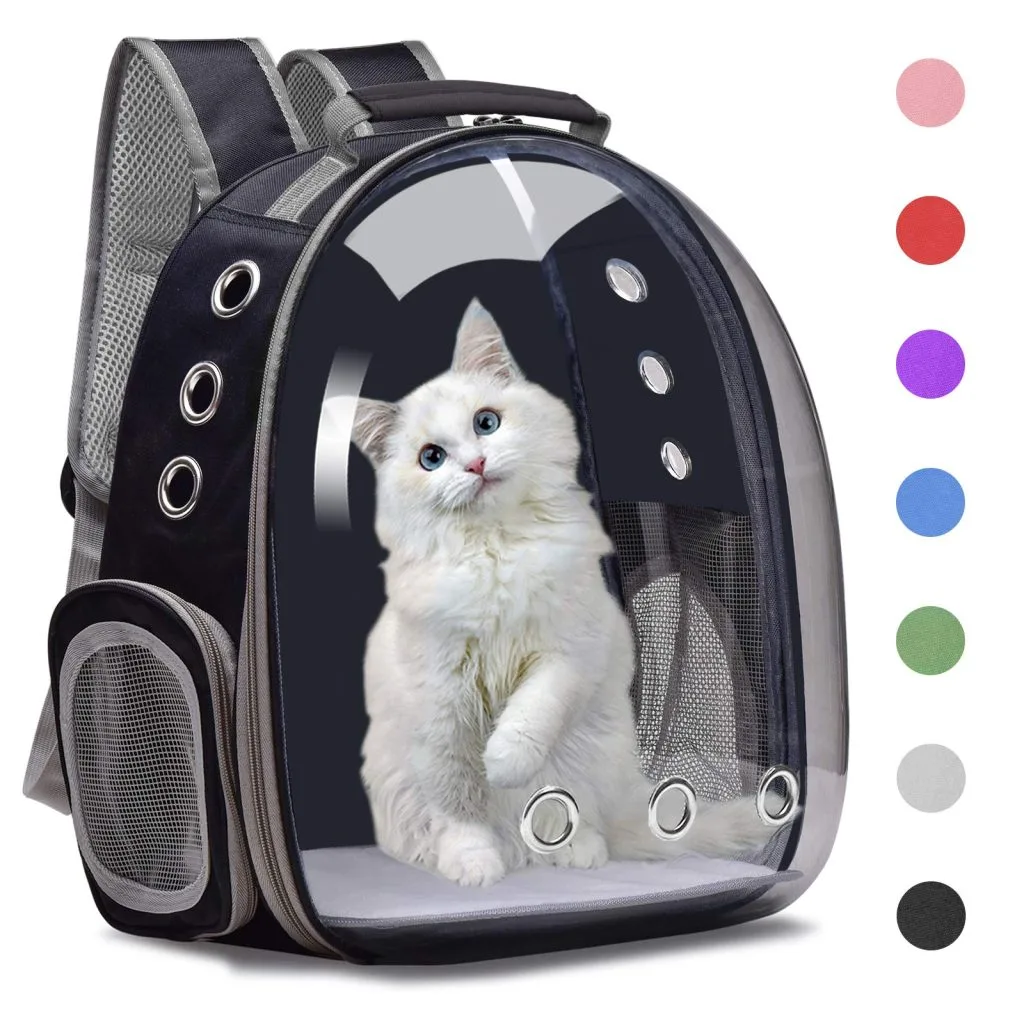
Select surfaces for frequent sanitation without false claims
Shelter cleaning is a chemical-and-mechanical exposure, not a colour preference. Document the actual products, dilution ratios, wet contact times, and rinse practice used by the facility. A 600D polyester exterior with polyurethane backing offers a practical balance of abrasion resistance, printable branding, and wipeability. For the lower interior, specify a smooth laminated polyester or coated Oxford that has fewer soil-trapping textures than brushed fabric. Avoid describing any textile as antimicrobial unless the finish, test method, claim jurisdiction, and durability are documented; cleanable construction is more useful than an unsupported health claim.
Run coupon screening before sewing the sample. Mark coated and uncoated swatches, expose them to the shelter's diluted disinfectant for ten wet-dry cycles, and compare colour shift, tackiness, whitening, delamination, and odour. A project-specific acceptance rule might permit a grey-scale colour change no worse than grade 4 and no visible coating lift at a folded edge. Follow with a completed-product trial of 30 cycles because seams, binding, inks, and adhesives can react differently from flat fabric. If bleach chemistry is routine, dark saturated sponsor colours may show change earlier than a medium grey body with replaceable printed patches.
Design for drying as well as wiping. Open-cell foam trapped in the base can retain moisture; use a removable pad that staff can separate and dry flat. Drainage eyelets may appear helpful but can create leakage during transport and sharp hardware inside the bag. A better approach for this issue-once program is a sealed lower tray zone with a removable absorbent liner supplied by the shelter. Bound seams should expose no raw edge that catches debris. Thread colour can contrast slightly inside, helping supervisors inspect skipped stitches and soil.
Material declarations should be supported by supplier records and market requirements. Buyers can consult the European Chemicals Agency when defining REACH-related substance controls and use lot-specific test reports where required. Sanitation durability must be approved against the shelter's named chemistry and cycle count, because generic “easy-clean” language is not an engineering acceptance criterion.
Build inventory, segregation, and packing into the product
A 500-piece donation becomes a warehouse program as soon as it reaches the receiving door. Specify how many flat carriers fit each master carton, the erected carton dimensions, gross weight, pallet pattern, and the label fields needed by the shelter. Ten units per carton keeps counting simple and limits handling mass, but the final count should be validated against carrier compression recovery. If twenty heavily compressed bags save freight but require reshaping, staffing cost merely moves from transport to the adoption desk. Test a carton after seven days of compression and require the roof frames, base boards, and mesh to return without heat or special tools.
| Control point | Proposed specification | Operational reason | Verification record |
|---|---|---|---|
| Master carton | 10 carriers, one size and artwork | Fast count and manageable lift | Pack audit and gross weight |
| Lot identity | PO, colour, production lot, carton 1/50 | Trace donation batches | Label scan at receipt |
| Status system | Replaceable CLEAN/HOLD card | Separate processed returns | Mock workflow exercise |
| Loose parts | Pad and base retained inside sleeve | No orphan components | 100% packing check |
| Compression recovery | Ready to issue within 20 seconds | Avoid desk reshaping labour | Seven-day carton trial |
Keep adoption units physically separate from reusable transfer stock. The easiest method is different carton end labels and removable status cards, not a second construction that fragments purchasing. A reserve carton can carry a tamper-evident inventory seal so staff know whether replenishment is actually needed. Include a carton-level inspection card with date, count, and visible damage fields. This creates feedback for reorder planning without asking busy staff to maintain a complicated asset system.
Carton print should also serve donor reporting. A short project code and scannable internal inventory identifier can link to the shelter's own records, while the carrier itself remains free of unnecessary data collection. Do not print an adopter's identity at source. Provide a write-on or insertable pet card that the shelter can complete under its own privacy process. The best bulk pack minimizes touches between receiving and discharge while preserving lot traceability down to a manageable carton group.
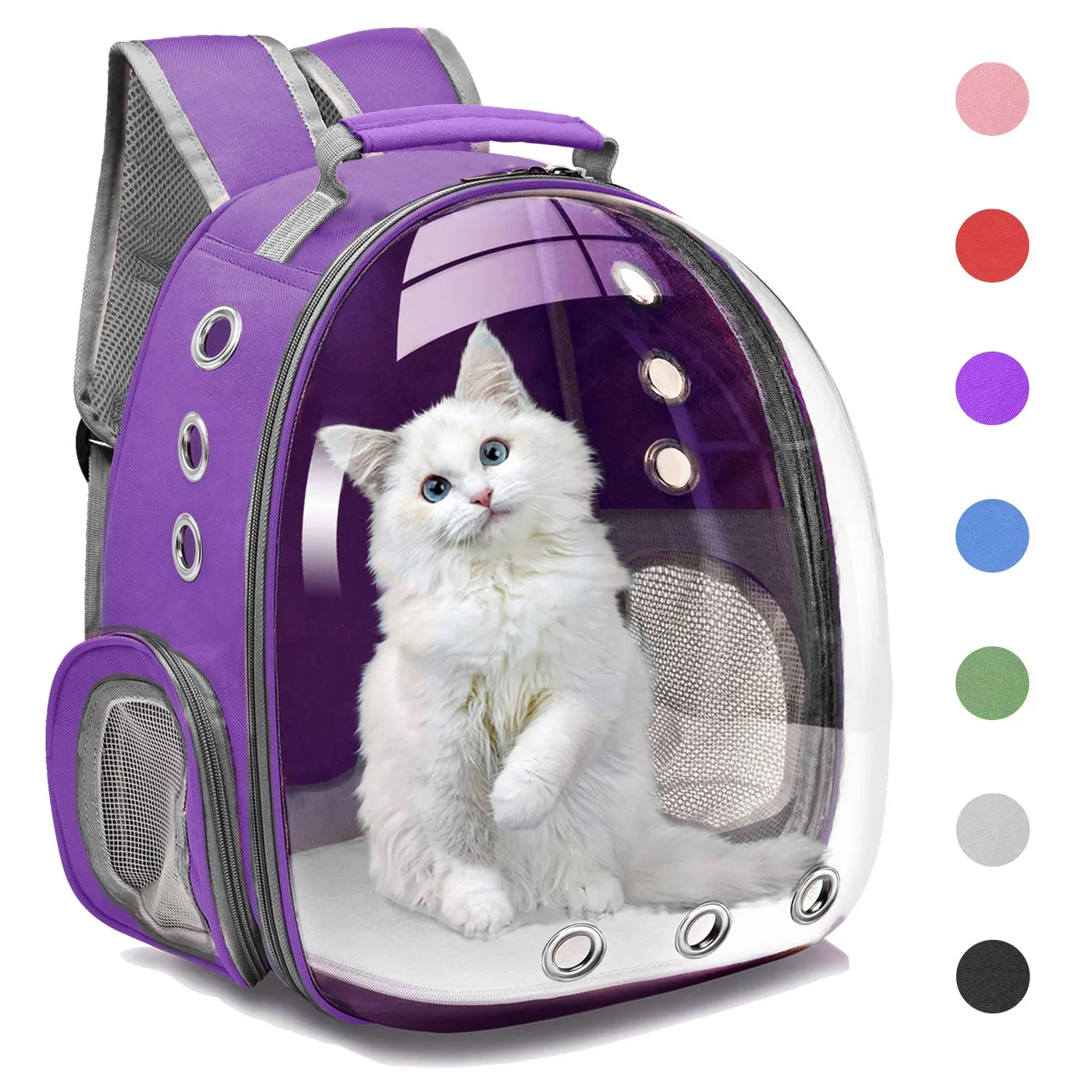
Engineer sponsor visibility around trust and replacement
Donation branding must remain legible in three settings: stacked at an event, carried through a public lobby, and photographed beside an adopter. Oversized logos across every mesh face can reduce ventilation, look promotional in sensitive situations, and complicate colour control. Reserve a 120 x 70 mm woven or printed patch zone on the solid side panel, plus an optional 80 x 35 mm shelter identifier near the end opening. Keeping donor and operator identities separate lets either patch be replaced if a sponsorship changes while the carrier remains in use.
Choose decoration by expected sanitation. A high-density heat transfer can deliver fine artwork but should be checked for edge lift after chemical wiping and flexing. A woven label gives stable colour and a restrained texture, although its perimeter stitching adds needle holes. Screen print is economical for a one- or two-colour mark on 500 units, provided ink adhesion is evaluated on the actual PU-backed face. For a photo-friendly result, specify a matte body fabric and avoid metallic inks. A 60-degree gloss reading can be recorded on approved swatches if the sponsor has strict visual guidelines; otherwise, retain the physical signed colour standard under controlled light.
Brand position should not sit under the handle, shoulder strap, or adopter's hand. Photograph the filled prototype at desk height and walking height, both left and right orientation. Require the mark to remain substantially visible in at least three of four agreed views. The shelter may also need bilingual care icons. Place these on an interior instruction label rather than crowding the sponsor patch. Use durable, plain language for load limit, closure check, cleaning, and animal supervision.
Approve Pantone references as directional targets but sign an actual fabric-and-process strike-off, because substrate shade and coating alter printed colour. Set tolerances for registration, patch skew, loose thread, and logo contamination in the artwork quality sheet. Ethical donor visibility comes from consistent placement and durable execution, not from maximizing the percentage of the carrier covered by advertising.
Control sewing, reinforcement, and line-level consistency
Manufacturing controls should focus on the junctions that carry repeated load: handle anchors, shoulder-strap D-rings, base corners, end-door zipper stops, and mesh-to-shell seams. A pre-production sample should be disassembled on paper into critical operations. Define seam allowance, stitch type, stitch density, reinforcement dimensions, webbing overlap, needle size, thread ticket, and permitted edge distance. For example, the handle box-X can use a 38 x 45 mm pattern with corner backtacks, but its performance depends on catching the reinforcement layer beneath the shell, not on the visible pattern alone.
Use templates for patch placement and webbing symmetry. A sponsor logo that drifts 12 mm between units is immediately visible in event photography even if the bag remains functional. The production team should confirm first-off pieces at cutting, shell assembly, base insertion, and final packing. Shade lots must not be mixed casually inside a carton; assign roll numbers and establish a visual band under D65-equivalent lighting. Mesh direction should remain consistent so adjacent carriers do not look different when displayed together.
Zipper assembly deserves a closed-loop check. Slider compatibility, chain gauge, pull attachment, end stops, and curved-panel sewing all affect escape resistance. Operators should cycle the first pieces and verify that no lining enters the chain. The short locking loop must be reachable but not long enough to become an interior snag. Trim thread ends at each door because loose threads can migrate into the slider path. Base-board sleeves should use consistent closure overlap so adopters do not encounter exposed hook material.
Quality records can follow an ISO 9001-style process approach; the buyer may review the overview at ISO's quality management resource. The SGS-verified production base can retain approved materials, signed artwork, inline measurements, and final inspection results by lot. For a public donation, visual consistency and structural consistency must be controlled from the same sealed sample, because both affect stakeholder confidence.
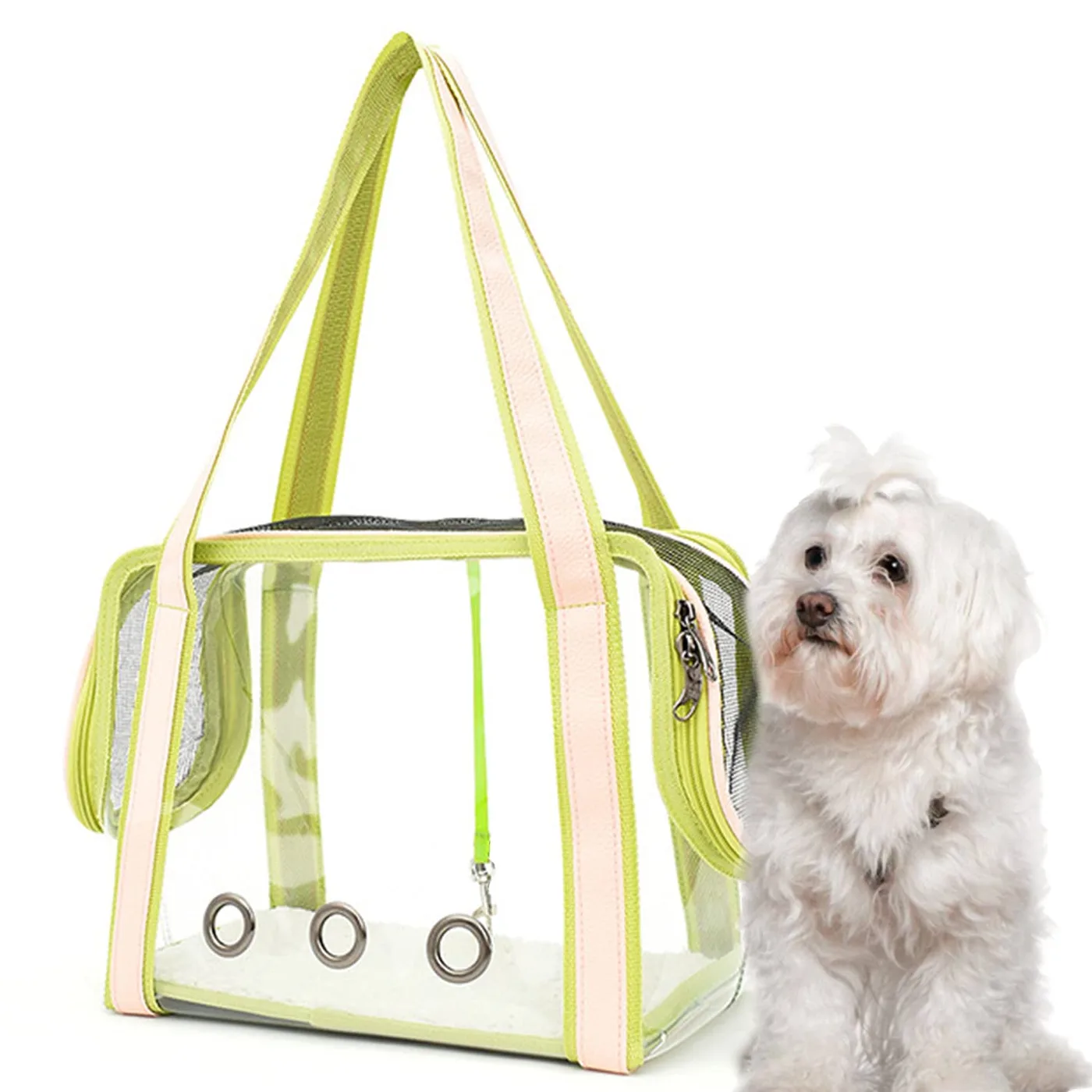
Verify safety, cleanability, and transport performance
Create a verification matrix before the purchase order so failures have agreed consequences. Start with a static proof load of 13.5 kg, equal to 1.5 times the proposed 9 kg working load, held for one hour by the joined handles. Follow with 250 lift-and-set cycles for adoption units and 1,000 cycles for the reusable reserve sample. Acceptance means no webbing pullout, seam opening above 3 mm, hardware fracture, or permanent base distortion that prevents stable standing. A shoulder-strap assembly should receive its own jerk or drop simulation because its force path differs from the handles.
Cycle both doors 500 times, including the locking feature, then apply a controlled outward load at the closed zipper junction. Abrade exposed mesh for an agreed number of rubs using a documented apparatus and inspect broken yarns against the sealed limit sample. Conduct a 60 cm packed-product drop on base, ends, and one corner with an inert test form inside. This is a handling test, not a crash-safety claim. For vehicle movement, provide webbing loops that can route a seat belt around the carrier; the shelter must separately manage placement and restraint practice. Organizations seeking crash-test context can review the independent work of the Center for Pet Safety.
Cleanability verification uses the selected disinfectant protocol: 30 wipe cycles for the issue program and 100 for the reusable pool sample. Inspect coating, print, label, hook-and-loop, odour, and drying time. Add an absorbency challenge at the lower seam by placing a measured dyed solution inside for ten minutes; record migration rather than promising absolute waterproofing. Ventilation must remain unobstructed after the compression-recovery test.
Final inspection under AQL 2.5 should use a written defect catalogue. Major defects include an unsecured door, missing base, broken handle reinforcement, wrong warning label, or materially blocked mesh. Minor defects cover bounded cosmetic issues such as slight stitch waviness away from load points. A shelter carrier is ready for release only when structural, sanitation, and packing evidence all refer to the same production configuration.
Pilot the donation and manage replenishment by evidence
Do not move directly from a digital rendering to 500 finished units. Use the sample window to evaluate two constructions if necessary: one with a lighter removable pad for adoption issue and one with a more durable washable insert for internal transfers. Ask staff from receiving, animal care, foster coordination, and the adoption desk to perform their real tasks. Record setup time, loading control, shelf fit, identity-card visibility, carrying comfort, wipe-down time, and any point where a zipper, flap, or strap requires a second hand. Consolidate decisions into one sealed sample rather than allowing informal preferences to survive into production.
Plan deployment by carton, not by individual bag. Release five cartons to normal operations, hold five for the next event, allocate transfer inventory, and preserve a small untouched reference quantity for complaint comparison. On the first 50 issues, record only useful operational fields: date, use pathway, animal weight band, setup exception, and any defect. Avoid collecting unnecessary adopter details. A seven-day and thirty-day review will reveal whether problems arise from product design, staff procedure, or storage.
Replenishment should use a reorder point based on actual issue velocity and the 35-50 day production window. If the shelter consumes 120 adoption carriers per month and wishes to keep a two-month buffer, procurement should begin review before usable stock falls below roughly 360 units after allowing approval and inbound time. Sponsor commitments can then be expressed as funded service months rather than an arbitrary unit photo. Preserve lot numbers when distributing stock to satellite sites so a local issue can be traced without withdrawing every carrier.
The purchase specification should end with revision control: dimensions, approved material codes, artwork files, label copy, packing plan, verification matrix, defect definitions, and signed sample date. Changes to coating, zipper, mesh, board thickness, or logo method require documented approval because they can alter cleaning or load performance. A successful donation program is a repeatable operating system in which the shelter can forecast, inspect, issue, and reorder the same qualified carrier.
Order and quality terms
- MOQ 500 pieces per colourway; samples in 6-10 working days
- Bulk production 35-50 days after approval; AQL 2.5 inspection standard
- T/T 30/70 terms, FOB Xiamen, full document set per shipment
People Also Ask
How many cat carriers should an animal shelter order for a donation program?
Base the quantity on monthly feline exits, event peaks, reusable-transfer demand, and safety stock. A 500-piece first lot can be allocated by pathway and reviewed after the first 50 issues.
What material is easiest for shelters to disinfect?
A smooth coated polyester lower interior with removable pad is practical, but it must be tested against the facility's actual diluted chemistry, wet contact time, and repeated drying cycle.
How strong should a donated cat carrier be?
Set a working load from the shelter's cat population and verify the complete carrier above that value. One example is a 9 kg working load with a 13.5 kg one-hour static proof test.
How can shelters separate clean and used carriers?
Use replaceable colour-coded CLEAN and HOLD cards, separate carton locations, and a defined processing route. Permanent status printing is less flexible when a carrier changes state.
What branding works best on donated pet carriers?
A restrained replaceable patch on a solid matte panel remains visible without blocking ventilation. Approve its colour, adhesion, skew, and cleaning durability on production material.
What should be inspected before donated carriers ship?
Inspect structure, closures, ventilation, labels, artwork, removable components, dimensions, workmanship, carton count, and traceability under the agreed sampling and defect plan.
Frequently Asked Questions
What size should a shelter donation cat carrier be?
A general program can begin near 46 x 28 x 30 cm, but the shelter should confirm the size against its feline weight and body-length distribution. Oversize animals should use a separately qualified carrier rather than exceed the stated working load.
Can donor logos be changed on a repeat order?
Yes. A replaceable woven or printed patch allows artwork changes without redesigning the structural shell. New artwork still requires a strike-off and placement approval before bulk production.
How many carriers should be packed in one carton?
Ten is an operationally simple starting point for counting and lifting. The final quantity must be confirmed by carton compression, gross-weight, recovery, and pallet-pattern trials.
Should adoption carriers and reusable transfer carriers be identical?
They can share the same shell and spare-part system, while pads, labels, and qualification cycles differ. This preserves purchasing scale without confusing the distinct duty cycles.
Is a donated soft carrier waterproof?
The specification should describe measured resistance or leakage performance, not make a broad waterproof promise. Lower-zone coating and a removable absorbent liner are practical controls for brief incidents.
How is the working load shown to adopters?
Print the approved working-load statement and closure checks on a durable interior label. The declared value should be supported by completed-product proof and cyclic tests.
Can every carrier have a unique serial number?
It is possible, but carton- or lot-level traceability is usually more economical for issue-once donations. Individual serialization is more useful for a controlled reusable transfer pool.
What payment terms apply to the program?
Standard commercial planning uses T/T 30/70 and FOB Xiamen unless the quotation states otherwise. Freight, destination handling, and special testing should be itemized separately.
Can the shelter supply its own cleaning product for testing?
Yes. The named product, dilution, contact time, and rinse method should be documented, and sufficient material should be supplied or sourced for repeatable coupon and completed-bag trials.
Are colour variations acceptable within a donation lot?
Define an approved shade band and prohibit unrecorded roll mixing within cartons. Visible panels and donor patches should be checked under controlled lighting against the signed standard.
What documents should accompany the shipment?
The agreed pack can include commercial documents, packing list, material declarations, inspection report, test summaries, approved artwork reference, and carton-lot traceability records.
Can the carrier be used for air travel?
This shelter design is not automatically airline compliant. Airline requirements vary, so any air-travel program needs carrier dimensions, route, operator rules, and approvals assessed separately.
Talk to QUANZHOU JUNYUAN BAGS about a pet carrier program: MOQ 500 pieces per colourway, samples in 6-10 working days, bulk production in 35-50 days under AQL 2.5 inspection.
Get a free quote Request a sample