Pet Carrier Accessories programmes run at MOQ 500 pieces per colourway with samples in 6-10 working days and bulk production in 35-50 days. Matching accessories and spare parts produced alongside the carrier programme on one line.
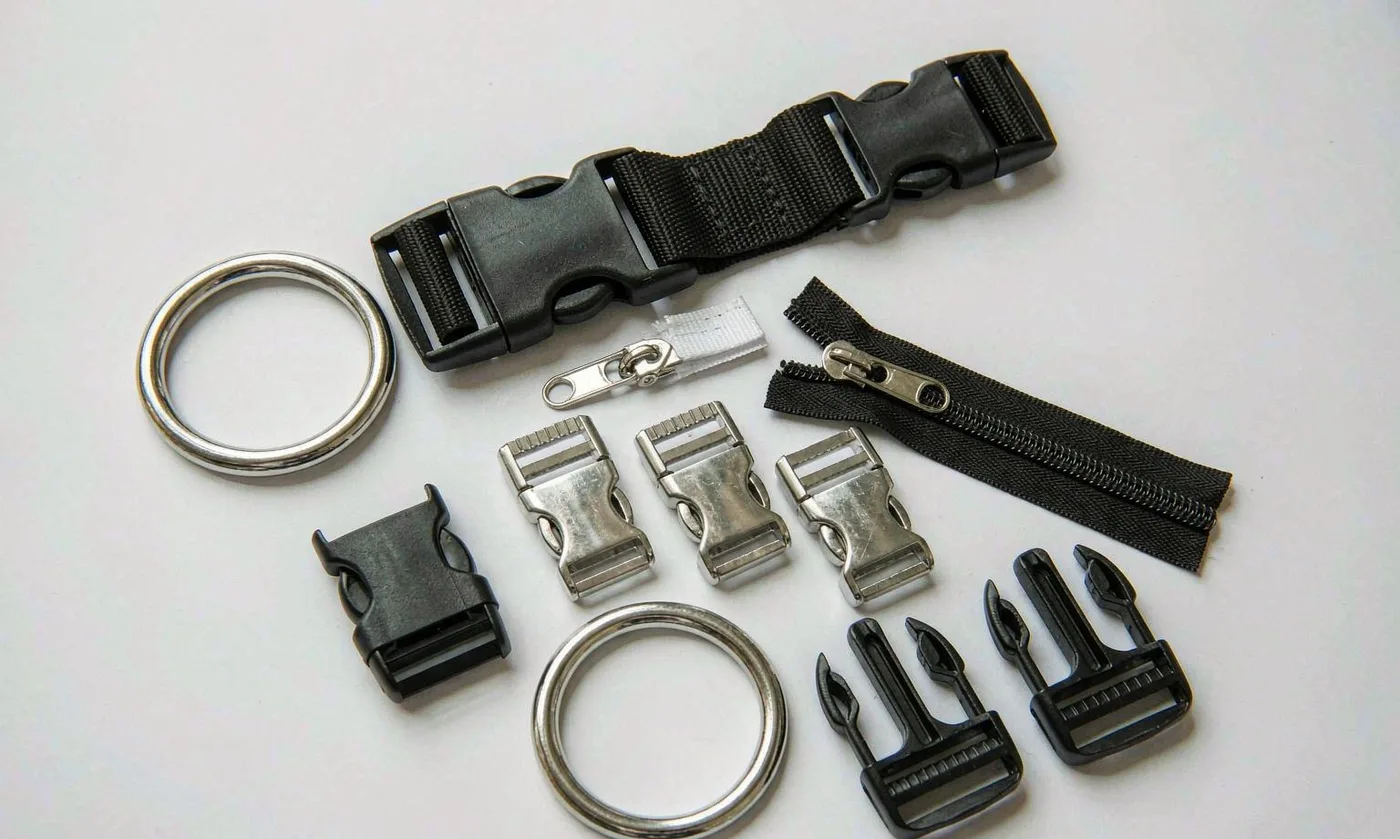
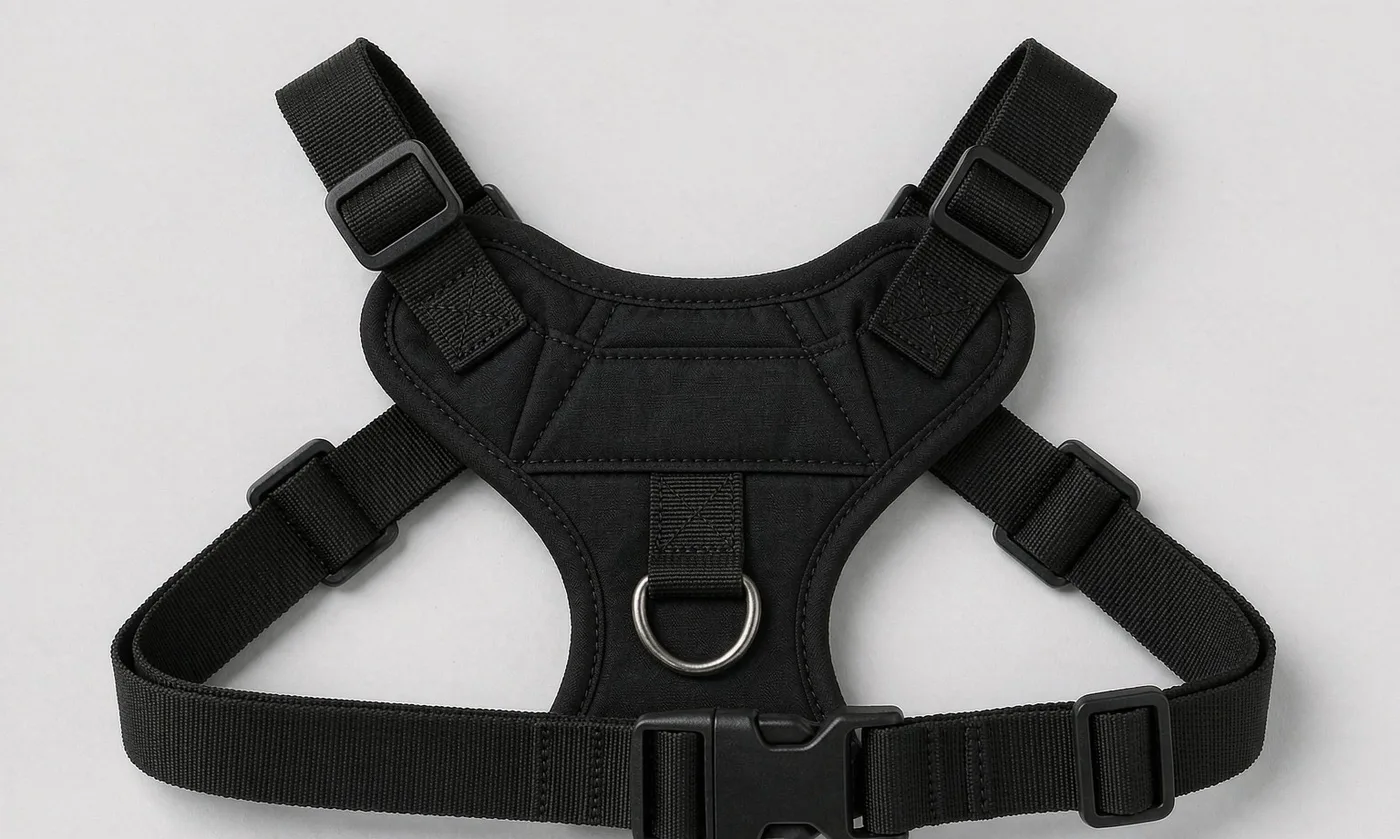
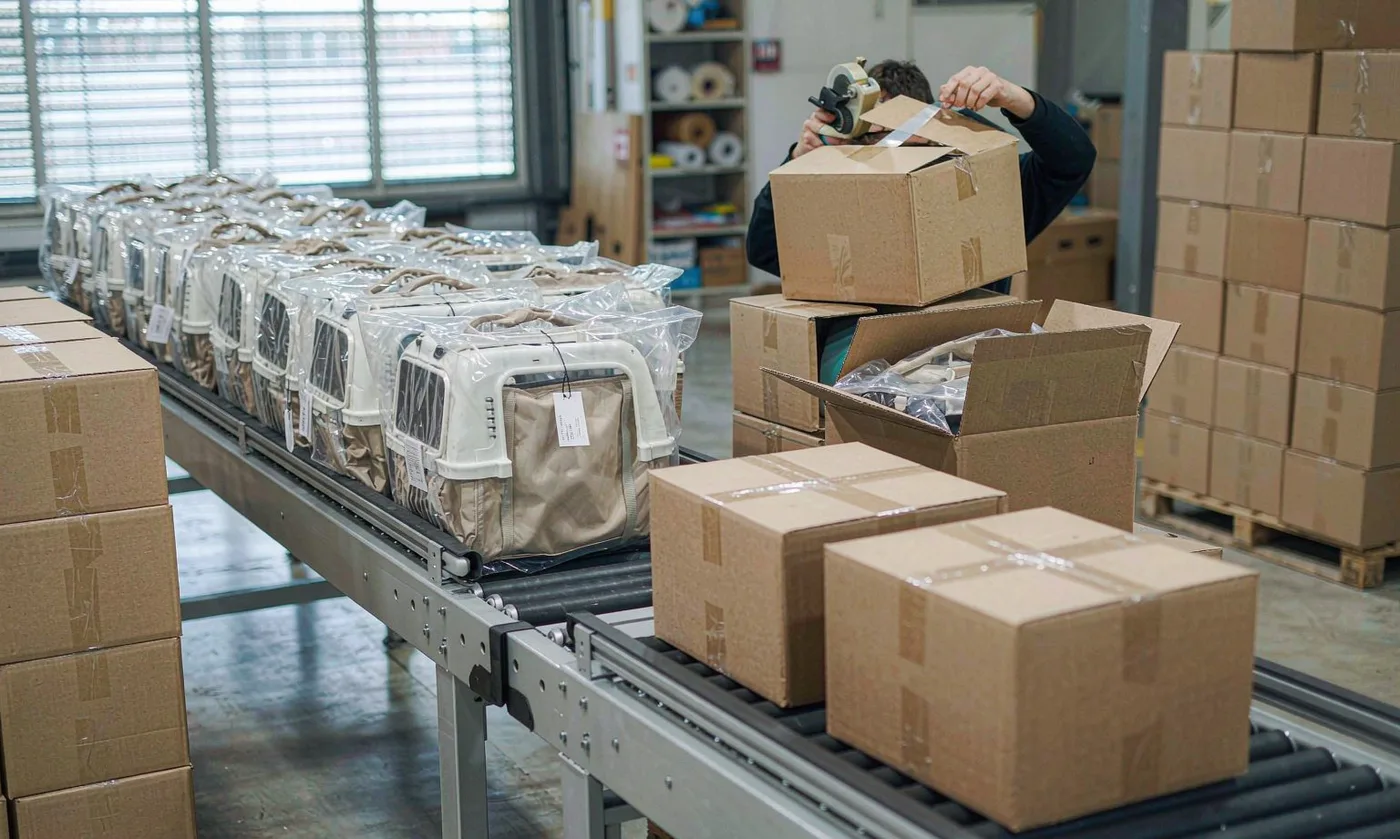
Specification baseline
| Item | Figure | Note |
|---|---|---|
| Straps and webbing | 20-50 mm polyester | Breaking strength tested |
| Hardware | Acetal / zinc alloy | Cycle and salt-spray tested |
| Bowls and feeders | PP / TPR / stainless | Food-contact compliant |
| Textile accessories | Cotton / fleece / mesh | Oeko-Tex option |
| Packing | Bulk or retail box | Barcodes applied in line |
| MOQ | 500 pcs / item | Assorted items may be mixed |
Spare parts as a service strategy
The accessory list that actually matters to a carrier brand is short: replacement shoulder straps, mesh panels, wheel sets, trolley handles, rain covers and buckle sets. Stocking them converts a warranty cost into a revenue line and keeps a returned bag out of landfill. Because these parts run on the same line as the carriers, a buyer can order in small batches - 500 units is the usual threshold - in the original dye lot, so a replacement matches rather than approximates. We hold pattern cards for twelve months after a production run and quote spare-part batches against the original specification.
Bundle economics
Accessories carry the highest margin in most pet assortments because shoppers compare them least. The practical way to build a bundle is to fix the packaging standard first - one carton footprint that fits a carrier plus three small items - then choose items that share it. A collapsible bowl, a waste-bag dispenser and a travel mat typically fill a standard gift-box cavity without re-engineering the carton. Packing happens on the same line, so there is no second handling charge, and the incremental unit cost stays well below the lift it produces in average order value.
| Category | MOQ | Note | Support |
|---|---|---|---|
| Replacement parts | 500 pcs | Matches original dye lot | Pattern card held 12 months |
| Companion items | 500 pcs / item | May be mixed across items | Retail box or bulk polybag |
| Gift bundles | 500 sets | Single carton footprint | In-line packing, no extra handling |
| Retail display kits | 250 kits | Assorted carton | Planogram drawing supplied |
Packaging standards across the assortment
Mixing bulk-packed carriers with retail-boxed accessories in one shipment creates labelling problems at the destination warehouse. We standardise either way - usually bulk polybag with a sewn-in label for carriers, and either a printed box or a header card for accessories - and apply barcodes in line so nothing arrives unidentified. When a buyer sells through Amazon FBA or similar, we prep to that specification instead: polybag with suffocation warning, a single scannable barcode covering the multipack, and carton labels generated from the shipment plan.
Accessory Categories With Minimums and Sampling Requirements
Spare parts and companion items are not one category. A replacement shoulder strap is a cut-and-sew textile part that runs on the same line as the carrier; a foldable bowl is a moulded food-contact article; a tether clip is a hardware item bought to a specification. Each has a different minimum, a different sampling route and a different document set, and treating them as a single purchasing decision is the usual reason an accessory programme slips a season.
The table below is the working list. Minimums are stated per item per colourway; where items share a material and a finish, an assorted order can be pooled against the 500-piece threshold, which is how a buyer tests five small items without committing to five separate demand pools. Sampling follows the same clock as the carriers: a first sample in 6-10 working days from confirmed technical documentation, revision rounds of 3-5 working days each. Hardware is the exception - those parts are normally sourced to a specification rather than prototyped, so the sample is a sourced part plus a fit check, not a made part.
| Category | Typical item | MOQ | Sampling requirement | Notes |
|---|---|---|---|---|
| Carry parts | Replacement shoulder strap, 20-50 mm webbing | 500 pcs per colourway | Made sample, 6-10 working days | Webbing graded against ASTM breaking-strength methods; matches the original dye lot |
| Interior parts | Base pad, liner, travel mat | 500 pcs per colourway | Made sample, 6-10 working days | Wash durability checked under AATCC 61; OEKO-TEX fabric option on request |
| Panel parts | Replacement mesh panel | 500 pcs per colourway | Made sample with bound edge | Air permeance characterised against ASTM methods so a substitution cannot change airflow |
| Hardware | Buckles, tether clips, D-rings | 500 pcs per finish | Sourced part plus fit check | Cycle and salt-spray checks; REACH and Proposition 65 data filed against the finish code |
| Feeding items | Foldable bowl, PP / TPR / stainless | 500 pcs per colourway | Moulded sample | Food-contact declaration for the destination market; material grade recorded |
| Small moulded items | Waste-bag dispenser, clip-on accessories | 500 pcs per colourway | Moulded sample after tooling trial | Tooling quoted as a planning range against cavity count |
| Storage items | Pouch, organiser, travel case | 500 pcs per colourway | Made sample, 6-10 working days | Can be pooled with other textile items in one order |
| Hygiene consumables | Waste-bag rolls, liners, wipes | 500 pcs per item | Sourced reference plus pack check | Shortest-lead item; usually used to top up a shipment |
| Bundle sets | Carrier plus accessories in one carton | 500 sets | Pack sample after item approval | One carton footprint; GS1 barcode applied in line |
Sequencing. Start with hardware. Sourced parts carry their own lead time and their own compliance file, and every textile accessory that attaches to them is dimensionally dependent on them: a strap is only as wide as the buckle it has to thread. Approve textile items next, then moulded ones, then the pack format. Bundles are approved last, because their only new variable is the carton.
Freight and consolidation. An assorted order still ships as one shipment. Accessories are low-value and low-cube, so the constraint is carton count rather than weight: a strap and a mat nested into the carrier carton add almost no volumetric cost, while the same items shipped separately pay for their own cube. We plan the assortment to fill the carrier carton wherever the items are sold together and consolidate everything else into shared cartons at the end of the run. One shipment means one 35-50 day bulk schedule, one pre-shipment inspection against AQL 2.5 under ISO 2859-1, one T/T 30/70 payment and one FOB Xiamen release.
Packaging is decided alongside the assortment rather than after it. Bulk polybag with a sewn-in label suits spare parts going into a service channel; a printed box or a header card suits retail; a bundle needs one carton footprint that fits the carrier plus its items without a second handling step. Barcodes are applied in line against a GS1 allocation so nothing arrives at the destination warehouse unidentifiable, and carton labels are generated from the shipment plan rather than written by hand at the end of the run.
Matching Accessories to the Carrier: Hardware, Shade and Pack
An accessory that almost matches is worse than one that clearly does not. On shelf, a strap in a slightly different shade reads as a defect on the carrier it is clipped to. In service, a buckle from a different plating batch corrodes at a different rate and becomes the first thing to fail. Matching is therefore a specification exercise with three parts: hardware unification, shade control and pack consistency.
Hardware unification. Every metal and plastic part in the assortment is specified to one finish code and one plating standard, and that code is written onto the technical pack so a replacement order three seasons later resolves to the same part rather than to whatever the line happens to hold. Buckle and D-ring geometry is unified across the carrier and its accessories, so one strap fits every anchor point in the range. Salt-spray and cycle testing are applied to the sourced part and the result is filed against the finish code rather than against an individual purchase order, which is what makes the data reusable across seasons.
Shade control. Textile accessories are cut from the same dye lot as the carrier shell wherever both are ordered together. Where that is not possible, the shade tolerance is set as a planning target and verified under a standard light source before cutting begins. Fastness matters as much as initial shade, because a strap that fades faster than the bag it is attached to produces the same complaint as a strap that never matched. Crocking is checked under AATCC 8, wash fastness under AATCC 61, and light and general fastness against the ISO 105 series, so the assortment ages at one rate rather than several.
Pack consistency. One carton footprint, one label layout and one barcode scheme across the whole assortment. Mixing bulk-packed carriers with retail-boxed accessories inside one shipment creates receiving problems at the destination, so the standard is chosen once - bulk polybag with a sewn-in label, printed box, or header card - and applied to everything in the order. Where the destination is a marketplace with its own prep rules, the entire order is prepped to that rule instead, including a single scannable barcode covering a multipack.
All of this is verified before release rather than at the destination. Pre-shipment inspection runs against AQL 2.5 under ISO 2859-1, with shade and hardware finish treated as defined defects rather than as subjective ones, and the inspection record is filed under the ISO 9001 process control system maintained across our vetted partner facilities. Volume terms are unchanged: 500 pieces per colourway, T/T 30/70, FOB Xiamen.
| Attribute | Control point | Planning tolerance | Verification | Record |
|---|---|---|---|---|
| Hardware finish | One finish code per plating standard | Single code across carrier and accessories | Salt-spray and cycle testing on the sourced part | Test data filed against the finish code, not the order |
| Hardware geometry | Buckle and D-ring mating dimensions | One geometry across the assortment | Fit check on the first sample of every attaching item | Dimension sheet on the technical pack |
| Fabric shade | Dye lot shared with the carrier shell | Shade difference set as a planning target | Visual check under a standard light source before cutting | Lot code recorded against the order |
| Fabric fastness | Crocking, washing, light | Matched grades across carrier and accessories | AATCC 8, AATCC 61 and the ISO 105 series | Fastness report scoped to material and supplier |
| Carton footprint | One footprint per assortment | Set at tech pack stage, before the pack sample | Pack sample approved before bulk packing | Carton drawing on the technical pack |
| Barcode and labelling | GS1 allocation, applied in line | One scheme per destination | Scan check during pre-shipment inspection under ISO 2859-1 | Carton labels generated from the shipment plan |
Which Accessories Need Their Own Test File
Accessories inherit nothing. A carrier with a complete compliance file does not confer that file on the bowl sold beside it, because the two are different articles with different materials, different suppliers and different exposure routes. The rule is simple: each article gets its own test file, and the file is scoped to material plus supplier rather than to a purchase order.
Chemical scope. Every accessory placed on the EU market carries REACH obligations as an article, and the SVHC declaration has to come from the material supplier with enough traceability to survive a retail audit - a generic statement is not sufficient. For the US market, Proposition 65 applies through the lead and phthalate routes to metal hardware and to any PVC component, and the warning decision belongs to the buyer rather than to us: we supply the test data and the buyer decides the labelling. Textile accessories - mats, pouches, fabric-covered straps - are commonly specified to an OEKO-TEX standard where the retail channel requires it.
Where CPSIA and EN 71 do and do not apply. Both are requested by default and both are frequently out of scope. CPSIA applies to articles designed or intended for children; a pet accessory does not become a children's product because it is small or brightly coloured, nor because it is sold in the same store as one. It does become one if it is marketed for children - a decision the buyer makes before testing is scoped, because it changes the substrate limits and adds a tracking label requirement. EN 71 is handled the same way: where an accessory has a play function or is sold through a toy channel, the mechanical and migration clauses are in scope; a replacement strap is not a toy. Our production team will state which of the two applies rather than testing for both by default and invoicing for work no auditor will ask to see.
Food contact and document ownership. Bowls and feeders are food-contact articles and are declared against the regulation applicable in the destination market, with material grade and moulding conditions recorded so the declaration matches what was actually produced. On ownership: the buyer pays for the test, the buyer owns the report, and the report is held with the article specification rather than with a shipment - a report that travels with one container is useless for the next one. Reports are scoped to material, supplier and process; a change to any of the three triggers a re-test, and we flag the trigger rather than waiting for an audit to find it. Facility-level documents - BSCI social-compliance audits and ISO 9001 certification for the partner facilities - are shared rather than owned and are re-issued on their own cycle.
Practically, the test scope should be budgeted at tech pack stage. A five-item accessory assortment typically needs three to five separate files, and the cost sits in the low hundreds of US dollars per file as a planning range. Deciding that before the 6-10 working day sampling window opens is cheaper than deciding it inside the window, where a re-scope costs another revision round of 3-5 working days.
| Accessory | Test trigger | Standard or regulation | Scoped to | Re-test trigger |
|---|---|---|---|---|
| Straps, mats, pouches | Textile article with skin or coat contact | OEKO-TEX where the channel requires it; REACH as an article | Fabric supplier plus dye house | Fabric or dye house change |
| Buckles, clips, D-rings | Metal or plated article, US and EU placement | REACH SVHC declaration; Proposition 65 lead route | Hardware supplier plus plating finish code | Plating batch or supplier change |
| Bowls and feeders | Food-contact article | Food-contact regulation of the destination market | Material grade plus moulding conditions | Resin grade or moulding process change |
| Items marketed for children | Marketing decision by the buyer | CPSIA substrate limits and tracking label | Article plus its coating | Coating or substrate change |
| Items with a play function | Sold through a toy channel | EN 71 mechanical and migration clauses | Article, coating and any small part | Small-part supplier change |
| PVC or coated items | Softened polymer present | Proposition 65 phthalate route; REACH as an article | Compound supplier | Compound reformulation |
Specification and engineering guides
All Pet Carrier Accessories articles
- Pet Carrier Accessories: Must-Have Add-Ons
- Pet Carrier Replacement Parts: Spare Components
- Pet Carrier Straps: Replacement Guide
- Pet Carrier Zippers: Repair and Replacement
- Pet Carrier Mesh: Repair and Replacement
- Pet Carrier Padding: Foam Refill Options
- Pet Carrier Base: Reinforcement Solutions
- Pet Carrier Wheels: Replacement and Upgrade
- Pet Carrier Trolley: Detachable Handle
- Pet Carrier Rain Cover: Weather Protection
- Pet Carrier Travel Bowl: Collapsible Design
- Pet Carrier Water Bottle: Portable Hydration
- Pet Carrier Waste Bag Dispenser: Convenience
- Pet Carrier Treat Pouch: Training Accessory
- Pet Carrier Toy Holder: Entertainment
- Pet Carrier Document Holder: Travel Papers
- Pet Carrier Phone Pocket: Tech Access
- Pet Carrier Key Clip: Secure Storage
- Pet Carrier Luggage Tag: Identification
- Pet Carrier Carabiner: Attachment Options
- Pet Carrier Seat Belt: Safety Harness
- Pet Carrier Tether: Interior Safety
- Pet Carrier Clip: Leash Attachment
- Pet Carrier Harness: Matching Set
- Pet Carrier Collar: Coordinated Look
- Pet Carrier Leash: Matching Set
- Pet Carrier Bandana: Stylish Accessory
- Pet Carrier Scarf: Fashion Accessory
- Pet Carrier Hat: Sun Protection
- Pet Carrier Booties: Paw Protection
- Pet Carrier Goggles: Eye Protection
- Pet Carrier Life Jacket: Water Safety
- Pet Carrier Cooling Vest: Heat Protection
- Pet Carrier Heated Vest: Warmth
- Pet Carrier Raincoat: Weather Gear
- Pet Carrier Sweater: Comfortable Wear
- Pet Carrier Shirt: Casual Look
- Pet Carrier Costume: Special Occasion
- Pet Carrier Wedding Outfit: Formal Wear
- Pet Carrier Holiday Sweater: Seasonal
- Pet Carrier Birthday Bandana: Celebration
- Pet Carrier Memorial Tag: Tribute
- Pet Carrier Service Dog Vest: Working Dog
- Pet Carrier Emotional Support Animal: ESA Vest
- Pet Carrier Therapy Dog: Training Vest
- Pet Carrier Search and Rescue: SAR Vest
- Pet Carrier Police K9: Official Vest
- Pet Carrier Military Working Dog: MWD Vest
- Pet Carrier Tracking Collar: GPS Location
- Pet Carrier Training Collar: Behavior
- Pet Carrier Bark Collar: Barking Control
- Pet Carrier Fence: Portable Barrier
- Pet Carrier Gate: Room Divider
- Pet Carrier Playpen: Exercise Pen
- Pet Carrier Crate: Kennel Alternative
- Pet Carrier Bed: Comfy Rest
- Pet Carrier Blanket: Travel Comfort
- Pet Carrier Towel: Drying After Walks
- Pet Carrier Brush: Grooming Tool
- Pet Carrier Comb: Detangling
- Pet Carrier Nail Clipper: Grooming Kit
- Pet Carrier Toothbrush: Dental Care
- Pet Carrier Shampoo: Travel Size
- Pet Carrier Conditioner: Coat Care
- Pet Carrier Ear Cleaner: Hygiene
- Pet Carrier Eye Wipes: Cleaning
- Pet Carrier Paw Balm: Protection
- Pet Carrier Hot Spot Spray: Skin Care
- Pet Carrier First Aid Kit: Emergency
- Pet Carrier Flea Comb: Pest Control
- Pet Carrier Tick Remover: Parasite
- Pet Carrier Dewormer: Medication
- Pet Carrier Vitamin Supplement: Nutrition
- Pet Carrier Probiotic: Digestive Health
- Pet Carrier Joint Supplement: Mobility
- Pet Carrier Omega 3: Coat Health
- Pet Carrier Calming Treat: Anxiety
- Pet Carrier Dental Chew: Oral Health
- Pet Carrier Training Treat: Reward
- Pet Carrier Travel Food Bag: Storage
- Pet Carrier Water Jug: Hydration
- Pet Carrier Food Bowl: Stainless Steel
- Pet Carrier Double Bowl: Two Dishes
- Pet Carrier Slow Feeder: Anti-Bloat
- Pet Carrier Elevated Bowl: Neck Friendly
- Pet Carrier Collapsible Bowl: Space Saving
- Pet Carrier Spill Proof Bowl: No Mess
- Pet Carrier Non-Slip Bowl: Stable Base
- Pet Carrier Insulated Bowl: Temperature
- Pet Carrier Heated Bowl: Winter Use
- Pet Carrier Cooling Bowl: Summer Use
- Pet Carrier Travel Mat: Place Setting
- Pet Carrier Placemat: Food Area
- Pet Carrier Food Storage: Airtight Container
- Pet Carrier Treat Jar: Snack Storage
- Pet Carrier Poop Bag Dispenser: Waste
- Pet Carrier Poop Bags: Refill Rolls
- Pet Carrier Pee Pads: Disposable
- Pet Carrier Training Pads: Housebreaking
- Pet Carrier Wipes: Cleaning
Frequently asked questions
What is the minimum order for accessories?
500 pieces per item, and different accessory items may be mixed into one shipment to reach workable quantities per style.
Do spare parts match the original production?
Yes. We keep pattern cards for twelve months and hold dye-lot references so replacement panels and straps match the original run rather than approximating it.
Can you pack a gift bundle on the same line?
Yes, provided one carton footprint is agreed first. Packing happens in line, so bundled units avoid a second handling operation.
Is retail-ready packaging available?
Yes - printed box, header card or bulk polybag with a sewn-in label. Barcodes are applied in line so nothing arrives at the destination warehouse unidentified.
Can you prep for Amazon FBA?
Yes. Polybag with suffocation warning, one scannable barcode covering the multipack, and carton labels generated from the shipment plan.
Are metal parts tested for nickel release?
Hardware is checked for cycle life and salt-spray resistance, and metal parts in contact with skin can be specified to a nickel-release limit on request.
Do textile accessories carry Oeko-Tex certification?
Oeko-Tex certified fabric and webbing can be specified, with the certificate number recorded against the batch before shipment.
What is the MOQ for a gift bundle?
500 sets, packed into a single carton footprint with a planogram drawing supplied so the retail shelf layout is agreed before production.
Do you hold spare parts in stock?
We keep the pattern card and dye-lot reference for twelve months so replacement webbing, mesh panels and buckle sets can be produced in small batches without a new approval cycle.
What is the lead time for a repeat order?
35-50 days from confirmation for a repeat of an existing pattern, because no new sampling or tooling approval is needed. New colourways add a lab dip round.
How long does sampling take?
First prototypes ship in 6-10 working days after the tech pack is confirmed; revisions typically add 3-5 working days per round.
What about bulk lead time?
35-50 days after sample approval, depending on material availability and order size.
Planning a pet carrier accessories programme? MOQ 500 pieces per colourway, samples in 6-10 working days, bulk production in 35-50 days under AQL 2.5 inspection.
Request a quote Ask for samples