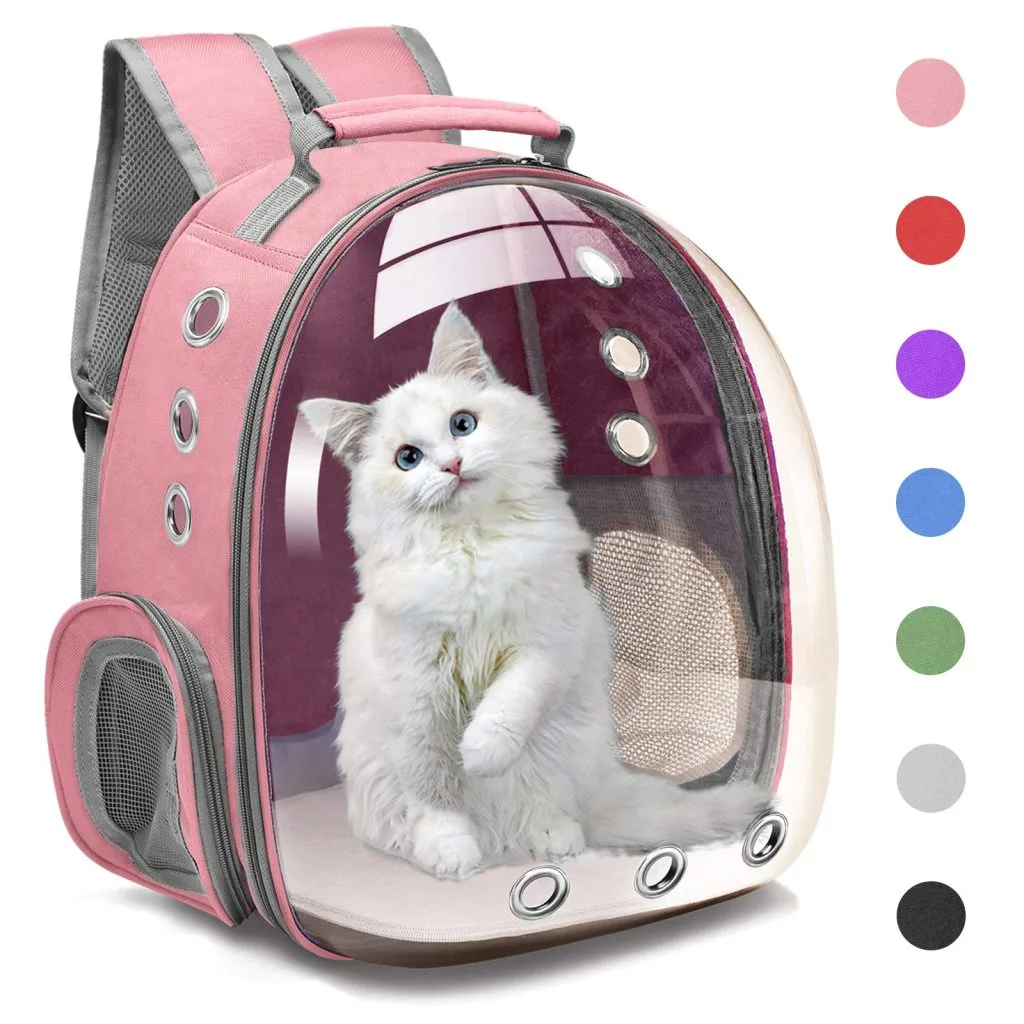
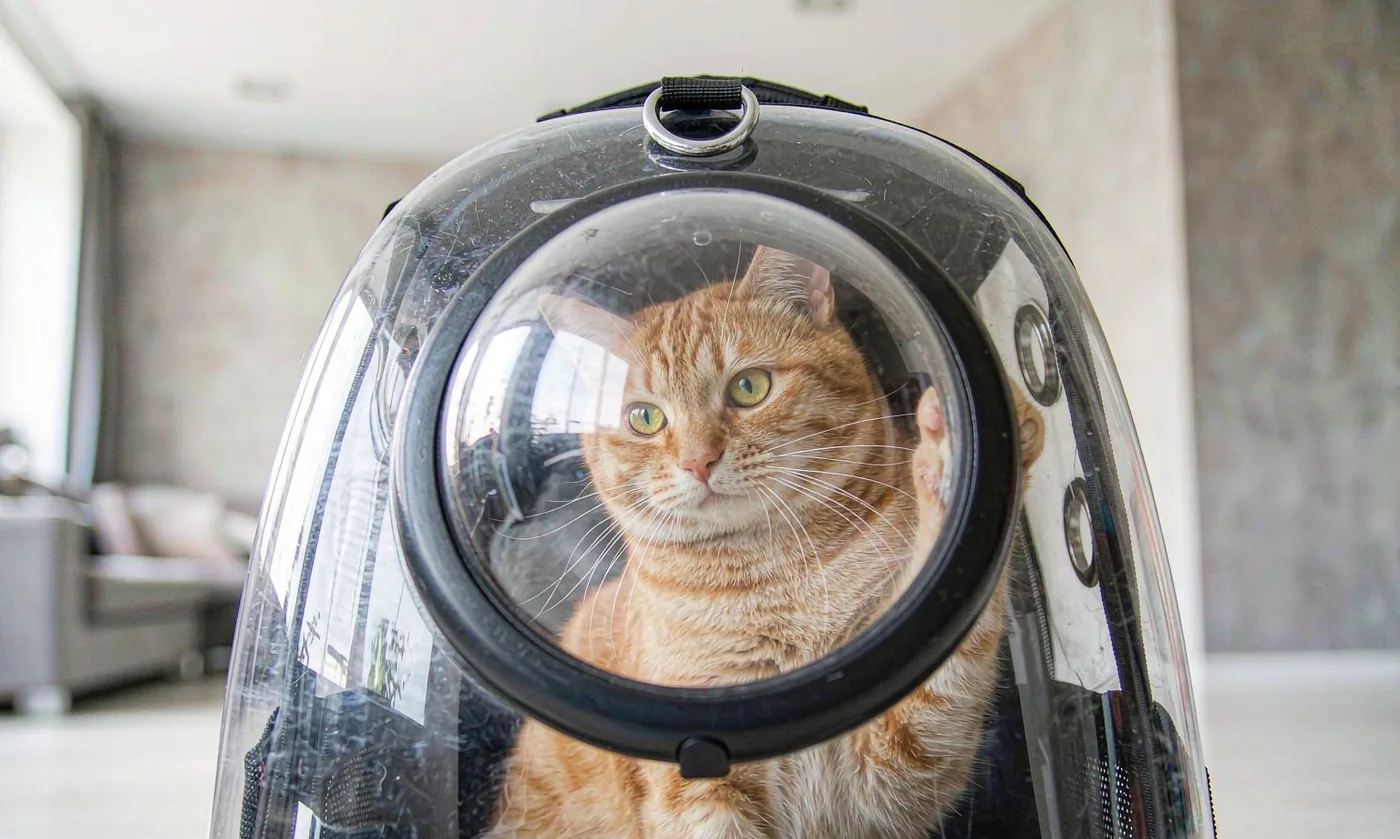
Cat Carrier & Travel Bag programmes run at MOQ 500 pieces per colourway with samples in 6-10 working days and bulk production in 35-50 days. Cat carriers engineered around escape resistance, hard-shell options and low-stress ventilation.
Specification baseline
| Item | Figure | Note |
|---|---|---|
| Target weight | 1.5-10 kg | Two size platforms |
| Closure | Reverse-coil zipper | Locking slider, inward pull |
| Shell options | Soft / hard shell | Injection or vacuum formed |
| Base | Removable 4-6 mm board | Machine washable cover |
| Ventilation | 25-40% of surface | Shaded front zone option |
| MOQ | 500 pcs / colourway | MOQ applies per shell type |
Closure engineering against escape behaviour
Cats defeat closures by pushing rather than pulling, which is why an ordinary slider bag fails. Specification starts with reverse-coil zipper tape, so the coil sits inside and a claw cannot lever the chain open, then adds a locking slider whose tab locks into the teeth rather than relying on friction. A second mechanical capture follows: either an internal tether ring clipped to a harness, or a turn-button panel covering the zipper end. During validation we run 200 push/pull cycles on a loaded shell and measure slider back-drive; anything above 1 mm of travel per cycle goes back to hardware sourcing.
Seam construction matters for the same reason. Bound internal seams remove the loose thread loops that a cat works at with its claws. Where a design genuinely needs an internal pocket seam, it is bound rather than overlocked, and the stitch density is raised so a bitten thread does not propagate into a run.
Soft shell versus hard shell
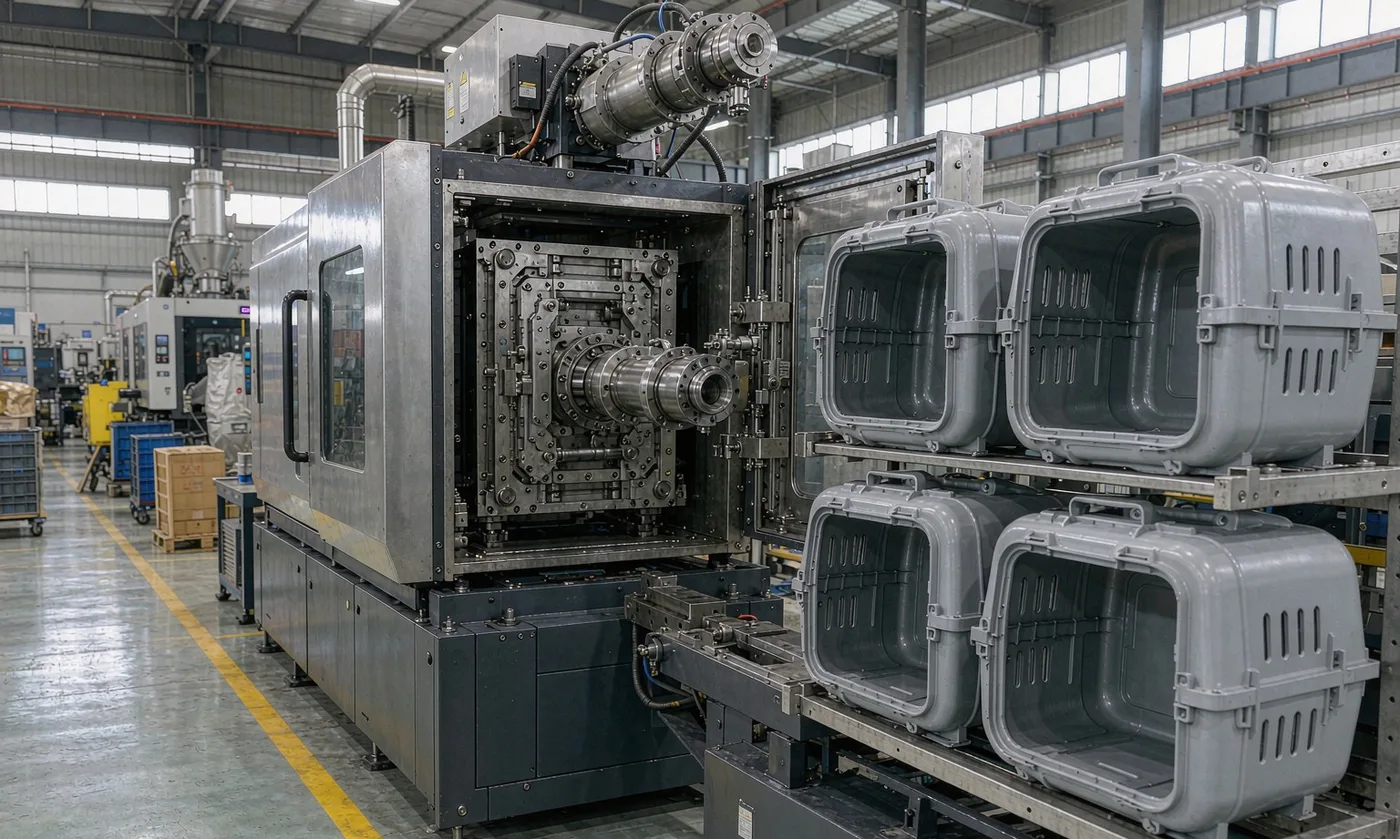
The decision is usually commercial rather than technical. Injection-moulded shells carry tooling cost but give cleaner retail stacking and better protection in cargo holds; vacuum-formed shells sit between the two. Soft shells win on packability - a folding soft carrier ships at roughly a third of the volumetric weight of an equivalent hard shell - and on machine washability, which veterinary and grooming buyers prioritise. We quote both against the same brief and show the landed cost difference per unit, because the right answer depends on whether the buyer optimises for shelf presence or freight.
| Shell type | Care method | Packability | Typical weight | Best channel |
|---|---|---|---|---|
| Soft shell | Machine washable | Folds flat | Approx. 0.9 kg | Vet and grooming channels |
| Vacuum formed | Semi rigid, wipe clean | Nestable | Approx. 1.4 kg | Mid-price retail |
| Injection shell | Full rigid, wipe clean | Stackable | Approx. 1.9 kg | Cargo and airline use |
| Hybrid soft + rail | Removable liner | Folds to half height | Approx. 1.3 kg | Pet specialty retail |
Cleaning, odour and re-use cycles
Cat carriers get contaminated more often than any other pet soft good: urine, vomit, hair and litter dust. The default specification is therefore a removable machine-washable base pad over a wipe-clean coated shell, with the zipper line raised away from the pad channel so liquid does not wick into the seam. Coatings are specified for hydrolysis resistance rather than initial beading alone, and each finish is checked after a 20-cycle machine wash to confirm the repellency has not flattened.
Behaviour-Led Structure: Stress Response, Clawing and Escape Paths
A cat carrier is designed against an animal that does not cooperate. The governing brief is not weight - most cats sit comfortably inside the small platform of a dog range - but behaviour: the push-out reflex, the clawing cycle and the stress response to open sightlines. Each maps to a specific structural requirement, and each has a failure mode that surfaces as a return rather than as a showroom complaint.
Escape paths. Mapping the routes is the first step. There are four: the zipper termination, the mesh-to-shell seam, the top or front opening, and the base board sleeve. A bag with an excellent zipper still fails if the board sleeve opens to the interior, because a cat that gets a forepaw into the sleeve works the board out and exits through the floor. The response is a sleeve that closes to the exterior, an internal tether ring clipped to a harness as second capture, and a locking slider on reverse-coil tape so the chain cannot be levered from inside. On validation our production team runs push-load cycles against the closed shell and measures any slider travel per cycle.
Clawing. A cat works a seam with the claw hooked under a thread, so loose thread loops are the enemy. Internal seams are bound rather than overlocked, stitch density is raised on anything within reach, and mesh is specified heavy enough that a hooked claw stretches the panel rather than splitting it. Hardware is checked for snag points using the same sharp-edge and sharp-point logic set out in EN 71, because a tether clip with a burr becomes both an injury risk and a thread anchor. Finishing is checked alongside structure: shade against the ISO 105 colour-fastness series and crocking under AATCC 8, since a dark-dyed shell that transfers onto a pale coat produces complaints that look like construction failures but are finishing failures.
Stress. Stress is structural as well as behavioural. Cats settle against a boundary, so an interior that is too open reads as exposure and keeps the animal unsettled for the whole journey. The practical answer is a shaded front zone with the open mesh moved to the upper side panels, a base pad that holds shape so the animal has a defined footprint, and a top-loading option for veterinary channels, where lifting a cat out through the front turns a consultation into a wrestling match. Cleaning belongs to the same decision set: a removable machine-washable pad over a wipe-clean coated shell, with the zipper line raised out of the pad channel so liquid does not wick into the seam.
All of this is settled before the first sample is cut, because behavioural fixes are structural fixes - a board sleeve cannot be turned outward after the tooling is done. First samples run 6-10 working days from confirmed technical documentation and revisions run 3-5 working days each. The MOQ of 500 pieces per colourway applies per shell type, because a soft shell and a formed shell do not share a bill of materials and cannot be pooled into one threshold.
| Behaviour | Structural risk | Design response | Verification |
|---|---|---|---|
| Push-out reflex at the closure | Chain levered open from inside | Reverse-coil tape, locking slider, mechanical end-stop | Push-load cycles, slider travel measured per cycle |
| Clawing at internal seams | Thread hooked, run propagating into a panel split | Bound internal seams, raised stitch density, heavier mesh | Seam inspection on the first sample and on the production batch |
| Forepaw into the base sleeve | Board worked out, exit through the floor | Sleeve closing to the exterior, board captured on three sides | Board removal attempt under push load |
| Stress from open sightlines | Panting, soiling, refusal to enter | Shaded front zone, mesh moved to upper side panels, shaped base pad | Fit review on the first sample with the target weight in place |
| Soiling during transit | Odour retention, pad delamination | Removable washable pad, zipper line raised out of the pad channel | Repeat wash cycles, coating checked after the cycle set |
Ventilation Versus Visual Exposure: Setting the Mesh Ratio
More mesh is not automatically better. Open area drives heat exchange, but it also drives visual exposure, and for a cat the second effect is often the one that decides whether the product succeeds in the field. A panel that lets the animal see everything also lets everything see the animal, and a stressed cat inside a well-ventilated bag is still a welfare problem: panting, drooling, and a soiled interior that arrives back as a return.
Setting the ratio. We plan open area per panel rather than per bag, because a single global percentage hides the distribution that actually matters. The working planning range is 25-40% of the visible envelope, split so that most of it sits in the upper third of the side panels and above the sightline at the front. The lower third stays closed: it is the surface that meets the ground, the car boot and the handler's clothing, and it is where a wipe-clean shell earns its keep. Shading is achieved with a double-layer construction - an outer coarse mesh over an inner finer one - which preserves airflow while breaking the direct sightline. That is a different answer from simply reducing the open area, and it is the one we default to.
Cross-flow, not holes. Air has to enter low and leave high, so a panel on one side alone achieves almost nothing. Placement pairs an intake in the lower rear of one side with an exhaust up front on the other, and the top panel is used as a chimney wherever the geometry allows it. On the bench our production team confirms exchange with a low-velocity smoke trace and a timed soak in a temperature-held room, treating the result as a planning target rather than as a certificate. Mesh itself is characterised against ASTM air permeability methods, so a mesh substitution cannot silently halve the open area while the drawing still says 30%.
Airline requirements. Where the carrier is sold for air travel, the IATA Live Animals Regulations set the ventilation rule by surface area and by the number of sides that must be open, and individual airlines publish their own under-seat dimensions on top of that. Requirements differ by carrier and are revised regularly, so we do not design to a remembered figure: the buyer nominates the strictest published limit for the route set, our production team records it in the technical pack before tooling starts, and the compressed or collapsed measurement is confirmed on the first sample rather than read off the drawing. Four-sided ventilation combined with a shaded front zone is the configuration that most often satisfies the airline rule and the behavioural requirement at the same time, which is why it is the default starting point for travel-oriented programmes.
| Panel | Open area planning range | Configuration | Why |
|---|---|---|---|
| Upper side panels | 30-40% | Single coarse mesh or double layer | Primary exhaust path; heat leaves high |
| Lower side panels | 0-10% | Closed shell or fine mesh above the ground line | Contact surface; also hides the animal from passing traffic |
| Front panel | 10-20%, shaded | Double layer, outer coarse over inner fine | Airflow retained, direct sightline broken |
| Top panel | 15-25% | Chimney vent, or a closable flap for vet use | Drives cross-flow; closable for calming in clinic |
| Rear panel | 0-5% | Closed | Sits against the handler or the seat back; contributes nothing |
Where Cat Carriers Diverge From Dog Carriers on the Line
Dog backpacks and cat carriers share a supplier base and diverge on the production line. Knowing where the divergence sits helps a buyer planning both categories from one source: the shared elements are what make a mixed container economical, and the diverging elements are what drive cost and calendar.
What is shared. Webbing, zipper tape and sliders, side-release buckles, binding tape, EVA and polypropylene board stock, hook-and-loop and most of the sewing operation are common to both. Cutting is common as well: a cat soft-shell marker and a small-platform dog marker are cut on the same tables from the same fabric rolls, which is what lets one dye lot serve both programmes and keeps shade consistent across the assortment. Hardware finishing is shared too, so one plating specification and one set of compliance documents cover both categories instead of two.
What diverges. The dog programme is textile-dominant: cut panels, sewn assembly, webbing anchors. The cat programme carries a much higher share of formed parts - vacuum-formed trays, injection-moulded shells, moulded ventilation panels, and on hard-shell builds, door and latch assemblies. That shifts cost from labour to tooling, and it changes the sequence: moulding and trimming happen before sewing, so a cat line carries a forming station upstream and a shorter sewing section, while a dog line is sewing-heavy from the first station. Across our SGS-verified production base - 4,950 m2 of floor space, 137 people, 7 assembly lines and 149 machines - the mix is scheduled so both categories run in parallel rather than competing for the same hours.
What it costs. Tooling for a formed shell is the differentiating line item. It is quoted as a planning range against cavity count, steel grade and expected programme life, then amortised over planned volume rather than buried in the unit price, because burying it is what makes the second season look more expensive than the first. Unit cost planning ranges differ for the same reason: a soft cat carrier and a small dog backpack land in a broadly similar band, while an injection shell sits above both and earns that back through retail stacking and freight density. Minimums apply per shell type, so a buyer running a soft version and a moulded version is committing to two pools of 500 pieces per colourway rather than one.
What it means for timing. A textile-dominant dog build reaches a first sample in 6-10 working days. A cat build with a new formed part cannot start that clock until the tool is cut and trialled, so the realistic plan is tooling first, then the 6-10 working day sample window, then revision rounds of 3-5 working days each. Bulk runs 35-50 days after approval under either programme, released against AQL 2.5 under ISO 2859-1 and documented under ISO 9001, with T/T 30/70 and FOB Xiamen unchanged.
| Element | Dog backpack | Cat carrier | Shared | Cost effect |
|---|---|---|---|---|
| Shell panels | Cut and sewn from 300D-900D polyester | Cut and sewn, or vacuum formed / injection moulded | Cutting tables and fabric rolls | Formed shells add tooling, quoted as a planning range |
| Base board | 4-8 mm EVA or PP, die cut | Removable 4-6 mm board, die cut | Same board stock and die-cutting capacity | Neutral; thickness is the only variable |
| Webbing and straps | 38-50 mm shoulder webbing | 20-38 mm carry strap or shoulder strap | Same webbing supplier and widths | Neutral |
| Hardware | Buckles, D-rings, ladderlocks | Locking sliders, latches, tether rings, door hardware | Same plating and finishing line | Latch and door sets carry a higher unit cost planning range |
| Line sequence | Sewing-heavy from the first station | Forming station upstream, shorter sewing section | Final assembly and inspection | Formed parts shift cost from labour hours to tooling amortisation |
Specification and engineering guides
All Cat Carrier & Travel Bag articles
- Cat Carrier Manufacturer: Complete Sourcing Guide
- Wholesale Cat Carrier: Best Materials and Designs
- Custom Cat Carrier: OEM Production Process
- Cat Travel Bag: Manufacturing Standards
- Cat Carrier Backpack: Design and Features
- Cat Carrier Tote Bag: Stylish Travel Solution
- Cat Carrier Shoulder Bag: Hands-Free Design
- Cat Carrier Sling: Comfortable and Secure
- Cat Carrier Purse: Fashionable Pet Travel
- Cat Carrier Hard Shell: Airline Approved Options
- Cat Carrier Soft Sided: Lightweight Design
- Cat Carrier Expandable: Extra Space Options
- Cat Carrier Collapsible: Storage Friendly
- Cat Carrier with Wheels: Rolling Travel
- Cat Carrier with Backpack Straps: Convertible Design
- Cat Carrier for Car Travel: Safety Standards
- Cat Carrier for Air Travel: Airline Requirements
- Cat Carrier for Vet Trips: Stress-Free Design
- Cat Carrier for Grooming: Easy Access
- Cat Carrier for Kittens: Safe and Cozy
- Cat Carrier for Adult Cats: Size Guide
- Cat Carrier for Senior Cats: Comfort Features
- Cat Carrier for Multiple Cats: Double Compartment
- Cat Carrier for Anxiety: Calming Design
- Cat Carrier for Car Sick: Ventilation and Comfort
- Cat Carrier with Litter Box: All-In-One Travel
- Cat Carrier with Food Bowl: Travel Accessories
- Cat Carrier with Water Bottle: Hydration On-the- Go
- Cat Carrier with Bed Pad: Cozy Interior
- Cat Carrier with Fleece Lining: Warm and Soft
- Cat Carrier with Removable Pad: Easy Cleaning
- Cat Carrier with Washable Cover: Hygiene Guide
- Cat Carrier Waterproof: Rain Protection
- Cat Carrier Breathable: Mesh Ventilation
- Cat Carrier Anti-Escape: Safety Features
- Cat Carrier Locking Zipper: Prevent Accidents
- Cat Carrier Safety Strap: Car Seat Belt Attachment
- Cat Carrier Crash Tested: Safety Certification
- Cat Carrier Center for Pet Safety: Rated Options
- Cat Carrier with ID Tag: Identification Guide
- Cat Carrier Custom Label: Branding Options
- Cat Carrier Own-Brand: White Label Program
- Cat Carrier OEM: Manufacturing Process
- Cat Carrier ODM: Design and Development
- Cat Carrier MOQ: Minimum Order Guide
- Cat Carrier Sample: Lead Time and Cost
- Cat Carrier Production Time: Bulk Order Timeline
- Cat Carrier FOB China: Shipping Terms
- Cat Carrier DDP: Door-to-Door Delivery
- Cat Carrier Wholesale Price: Cost Breakdown
- Cat Carrier Packaging: Retail Box Options
- Cat Carrier Hang Tag: Custom Design
- Cat Carrier Instruction Manual: Compliance
- Cat Carrier Warranty: Quality Guarantee
- Cat Carrier Return Policy: B2B Guide
- Cat Carrier Amazon Seller: FBA Preparation
- Cat Carrier Shopify Brand: DTC Ecommerce
- Cat Carrier Pet Store: Retail Display
- Cat Carrier Veterinary Clinic: Professional Use
- Cat Carrier Animal Shelter: Bulk Donation
- Cat Carrier Rescue Organization: Wholesale Program
- Cat Carrier Pet Sitter: Professional Gear
- Cat Carrier Dog Walker: Dual Pet Use
- Cat Carrier Pet Groomer: Mobile Salon
- Cat Carrier Pet Taxi: Transportation Service
- Cat Carrier Pet Hotel: Boarding Facility
- Cat Carrier Pet Daycare: Daily Use
- Cat Carrier Pet Trainer: Training Sessions
- Cat Carrier Pet Photographer: Studio Props
- Cat Carrier Pet Influencer: Content Creation
- Cat Carrier Pet Blogger: Product Reviews
- Cat Carrier Pet Vlogger: Video Production
- Cat Carrier Pet Youtuber: Channel Growth
- Cat Carrier Pet Instagrammer: Visual Content
- Cat Carrier Pet TikTok: Short Video Marketing
- Cat Carrier Pet Facebook Group: Community Building
- Cat Carrier Pet Reddit: Niche Marketing
- Cat Carrier Pet Pinterest: Visual Discovery
- Cat Carrier Pet Twitter/X: Real-Time Updates
- Cat Carrier Pet LinkedIn: B2B Networking
- Cat Carrier Pet Medium: Long-Form Content
- Cat Carrier Pet Substack: Newsletter Growth
- Cat Carrier Pet Patreon: Fan Support
- Cat Carrier Pet Etsy: Handmade Marketplace
- Cat Carrier Pet eBay: Auction Sales
- Cat Carrier Pet Walmart: Large Retailer
- Cat Carrier Pet Target: Chain Store
- Cat Carrier Pet Petco: Pet Specialty
- Cat Carrier Pet Petsmart: Big Box Retail
- Cat Carrier Pet Chewy: Online Pet Store
- Cat Carrier Pet Amazon: Marketplace Giant
- Cat Carrier Pet AliExpress: Global Sourcing
- Cat Carrier Pet Alibaba: B2B Platform
- Cat Carrier Pet DHgate: Wholesale Portal
- Cat Carrier Pet Global Sources: Trade Show
- Cat Carrier Pet Canton Fair: Trade Event
- Cat Carrier Pet Hong Kong Fair: Asia Expo
- Cat Carrier Pet Frankfurt Fair: European Show
- Cat Carrier Pet Zoomark: Bologna Exhibition
Frequently asked questions
What is the minimum order for cat carriers?
500 pieces per colourway, applied per shell type - soft, vacuum formed and injection shells each count as their own colourway pool.
Do your carriers meet airline under-seat dimensions?
Dimensions differ by carrier, so we build to the strictest published limit you nominate and confirm the collapsed or compressed measurement in the technical pack before tooling starts.
Can the base pad be machine washed repeatedly?
Yes, standard specification is a removable pad rated for repeated domestic machine cycles, with hydrolysis-resistant coating checked after 20 wash cycles.
How do you test escape resistance?
Reverse-coil zipper tape with a locking slider, then 200 push and pull cycles on a loaded shell with slider back-drive measured per cycle. Anything above 1 mm of travel goes back to hardware sourcing.
What ventilation ratio do you specify?
25-40% of the visible surface, split between high side panels and a shaded front zone, because full exposure raises stress in cats even when airflow is technically adequate.
Which shell type sells best in retail?
Soft shells lead on packability and freight cost, shipping at roughly a third of the volumetric weight of an equivalent hard shell. Injection shells win where shelf stacking and cargo protection matter more than freight.
Can the shell carry our printed artwork?
Yes. Soft shells take heat transfer or screen print on the panel before assembly; injection shells take an in-mould label or a printed insert, which is quoted with the tooling.
Are the materials REACH and Prop 65 compliant?
Material sets are declared against REACH SVHC and California Prop 65 at quotation stage, and the test report is tied to the exact dye lot and hardware batch shipped.
Can we mix shell types in one order?
Yes within a colourway pool, but each shell type carries its own tooling or mould scheduling, so mixed orders are planned as separate production windows inside one shipment.
How many sample revisions are included?
The first prototype ships in 6-10 working days after tech pack confirmation, and each revision round typically adds 3-5 working days. Pattern changes that need a new mould are quoted separately.
How long does sampling take?
First prototypes ship in 6-10 working days after the tech pack is confirmed; revisions typically add 3-5 working days per round.
What about bulk lead time?
35-50 days after sample approval, depending on material availability and order size.
Planning a cat carrier & travel bag programme? MOQ 500 pieces per colourway, samples in 6-10 working days, bulk production in 35-50 days under AQL 2.5 inspection.
Request a quote Ask for samples