Cat Carrier Manufacturer: Complete Sourcing Guide
Qualifying a cat carrier manufacturer comes down to eight verifiable facts: a 10 kg rated load with 4x static proof, a documented anti-escape closure test, at least 22% open ventilation area, current third-party social and quality audit, confirmed monthly capacity, declared tooling ownership, chemical screening to the destination market, and a written inspection level. Quotes that survive all eight typically land at 14-38 USD FOB on MOQ 500 pieces per colourway.
This guide is written for the buyer rather than the designer. It assumes the product concept exists and asks how to convert it into a repeatable supply relationship without discovering the constraints late. Cat products look simpler than dog products and are not: the loads are lower but the escape behaviour is more demanding, the acceptable failure rate is closer to zero, and the regulatory surface - air transport dimensions, chemical screens, small-parts and sharp-edge rules - is broader than most first-time pet brands expect. Eight sections follow, moving from specification through supplier classification, audit, tooling, commercial terms, schedule and quality agreement, with the acceptance criteria stated numerically throughout. Where numbers appear they are ones a supplier should be able to evidence rather than assert. Standard programme terms apply from the outset: MOQ 500 pieces per colourway, prototypes in 6-10 working days, bulk production 35-50 days after golden sample approval, final random inspection to AQL 2.5, T/T 30/70 payment and FOB Xiamen loading.
Pet carrier OEM builds to your drawing, while pet carrier ODM adapts an existing cat carrier platform and removes the tooling cost. Both start from the same tech pack.
Writing the Data Package Before You Contact Anyone
The most expensive sourcing failures are not caused by bad suppliers. They are caused by incomplete briefs, because a supplier quoting against an ambiguous document will fill every gap with their own assumption and there is no mechanism to detect the divergence until bulk arrives. Price differences between two quotes usually measure the difference in assumption rather than the difference in efficiency.
A complete package contains seven artefacts: a dimensional drawing with tolerances, a bill of materials naming every component by specification rather than by appearance, a rated load figure with its safety factor, a list of applicable destination-market regulatory requirements, a colour standard with approved references, a packaging specification, and an acceptance criteria list stating how each requirement will be measured. Six of the seven are routinely omitted by new brands, and each omission becomes a variable during production.
The rated load figure deserves particular care. Cat carriers are typically rated at 8-12 kg, covering the domestic population of 2.5-8 kg with margin, but the number is meaningless without stating the test method behind it. A 10 kg rating proven by four times static load for 60 seconds is a very different claim from a 10 kg rating that someone estimated from fabric thickness, and only one of them will survive a dispute.
Dimensioning should be functional rather than nominal. Interior width, length and height need to be tied to the target animal weight band, with the usual production rule being about 100 mm of added length and 50 mm of added width over the animal's body length and shoulder width, plus enough height for the animal to stand with its ears clear of the top panel when it chooses to.
Acceptance criteria convert preferences into disputes that can be resolved. "Strong zipper" cannot be argued either way; "reverse-coil number 5 zipper, no separation under a 30 N lateral pry applied through a 2.0 mm probe for 10 seconds, 5,000 cycle durability" can be measured at receiving inspection in the destination warehouse. Every requirement in the data package must be testable at the receiving end, not only at the supplier end, or it is not really a requirement.
Supplier Types and How to Tell Them Apart
Three organisational types populate the search results for this category, and they behave very differently once something goes wrong. Distinguishing them early prevents most of the mispricing and most of the finger-pointing later.
The first is the integrated maker: cutting, sewing, finishing, assembly and inspection under one roof and one management system, with a pattern room and a maintenance capability. These operations quote honestly, own their schedule, and can change a construction mid-development because they control the equipment. They generally carry higher fixed overhead reflected in unit price, and they will decline work outside their equipment range rather than subcontracting it silently.
The second is the assembly partner: a sewing-centred operation that buys in moulded shells, hardware and sometimes even cut panels. This is the most common structure in the pet bag category and often offers the best value, provided the buyer understands which processes are in-house and which are bought out. The risk is not quality in itself but traceability: a defect originating in a bought-out moulded tray has to be traced through two organisations, and that only works if bought-out parts are declared by name at quotation.
The third is the trading intermediary, presenting themselves with the same vocabulary as the first two. Intermediaries can be genuinely useful for small programmes needing consolidated logistics and low volumes across many categories, because they aggregate volumes no single line would accept. The buyer should simply know the structure and price it accordingly, since the margin is legitimate but concealed when the intermediary claims to be the maker.
| Attribute | Integrated maker | Assembly partner | Trading intermediary |
|---|---|---|---|
| Component traceability | In-house to fabric roll | In-house for sewn parts, by agreement for bought-out | Depends entirely on disclosed chain |
| Design change mid-development | Same week | Days to two weeks | Often weeks |
| Tooling ownership clarity | Clear, contract-based | Clear if declared at quote | Frequently ambiguous |
| Unit price index | 100 | 85-95 | 105-125 |
| Best fit | Complex or hard-shell programmes | Soft cat carriers at scale | Multi-category consolidation |
| Verification cost to buyer | Low | Medium | High |
The practical test is simple and takes one email. Ask which operations are performed at the address given and which are performed elsewhere, name them, and ask for contact details of the bought-out suppliers. Organisations that answer that question concretely are worth visiting; organisations that describe themselves as "a professional manufacturer with our own facilities" without answering it are telling you something already.
What Actually Gets Checked During Qualification
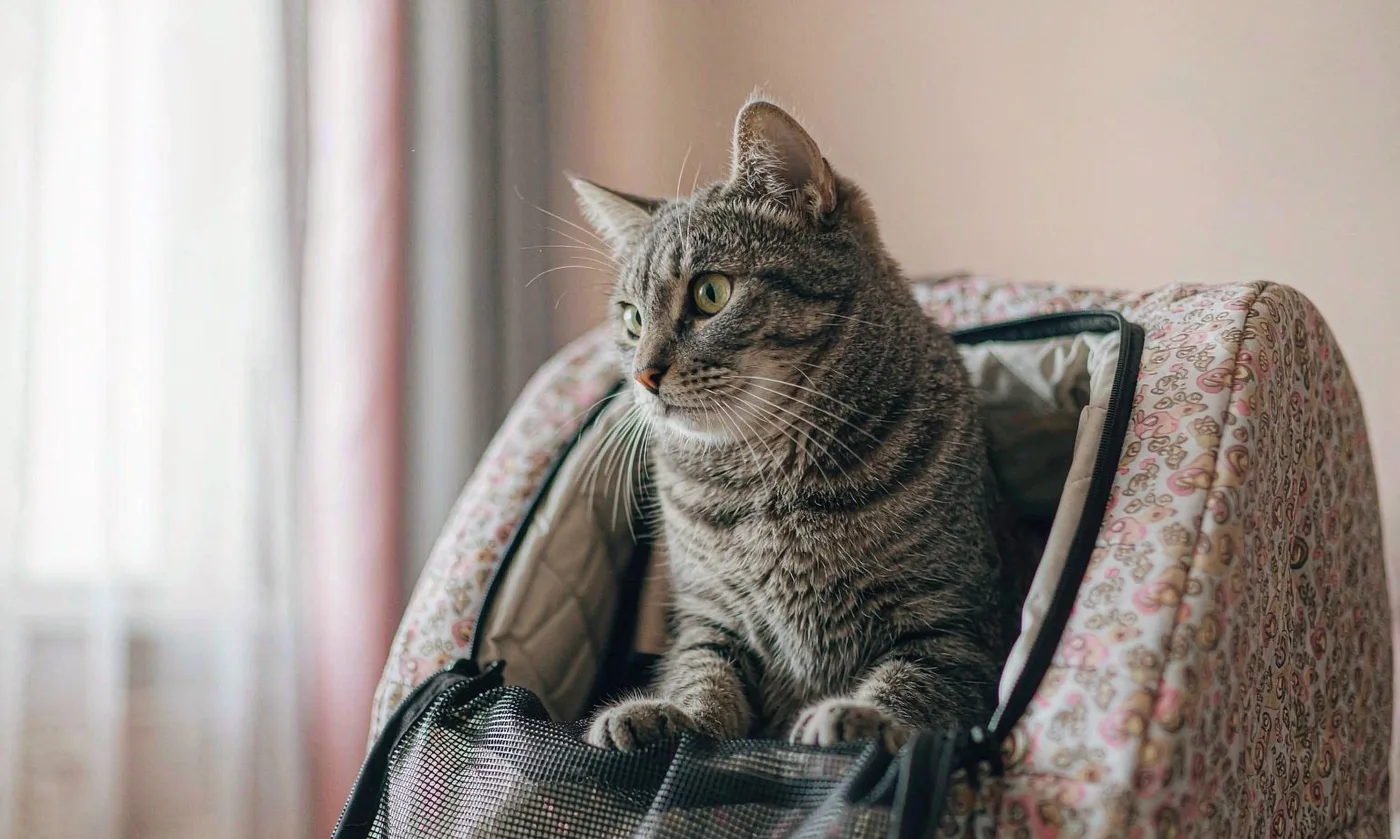
A qualification visit is not a tour. It is a targeted verification that specific processes exist, are controlled, and are producing measurements rather than opinions. Four areas carry almost all the information value: cutting, needle control, the closure line and final inspection.
Cutting determines material consumption and dimensional consistency. Look for die-clicking or automated cutting for repeat volumes, control templates rather than freehand marking for samples, and a recorded fabric consumption figure per size. Panel dimensions should be checked against the pattern with go/no-go templates, and the buyer should ask to see the last ten measurements recorded rather than being shown a single sample.
Needle control is a hard requirement where any metal needle may end up in the product. The standard control is a needle issue-and-return log with broken-piece accounting, a written procedure for lost fragments, and magnetic or metal-detector screening at pack-out with the detector's sensitivity verified at defined intervals using test shards. Ask to see the last verification record and its date; a detector with no recorded sensitivity check is decoration.
The closure line is where the cat-specific risk sits. Zipper assembly, escapement hardware and lock components need defined tooling, operators trained to a written work instruction, and in-process testing of slider retention. Because an escape is the failure mode customers remember, every closure should have a 100% in-line function check rather than a sampling check, with the result recorded against the operator and the batch.
Final inspection tells you how the supplier thinks about defects. Look for defined defect classification by critical, major and minor, a written sampling plan naming the standard and level, calibrated gauges with current calibration stickers, and - most importantly - retained defect samples from the last ten inspections. A supplier that has records of what went wrong is far more useful than one that claims nothing has.
Social compliance and quality system currency matter for retail access. Certificates should be live rather than archived, with the audit scope covering the actual production address. Certification to ISO 9001 establishes a management system basis, and welfare framing for live animal transport is commonly cross-checked against guidance from the American Veterinary Medical Association.
Cat-Specific Capability Matrix
Generic bag-making ability does not transfer cleanly to this product category. Four capabilities separate a credible cat programme from a general soft-goods line, and each can be verified in a single question.
Escape-resistant closure engineering comes first. A cat is a compact, flexible, motivated animal capable of generating a substantial concentrated pry load with a forepaw working against a zipper line from inside. The construction answer is a reverse-coil chain protected by a storm flap, a locking slider, and in most designs a secondary mechanical restraint so that a partially-opened slider cannot travel. Ask the supplier what pry load the construction was developed against and how it was measured. Vague answers about stronger zippers indicate no development work.
Interior tether provision is the second. Anchoring point geometry is not simply a matter of sewing a ring to a panel; the load path has to reach the structural frame through a webbing extension and a stiffener, because a ring anchored into face fabric pulls out under a fraction of the animal's output. The verification question is what the anchor tested to and where the load path terminates.
Rigid elements form the third area. Hard shells require either injection tooling or vacuum forming capability, or a bought-out supplier that is named and qualified. Soft models need compression-moulded or die-cut stiffeners with defined thickness and density. Each is a distinct process with distinct tooling economics, and a supplier claiming all of them in-house is unusual enough to warrant verification.
The fourth capability is-coated seam work: high-frequency welding for TPU or PVC-coated materials, hot-air or hot-wedge sealing for coated woven fabrics, and the ability to test weld strength destructively. This matters most for cleanability, since a welded or sealed floor is what allows a urine accident to be contained rather than absorbed into a board.
A fifth and quieter capability is acoustic and enclosure behaviour. Cats are startled by transmitted noise and by enclosure movement, so panel damping, closure rattle control and a base that does not drum against a hard floor are real product attributes rather than niceties. Suppliers should be able to say what closed-cell thickness and what lining construction they use to damp panel resonance, because no one specifies these by accident.
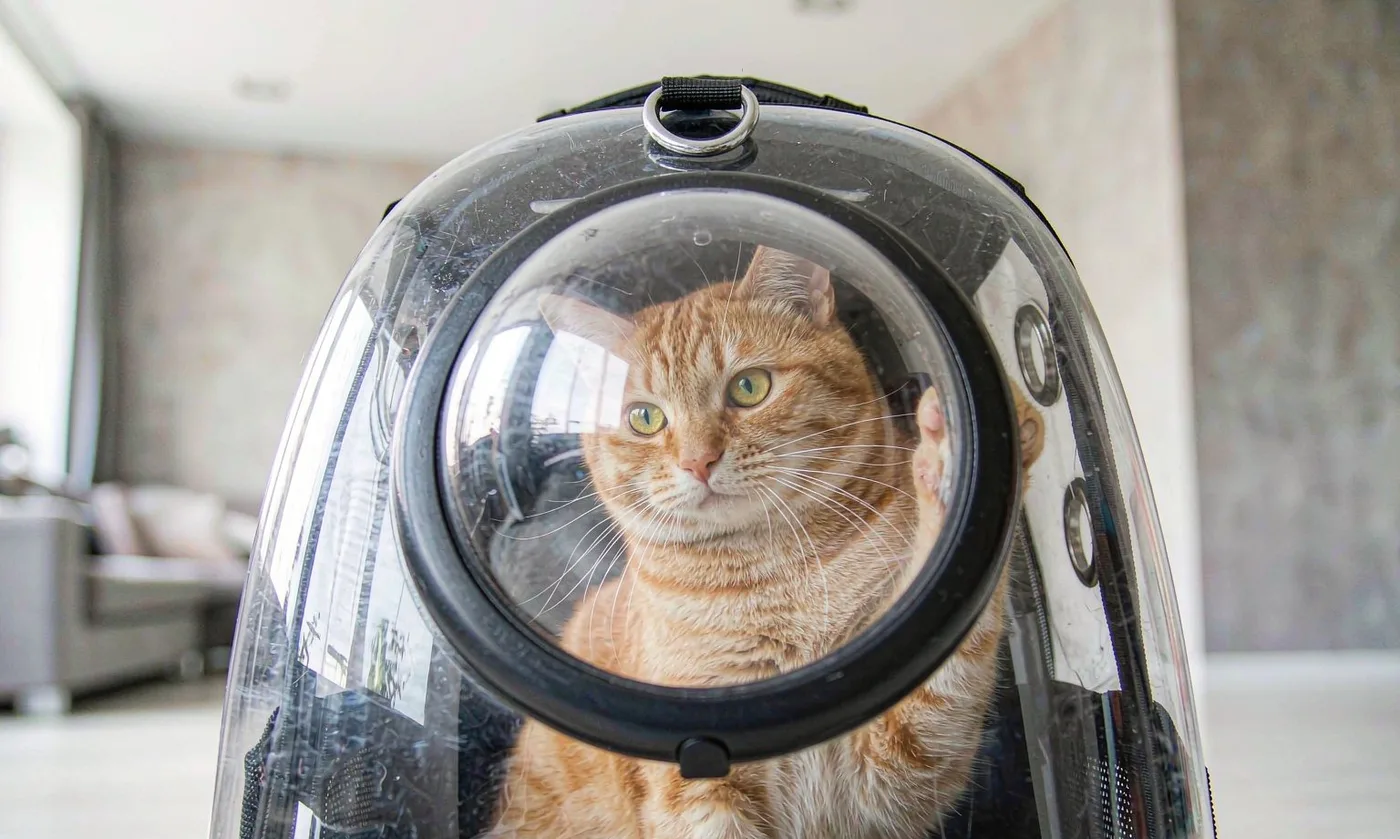
Finally, ventilation construction. Delivering a verified open area across multiple faces requires either mesh panels with correct claw resistance or moulded apertures with defined slot geometry, plus a method of measuring achieved open area. A supplier quoting open area without a measurement method is guessing, and the difference between 22% and 15% is not visible by eye but is measurable in interior temperature.
Tooling, Dies and Ownership Clauses
Tooling is where most first-year relationships become difficult, because tools are paid for once and used for years, and the commercial arrangement is rarely written down clearly. Four categories exist in this product range, each with different economics and each needing an explicit ownership clause.
Clicking dies for fabric panels are cheap and custom: typically 150-600 USD per size, cut in a few days, and specific to the pattern revision. Because they are pattern-revision dependent, they are often treated as consumable and re-charged when a significant revision is made. Moulded components are the expensive category: injection tooling for a shell or tray runs 25,000-60,000 USD on a ten to sixteen week path, while vacuum forming tooling runs 3,000-8,000 USD on four to six weeks. The vacuum forming route is substantially cheaper and faster but produces a thinner wall with less dimensional control.
Print screens, heat-transfer plates and embroidery digitising occupy the middle ground at 100-900 USD per artwork and are usually re-charged per new logo. Sampling tools for hardware - buckle dies, moulded feet, custom zipper pulls - fall in the 1,500-6,000 USD band and are frequently amortised into unit price rather than invoiced, which is acceptable provided the arrangement is stated.
The ownership clause should state three things: who owns the tool, where it may be used, and what happens on termination. Buyer-owned tooling should be physically marked with the buyer's reference, inventoried with photographs, and covered by a clause permitting removal or transfer to another supplier on written notice. Supplier-owned tooling bought out of unit price should be accompanied by a written commitment on price per piece and a stated period.
Confidentiality and tooling interact. A custom mould carries much of the product's differentiating geometry, and the agreement should prohibit its use for other customers regardless of who paid for it, with the prohibition surviving termination. Tooling clauses are cheap to write at the beginning and effectively impossible to negotiate later, because by then the supplier has possession and the buyer has a deadline.
Commercial Terms and What Actually Moves Price
Unit price in soft pet goods is dominated by material and labour hour rather than by margin, which makes it unusually transparent if asked about properly. Understanding the drivers is worth more than negotiating the last few cents.
Fabric selection sets the floor. A 600D polyester with a PU coating, a 900D Oxford and a recycled rPET equivalent of the same construction differ by 0.30-1.20 USD per unit on a mid-size cat carrier, and coating chemistry differences add another 0.20-0.50 USD. Hardware is the second lever: branded zipper chain against unbranded equivalent moves 0.40-1.10 USD, and plated zinc alloy hardware against the same part in engineering plastic moves similar amounts in the opposite direction with a durability trade-off.
Construction method drives labour hours, typically the largest single cost block. Adding high-frequency welding, binding internal raw edges or inserting a moulded tray adds operations, and each operation added to a line balance either adds time per unit or adds a station. This is why a design change that looks cosmetic can move unit price by more than a fabric upgrade does.
Quantity is the least flexible lever on its own but the most misunderstood. Below MOQ per colourway the line has to change thread, webbing and panel dies for a short run, and the changeover cost per unit becomes dominant. Standard programmes set MOQ at 500 pieces per colourway, which is where changeover cost per piece stops distorting the quote.
Payment and Incoterms structure the risk rather than the price. T/T 30/70 with balance against documents is standard, letters of credit add bank cost on both sides, and the shift from FOB to DDP moves freight, duty and delivery risk to the supplier for a quoted premium that typically runs 8-18% over FOB depending on destination and duty rate. Air transport dimension rules worth checking before freezing sizes are published by IATA.
Sixteen Weeks From RFQ to Container
The schedule is rarely the constraint people fear if its dependencies are understood. A typical first programme from a complete data package runs fourteen to eighteen weeks, and the longest single element is almost always tooling rather than sewing.
Weeks one to three are quotation and specification round-out: component sourcing confirmation, alternative offerings where a specification is uneconomic, and final agreement on the bill of materials. This is also when a moulded tray decision, if any, has to be committed, because its lead time runs parallel to everything else and cannot be recovered later.
Weeks four to seven cover prototype build and revision. Prototypes are delivered in 6-10 working days from a frozen specification, evaluated, and typically revised once. Two prototype rounds is normal for a new cat construction, three rounds usually indicates an incomplete initial brief rather than a weak supplier.
Weeks eight to eleven carry the qualified-production homework: golden sample approval, chemical screen submission for destination-market requirements, packaging artwork and structural packaging testing, tooling try-out and first-off inspection on any moulded parts, and a production trial of 30-50 pieces made with production tooling and production line staffing rather than in the sample room.
Weeks twelve to seventeen are bulk. Bulk production occupies 35-50 days after sample approval, with pre-production meeting, cutting, line loading, in-line inspection and final random inspection inside that window. Book vessel space before final inspection rather than after, because the inspection window itself is only a few days and waiting for results before booking routinely costs two weeks.
Week eighteen plus is transit and receipt: document set issue, customs clearance, destination-side inspection against the acceptance criteria list written in week one. Programmes that wrote that list carefully clear this step in a day; programmes that did not spend a week arguing about what "acceptable" meant.
The Quality Agreement: Defects, Inspection and Escalation
A quality agreement converts good intentions into an enforceable routine. It should be signed before the first purchase order rather than after the first claim, and it needs four components: defect classification, sampling plan, corrective action procedure and retained reference samples.
Defect classification divides what can go wrong into critical, major and minor. Critical defects in this category are those creating an escape path, a sharp edge, a small-part hazard, a broken needle fragment or a structural failure at rated load - anything making the product unsafe or unusable, with a zero acceptance number regardless of sample size. Major defects are seam failures, zipper malfunction, dimensional out-of-tolerance beyond 5 mm, visible colour deviation beyond the approved reference, and similar functional or commercial faults. Minor defects are cosmetic imperfections visible at arm's length but not affecting function.
Sampling follows AQL 2.5 for majors with minors set at AQL 4.0, using general inspection level II and single sampling on a normal-to-tightened switching rule. Critical defects are handled by a separate 100% screen rather than by sampling, which for needle detection and closure function means every unit passes through those controls.
Corrective action completes the loop. Each failed inspection requires a written root cause, a containment action protecting any affected inventory, a preventive action with an owner and a date, and verification on the following shipment. Claims without containment and verification recur, and every experienced buyer recognises the pattern of a supplier whose corrective actions address symptoms.
Retained samples are the cheapest insurance in the document. Two golden samples signed by both parties and held at both ends, plus a retained shipment sample from every lot stored for the warranty period, resolve almost any later disagreement in minutes. Detailed prices, quantities and timelines are set out in the companion pages on minimum order quantities and the sampling schedule. A quality agreement is not a statement of distrust; it is the mechanism that lets both sides stop renegotiating every shipment and get back to production.
Why brands source here
- Pet carrier programs run since 2014; founding team in sewn goods since 2004
- SGS-verified production floor of 4,950 m² with 137 workers across 7 lines
- Monthly capacity of 200,000 units, audited to BSCI and ISO 9001
People Also Ask
What MOQ should I expect from a cat carrier manufacturer?
500 pieces per colourway is the industry norm. Below that, line changeover cost per unit dominates the quote, and it applies per colour rather than per order unless materials are shared across colours.
How do I know if a supplier actually makes the product themselves?
Ask which operations happen at the given address and which are bought out, and request contact details for bought-out suppliers. Concrete answers indicate a real operation; vague self-descriptions indicate otherwise.
What rated load should a cat carrier carry?
8-12 kg covers the domestic range of 2.5-8 kg with margin, but only if proven by four times rated static load held 60 seconds with deflection recorded rather than estimated.
How much does vacuum forming tooling cost against injection?
Vacuum forming runs 3,000-8,000 USD on four to six weeks; injection tooling runs 25,000-60,000 USD on ten to sixteen weeks, with better dimensional control and wall thickness.
Which defect class has zero acceptance?
Critical defects: escape paths, sharp edges, small-part hazards, needle fragments and structural failure at rated load. These need a 100% screen, not a sampling plan.
How long does a first cat carrier programme take?
Fourteen to eighteen weeks from a complete data package, with tooling rather than sewing setting the critical path and vessel space booked before final inspection rather than after.
What should the tooling ownership clause say?
Who owns the tool, where it may be used, and what happens on termination - including physical marking, photographic inventory and a right to transfer on written notice.
Frequently Asked Questions
What belongs in a complete RFQ data package?
Seven artefacts: a dimensioned drawing with tolerances, a bill of materials named by specification, a rated load with its safety factor, applicable regulatory requirements, a colour standard, packaging specification, and a measurable acceptance criteria list.
Why do quotes for the same design differ so widely?
Usually because assumptions differ where the brief was silent. Fabric construction, hardware brand, coating chemistry and construction method can each move unit price by 0.20-1.20 USD, and unstated defaults account for most gaps.
What is the rule of thumb for interior dimensions?
Add roughly 100 mm of length and 50 mm of width over the animal's body length and shoulder width, then set height so the animal can stand with ears clear of the top panel.
How should an anti-escape zipper be specified?
Reverse-coil number 5 chain, a storm flap, a locking slider and a secondary restraint preventing slider travel, developed against a 30 N lateral pry through a 2.0 mm probe and verified to 5,000 cycles.
Why can a tether ring not be sewn directly to a panel?
An anchor into face fabric pulls out at a fraction of the animal's output. The load path must reach the structural frame through a webbing extension and a stiffener, and the test figure should name where it terminates.
What should be checked in the cutting room?
Die-clicking or automated cutting for volume, control templates instead of freehand marking, recorded fabric consumption per size, and the last ten recorded panel measurements rather than a single sample.
How is needle control verified?
A needle issue-and-return log with broken-piece accounting, a written lost-fragment procedure, and metal detection at pack-out whose sensitivity is periodically verified with test shards and recorded with dates.
What distinguishes a superior final inspection setup?
Defect classification into critical, major and minor; a written sampling plan naming standard and level; calibrated gauges with current stickers; and retained defect samples proving recent inspections actually found things.
How much do clicking dies cost?
150-600 USD per size, cut in a few days and specific to the pattern revision, which is why they are treated as consumable and re-charged on significant revisions.
What should chemical screening cover?
Destination-market requirements: restricted substances lists, heavy metals in coatings and hardware, and any applicable substance declarations for the market where the product will be sold, submitted during weeks eight to eleven.
What does escalation from FOB to DDP add?
Typically 8-18% over FOB depending on duty rate and destination, moving freight, duty and delivery risk to the supplier rather than merely changing who pays the freight.
How many prototype rounds are normal?
Two for a new cat construction, delivered 6-10 working days each from a frozen specification. Three usually signals an incomplete brief rather than a weak supplier.
What is included in the bulk production window?
Pre-production meeting, cutting, line loading, in-line inspection and final random inspection, all inside 35-50 days after golden sample approval and on standard T/T 30/70 terms.
What sampling plan should the agreement specify?
AQL 2.5 for majors and AQL 4.0 for minors at general inspection level II with single sampling and a normal-to-tightened switching rule, plus 100% screening for every critical characteristic.
Talk to QUANZHOU JUNYUAN BAGS about a pet carrier program: MOQ 500 pieces per colourway, samples in 6-10 working days, bulk production in 35-50 days under AQL 2.5 inspection.
Get a free quote Request a sample