Cat Carrier Pet Amazon: Marketplace Supplier Specification
Plan the unit around three dimensional breakpoints: 45 x 34 x 26 cm for the large standard tier, 22.7 kg carton limit with 25 cm minimum edge, and 2,000 px imagery. Fulfilment fee moves 3.10-6.40 USD across one tier boundary, so pack height is a design variable, not a packaging afterthought.
The largest marketplace prices a product twice: once in the catalogue, where dimensions decide the fulfilment fee tier, and once in the warehouse, where inbound rules decide whether a shipment is received or refused. Both are engineering questions before they are commercial ones. This page sets out the manufacturing side of selling cat carriers into that channel: the dimensional breakpoints that move a per-unit fee by several dollars, the inbound carton and prep specification that governs receipt, the product data fields that drive search indexing, the image pipeline, and the packaging standard the fulfilment network expects. It also covers the inventory health metrics that gate how much can be sent, and the manufacturing causes behind most returns in this category. Standard terms apply: MOQ 500 pieces per colourway, prototypes in 6-10 working days, bulk production 35-50 days after sample approval, final random inspection to AQL 2.5, T/T 30/70 and FOB Xiamen, with the marketplace inbound leg quoted separately.
Any dog carrier factory quoting cat carrier work should be able to show a current BSCI audit and an ISO 9001 certificate before a deposit is released.
Size Tier, Fulfilment Fee and the Dimensional Breakpoints
Fulfilment cost on the largest marketplace is a step function of the packed dimensions, not a smooth curve. A unit sits in a tier, and crossing a boundary moves the per-unit fee by several dollars at once. That makes packed dimension a product design variable with a dollar value attached, decided long before a price is quoted.
For a cat carrier the relevant boundaries sit in the large standard and oversize range. A medium soft carrier that packs at 45 by 34 by 26 cm and 1.35 kg lands in one tier; the same product forced to 48 by 36 by 28 cm by a rigid frame crosses into the next and the per-unit fee rises 3.10-6.40 USD. On 4,000 annual units that is 12,400-25,600 USD of margin removed by 2 cm on each axis.
Weight interacts with dimension through dimensional weight, calculated at a 5,000 divisor on centimetre dimensions in most regions. A carrier at 45 by 34 by 26 cm has a dimensional weight of 7.96 kg against an actual 1.35 kg, and the greater figure governs. Compressing pack height from 26 cm to 20 cm drops dimensional weight to 6.12 kg, which matters most on the inbound and outbound freight legs.
| Packed dims (cm) | Girth plus length | Dim weight (kg) | Fee tier | Fee per unit (USD) | Delta on 4,000 units (USD) |
|---|---|---|---|---|---|
| 40 x 30 x 18 | 136 | 4.32 | Large standard, low | 6.10-8.40 | Baseline |
| 45 x 34 x 22 | 157 | 6.73 | Large standard, mid | 7.40-10.20 | Plus 5,200-7,200 |
| 45 x 34 x 26 | 165 | 7.96 | Large standard, high | 8.90-12.60 | Plus 11,200-16,800 |
| 48 x 36 x 28 | 176 | 9.68 | Large bulky | 12.00-19.00 | Plus 23,600-42,400 |
| 60 x 40 x 30 | 200 | 14.40 | Extra-large | 17.50-28.00 | Plus 45,600-78,400 |
The girth-plus-length column is the one to watch because it is the metric that actually assigns the tier, and it is computed as length plus twice width plus twice height. Reducing the largest dimension by 3 cm reduces girth by 6 cm, which is why the longest axis is the most valuable one to compress.
Compressible or knockdown construction is the engineering answer, and it has to be designed in. A frame that holds shape after 30-45 days of compression needs a spring-steel or high-resilience polymer hoop, and the panel has to recover without creasing. Testing that recovery is a 5-12 day cycle at 180-620 USD and it belongs in the sampling stage rather than after the first inbound.
Compressing the longest axis by 3 cm moves girth by 6 cm, and one tier boundary is worth 3.10-6.40 USD per unit, or 12,400-25,600 USD on 4,000 annual units.
Inbound: Carton Limits, Prep Category and Labelling
An inbound shipment is received against a fixed rule set, and a violation costs more than the goods it protects. The three rules that catch carriers most often are the carton weight limit, the minimum carton edge, and the prep category assigned to the product.
Carton weight is capped at 22.7 kg for a standard carton; above that it needs a specific heavy-bulky handling label and a pallet. Minimum carton edge is 25 cm on the shortest side, which rules out the very flat cartons an apparel shipper might use. Every carton needs a scannable shipping label on a flat surface and, where contents are mixed, a box content declaration transmitted before the shipment arrives.
Prep category is assigned per product and it dictates what has to happen before the unit reaches the warehouse. A soft carrier in a printed retail box is usually prep-free. A unit in a plain polybag needs a suffocation warning printed on the bag, and any polybag with an opening of 380 mm circumference or more requires that warning in the required format. Loose items needing bagging add 0.18-0.46 USD per unit of prep.
| Rule | Threshold | Requirement | Violation cost | Prevention cost |
|---|---|---|---|---|
| Carton weight | 22.7 kg maximum | Heavy label and pallet above | 25-60 per carton | Weigh at packout |
| Carton minimum edge | 25 cm shortest side | Carton redesign | Repack at 1.20-3.40 per unit | Spec check |
| Shipping label | Scannable, flat face | One label per carton | 25-60 per carton | Print verification |
| Box content declaration | Before arrival | Transmitted electronically | Refusal of shipment | 0-15 per shipment |
| Product identifier | Scannable barcode | FNSKU or manufacturer barcode | 0.20-0.55 per unit | Label verification |
| Polybag suffocation warning | 380 mm opening | Printed warning text | 0.20-0.55 per unit | Artwork check |
| Prep category, bagging | Assigned per ASIN | Bag and label | 0.18-0.46 per unit | Retail box instead |
| Expiry or lot marking | Where applicable | Legible lot code | Disposal of stock | Print at packout |
The identifier decision is worth making explicitly. Using the manufacturer barcode rather than a marketplace label means the same inventory can serve multiple channels, which is valuable for a supplier running both wholesale and marketplace programmes. It requires a registered brand and a GS1-origin barcode, and enrolling costs nothing while saving 0.20-0.55 USD per unit of labelling labour.
Small-parcel and less-than-truckload are the two inbound modes and they price differently. A small-parcel shipment under 68 kg and under 150 cartons costs 1.90-5.60 USD per unit on a 1.35 kg carrier; an equivalent palletised less-than-truckload movement costs 1.10-3.20 USD per unit but needs 12-24 cartons per pallet and a booked appointment. Above roughly 400 units per movement, palletised wins.
The two expensive violations are carton weight above 22.7 kg at 25-60 USD per carton and a missing box content declaration, which can refuse the entire shipment.
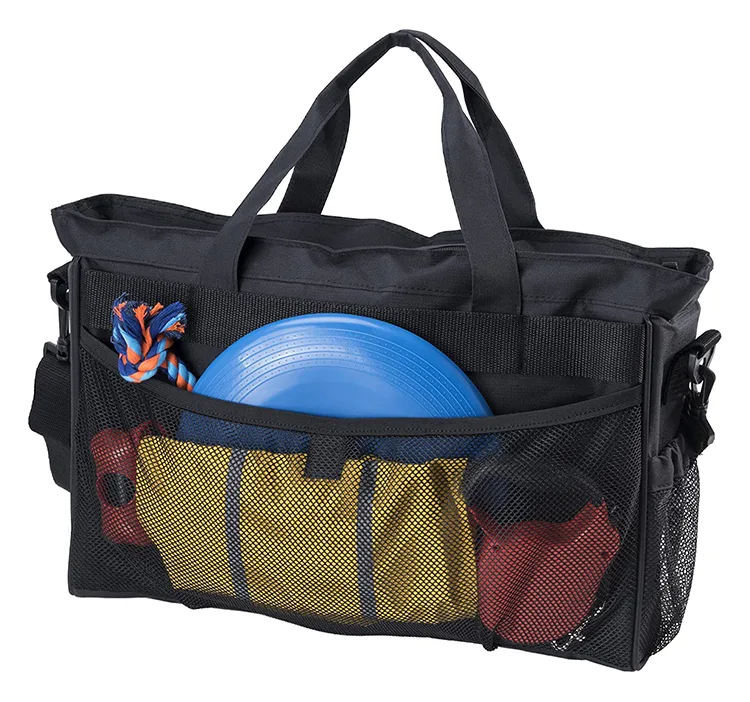
Product Data: What the Search Index Actually Reads
The catalogue record has two audiences: the customer reading the page and the index deciding when to show it. Both are served by the same fields, and the fields have hard limits that shape how the product can be described.
The title carries the most weight and typically allows around 150-200 characters with a required structure: brand, model or product type, key attribute, size, colour, and pack count. Front-loading the two or three terms that buyers actually search is the whole game, because the index weights earlier words more heavily. Bullet points run five per listing, each with a practical ceiling around 200-255 characters, and they are where dimensional and material facts belong.
Backend search fields are invisible and they are where synonyms, misspellings and alternative phrasings go, up to roughly 250 bytes. Structured attribute fields matter more than prose for filtering: exterior and interior dimensions, recommended pet weight, material composition, closure type, washability and colour all populate filter facets that shoppers click.
| Field | Limit | Content rule | Index weight | Production cost (USD) |
|---|---|---|---|---|
| Title | 150-200 characters | Brand, type, attribute, size, colour | Highest | 25-90 |
| Bullet points | 5 x 200-255 characters | Dimensions, material, safety, use | High | 40-160 |
| Product description | Up to 2,000 characters | Prose, no promotional claims | Low | 60-220 |
| Backend search terms | Approximately 250 bytes | Synonyms, misspellings | Medium | 20-80 |
| Structured attributes | 25-45 fields | Dimensions, weight, material | Filter facets | 60-260 |
| Enhanced brand content | 5-7 modules | Comparison table, diagrams | Indirect, conversion | 120-450 |
| Category browse node | One primary | Must match product type | Critical | 0-40 |
Accuracy in the attribute fields is a compliance matter, not an optimisation one. Declared interior dimensions are checked against physical measurement during returns analysis, and a systematic overstatement shows up as a fit-related return rate that damages account health. Measuring three units per production batch and publishing the mean with a stated tolerance costs about 20 minutes a batch.
Enhanced content modules are the cheapest conversion lever available in the record, and the comparison module in particular. A five-column table showing three or four sizes side by side with interior dimensions and pet weight range costs 120-450 USD once and measurably reduces the wrong-size return, which is the dominant return reason in this category at 24-41% of all returns.
Airline-related claims in the copy carry a specific risk: stating that a carrier is airline approved is a factual claim about airline rules that vary by carrier. Referencing the published pet-in-cabin guidance from the Federal Aviation Administration and stating measured dimensions rather than an approval status is the defensible way to write it.
Publish measured interior dimensions with a tolerance and a pet weight range; fit-related returns run 24-41% of all returns and are the single largest avoidable cost in the channel.
Image Specification and the Rendering Pipeline
Imagery is specified tightly and enforced automatically: a listing that fails the technical checks will publish without an image, which is functionally invisible. The specification covers resolution, background, frame fill, colour space and format.
The primary image must be on a pure white background at RGB 255-255-255, with the product occupying 85-95% of the frame, at 2,000 pixels or more on the longest edge to enable zoom, and supplied in sRGB JPEG. Secondary images have the same resolution requirement but may use lifestyle backgrounds. The practical set for a carrier is seven to nine images: primary, three-quarter, interior, base, feature close-up, scale reference and a dimensional diagram.
The pipeline matters as much as the output. Shooting to a fixed template means a new colourway can be rendered into the same frame without a reshoot, which is the difference between 40-140 USD per additional colourway and 180-620 USD. A standard turntable position, fixed lighting at 5,500 K and a locked camera distance are all that is needed, and setting them up costs 200-700 USD once.
| Asset | Resolution | Background | Cost per SKU (USD) | Turnaround | Reusable across colourways |
|---|---|---|---|---|---|
| Primary, white ground | 2,000 plus px | RGB 255 | 25-90 | 2-5 days | No |
| Three-quarter and base | 2,000 plus px | White | 50-180 | 2-5 days | Partial |
| Interior detail | 2,000 plus px | White | 30-110 | 2-5 days | Yes |
| Feature close-up | 2,000 plus px | White | 40-150 | 3-6 days | Yes |
| Scale reference with pet | 2,000 plus px | Lifestyle | 180-760 | 5-12 days | No |
| Dimensional diagram | Vector | White | 40-140 | 2-5 days | Partial |
| 360-degree spin | 24-36 frames | White | 220-780 | 4-9 days | No |
| Video | 20-45 seconds | Lifestyle | 450-2,200 | 7-18 days | No |
The scale reference image is the one worth paying for. A photo of the carrier with an animal of a stated weight inside answers the fit question that a dimension figure does not, and it is the asset most directly linked to reducing returns. A shoot with a released animal costs 180-760 USD and serves all colourways of the same size.
Colour accuracy across colourways is a quality issue in its own right. A product photographed under 5,500 K lighting with a grey card reference and corrected to a spectral target keeps a navy listed as navy, and a Delta-E check at 2.0 on the rendered file against the physical fabric is the control. Without it, a colourway variant drifts and returns follow.
One structural point: images are the last asset produced but the first one needed. Sequencing a shoot against the pre-production sample, inside the standard 6-10 working day sampling window, means the imagery is ready when the listing is built rather than when the first inbound lands 35-50 days later.
Shoot against the pre-production sample using a locked template: 40-140 USD per additional colourway against 180-620 USD for a reshoot.

Packaging Standard: Ships-in-Own-Container and the Free-Entry Tiers
The fulfilment network handles a unit as an individual parcel, so the retail carton has to survive that handling unaided. The packaging programme has three recognised levels, and knowing which one a product qualifies for changes both the packaging cost and the fee.
The entry level is a unit that ships in its own container after passing a defined transit test with no overbox. The next level adds curbside-recyclable materials and reduced void. The third is a prep-free, protective-free configuration where no additional packaging is applied at all. Moving up a level removes a per-unit handling charge and reduces damage, at the cost of a more engineered retail carton.
The test itself is a drop and vibration sequence: ten drops covering faces, edges and corners from a height set by unit weight, followed by random vibration and, where relevant, a compression hold. A 1.35 kg soft carrier drops from 760 mm. The unit has to arrive sellable, so cosmetic damage to the printed carton counts as a failure.
| Level | Requirement | Pack cost (USD) | Test cost (USD) | Damage rate | Handling fee effect |
|---|---|---|---|---|---|
| Overbox required | Corrugated overbox added | 1.28-2.02 | 0 | 0.6-1.4% | Surcharge applied |
| Ships in own container | Passes drop and vibration | 1.12-1.86 | 350-1,600 | 0.9-1.8% | Surcharge removed |
| Plus curbside recyclable | All materials recyclable | 1.24-2.10 | 350-1,600 | 0.9-1.8% | Further reduction |
| Prep-free, no void fill | Right-sized, self-restraining | 1.40-2.60 | 500-2,200 | 0.4-1.1% | Lowest |
| Non-compliant standard pack | None | 0.62-1.05 | 0 | 3.1-6.1% | Surcharge plus returns |
The economics are one-sided. Moving from a standard pack to a tested own-container build costs 0.50-0.81 USD per unit plus 350-1,600 USD of testing, and it removes a surcharge while cutting damage from 3.1-6.1% to 0.9-1.8%. At 4,000 units a year that is roughly 2,400-4,000 USD of added pack cost against 9,600-26,400 USD of avoided damage and returns.
Right-sizing is the cheapest part of the upgrade. A carton with 20-30 mm of dead space on any axis adds dimensional weight, adds void fill and increases the drop height exposure; removing it costs nothing and often removes an entire dimensional bracket. Designing the carton around the compressed product rather than the expanded one is the single highest-return packaging decision available.
Test evidence should be held on file and re-run on material change. Methods are referenced to ASTM International drop and vibration standards, and a passing report from an accredited laboratory is the document that settles any dispute about whether the packaging was adequate.
A tested own-container build costs 0.50-0.81 USD more and 350-1,600 USD to certify, and it cuts damage from 3.1-6.1% to 0.9-1.8%, worth 9,600-26,400 USD on 4,000 annual units.
Inventory Health: Storage Limits, Age and Replenishment Timing
How much can be sent into the network is governed by a score, and the score is driven by sell-through, in-stock rate and excess inventory. A supplier who ships a large first order and then stalls on replenishment damages the very metric that gates the next shipment.
The mechanics are a cycle. Inventory performance is assessed on a rolling basis; a score below the threshold triggers volume limits and, in some periods, a per-unit surcharge on storage above a set age. Aged stock above 181 days carries a surcharge, and above 365 days it rises sharply. The practical rule is to keep the inbound quantity aligned to 45-90 days of cover.
Replenishment timing follows the same arithmetic as any import programme. Weekly consumption of 180 units against a 55-72 day door-to-stock lead time gives pipeline demand of 1,414-1,852 units; with 30% safety cover the reorder point is 1,838-2,408 units and the order quantity at six weeks of cover is 1,080 units.
| Strategy | Inbound quantity | Days of cover | Aged stock risk | Storage cost (USD/yr) | Stockout risk | Score effect |
|---|---|---|---|---|---|---|
| Single large first order | 4,000 | 155 | High | 2,900-6,800 | Low | Negative |
| Quarterly, even | 1,040 | 40 | Low | 760-1,780 | High | Neutral |
| Six-week cover, rolling | 1,080 | 42 | Low | 790-1,850 | Medium | Positive |
| Ninety-day cover, rolling | 2,310 | 90 | Medium | 1,690-3,960 | Low | Positive |
| Sixty-day cover plus air top-up | 1,540 | 60 | Low | 1,130-2,640 | Low | Positive |
Sixty-day cover with an air top-up option is the configuration that usually scores best. It holds enough to avoid stockout, avoids the aged-stock band, and reserves the expensive option for genuine spikes rather than using it as a substitute for planning. The air top-up costs 7.30-19.00 USD per unit, and on a 300-unit emergency that is 2,190-5,700 USD, which is cheap against a stockout that resets the sales rank.
What makes the cadence achievable is a reliable production cycle rather than a fast one. A material bank holding fabric, mesh, hardware and zipper chain against a rolling forecast removes 14-35 days from the reorder, and a reserved production slot converts the 35-50 day window into a confirmed start. Together they let a supplier promise a date rather than an estimate.
Splitting a shipment across two inbound destinations used to be a way to reduce a placement fee; where an inbound placement charge applies, consolidating to a single destination and accepting the fee is often cheaper than splitting once the per-carton handling of a second shipment is counted. Comparing 0.20-0.85 USD per unit of placement fee against 1.10-3.20 USD per unit of split freight decides it.
Hold 45-90 days of cover, keep stock under the 181-day aged band, and reserve air for genuine spikes rather than as a substitute for planning.
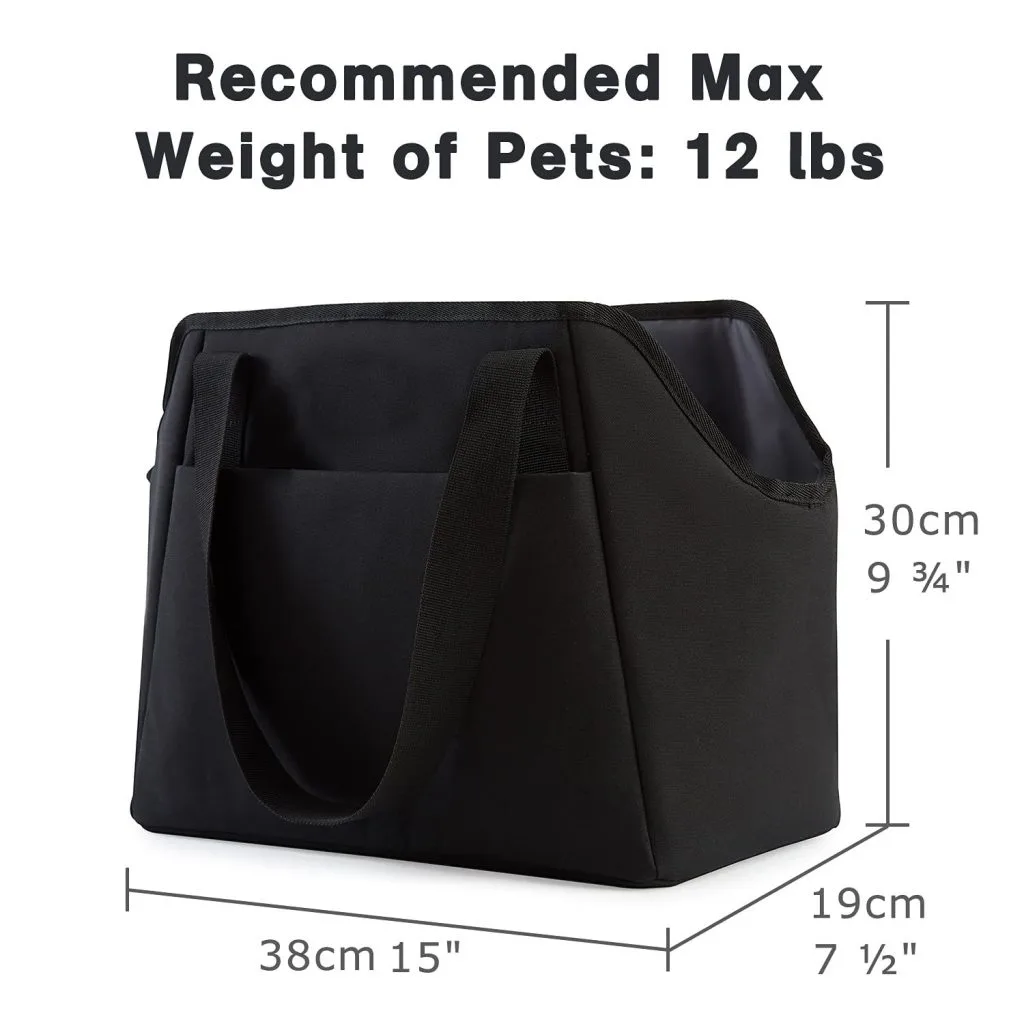
Returns Analysis: Tracing the Reason Back to the Build
Return rate in this category runs 9-18% of units shipped, and the reasons are remarkably consistent. They are also mostly traceable to a specific manufacturing or specification decision, which is what makes them fixable.
Fit is the largest category at 24-41% of all returns. The customer bought a size that did not suit the animal, and the cause is usually a published dimension or weight range that overstated capacity. The second category is damage in transit at 14-26%, which traces directly to packaging. The third is a product defect at 11-22%, most often a zipper failure, a seam opening or a strap anchor pulling.
Each has a manufacturing answer. Fit is answered by publishing measured interior dimensions with a tolerance and by rendering a scale image with an animal of stated weight. Damage is answered by packaging testing. Defect is answered by specifying the hardware and testing it, which is what a final random inspection to AQL 2.5 catches before shipment rather than after.
| Reason | Share of returns | Root cause | Control | Cost of control (USD) | Residual rate |
|---|---|---|---|---|---|
| Does not fit the animal | 24-41% | Overstated dimensions | Measured spec, scale image | 40-140 once | 9-16% |
| Arrived damaged | 14-26% | Untested packaging | Drop and vibration test | 350-1,600 once | 3-8% |
| Zipper failure | 8-16% | Underspecified chain | Cycle test, brand chain | 0.18-0.62 per unit | 2-5% |
| Seam opening | 5-12% | Stitch density, thread | Seam strength test | 0.06-0.22 per unit | 1-4% |
| Strap anchor pull | 4-10% | Reinforcement absent | Load test at anchor | 0.10-0.34 per unit | 1-3% |
| Odour or material complaint | 3-8% | Adhesive or foam | Material declaration | 180-780 once | 1-3% |
| Not as described | 6-14% | Attribute error | Record accuracy check | 20-80 once | 2-5% |
The zipper line deserves a specific note because it is the most common physical defect and the cheapest to fix. A chain specified by brand and gauge, tested to 3,000-8,000 open-close cycles with a pull test on the slider and the stop, costs 0.18-0.62 USD more per unit than an unbranded equivalent and removes most of an 8-16% return category.
Return disposition is a cost that is often forgotten. A returned unit cannot be resold as new in most cases, so the full unit cost plus two legs of freight is written off, which on a 1.35 kg carrier is 21-42 USD. At a 12% return rate that is 2.52-5.04 USD per unit shipped, which exceeds the entire cost of the controls that prevent it.
Our production team treats the return reason as a specification input: each quarter, the reason distribution is mapped back to a component or a published figure, and the specification is revised. Chemical declarations are issued against OEKO-TEX criteria, and safety-related claims are kept within the scope of the Consumer Product Safety Commission guidance.
A return costs 21-42 USD all in, so at a 12% return rate the 0.24-1.18 USD of added component cost that prevents it is the best-spent money in the build.
Cost Model: Channel-Ready Build Against Standard Export Build
The two builds can be compared on a 4,000-unit annual programme. The standard export build assumes a rigid frame, an overbox and a basic image set. The channel-ready build assumes a compressible frame, a tested own-container carton, a full asset set and the component upgrades identified in the returns analysis.
Three lines go up: product cost by 1.00-1.20 USD for the compressible frame and better hardware, packaging by 0.50-0.81 USD, and catalogue assets amortised by 0.30-1.25 USD. Five lines go down: fulfilment fee through tier placement, inbound freight through cube, damage and returns, aged storage, and the handling surcharge.
The dominant saving is the fee tier. A build that packs at 45 by 34 by 22 cm instead of 48 by 36 by 28 cm saves 3.10-6.40 USD per unit in fulfilment fee alone, which on 4,000 units is 12,400-25,600 USD and dwarfs every added cost combined.
| Element | Standard export build | Channel-ready build | Delta | Driver |
|---|---|---|---|---|
| Product cost | 13.90-15.40 | 14.90-16.60 | Plus 1.00-1.20 | Compressible frame |
| Packaging | 0.62-1.05 | 1.12-1.86 | Plus 0.50-0.81 | Tested own container |
| Fulfilment fee | 12.00-19.00 | 7.40-10.20 | Minus 4.60-8.80 | Tier placement |
| Inbound freight | 1.90-5.60 | 1.10-3.20 | Minus 0.80-2.40 | Cube, palletised |
| Damage and returns | 2.52-5.04 | 0.84-1.68 | Minus 1.68-3.36 | Testing, components |
| Aged storage and surcharge | 0.44-1.70 | 0.19-0.66 | Minus 0.25-1.04 | Cover discipline |
| Catalogue assets amortised | 0.10-0.42 | 0.40-1.67 | Plus 0.30-1.25 | Full asset set |
| Total | 31.48-48.21 | 25.95-35.87 | Minus 5.53-12.34 | 18-26% saving |
The net is 5.53-12.34 USD per unit, an 18-26% saving, and the largest single contributor is dimensional design rather than any negotiated price. That is the message of this channel: the physical envelope of the packed unit is worth more than the unit price, and a supplier who optimises price while shipping 48 by 36 by 28 cm is leaving the larger saving on the table.
The honest cost should be stated too. A compressible frame constrains the design, ruling out some rigid structural options and some hard-shell formats, and the full asset set is a one-time 1,185-5,000 USD per SKU. Both are affordable and neither is free, and a hard-shell programme should expect to pay the higher fee tier instead.
Commercial terms frame the programme: MOQ 500 pieces per colourway, prototypes in 6-10 working days, bulk production 35-50 days after sample approval, final random inspection to AQL 2.5, T/T 30/70 and FOB Xiamen. Programmes run through an SGS-verified production base under ISO 9001 and BSCI coverage, with physical testing referenced to ASTM International methods. The channel-ready build lands 18-26% below the standard export build on 4,000 annual units, and most of the saving comes from the packed envelope rather than the unit price.
Why brands source here
- Pet carrier programs run since 2014; founding team in sewn goods since 2004
- SGS-verified production floor of 4,950 m² with 137 workers across 7 lines
- Monthly capacity of 200,000 units, audited to BSCI and ISO 9001
People Also Ask
What packed dimensions should a cat carrier target for the lowest fee tier?
Keep length plus girth under about 165 cm and the longest axis at 45 cm or less. Moving from 48 x 36 x 28 cm to 45 x 34 x 22 cm saves 3.10-6.40 USD per unit.
What is the FBA carton weight limit?
22.7 kg per carton, with a 25 cm minimum on the shortest edge. Above the limit the carton needs a heavy-bulky label and palletisation, and violations run 25-60 USD per carton.
Does a soft carrier in a retail box need prep?
Usually no. A unit in a printed retail box is prep-free; a loose unit needing bagging adds 0.18-0.46 USD, and any polybag with a 380 mm opening needs a suffocation warning.
How many images does a listing need and at what resolution?
Seven to nine, at 2,000 pixels or more on the longest edge, primary on RGB 255 white with 85-95% frame fill. A full set costs 585-3,410 USD per SKU.
What does packaging testing cost and what does it save?
350-1,600 USD per configuration, cutting damage from 3.1-6.1% to 0.9-1.8% and removing a handling surcharge, worth 9,600-26,400 USD on 4,000 annual units.
How much inventory cover should be held in the fulfilment network?
45-90 days. Below 40 days risks stockout and a rank reset; a single 155-day order triggers aged stock and volume limits.
What is the largest return reason for pet carriers?
Fit, at 24-41% of returns, caused by overstated interior dimensions. Publishing measured dimensions with a tolerance and a scale image with an animal of stated weight reduces it to 9-16%.
Should an inbound shipment be split across destinations?
Usually not. A placement fee of 0.20-0.85 USD per unit is typically cheaper than the 1.10-3.20 USD per unit of freight cost a second shipment adds.
Frequently Asked Questions
Why does dimensional weight matter more than actual weight here?
A 1.35 kg carrier at 45 by 34 by 26 cm has a dimensional weight of 7.96 kg at the 5,000 divisor, and the greater figure governs. Compressing height to 22 cm drops it to 6.73 kg.
What frame construction allows a knockdown pack?
A spring-steel or high-resilience polymer hoop that recovers shape after 30-45 days of compression. Recovery testing runs 5-12 days at 180-620 USD.
When does palletised inbound beat small parcel?
Above roughly 400 units per movement. Palletised runs 1.10-3.20 USD per unit against 1.90-5.60 for small parcel, but needs 12-24 cartons per pallet and a booked appointment.
Why use a manufacturer barcode instead of a marketplace label?
The same inventory can then serve multiple channels. It requires a registered brand and a GS1-origin barcode, and it saves 0.20-0.55 USD per unit of labelling labour.
How is the girth figure calculated?
Length plus twice width plus twice height, which is the metric that assigns the fee tier. Cutting 3 cm from the longest axis reduces girth by 6 cm.
What character limits apply to the title and bullets?
Title 150-200 characters with brand, type, attribute, size and colour; five bullets of 200-255 characters each; backend search terms around 250 bytes.
How is a wrong-size return prevented most cheaply?
Publish measured interior dimensions with a stated tolerance and render a scale image with an animal of a stated weight. The diagram costs 40-140 USD and the scale shot 180-760 USD.
What does a fixed photography template save?
An additional colourway renders into the same frame at 40-140 USD rather than 180-620 USD for a reshoot. Setup costs 200-700 USD once for turntable, 5,500 K lighting and locked distance.
How is colour accuracy held across colourways?
Shoot at 5,500 K with a grey card reference and correct to a spectral target, checking the rendered file against the physical fabric at Delta-E 2.0.
What is the difference between the packaging levels?
Overbox required, ships in own container after passing drop and vibration, curbside recyclable, and prep-free with no void fill. Each step removes handling cost and reduces damage.
Why is right-sizing the cheapest packaging improvement?
Dead space of 20-30 mm on any axis adds dimensional weight, void fill and drop exposure. Removing it costs nothing and can drop an entire dimensional bracket.
What happens to stock aged over 181 days?
A surcharge applies, rising sharply beyond 365 days. Holding 45-90 days of cover keeps the programme clear of the aged band and protects the inventory score.
How much does an air top-up cost and when is it justified?
7.30-19.00 USD per unit, or 2,190-5,700 USD on a 300-unit emergency, which is cheap against a stockout that resets sales rank.
What is a returned unit actually worth?
Nothing as new. The full unit cost plus two freight legs is written off, 21-42 USD on a 1.35 kg carrier, or 2.52-5.04 USD per unit shipped at a 12% return rate.
Talk to QUANZHOU JUNYUAN BAGS about a pet carrier program: MOQ 500 pieces per colourway, samples in 6-10 working days, bulk production in 35-50 days under AQL 2.5 inspection.
Get a free quote Request a sample