Cat Carrier Pet eBay: Auction Sales
An auction channel ships one unit per transaction in 70-85% of sales, and the structure that serves it is unbranded stock held at 300-900 units with dispatch inside 24-48 hours. Single-unit parcels cost 6.80-16.80 USD. Returns run 8-18%, and that figure drives the pack specification rather than the shipping one.
Auction selling inverts almost every assumption a production planner makes. Demand arrives one unit at a time, the winner is unknown until the listing closes, the dispatch promise is measured in hours, and a material share of units comes back. Manufacturing cannot respond to any of that at 35-50 days, so the entire model rests on what is held in the seller's country and how well it is packed. This page sets out the order profile by listing format, how condition grading translates into a pack specification, and why unbranded supply is the correct form for a resale channel. It also quantifies the changeover behaviour of a single-unit workflow, the returns rate and its effect on pack design, and the labelling obligations that apply to a resold unit exactly as they apply to a first sale. Commercial terms follow the standard programme: MOQ 500 pieces per colourway, prototypes in 6-10 working days, bulk production 35-50 days after sample approval, final random inspection to AQL 2.5, T/T 30/70 and FOB Xiamen.
Pet carrier OEM builds to your drawing, while pet carrier ODM adapts an existing cat carrier platform and removes the tooling cost. Both start from the same tech pack.
Order Profile by Listing Format
An auction channel produces three distinct transaction shapes and they need different supply. Single-unit auction listings, fixed-price listings that occasionally sell in multiples, and lot listings where ten to fifty units move at once to a single buyer.
The single-unit case dominates. 70-85% of transactions are one unit to one address, dispatched within 24-48 hours of payment. That is a parcel operation with an inventory buffer, and the buffer is the only thing manufacturing can influence.
Lot listings are the exception and they behave like wholesale: 10-50 units, one address, freight rather than parcel, and a 3-10 day dispatch window. A seller running both formats should hold stock in two pack states — single mailers and master cartons — because repacking a master carton into fifty mailers is a six to twelve hour job.
| Format | Units per transaction | Share of transactions | Dispatch window | Pack state required | Freight cost (USD) | Return rate |
|---|---|---|---|---|---|---|
| Single-unit auction | 1 | 55-70% | 24-48 hours | Mailer ready | 6.80-16.80 | 9-19% |
| Fixed-price single | 1-3 | 15-25% | 24-72 hours | Mailer ready | 6.80-16.80 | 7-15% |
| Multi-buy listing | 2-6 | 5-12% | 48-96 hours | Mailer or small carton | 7.40-19.20 | 6-12% |
| Lot, wholesale | 10-50 | 3-8% | 3-10 days | Master carton | 0.75-2.40 per unit | 2-6% |
| Pallet clearance | 100-600 | 1-3% | 5-15 days | Palletised | 0.35-1.10 per unit | 1-3% |
The return rate column is the one that shapes pack design. At 9-19% on single-unit auctions, roughly one unit in seven comes back, and a returned unit has to be resaleable on arrival or the return is a total loss. That is a pack specification requirement rather than a customer service one.
Sell-through is the planning number behind the buffer. An auction listing converts at 8-22% of views, and a seller running forty active listings at a time sells 60-200 units a month. Inventory cover of four to eight weeks at that rate is 60-400 units, which is the 300-900 range once safety cover for a run of unsold listings is added.
Seasonality is milder here than in retail but real. Volume rises 25-60% in the eight weeks before the major gift periods and falls 20-40% in the six weeks after, so the buffer should be sized on the peak rather than the average.
Auction selling is 70-85% single-unit at 24-48 hour dispatch, which makes the in-country buffer and the pack specification the two manufacturing decisions that matter.
Condition Grading Translated Into a Pack Specification
An auction listing states a condition grade, and the grade is a promise about the physical state of the unit the buyer receives. That promise is delivered by the pack, not by the product, because a unit graded as new can arrive looking used if the pack fails.
Three grades matter. New with tags, in original packaging, requires an intact retail pack with no scuffing to the print and no compression to the corners. Open box requires the unit to be pristine but permits a plain carton. Used or refurbished permits minor marks and requires a disclosure statement.
The pack has to be specified per grade, because over-specifying a used-grade pack wastes 0.32-1.44 USD per unit and under-specifying a new-grade pack produces a claim. The distinction is measurable: corner compression above 3 mm or a scuff above 25 mm on the retail print is what a buyer photographs.
| Grade | Pack required | Pack cost (USD) | Allowable corner compression | Allowable print scuff | Claim rate | Resale value retained |
|---|---|---|---|---|---|---|
| New, retail packed | Retail box in mailer, corner posts | 2.10-4.60 | Under 3 mm | Under 25 mm | 0.4-1.2% | 100% |
| New, plain packed | Box in mailer, void fill | 1.40-3.10 | Under 6 mm | n/a | 0.8-2.1% | 88-96% |
| Open box | Vented bag in mailer | 0.82-2.10 | Under 12 mm | n/a | 1.6-3.8% | 76-88% |
| Refurbished | Bag in mailer, disclosure card | 0.68-1.80 | Under 20 mm | n/a | 2.8-6.4% | 58-76% |
| Lot, master carton | Master carton, 20-40 units | 0.35-0.90 | Under 8 mm | n/a | 0.6-1.8% | 92-100% |
The claim rate column is why the top two rows are worth their cost. A new-grade unit packed in a mailer without corner posts claims at 0.8-2.1% against 0.4-1.2% with them, and each claim costs 18-46 USD to resolve plus the unit. At 30 USD of unit value the corner posts pay for themselves above roughly sixty units a month.
Resale value retained is the number that matters on a return. A returned unit that arrives back in resaleable condition keeps 88-96% of its value in a plain pack and 76-88% in a bag. Over a year at a 12% return rate, that difference is worth 1.44-2.88 USD per unit sold.
Verification is a ten-drop test from 460-760 mm plus a corner compression check at 30-60 kg for 24 hours. Together they cost 120-320 USD per pack design and they predict the claim rate well enough to choose between the top three rows without a trial shipment.
Specify the pack by condition grade: corner posts at 2.10-4.60 USD hold new-grade claims to 0.4-1.2% and preserve 100% of resale value on a return.
Unbranded Supply for a Resale Channel
A resale channel does not want a supplier mark on the product. The seller's own reputation is the brand, an unmarked unit can be listed without conflict, and a unit carrying another party's mark raises questions the listing does not want to answer.
Unbranded supply is therefore the correct form, and it has three specification consequences. No supplier mark on the exterior, a generic care and origin label rather than a branded one, and no supplier identity in the documentation beyond what import requires.
The manufacturing difference is small but real. Removing a moulded or embroidered supplier mark saves 0.35-1.40 USD per unit; a generic woven label costs 0.06-0.16 against 0.12-0.35 for a branded one. The saving is modest and the value is in the listing rather than in the cost.
| Element | Branded supply | Unbranded supply | Cost delta (USD) | Listing impact | Changeover on switch (USD) |
|---|---|---|---|---|---|
| Exterior mark | Transfer or patch, 0.35-1.40 | None | Minus 0.35-1.40 | Removes conflict | 0-40 |
| Care and origin label | Branded woven, 0.12-0.35 | Generic woven, 0.06-0.16 | Minus 0.06-0.19 | None | 0-60 |
| Hangtag and insert | Branded, 0.18-0.86 | Generic care sheet, 0.10-0.42 | Minus 0.08-0.44 | None | 40-120 |
| Retail box print | Branded, 0.90-2.80 | Plain or generic, 0.35-1.20 | Minus 0.55-1.60 | Grade as plain packed | 120-380 |
| Documentation | Supplier-branded reports | Supplier-neutral reports | 0.00 | None | 0 |
The retail box row is the largest and the most consequential. A plain box costs 0.55-1.60 USD less and lets a seller list as plain packed rather than retail packed, which moves the resale value retained from 100% to 88-96% but removes any question about the mark on the box.
The switch cost column is what stops a seller changing their mind mid-run. Moving from branded to unbranded retail packaging costs 120-380 USD of print setup, so the decision belongs at the base run specification rather than at reorder.
Documentation is the one element that cannot be anonymous, and it should not be. A test report has to identify the issuing body and the tested specification, and an importer needs the manufacturer identity for their records. What can be neutral is the product marking, not the paperwork.
Structural testing is referenced to ASTM International methods and issued with the batch record, which is what lets a reseller answer a marketplace enquiry about load rating or seam strength without commissioning anything.
Unbranded supply saves 1.04-3.63 USD per unit and removes listing conflict; decide it at the base run, because switching retail print later costs 120-380 USD.
Changeover and Consolidation on a Single-Unit Flow
A single-unit flow is the worst case for changeover, because every unit potentially carries a different specification and none of them amortise a setup. The cost is small in absolute terms and large per unit.
In practice a resale seller does not change specification per unit; they change it per listing batch. A batch of 20-60 units in one colourway, then another batch in another. That is where the changeover sits, and it is 0-60 USD for a decoration change and 18-60 for a colourway change.
Consolidation is the answer and it is a purchasing discipline. Ordering 500 units of one colourway once a quarter, rather than 150 units of three colourways monthly, removes two thirds of the changeovers and moves the unit cost down the volume ladder.
| Ordering pattern | Orders per year | Units per order | Colourways per year | Changeover total (USD) | Per unit (USD) | Unit cost (USD) |
|---|---|---|---|---|---|---|
| Monthly, three colourways | 12 | 150 | 3 | 216-720 | 0.12-0.40 | 19.80-23.60 |
| Monthly, one colourway | 12 | 150 | 1 | 216-720 | 0.12-0.40 | 19.80-23.60 |
| Quarterly, one colourway | 4 | 450 | 1 | 72-240 | 0.04-0.13 | 15.60-17.20 |
| Semi-annual, two colourways | 2 | 900 | 2 | 72-240 | 0.04-0.13 | 14.80-16.40 |
| Annual, four colourways | 1 | 1,800 | 4 | 54-180 | 0.03-0.10 | 13.90-15.40 |
The unit cost column is the real prize, not the changeover line. Moving from monthly 150-unit orders to quarterly 450-unit orders takes the unit cost from 19.80-23.60 to 15.60-17.20, a saving of 4.20-6.40 USD per unit, against a changeover saving of only 0.08-0.27. Consolidation is about the volume ladder.
The cost of consolidation is inventory and colourway variety. A quarterly order of 450 units ties 6,264-7,740 USD against 2,970-3,540 for a monthly 150-unit order, and it commits the seller to one colourway for a quarter. At a 12% monthly sell rate that is acceptable; at 4% it is not.
The decision rule is the sell-through rate. Consolidate when monthly sell-through exceeds 8% of the holding, because the capital is then recycled fast enough to justify the larger order. Below 4%, keep orders small and accept the higher unit cost.
Decoration should be separated from the base entirely in this channel. If the seller's variety comes from a label or a card at 0.06-0.35 USD rather than from a base colourway at 15.60-23.60, the consolidation argument becomes free: one colourway, many listings.
Consolidate to quarterly above 8% monthly sell-through: unit cost falls 4.20-6.40 USD, and separating decoration from the base makes consolidation free.
Returns Rate and What It Does to Pack Design
Auction returns run 8-18% against 2-6% for a curated retail channel, and the difference is structural: the buyer has not seen the unit, the listing described it in words, and the return window is generous. Returns are therefore a design input rather than an afterthought.
The cost of a return has four parts: inbound freight at 6.80-16.80 USD, inspection labour at 0.60-1.80 USD, repacking at 0.20-0.60 USD, and value loss if the unit or its pack is not resaleable. Summed, a return costs 7.60-19.20 USD plus any value loss, which at a 12% return rate is 0.91-2.30 USD per unit sold.
Two thirds of that is avoidable by pack design. A unit that arrives back undamaged in a pack that can be reused costs 0.80-2.40 USD to return to stock; one that arrives with a crushed corner or a torn retail box loses 12-42% of its value and may need a new pack.
| Pack spec | Return rate | Arrives resaleable | Handling cost (USD) | Value loss (USD) | Cost per unit sold at 12% (USD) | Net of pack cost |
|---|---|---|---|---|---|---|
| Retail box plus corner posts, reusable closure | 8-12% | 92-98% | 0.80-2.40 | 0.18-1.26 | 0.12-0.44 | 2.22-5.04 |
| Retail box, tape closure | 10-15% | 78-90% | 1.10-3.20 | 0.96-3.96 | 0.25-1.08 | 1.85-4.18 |
| Plain box in mailer | 11-16% | 82-92% | 1.00-2.90 | 0.72-3.24 | 0.21-0.98 | 1.38-3.28 |
| Vented bag in mailer | 13-19% | 64-82% | 1.40-3.80 | 1.68-6.48 | 0.37-1.56 | 1.05-2.90 |
| Master carton, lot sales | 2-6% | 90-98% | 0.60-1.80 | 0.12-0.72 | 0.02-0.15 | 0.37-1.05 |
The last column nets the total return cost against the pack cost from the earlier section, and it shows the top row winning despite the highest pack cost. Corner posts and a reusable closure cost 2.10-4.60 USD and return 2.22-5.04 USD of cost per unit sold; a bag pack costs 0.68-1.80 and returns 1.05-2.90. The expensive pack is cheaper once returns are counted.
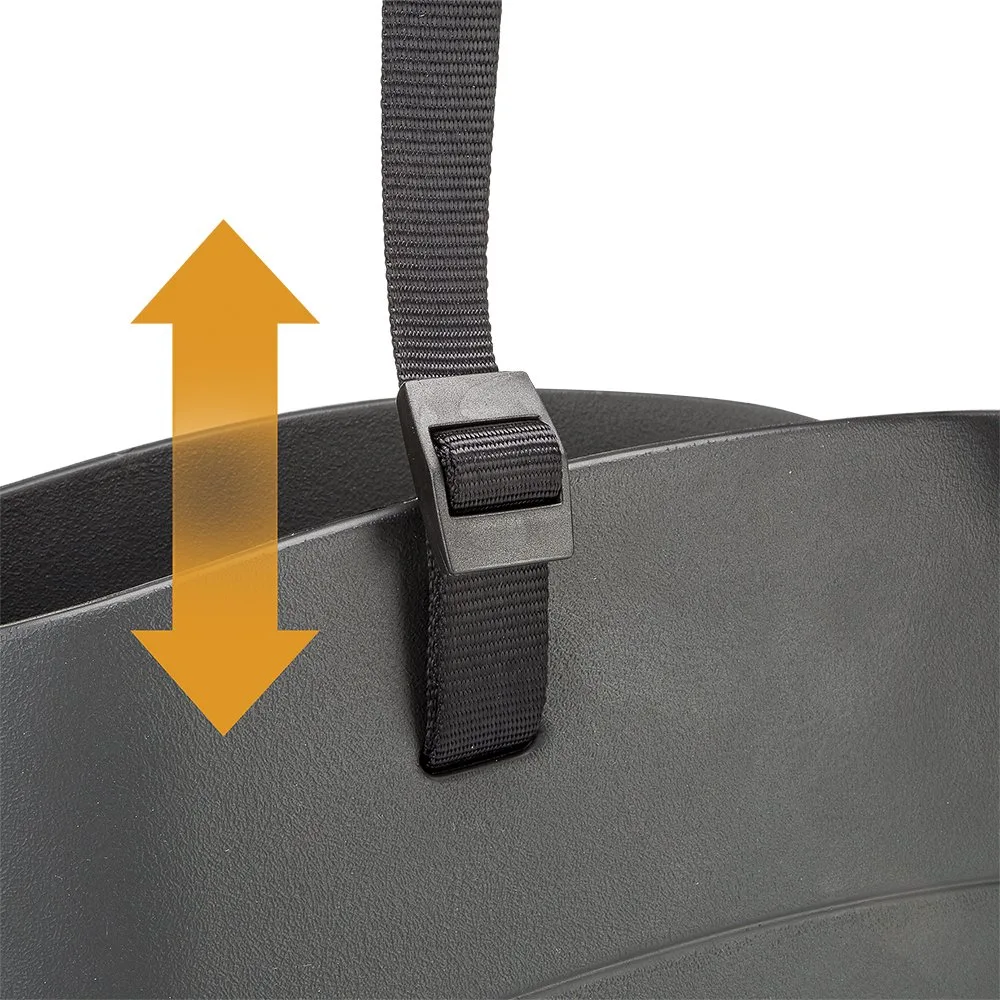
A reusable closure is the specific design element worth paying for. A two-stage tape or a resealable strip lets the buyer return the unit in the original pack at no cost to themselves, which raises the resaleable arrival rate from 78-90% to 92-98% and costs 0.14-0.42 USD.
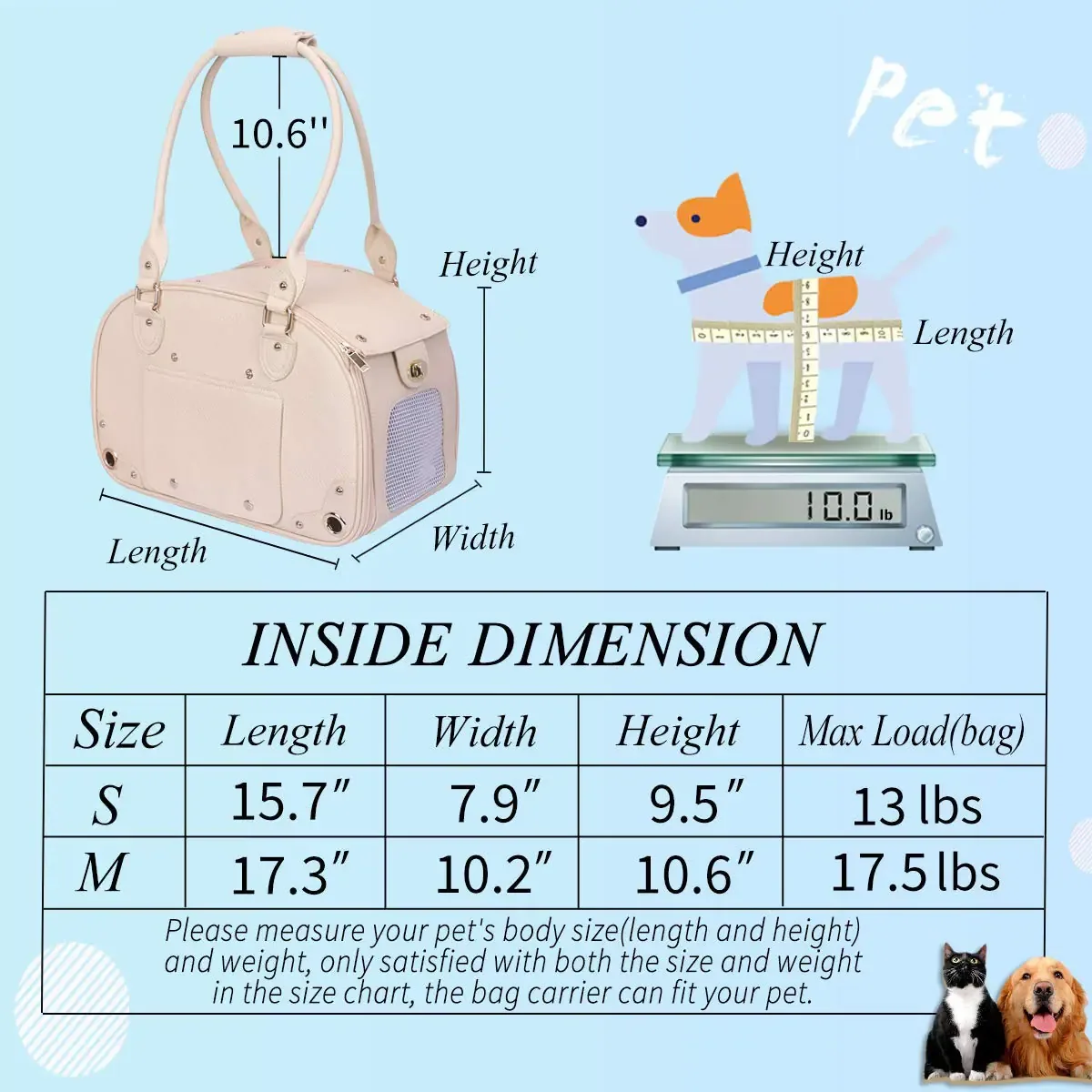
Disclosure accuracy is the cheapest return reduction available. A listing that states the collapsed dimension within 10 mm, the weight within 100 g and the maximum pet weight explicitly reduces returns by 1.8-4.2 percentage points, which is worth 0.27-1.34 USD per unit sold at no cost beyond writing the listing carefully.
Counting returns, the expensive pack wins: corner posts and a reusable closure return 2.22-5.04 USD of cost per unit sold against 1.05-2.90 for a bag pack.
Compliance and Labelling on a Resold Unit
Reselling does not reset the labelling obligation. A unit placed on the market by any party needs country of origin, fibre content, care instruction and a maximum pet weight, and a resale listing is a placement on the market.
The practical problem is that a reseller usually cannot add markings to a finished unit. A sewn origin and fibre label has to be present when the goods arrive, which means the specification decision is made at the base run and the reseller inherits it rather than choosing it.
That is the argument for buying supply that already carries the full set, even in an unbranded programme. A generic label carrying origin, fibre content and care symbols costs 0.10-0.31 USD per unit and removes the obligation entirely, against the alternative of a reseller applying stickers that peel and a care sheet that goes missing.
| Element | Obligation | Satisfied at | Cost (USD) | Reseller can add later | Risk if absent |
|---|---|---|---|---|---|
| Country of origin | Yes, permanent | Base run, sewn label | 0.03-0.12 per unit | Only by sticker | Customs hold, listing removal |
| Fibre content by weight | Yes, permanent | Base run, sewn label | 0.04-0.15 per unit | No | Mislabelling penalty |
| Care instruction | Yes | Insert or sewn label | 0.10-0.42 per unit | Yes, by insert | Instruction gap |
| Maximum pet weight | Recommended | Label or insert | 0.02-0.09 per unit | Yes | Load claim unsupported |
| Safety warning if applicable | Destination-dependent | Insert or listing | 0.01-0.12 per unit | Yes | Private action exposure |
| Test evidence on file | On enquiry | Base run, batch record | Shared, 0.04-0.18 per unit | No | Enquiry unresolved |
The bottom row is the one a reseller cannot supply and the one a marketplace asks for first. A batch record with test references issued at the base run costs 0.04-0.18 USD per unit when shared across a run and cannot be reconstructed afterwards.
Chemical obligations follow the destination as always. A Proposition 65 assessment at 140-540 USD and a REACH SVHC statement at 180-620 USD cover the main markets, and both are supplied with the run rather than per reseller. Product safety duties for consumer goods are administered in the US by the Consumer Product Safety Commission, and the importer of record carries them.
Where a listing describes a carrier as suitable for air travel, the wording should be dimensional rather than a claim of approval, referencing the cabin rules published by IATA. Textile chemistry is declared against OEKO-TEX criteria, and our production team issues the shared set from the SGS-verified production base so a reseller's file is complete at first listing rather than at first enquiry.
Buy supply that already carries origin, fibre and care markings at 0.17-0.69 USD per unit, because a reseller cannot sew a label into a finished unit.
Cost Model for an Auction Resale Programme
The channel models as follows. Take a seller moving 1,800 units a year, 80% as single-unit parcels and 20% as lots, holding 300-900 units of unbranded stock, dispatching in 24-48 hours, with a 12% return rate.
The fragmented version buys twelve monthly orders of 150 units in three colourways, packs single units in a vented bag, and handles returns as they come. Landed cost before returns is 28.40-42.60 USD per unit.
The consolidated version buys four quarterly orders of 450 units in one colourway, packs to the new-grade specification with corner posts and a reusable closure, and supplies full labelling from the base run.
| Element | Fragmented buying, light pack | Consolidated buying, return-ready pack | Delta | Driver |
|---|---|---|---|---|
| Base product | 19.80-23.60 | 15.60-17.20 | Minus 4.20-6.40 | 450 against 150 per order |
| Changeover amortised | 0.12-0.40 | 0.04-0.13 | Minus 0.08-0.27 | Four orders against twelve |
| Unbranded specification | 0.00 | Minus 1.04-3.63 | Minus 1.04-3.63 | No exterior mark, plain box |
| Pack | 0.68-1.80 | 2.10-4.60 | Plus 1.42-2.80 | Corner posts, reusable closure |
| Parcel freight, 80% of units | 5.44-13.44 | 5.44-13.44 | 0.00 | Same mode |
| Returns at 12% | 0.37-1.56 | 0.12-0.44 | Minus 0.25-1.12 | Resaleable arrival rate |
| Relisting and repack labour | 0.42-1.28 | 0.14-0.46 | Minus 0.28-0.82 | Reusable closure |
| Compliance documentation | 0.62-2.24 | 0.17-0.69 | Minus 0.45-1.55 | Shared across the run |
| Total landed | 27.45-44.32 | 22.57-32.39 | Minus 4.88-11.93 | 18-27% saving |
The saving is 4.88-11.93 USD per unit, or 18-27%, and it comes from four lines roughly equally: the volume ladder, the unbranded specification, the returns reduction and the shared documentation. Only the pack line moves the wrong way, and it is more than paid for by the two return-related lines below it.
The returns pair is worth separating out. Spending 1.42-2.80 USD more on the pack saves 0.25-1.12 in return losses and 0.28-0.82 in relisting labour, which is 0.53-1.94 against 1.42-2.80. On those numbers alone the pack upgrade loses; it is justified by the product value preserved on the units that come back, which the table cannot show per unit but which a seller sees in their inventory.
The honest limitation of consolidation is capital and variety. A quarterly 450-unit order ties 6,264-7,740 USD in stock and commits to one colourway, which is right above 8% monthly sell-through and wrong below 4%.
Commercial terms run as standard: MOQ 500 pieces per colourway, prototypes in 6-10 working days, bulk production 35-50 days after sample approval, final random inspection to AQL 2.5, T/T 30/70 and FOB Xiamen. Quality management runs under ISO 9001 with BSCI coverage. Consolidated buying, unbranded supply and a return-ready pack save 4.88-11.93 USD per unit, and the pack upgrade is justified by preserved value rather than by handling cost.
Why brands source here
- Pet carrier programs run since 2014; founding team in sewn goods since 2004
- SGS-verified production floor of 4,950 m² with 137 workers across 7 lines
- Monthly capacity of 200,000 units, audited to BSCI and ISO 9001
People Also Ask
How many units does an auction channel sell per transaction?
One, in 70-85% of transactions. Lots of 10-50 units account for 3-8% and pallet clearances of 100-600 for 1-3%.
How fast must an auction seller dispatch?
24-48 hours on single-unit listings, which is why finished stock has to be in the seller's country before the listing closes.
What return rate should an auction programme plan for?
8-18%, against 2-6% for curated retail. At 12% the cost is 0.91-2.30 USD per unit sold before any value loss.
Why buy unbranded supply for resale?
It removes listing conflict and saves 1.04-3.63 USD per unit by dropping the exterior mark and using a plain retail box.
Should an auction seller consolidate orders?
Yes above 8% monthly sell-through. Quarterly 450-unit orders take the unit cost from 19.80-23.60 to 15.60-17.20 USD.
Is an expensive pack worth it in an auction channel?
Yes once returns are counted. Corner posts and a reusable closure raise resaleable arrival from 78-90% to 92-98% and cut relisting labour by 0.28-0.82 USD per unit.
Who is responsible for labelling on a resold unit?
The party placing it on the market, which is the reseller. The markings must therefore be specified at the base run, because a reseller cannot sew a label into a finished unit.
How much does consolidation save an auction seller?
4.88-11.93 USD per unit on 1,800 annual units, an 18-27% saving across the volume ladder, unbranded supply, returns and shared documentation.
Frequently Asked Questions
Why should a seller hold stock in two pack states?
Single-unit listings need mailer-ready units and lot listings need master cartons. Repacking a master carton of forty into forty mailers is a six to twelve hour job that a 24-48 hour dispatch window cannot absorb.
How much inventory cover does an auction seller need?
Four to eight weeks at their sell rate plus cover for unsold listings, which is 300-900 units. Size it on the seasonal peak, which runs 25-60% above average.
What damage does a buyer actually photograph on a new-grade unit?
Corner compression above 3 mm or a print scuff above 25 mm. Those two thresholds are what separate a new-grade claim from a satisfied delivery.
How is a pack design verified before use?
Ten drops from 460-760 mm plus corner compression at 30-60 kg for 24 hours, at 120-320 USD per design.
Why is documentation the element that cannot be anonymous?
A test report has to identify the issuing body and the specification, and the importer needs the manufacturer identity for their records. Only the product marking can be neutral.
Why is the changeover saving smaller than the volume ladder saving?
Consolidation saves 0.08-0.27 USD per unit in changeover against 4.20-6.40 in unit cost. The case for consolidating is the volume tier, not the setup.
What does a return cost in total?
7.60-19.20 USD: inbound freight 6.80-16.80, inspection 0.60-1.80 and repacking 0.20-0.60, plus any value loss from a damaged unit or pack.
What is the cheapest way to reduce returns?
Accurate disclosure. Stating the collapsed dimension within 10 mm, the weight within 100 g and the maximum pet weight explicitly cuts returns by 1.8-4.2 percentage points at no cost.
Why does a reusable closure matter specifically?
It lets the buyer return the unit in the original pack at no cost to themselves, raising resaleable arrival from 78-90% to 92-98% for 0.14-0.42 USD.
Can a reseller apply fibre content labelling later?
Effectively no. It has to be permanent on the unit, so it must be specified at the base run at 0.04-0.15 USD rather than added as a sticker.
What does a batch record cost when shared?
0.04-0.18 USD per unit, and it cannot be reconstructed afterwards. It is the item a marketplace asks for first on an enquiry.
How should an airline suitability claim be worded in a listing?
As collapsed and rigid dimensions referencing published cabin rules. No airline certifies a product, so an approval statement is unsupportable.
When is consolidation the wrong choice?
Below 4% monthly sell-through. A quarterly 450-unit order ties 6,264-7,740 USD and commits to one colourway, which is only right when the capital recycles quickly.
How does decoration separation help an auction seller?
If variety comes from a label or card at 0.06-0.35 USD rather than a base colourway at 15.60-23.60, consolidation to one colourway costs nothing in listing variety.
Talk to QUANZHOU JUNYUAN BAGS about a pet carrier program: MOQ 500 pieces per colourway, samples in 6-10 working days, bulk production in 35-50 days under AQL 2.5 inspection.
Get a free quote Request a sample