Cat Carrier Pet Global Sources: Trade Show Preparation
Bring 28-46 samples weighing 62-118 kg, shipped 18-28 days before build-up at 340-980 USD, and staff the booth with one engineer who can quote without calling home. On-site quotations convert at 14-28% when a price ladder and a specification sheet are handed over at the booth, against 4-9% when they are promised by email.
A trade show compresses a year of relationship building into four days, and the outcome is decided almost entirely before the doors open. What converts on the floor is not enthusiasm but the ability to answer a technical question and hand over a number while the buyer is standing there. This page sets out the manufacturing side of that: how many samples to bring and how to choose them, how to get them to the venue intact and on time, what the booth has to let a buyer do physically, which compliance documents travel, and how a quotation is constructed on the spot without a full specification. It also covers staff composition, and the post-show schedule that decides whether the show produced orders or merely business cards. Standard commercial terms apply and should be quotable from memory at the booth: MOQ 500 pieces per colourway, prototypes in 6-10 working days, bulk production 35-50 days after sample approval, final random inspection to AQL 2.5, T/T 30/70 and FOB Xiamen.
Choose a pet bag supplier that keeps the cat carrier pattern card on file for at least twelve months, so a repeat order matches the approved sample instead of drifting.
Sample Selection: What Travels and What Stays Behind
The sample set is the show. It is the only thing a buyer can evaluate with their hands, and choosing it is a technical decision rather than a marketing one. Too many samples and the booth reads as a catalogue; too few and a buyer cannot see the range logic.
The working set for a cat carrier programme is 28-46 units. That covers three to four sizes, three to five colourways, one construction variant per size, one hardware finish option, and two or three branding applications. It weighs 62-118 kg and occupies 1.4-2.8 m3 packed, which is the number that drives the freight decision.
Selection should be weighted towards what converts rather than towards what looks best. New and unreleased constructions draw attention and generate conversation, but the volume at a show usually goes to the proven platform in a new colour. A practical split is 60-70% proven product in new finishes and 30-40% genuinely new construction.
| Category | Units | Weight (kg) | Purpose | Conversation rate | Order rate |
|---|---|---|---|---|---|
| Proven platform, all sizes | 8-12 | 18-32 | Range logic | 48-68% | 22-38% |
| Proven platform, new colourways | 6-10 | 12-22 | Volume driver | 52-72% | 26-42% |
| New construction, unreleased | 4-8 | 10-20 | Attention | 68-86% | 8-18% |
| Branding application samples | 4-8 | 8-16 | OEM conversation | 44-64% | 18-32% |
| Hardware and trim options | 2-4 | 2-6 | Specification detail | 28-48% | Indirect |
| Cut-away and construction samples | 2-4 | 4-10 | Technical credibility | 34-56% | Indirect |
| Packaging samples | 2-4 | 8-22 | Retail conversation | 22-42% | Indirect |
Cut-away samples are the highest-return item in the whole set and the one most often left behind. A carrier sectioned to show the frame, the seam construction, the reinforcement at the strap anchor and the base board answers the three questions every technical buyer has and cannot ask from outside. Building two or three costs 60-220 USD and they weigh almost nothing.
Colourway samples should be physical rather than rendered wherever possible, because colour is the attribute buyers most want to see in person and the one that photographs worst. Where a colourway cannot be produced in time, a physical fabric swatch on a card is far better than a printed image, at 4-18 USD per swatch set.
What stays behind is as important as what travels. Fragile one-off prototypes, anything requiring power, and any sample that is the only existing unit should not go: a booth sample gets handled 40-200 times a day and roughly 2-6% incur damage. Keeping a duplicate at the production base means a damaged sample can be replaced rather than explained.
Bring 28-46 units weighted 60-70% towards proven product in new finishes, and always include two or three cut-away samples at 60-220 USD.
Getting Samples to the Venue: Mode, Timing and Cost
Sample freight is the part of a show programme that most often goes wrong, because it is booked late and because a missing sample cannot be recovered. The planning rule is simple: samples arrive eight days before build-up, not two.
Three modes are practical. Air express at 4-9 days and 9.80-24.60 USD per kg is the default for a 62-118 kg set, costing 608-2,903 USD. Consolidated air at 12-22 days and 4.90-12.60 USD per kg costs 304-1,487 USD and is the cost-efficient option if the schedule allows. Sea less-than-container at 26-42 days and 2.20-6.40 USD per kg costs 136-755 USD and only works for a programme shipping a month early.
The customs route matters as much as the mode. A temporary admission document lets samples enter without duty and without a permanent import, and it is the correct instrument for a set that returns. Without it, samples are entered as a commercial import, duty is assessed on their value, and re-export becomes an administrative exercise.
| Mode | Transit | Cost (USD) | Book by | Risk | Suits |
|---|---|---|---|---|---|
| Air express, door to venue | 4-9 days | 608-2,903 | 12-16 days out | Low | Default |
| Consolidated air, airport to airport | 12-22 days | 304-1,487 | 24-30 days out | Medium | Cost-efficient |
| Sea LCL, port to port | 26-42 days | 136-755 | 45-60 days out | High | Early planners |
| Air express, split shipment | 4-9 days | 680-3,240 | 12-16 days out | Lowest | Critical sets |
| Hand-carry on flights | 1-3 days | 180-620 excess | 2-5 days out | Highest | Emergency only |
The split shipment in the fourth row is worth the 12% premium on any show where the sample set is irreplaceable. Sending half the set on one airway bill and half on another, two days apart, means a delayed or inspected shipment costs the booth half its range rather than all of it. The premium is 72-337 USD against a show costing 18,000-64,000 USD to attend.
Packing for a booth is different from packing for a warehouse. Samples travel in reusable wheeled cases with foam inserts rather than in cartons, because they are unpacked and repacked several times and because a carton that arrives crushed is a carton of crushed samples. A set of four to six flight cases costs 340-1,180 USD and lasts 8-14 shows, which is 24-147 USD per show.
Returns are planned at the same time as outbound. Booking the return movement before travelling, with a pre-filled document set and a carrier collection booked for the day after breakdown, avoids the common failure of a sample set sitting in a venue warehouse for weeks. Return freight costs 60-85% of the outbound figure.
Book samples to arrive eight days before build-up, split the airway bill for an irreplaceable set, and book the return movement before travelling.
Booth Engineering: What the Space Has to Let a Buyer Do
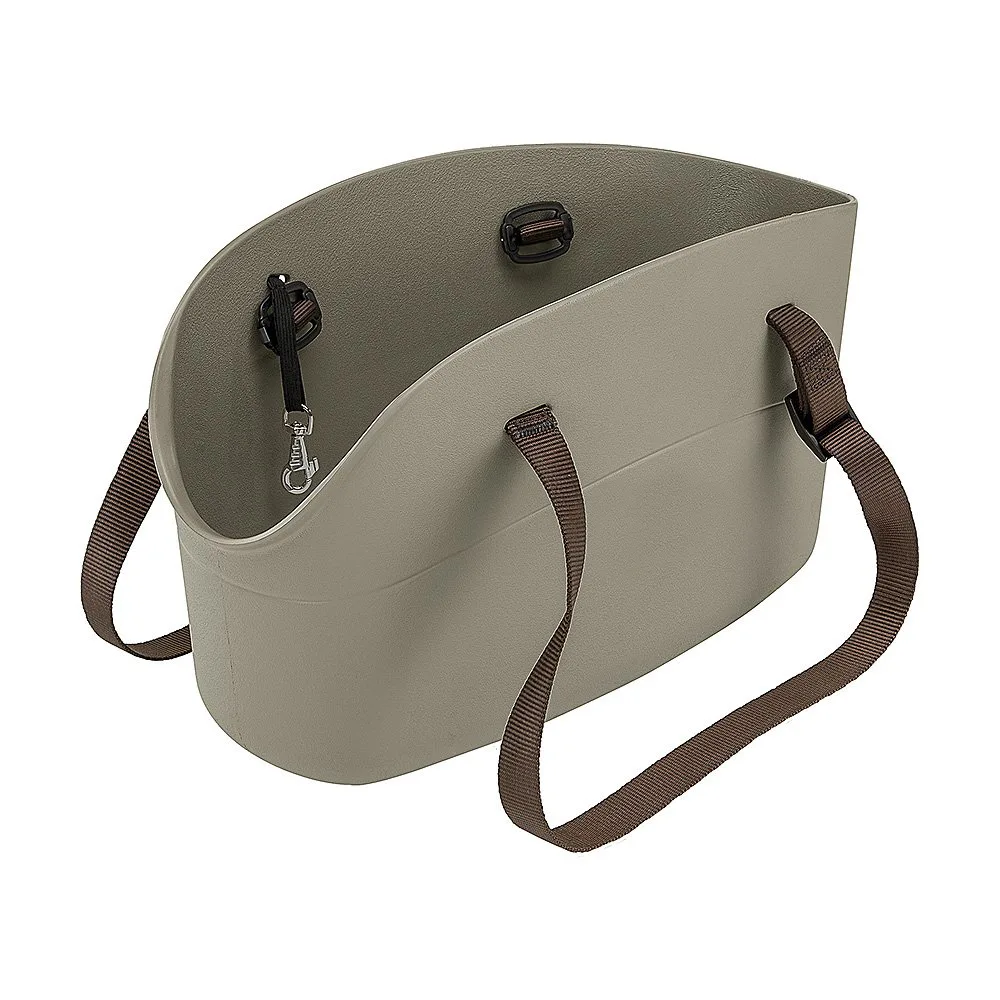
A booth for a manufactured product has a physical job to do. A buyer has to be able to pick the product up, open it, put a hand inside, feel the frame, look at the seam and see the interior base. Layout that prevents any of those reduces conversion.
The three elements that matter are height, reach and lighting. Samples at 900-1,400 mm are in the natural reach band and get handled; samples above 1,800 mm are display only and are rarely touched. Lighting at 4,000-5,500 K renders fabric colour accurately, and anything warmer makes a navy read as black and a grey read as beige.
Space allocation follows from that. On a standard 9 m2 shell scheme, roughly 40-50% should be sample display, 20-30% meeting space, and 20-30% storage and staff circulation. A booth that is all display has nowhere to close; a booth that is all table has nothing to look at.
| Element | Area share | Cost (USD) | Purpose | Effect on conversion |
|---|---|---|---|---|
| Sample shelving at 900-1,400 mm | 26-34% | 340-1,400 | Handling | High |
| Feature plinth for new construction | 8-14% | 180-760 | Attention | Medium |
| Meeting table, two to four seats | 18-26% | 120-620 | Closing | High |
| Lighting at 4,000-5,500 K | n/a | 240-980 | Colour accuracy | High |
| Graphic back wall with range logic | 10-16% | 420-1,900 | Orientation | Medium |
| Locked storage | 12-20% | 180-680 | Security, stock | Indirect |
| Cut-away display case | 4-8% | 120-480 | Technical credibility | High |
The cut-away display case earns its space. A sectioned carrier under a clear cover, with callouts naming the frame material, the seam construction and the reinforcement, answers the technical buyer without a conversation and it does so while the sales staff are busy elsewhere. It is the highest-return square metre in the booth.
Graphic content should carry range logic rather than slogans. A wall showing the three sizes with interior dimensions, pet weight ranges and the colourways available lets a buyer orient themselves in ten seconds, and it is the same dimensional diagram used in the catalogue at 40-140 USD. Reusing it rather than commissioning a separate graphic saves 380-1,760 USD.
One practical point about power and fixings: venue power is ordered in advance at 180-620 USD for a four-day show and costs up to three times as much on site, and shell scheme panels take limited fixing loads. Ordering power and specifying fixings at the booking stage rather than at build-up removes the two most common build-day problems.
Put samples at 900-1,400 mm under 4,000-5,500 K lighting, keep 18-26% for a meeting table, and give the cut-away its own case.
Compliance Pack: What Travels in the Document Folder
A trade show conversation reaches a decision point faster than an email exchange, because the buyer is there and the questions are immediate. The supplier who can produce evidence on the spot wins the comparison against the one who promises to send it later.
The pack is small and it is physical. A folder with the current social compliance audit, the quality management certificate, the product test reports relevant to the buyer market, the restricted substance declaration, and a capacity statement covers almost everything asked on a floor. Digital copies on a tablet are a useful backup and a poor substitute for handing over paper.
Market specificity matters. A buyer from the United States asks about CPSIA and Proposition 65; a European buyer asks about REACH and, increasingly, general product safety documentation; a buyer asking about airline use asks about dimensional compliance. Carrying the relevant set rather than the whole file keeps the folder usable.
| Document | Asked by | Cost (USD) | Validity | Copies to carry | Weight |
|---|---|---|---|---|---|
| Social compliance audit report | All large buyers | 600-2,900 | 12 months | 8-14 | Low |
| ISO 9001 certificate | All large buyers | 700-3,200 | 3 years, annual check | 8-14 | Low |
| Product test report, physical | Technical buyers | 240-1,400 | Design-locked | 6-12 | Low |
| Restricted substance declaration | Europe, California | 180-780 | 12 months | 6-12 | Low |
| Capacity and lead time statement | Programme buyers | 0-150 | 12 months | 14-24 | Low |
| Price ladder and terms sheet | Everyone | 20-90 | Per show | 30-60 | Low |
| Specification sheet per SKU | Technical buyers | 30-140 | Per range | 20-40 | Low |
The capacity and lead time statement is the most underrated item. A buyer evaluating a 5,000-unit programme wants to know whether that is 2% or 20% of monthly capacity, because it predicts whether they will be prioritised and whether the lead time quoted is real. Stating monthly capacity, current booking position and honest lead times costs nothing and pre-empts the question every experienced buyer asks.
Print volume is the practical failure. A four-day show with 180-420 conversations consumes 30-60 ladders, 20-40 specification sheets and 8-14 audit copies, and running out on day three is a common and avoidable loss. Printing 50% more than the estimate costs 40-180 USD and prevents it.
Test reports should be matched to the samples on the floor. A buyer looking at a new construction will ask whether it has been tested, and a report for a different product is worse than no report. Where a genuinely new construction is shown untested, saying so plainly, with the test schedule, is more credible than a claim.
Carry 8-14 audit copies, 30-60 price ladders and a capacity statement; a buyer evaluating 5,000 units is asking whether it is 2% or 20% of monthly capacity.
On-Site Quotation: Pricing Without a Full Specification
A buyer at a booth wants a number, and the temptation is to give one that is wrong. The discipline is to give a number that is defensible: a price ladder with stated assumptions, handed over in writing before the buyer leaves.
The method is to quote four or five quantity breakpoints with the assumptions printed next to them. On a soft carrier: 500 units at 15.40-16.90 USD, 1,000 at 14.60-15.80, 2,000 at 13.80-14.90, 5,000 at 13.10-14.20, all FOB Xiamen, all assuming the standard material set and the standard construction. Any deviation from the assumption is named as an adder rather than absorbed.
Adders are what make on-site quoting safe. A different fabric denier, a custom hardware finish, a branded zipper pull, a retail carton upgrade and a specific test requirement each have a known cost, and naming them as adders at 0.18-4.20 USD protects the quoted price from a specification that arrives three weeks later.
| Deviation from base | Adder (USD per unit) | Tooling (USD) | Lead time effect | Named on ladder |
|---|---|---|---|---|
| Fabric denier upgrade, 600D to 900D | 0.60-1.90 | 0 | None | Yes |
| Water-repellent finish upgrade | 0.28-0.86 | 0 | 2-5 days | Yes |
| Branded zipper pull | 0.18-0.62 | 180-620 | 8-18 days | Yes |
| Moulded logo patch | 0.55-1.40 | 180-450 | 12-25 days | Yes |
| Woven label | 0.12-0.35 | 0-60 | 2-6 days | Yes |
| Retail carton, board upgrade | 0.28-0.97 | 60-340 print | 5-12 days | Yes |
| Additional third-party test | 0.08-0.42 amortised | 340-1,400 | 10-25 days | Yes |
Handing over the ladder in writing at the booth is the action that changes the conversion rate. An on-site quotation with a printed ladder and a specification sheet converts at 14-28%, against 4-9% for a promise to send it by email, because the buyer leaves with something they can act on rather than something they have to remember.
The one number that should never be given on the floor is a tooling cost for a genuinely new component. A mould for a bespoke buckle is 180-4,200 USD depending on cavity count and material, and quoting it without a drawing produces a commitment that will be wrong in both directions. The correct answer is a range plus a drawing request, given the same day.
Recording the enquiry properly is the other half of the discipline. A one-page capture sheet with the buyer identity, the samples discussed, the quantity range, the target market, the compliance standards mentioned and the specific questions asked takes 90 seconds to fill in and it is what makes the follow-up specific rather than generic. A booth without capture sheets loses 40-60% of the value of its conversations.
Quote a ladder with named adders and hand it over in writing: 14-28% conversion against 4-9% for a promised email.
Staffing: Who Stands on the Floor
The composition of the booth team determines what can be answered without a delay, and a delay on a four-day show is often a lost enquiry. The question is not how many people but which functions are covered.
Three functions need covering: commercial, technical and administrative. Commercial is the person who qualifies and closes. Technical is the person who can answer a question about seam construction, hardware gauge or test method without calling anyone. Administrative is the person capturing enquiries and managing samples.
A 9 m2 booth runs on three to four people, and the common failure is to staff it with four commercial people. A buyer asking whether the strap anchor is bar-tacked or box-stitched, at what stitch density and with what thread, is asking a question that decides the order, and a commercial answer of I will check and confirm loses the moment.
| Role | People per 9 m2 | Answers | Cost per show (USD) | Effect on conversion |
|---|---|---|---|---|
| Commercial lead | 1 | Qualification, terms, closing | 1,800-4,600 | High |
| Technical engineer | 1 | Construction, materials, testing | 1,400-3,800 | High |
| Administrative support | 1 | Capture, samples, scheduling | 900-2,400 | Medium |
| Second commercial, peak hours | 0-1 | Overflow | 600-1,800 | Medium |
| Interpreter, where needed | 0-1 | Language | 400-1,600 | High where needed |
The technical engineer is the role most worth funding and most often cut. Their value is not in answering questions but in asking them: a technical person who asks a buyer which market, which standard and which test report they need qualifies the enquiry in two minutes and directs the conversation to the right product. That is worth 1,400-3,800 USD against a booth costing 18,000-64,000 USD.
Preparation is cheap and decisive. A one-day briefing covering the price ladder, the adders, the standard lead times, the compliance pack contents and the capture sheet costs 600-1,800 USD of staff time and prevents the two failures that cost most: inconsistent prices quoted by different people, and enquiries captured without the information the follow-up needs.
Coverage planning should follow the visitor curve rather than the clock. Most shows run 55-70% of meaningful traffic in two windows, late morning and mid-afternoon, and staffing both windows fully while running lighter at the edges is worth more than uniform coverage across the day.
Staff one technical engineer: they qualify in two minutes by asking which market, which standard and which test report, and that is worth 1,400-3,800 USD against an 18,000-64,000 USD booth.
Post-Show: Follow-Up Window and the Sampling Schedule
A show produces its orders in the six to twelve weeks after it closes, and the value of the show is decided in the first ten days. The follow-up window is short because the buyer met twelve suppliers in four days and their memory of any one of them decays quickly.
The schedule that works is three contacts: within 48 hours, at day 10-14, and at day 30-45. The first references the specific samples discussed and attaches the specification sheet and the ladder already handed over. The second answers the question the buyer asked that was not answered on the floor. The third carries the offer of a sample or a revised quotation.
Sampling is the conversion mechanism and it has to be scheduled. A buyer who expressed real interest receives a sample offer within 14 days; the standard cycle is 6-10 working days plus 3-9 days of express freight, so a show enquiry can be sampled and approved inside 30-45 days of the show closing if the follow-up runs to schedule.
| Day | Action | Recipients | Response rate | Cost (USD) | Conversion to order |
|---|---|---|---|---|---|
| 1-2 | Reference email, spec sheet, ladder | All qualified | 38-62% | 180-620 | n/a |
| 10-14 | Answer the open question | Responders | 34-56% | 240-880 | n/a |
| 14-30 | Sample offer and build | High interest | 44-68% | 1,400-9,400 | 38-62% |
| 30-45 | Sample approval and revision | Sampled | 52-74% | 400-2,200 | 52-74% |
| 45-90 | Quotation revision and deposit | Approved | 28-48% | 300-1,600 | 28-48% |
| 90 plus | Production slot and bulk | Ordered | n/a | n/a | n/a |
Working backwards from the conversion rates: 100 qualified show enquiries produce roughly 38-62 first responses, 17-42 sample offers, 7-26 approvals and 2-13 orders. That is the arithmetic of a show, and it is why a booth that captures 400 business cards and qualifies none of them is worth less than one that captures 80 and qualifies 60.
Production slot reservation is the step that turns an approval into a booked order. Offering a confirmed start date against the deposit, rather than an estimated window, converts 18-34% more approvals, and it costs the supplier nothing beyond the discipline of booking the slot. Against a buyer working to a season, a confirmed date is often the deciding factor.
The schedule has to be matched to capacity. A show that generates 26 sample requests against a sampling capacity of 8 per cycle creates a queue, and a buyer waiting 30 days for a sample they expected in 10 is a lost buyer. Capping the sample offers at capacity and sequencing them by enquiry quality is better than accepting all of them and serving none well.
Three contacts at day 1-2, 10-14 and 30-45: 100 qualified enquiries produce 7-26 sample approvals and 2-13 orders, so qualify at the booth rather than collecting cards.
Cost Model: Show Programme Against Year-Round Programme
A show is expensive and its cost is concentrated, which makes it easy to evaluate wrongly. The correct comparison is cost per converted programme against the same money spent on year-round outreach, and on a 9 m2 booth the two are closer than they look.
A four-day show costs 18,000-64,000 USD all in: space at 6,400-24,800, build and graphics at 2,400-11,600, sample freight at 608-2,903, samples at 900-4,600, staff travel at 4,200-14,800 and preparation at 1,200-5,400. Against 2-13 converted programmes, that is 1,385-32,000 USD per programme with a wide spread.
The year-round alternative spends the same money on platform presence, direct outreach and travel, at 22,000-58,000 USD a year, and produces 4-12 programmes at 1,833-14,500 USD each. The spread is tighter and the average is lower, but the ceiling is also lower.
| Element | Show programme | Year-round programme | Note |
|---|---|---|---|
| Total spend (USD) | 18,000-64,000 | 22,000-58,000 | Comparable |
| Programmes converted | 2-13 | 4-12 | Show has higher variance |
| Cost per programme (USD) | 1,385-32,000 | 1,833-14,500 | Year-round tighter |
| Average programme size | 1,200-6,800 units | 500-2,400 units | Show wins |
| Cost per unit acquired (USD) | 0.20-26.67 | 0.76-29.00 | Show wins at best |
| Time to first order | 45-120 days | 73-163 days | Show wins |
The decisive row is programme size: a show converts fewer programmes but each one is larger, at 1,200-6,800 units against 500-2,400. That is because a buyer who has handled the product and met the team commits more, and it is the reason the show remains worth attending despite the higher cost per programme.
The variance is the honest risk. A show that converts two programmes costs 32,000 USD per programme, which is worse than any year-round alternative, and the difference between two and thirteen is mostly the quality of preparation described in the earlier sections rather than luck. Sample selection, technical staffing and the follow-up schedule are what move a show along that range.
Commercial terms should be identical whichever route a buyer arrives by: MOQ 500 pieces per colourway, prototypes in 6-10 working days, bulk production 35-50 days after sample approval, final random inspection to AQL 2.5, T/T 30/70 and FOB Xiamen. Our production team quotes from the same ladder on the floor as in writing, with process documentation under ISO 9001 coverage, testing referenced to ASTM International methods, and chemical declarations issued against OEKO-TEX criteria. A show converts fewer programmes at 1,385-32,000 USD each but they average 1,200-6,800 units against 500-2,400, and the difference between two and thirteen conversions is preparation rather than luck.
Production capability
- SGS-verified production space of 4,950 m², 149 machines, 7 assembly lines
- Pet carrier and pet bag output since 2014 from a 137-person team
- 200,000 units shipped monthly under BSCI and ISO 9001 systems
People Also Ask
How many samples should a cat carrier supplier bring to a trade show?
28-46 units weighing 62-118 kg and occupying 1.4-2.8 m3, weighted 60-70% towards proven product in new finishes and 30-40% towards new construction.
When should booth samples be shipped?
To arrive eight days before build-up. Air express takes 4-9 days at 608-2,903 USD for a 62-118 kg set; book 12-16 days out.
Why include cut-away samples?
They answer the three questions a technical buyer cannot ask from outside: frame material, seam construction and reinforcement at the anchor. Two or three cost 60-220 USD and weigh almost nothing.
What documents should travel to the show?
The current social audit, ISO 9001 certificate, product test reports, restricted substance declaration and a capacity statement. Carry 8-14 audit copies and 30-60 price ladders.
Should a supplier quote a price at the booth?
Yes, a ladder with named adders handed over in writing: 14-28% conversion against 4-9% for a promised email. Never quote tooling for a new component without a drawing.
Who should staff a 9 m2 booth?
Three to four people covering commercial, technical and administrative functions. The technical engineer is the role most worth funding at 1,400-3,800 USD.
What post-show follow-up schedule works?
Three contacts at day 1-2, 10-14 and 30-45. 100 qualified enquiries produce 7-26 sample approvals and 2-13 orders.
Is a trade show cheaper than year-round outreach?
Not per programme: 1,385-32,000 USD against 1,833-14,500 USD. But show programmes average 1,200-6,800 units against 500-2,400, and convert in 45-120 days against 73-163.
Frequently Asked Questions
Why should a sample airway bill be split?
A delayed or inspected shipment then costs the booth half its range rather than all of it. The premium is 72-337 USD against a show costing 18,000-64,000 USD.
What packing should booth samples travel in?
Reusable wheeled flight cases with foam inserts, because samples are unpacked several times and a crushed carton is a carton of crushed samples. Four to six cases cost 340-1,180 USD and last 8-14 shows.
What sample height gets handled at a booth?
900-1,400 mm is the natural reach band. Above 1,800 mm samples are display only and are rarely touched.
Why does booth lighting colour temperature matter?
At 4,000-5,500 K fabric colour renders accurately. Warmer lighting makes a navy read as black and a grey read as beige, which produces a colour complaint later.
What should the graphic back wall show?
Range logic: the three sizes with interior dimensions, pet weight ranges and colourways. Reusing the catalogue dimensional diagram rather than commissioning new art saves 380-1,760 USD.
Why order venue power in advance?
It costs 180-620 USD booked ahead for four days and up to three times as much on site. Specifying shell scheme fixings at booking also removes the most common build-day problem.
What is the most underrated document in the pack?
The capacity and lead time statement. A buyer evaluating 5,000 units wants to know whether that is 2% or 20% of monthly capacity, which predicts prioritisation and whether the lead time is real.
How many printed sheets does a four-day show consume?
Typically 30-60 ladders, 20-40 specification sheets and 8-14 audit copies across 180-420 conversations. Printing 50% more costs 40-180 USD and prevents running out on day three.
How should a new untested construction be presented?
State plainly that it is untested, with the test schedule. A report for a different product is worse than no report at all.
Why not send four commercial staff to the booth?
A buyer asking about stitch density and thread specification is asking a question that decides the order, and I will check and confirm loses the moment.
What should the enquiry capture sheet record?
Buyer identity, samples discussed, quantity range, target market, compliance standards mentioned and specific questions asked. It takes 90 seconds and without it a booth loses 40-60% of conversation value.
How is sampling capacity matched to show demand?
Cap sample offers at capacity and sequence by enquiry quality. A show generating 26 requests against capacity of 8 per cycle creates a queue, and a buyer waiting 30 days for a 10-day sample is lost.
Why offer a confirmed production start date?
It converts 18-34% more approvals and costs nothing beyond booking the slot. Against a buyer working to a season, a confirmed date is often the deciding factor.
What is the realistic outcome of 100 qualified show enquiries?
Roughly 38-62 first responses, 17-42 sample offers, 7-26 approvals and 2-13 orders, which is why qualifying at the booth beats collecting cards.
Talk to QUANZHOU JUNYUAN BAGS about a pet carrier program: MOQ 500 pieces per colourway, samples in 6-10 working days, bulk production in 35-50 days under AQL 2.5 inspection.
Get a free quote Request a sample