Cat Carrier Shopify Brand: DTC Ecommerce
A direct-to-consumer cat carrier ships in a mailer sized to within 15-25 mm of the product on each axis, because carriers are billed on dimensional weight at a divisor of 5,000-6,000. A 460 x 330 x 130 mm mailer around a 430 x 300 x 110 mm folded carrier bills as 4.0 kg dimensional against 1.8 kg actual, so 30 mm of excess costs 1.10-3.40 USD per order.
Direct-to-consumer changes the packaging problem from protecting a pallet to creating an experience and controlling a per-order shipping cost, and those two pull in opposite directions. A rigid gift box creates the experience and inflates the shipping cost; a tight poly mailer controls the cost and feels cheap. This page resolves it as an engineering question with numbers: dimensional weight divisors, mailer size bands, insert costs, kitting labour and the returns grading that decides whether a returned unit is an asset or a write-off. The DTC channel also shifts work upstream — the product page has to carry the dimension and fit data that a shop assistant would otherwise provide, and that data comes from the same tech pack as the product. Commercial terms follow the standard programme: MOQ 500 pieces per colourway, prototypes in 6-10 working days, bulk production 35-50 days after sample approval, final random inspection to AQL 2.5, T/T 30/70 and FOB Xiamen.
The economics of wholesale pet carriers move with carton cubage, so cat carrier programmes are quoted both by unit price and by filled container.
DTC Changes What the Packaging Has to Do
In a retail channel, packaging protects a pallet and presents on a shelf. In a direct channel it does neither: it protects a single parcel through a parcel network, and it is the only physical contact a customer has with the brand. That is a different specification.
Protection changes first. A parcel network handles a package far more roughly than a pallet, with drops from conveyor height, sorting by machine and stacking in a delivery vehicle. A single-parcel shipment therefore needs a higher level of protection per unit of value than a palletised one, and the standard measure is a drop test from a greater height on a smaller package.
Presentation changes second and it is the part with no retail equivalent. The customer opens the parcel at home, alone, and forms an impression in the first ten seconds. That impression is built from the sequence — outer, inner, product, documentation — and from details such as whether the outer is easy to open, whether the product is protected but visible, and whether the paperwork is useful or promotional.
Cost changes third and it is the constraint most DTC brands underestimate. In retail, packaging cost is a one-off per unit. In DTC, packaging also sets the shipping cost on every order, and shipping is often the largest single line in a DTC contribution margin — frequently 8-22% of order value.
Returns close the loop and they are part of the packaging specification. A DTC return rate of 6-16% in soft pet goods means one in eight parcels comes back, and the packaging has to survive a second journey and be re-usable or replaceable at low cost.
The design consequence is that a DTC pack should be specified as a system: an outer mailer sized to the product, an inner protection layer, an insert kit, and a returns path. Optimising one in isolation usually costs more elsewhere.
In DTC the packaging sets the shipping cost on every order and is the only physical brand contact, so it is a margin decision as much as a design one.
Mailer Sizing and Dimensional Weight
Parcel carriers bill on the greater of actual and dimensional weight, and for a bulky, light product like a folded cat carrier the dimensional figure almost always wins. That makes mailer dimensions a direct cost driver, and it is the single most controllable cost in a DTC programme.
The calculation is simple: dimensional weight in kilograms is length times width times height in centimetres divided by a divisor, which is 5,000 or 6,000 depending on the carrier and the service. A mailer of 460 x 330 x 130 mm is 19.7 million cubic centimetres divided by 6,000, or 3.29 kg dimensional against perhaps 1.8 kg actual.
Sizing is therefore worth doing precisely. Reducing that mailer to 440 x 310 x 120 mm gives 2.73 kg dimensional, a saving of 0.56 kg of billable weight, which at typical parcel rates is 1.10-3.40 USD per order. On 5,000 orders a year that is 5,500-17,000 USD for thirty millimetres of board.
| Mailer LxWxH mm | Volume cm³ | Dimensional kg | Actual kg | Billable kg | Delta USD/order |
|---|---|---|---|---|---|
| 500 x 380 x 180 | 34,200 | 5.70 | 1.9 | 5.70 | Baseline |
| 480 x 350 x 150 | 25,200 | 4.20 | 1.9 | 4.20 | -1.50 |
| 460 x 330 x 130 | 19,734 | 3.29 | 1.8 | 3.29 | -2.41 |
| 440 x 310 x 120 | 16,368 | 2.73 | 1.8 | 2.73 | -2.97 |
| 420 x 300 x 110 | 13,860 | 2.31 | 1.7 | 2.31 | -3.39 |
Mailer type is the second decision. A poly mailer is light, cheap at 0.12-0.45 USD and adds almost nothing to the dimensional weight, but it offers little crush protection. A corrugated mailer is 0.55-1.75 USD, adds structural protection and a better surface, and adds thickness to every dimension. A rigid box is 2.40-5.80 USD and is a presentation choice rather than a logistics one.
The usual answer for a folded soft carrier is a corrugated mailer with an internal void of 10-20 mm, because a soft carrier tolerates compression and the mailer protects against the crush and puncture that a poly mailer does not. A moulded hard-shell carrier needs more and is usually boxed.
Flat-pack design at the product level is what makes tight sizing possible, and it is worth designing for. A carrier that folds to 110 mm instead of 160 mm saves 0.8-1.4 kg of dimensional weight per order, which over a year is worth more than most packaging upgrades cost.
Carrier rate cards should be checked against actual dimensions rather than assumed, because many programmes cross a dimensional threshold — a longest-side limit or a girth limit — that moves the parcel into a different rate band entirely. Checking the four or five standard size bands against the product before the mailer is drawn prevents a surprise.
Thirty millimetres of mailer is 1.10-3.40 USD per order, every order, for the life of the product.
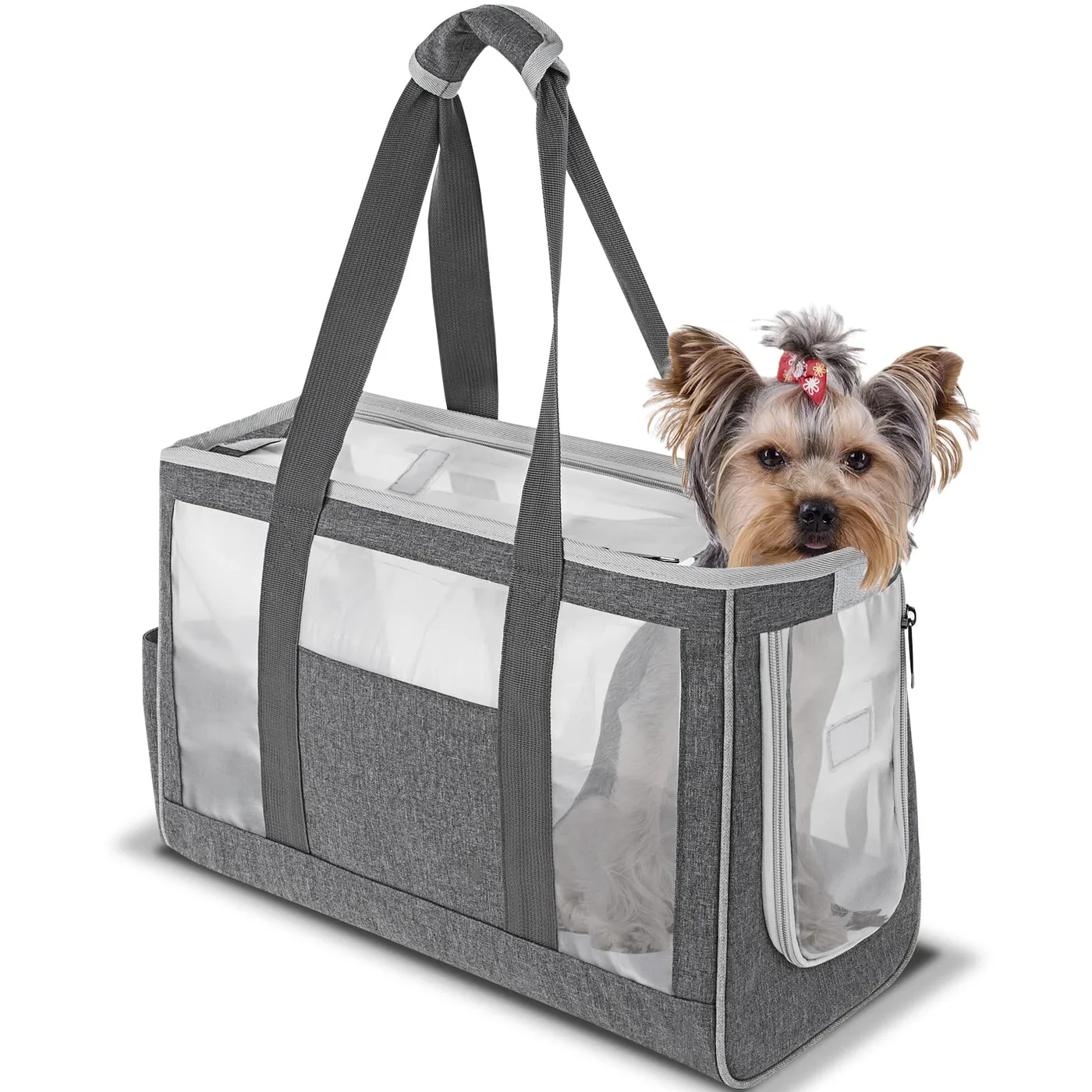
The Unboxing Sequence and Insert Kit
The unboxing sequence is a short script — open, see, lift, read — and each step has a physical component. Designing it deliberately costs little and it is the part of a DTC programme that generates reviews and repeat orders.
Opening is the first step and it should be easy and clean. A tear-strip with a pull force of 8-25 N, or a peel-and-seal closure with a reseal strip for returns, is the specification. A parcel that needs a knife is a small failure that customers mention, and a reseal capability is what makes a return possible without sourcing a new box.
Seeing is the second step and it is a packing decision rather than a print one. The product should be the first thing visible when the lid opens, which means any insert sits beneath or beside it rather than on top, and any printed material is to one side. A common error is to put a marketing card on top, so the first thing a customer touches is paper.
Lifting is the third and it needs a mechanism. A finger notch, a lift ribbon or a folded card that presents an edge makes the difference between a customer reaching into a box and lifting the product out. A lift ribbon of 15-20 mm costs 0.04-0.14 USD and is the cheapest perceived-quality item in the pack.
| Component | Purpose | Specification | USD | Skip if |
|---|---|---|---|---|
| Tissue or paper wrap | Protection, reveal | 17-30 gsm, unbranded or printed | 0.05-0.22 | Sustainability-led brand |
| Lift ribbon or tab | Presentation | 15-20 mm, 300-450 mm | 0.04-0.14 | Mailer is tight |
| Fit and care card | Reduces returns | 300-400 gsm, folded | 0.08-0.26 | Never |
| Thank-you card | Brand, review request | 300 gsm, one colour | 0.05-0.18 | Cost-led brand |
| Returns instruction | Return experience | Printed on the invoice | 0.00-0.04 | Never |
| Corrugated cradle | Protection | Die-cut, 3 mm board | 0.18-0.55 | Product ships rigid |
| Sticker or seal | Closure, brand | 50-75 mm | 0.02-0.12 | Minimal brand |
The fit and care card is the one insert that pays for itself, because it attacks the largest return reason. It should carry the three internal dimensions, the weight band, a fitting check the customer can perform, the compatible cleaning agents and a contact route. That is four pieces of information and it reduces fit-related returns measurably.
Volume of paper should be controlled. Three sheets is a considered pack; eight is landfill, and customers comment on it. The working rule is that the printed set fits on two sides of one folded card plus the invoice.
Sustainability interacts with every item on the list. A paper wrap, a paper tape closure and an unbleached mailer together cost 0.10-0.35 USD more and remove the plastic from the pack, which for a pet brand is often a stated value rather than a nice-to-have. Where a plastic-free claim is made, it should be true of the void fill and the tape too.
The sequence is open, see, lift, read — and the fit card and the lift ribbon are the two cheapest items that change how it is remembered.
Kitting, Warehousing and the Fulfilment Workflow
Kitting is the assembly of the finished parcel, and in a DTC programme it is a real cost with a real labour content. Whether it happens at the supplier's line, at a third-party logistics provider, or in-house decides a material part of the margin.
Kitting at the supplier's line is the cheapest option at 0.10-0.45 USD per unit, and it is possible where the pack is stable and the destination is known before despatch. It requires the insert artwork to be finalised before packing starts, and it removes flexibility: a unit kitted for one market cannot easily be redirected.
Kitting at a third-party logistics provider in the destination market costs 0.60-2.40 USD per unit plus receiving and storage, and it buys flexibility and speed. It is the right answer where a brand serves several markets from one inventory pool, or where the pack changes seasonally.
In-house kitting costs the same order as a 3PL plus the overhead of running a packing operation, and it is justified mainly at small volumes or where the pack is complex and brand-critical.
| Route | Kitting USD/unit | Storage | Flexibility | Lead to customer | Best for |
|---|---|---|---|---|---|
| Supplier line kitting | 0.10-0.45 | None | Low | Adds transit only | Stable single-market pack |
| 3PL, destination | 0.60-2.40 | Per pallet per month | High | 1-3 days | Multi-market, seasonal |
| In-house | 0.80-2.80 | Own cost | Highest | 1-2 days | Small volume, complex pack |
| Marketplace fulfilment | 0.60-3.40 | Per cubic foot | Medium | 1-2 days | Marketplace orders |
Pick and pack is the operational core and its cost is driven by touches. A pack that requires the operator to fold a box, insert a cradle, wrap the product, add three cards and seal takes 60-110 seconds; a pack that requires inserting a pre-kitted unit into a mailer and sealing takes 18-30 seconds. At a loaded rate of 0.006-0.011 USD per second, that is 0.11-1.21 USD per order of difference.
Pre-kitting is the answer to the touches problem and it is the reason supplier-line kitting is cheap. A pre-kitted unit — product, cradle, cards and wrap assembled into a single item — turns a sixty-second pack into a twenty-second one, and the assembly happened where labour costs less.
Inventory accuracy is the hidden cost in a DTC operation. A pick error costs a reshipment plus the original order value plus a customer service contact, typically 18-55 USD, which is why barcode scanning at pick and at pack is worth the 0.01-0.03 USD of labels.
Storage economics matter because a carrier is bulky. A pallet of 88 boxed carriers occupies about 1.5 m³, so a 3,000-unit inventory needs roughly 34 pallets and 51 m³, which at typical 3PL storage rates is a meaningful monthly line. Stocking depth should be set against that, not only against unit price.
Pre-kitting removes touches: it turns a 60-110 second pack into an 18-30 second one and moves the labour to where it costs less.

Product Page Data: What a Shop Assistant Would Have Said
In a retail channel a shop assistant answers the questions that decide a sale: will it fit, how heavy is it, how do I clean it, is it airline-compatible. In DTC those answers have to be on the product page, and they come from the tech pack rather than from the copywriter.
Dimensions are the first gap. Listing an external dimension only is the most common failure, because what matters to a customer is the internal space and the aperture. The page should carry three internal dimensions, the aperture dimensions, and the folded or storage dimensions, each with a stated tolerance of plus or minus 5 mm.
Weight data is the second gap and it needs two numbers: the product weight and the maximum pet weight. A carrier weighing 1.4 kg that carries up to 8 kg is a clear specification; one described as "lightweight" is not.
| Field | Source | Format | Tolerance | Why it matters |
|---|---|---|---|---|
| Internal length, width, height | Tech pack | mm | ±5 mm | Largest return reason |
| Aperture dimensions | Tech pack | mm | ±5 mm | Loading an unwilling cat |
| Product weight | Production sample | kg | ±5% | Carry comfort |
| Maximum pet weight | Load test report | kg | None | Claim must be evidenced |
| Folded dimensions | Tech pack | mm | ±5 mm | Storage |
| Materials and fibre content | BOM | Text | None | Compliance and allergies |
| Cleaning agents compatible | Chemical test | Text | None | Warranty protection |
| Ventilation area | Design file | cm² | ±10% | Airline and welfare questions |
Photography does the rest of the work and it should be planned as data rather than as styling. The set that converts: a three-quarter view, an interior view with the floor visible, an aperture view showing the opening, a scale view with a cat or a reference object, a folded view, and a detail view of the closure and the hardware. Six images, each answering a question.
A scale reference is the single most useful image and the most often missing. A carrier photographed alone gives no sense of size; the same carrier photographed beside a cat of known weight answers the fit question without a word of copy.
Video answers the two questions images cannot: how the carrier folds, and how a cat goes into it. A 20-40 second clip with no narration reduces both the fit returns and the pre-sale questions, and it is cheap to produce once the sample exists.
Compliance content belongs on the page too, because it is a purchase criterion in this category. Fibre content, the cleaning chemistry and any test evidence behind a claim should be stated, and where a claim is made about airline compatibility it should be qualified rather than absolute — the requirements are published by carriers and differ by route.
Six images, three internal dimensions and an evidenced weight claim: that is what replaces the shop assistant.
Shipping Cost Architecture and Free Shipping Thresholds
Shipping is usually the largest controllable cost in a DTC contribution margin, and the architecture — who pays, at what threshold, by what service — decides whether a programme is profitable at a given price point. It should be modelled rather than guessed.
The build-up on a typical order: pick and pack 0.60-2.40 USD, mailer and void fill 0.55-1.75 USD, parcel postage 4.80-13.60 USD depending on zone and dimensional weight, payment processing 2.4-2.9% plus a fixed fee, and a share of customer service and returns. On a 62 USD order that is 12-24 USD, or 19-39% of revenue before the cost of goods.
Free shipping is the expectation in most markets, which means the cost has to be absorbed into the price rather than shown separately. The threshold at which it works is an average-order-value question: a threshold set above the current average basket lifts basket size, and one set below it gives away margin on orders that would have converted anyway.
| Line | Tight pack USD | Loose pack USD | Notes |
|---|---|---|---|
| Revenue | 62.00 | 62.00 | Includes free shipping |
| Cost of goods landed | -15.10 | -15.10 | FOB plus freight and duty |
| Mailer and void fill | -0.75 | -1.65 | Tight versus loose sizing |
| Pick and pack | -0.85 | -1.60 | Pre-kitted versus loose |
| Parcel postage | -7.20 | -11.40 | Dimensional weight effect |
| Payment processing | -2.05 | -2.05 | 2.9% plus fixed fee |
| Returns provision | -1.85 | -2.40 | At 9% return rate |
| Contribution | 34.20 | 27.80 | 55% versus 45% |
The difference between the two columns is 6.40 USD of contribution on the same product at the same price, produced entirely by packaging and kitting decisions. That is the clearest illustration of why packaging is a margin lever in DTC and not a cost line to be minimised in isolation.
Zone and service mix is worth modelling once. An economy service at 3-6 days and an express service at 1-2 days differ by 40-120% in postage, and most customers choose economy when both are offered. Offering only express is an unforced cost; offering only economy loses the customers who need speed.
International orders change the arithmetic again, and DTC brands routinely underprice them. Duty, taxes, a longer transit and a higher return cost mean an international order needs a 15-35% higher contribution to be worth the same, which is why delivered-duty-paid pricing with the duty built in is usually better than surprising a customer at the door.
Packaging and kitting decisions were worth 6.40 USD of contribution per order in the comparison above, on an identical product at an identical price.
Returns in DTC: Grading, Resale and the Second Journey
A DTC return is not a single event but a sequence with a grading decision in the middle, and the grading decision determines whether the unit is an asset or a write-off. Managing it deliberately recovers 40-70% of the value that would otherwise be lost.
The return window is a competitive requirement at 30-60 days and it should be stated clearly, along with the condition required. For a pet product the condition criterion has to be explicit: unused, no pet hair, no odour, all components and documentation present, and packaging intact. Without that, a return becomes a donation.
Grading happens on receipt and it should be a three-way decision: resaleable as new, resaleable as open-box, or not resaleable. As new means sealed or as-delivered condition and it recovers 92-97% of value. Open-box means complete and undamaged but with opened packaging, and it recovers 60-80% through a secondary channel. Not resaleable means used by a pet or damaged, and it recovers zero.
| Grade | Criteria | Share of returns | Recovery | Disposition |
|---|---|---|---|---|
| A, as new | Sealed, unused, packaging intact | 35-55% | 92-97% | Return to stock |
| B, open box | Complete, undamaged, packaging opened | 20-35% | 60-80% | Secondary channel or outlet |
| C, minor defect | Marked packaging or minor fault | 5-15% | 40-60% | Outlet or staff sale |
| D, used by pet | Hair, odour, signs of use | 8-20% | 0% | Donation or disposal |
| E, damaged in transit | Carrier damage | 2-6% | Carrier claim | Claim and dispose |
Pet hair is the decisive test in this category and it should be applied at intake without exception. A carrier that has contained an animal cannot be resold as new regardless of how it looks in a photograph, and a single such unit resold as new generates a complaint worth far more than the unit.
The second journey is what damages returned units. A carrier returned in its original mailer with the seal re-used arrives crushed; the provision of a return mailer, or a resealable outer designed for two journeys, costs 0.15-0.55 USD and lifts the share graded A materially.
Refurbishment is worth a defined process for grade B and C. A lint roll, a wipe-down with a compatible agent, a replacement polybag and a repack takes 3-6 minutes and costs 0.60-1.80 USD, and it moves a unit from zero to 60-80% recovery. That is the highest-return activity in a returns operation.
Data closes the loop. Return reason codes captured at the portal — too small, too large, not as described, changed mind, damaged — produce a monthly report that usually identifies one dominant cause. In this category it is almost always fit, and the fix is on the product page rather than in the product.
Grading at intake, a mailer designed for two journeys, and a defined refurbishment step recover 40-70% of what a returns process would otherwise write off.
Programme Notes for a DTC Launch
A DTC programme has more moving parts than a wholesale one, and the critical path is usually content rather than production. Sequencing it correctly is what determines whether a launch date holds.
The sequence runs: product specification and sampling 6-10 working days per iteration; packaging and insert artwork finalised before bulk starts; bulk production 35-50 days after sample approval; transit, clearance and delivery 20-45 days; kitting and inbound to the fulfilment partner 3-10 days; and product page, photography and video produced against the approved sample, which can run in parallel with production and should.
Photography against a production sample rather than a prototype matters, because a prototype differs from production in colour, hardware finish and print. Booking photography after the approval sample is available costs a few days and avoids re-shooting the whole set.
Quantity for a first DTC order should be set against cash and storage rather than unit price. 500-1,500 units tests demand, occupies 6-17 pallets, and can be replenished inside the 35-50 day production window plus transit.
Packaging decisions should be locked last but decided earliest, because they depend on the product's folded dimensions, which are not known until the sample is approved. The practical method is to fix the mailer size band at the sample stage and confirm the final dimensions after approval.
Inspection additions for a DTC programme: a dimensional check on folded units at 5 per lot against the mailer fit, a print and colour check on inserts against the approved proof, a drop test on one packed parcel per lot from the mailer's rated height, and a scan check on any barcode applied at the line. Material declarations for the fabrics and the packaging are checked against the criteria published by OEKO-TEX, and physical test methods follow practice published by ASTM International. Our production team supports DTC programmes with line kitting and tight-tolerance packing through the SGS-verified production base under ISO 9001 and BSCI coverage, with prototypes in 6-10 working days, bulk production 35-50 days after sample approval, final random inspection to AQL 2.5, T/T 30/70 and FOB Xiamen. In DTC the packaging is the margin, the product page is the shop assistant, and the critical path is content.
Order and quality terms
- MOQ 500 pieces per colourway; samples in 6-10 working days
- Bulk production 35-50 days after approval; AQL 2.5 inspection standard
- T/T 30/70 terms, FOB Xiamen, full document set per shipment
People Also Ask
Why is dimensional weight so important for cat carriers?
They are bulky and light, so parcel carriers bill on volume rather than weight. At a divisor of 6,000, a 460 x 330 x 130 mm mailer bills 3.29 kg against 1.8 kg actual.
How much does mailer sizing affect shipping cost?
1.10-3.40 USD per order for 30 mm of excess dimension. Over 5,000 orders a year that is 5,500-17,000 USD recovered for thirty millimetres of board.
What should a DTC cat carrier ship in?
A corrugated mailer sized to within 15-25 mm of the folded product, with a die-cut cradle. A poly mailer lacks crush protection; a rigid box is a presentation choice that inflates dimensional weight.
What inserts are worth including?
A fit and care card above all, because it attacks the largest return reason, plus a lift ribbon at 0.04-0.14 USD. Three sheets of paper is a considered pack; eight is landfill.
Should kitting happen at the factory or a 3PL?
At the factory where the pack is stable, at 0.10-0.45 USD per unit against 0.60-2.40 at a 3PL. Pre-kitting turns a 60-110 second pack into an 18-30 second one.
What dimensions should a product page show?
Three internal dimensions, the aperture dimensions and the folded dimensions, each at plus or minus 5 mm, plus product weight and maximum pet weight evidenced by a load test.
What return rate should a DTC cat carrier expect?
6-16%, with fit the dominant reason. A scale reference image and a fit card reduce it measurably, because the fix is on the page rather than in the product.
How should returned carriers be graded?
As new at 92-97% recovery, open box at 60-80%, minor defect at 40-60%, and used by pet at zero. Pet hair is the decisive test and there is no exception.
Frequently Asked Questions
What is a dimensional weight divisor?
The number the cubic volume is divided by to produce a billable weight, typically 5,000 or 6,000 depending on carrier and service. Carriers bill the greater of dimensional and actual weight.
Why design the product to fold flat for DTC?
Because folded height drives dimensional weight directly. Folding to 110 mm instead of 160 mm saves 0.8-1.4 kg of billable weight per order, worth more annually than most packaging upgrades.
What pull force should a tear-strip have?
8-25 N. It should open cleanly without a knife, and a reseal capability is what lets a customer return the unit without sourcing a new box.
Why put the fit card above the product in packing order?
Actually it should not be on top. The product should be first visible; paper on top means the customer touches packaging first. Cards go beneath or beside.
What makes a pack cheap to pick and pack?
Pre-kitting. Assembling product, cradle, cards and wrap into one item at the line turns a 60-110 second operation into 18-30 seconds at the 3PL.
How much does a pick error cost?
18-55 USD: a reshipment plus the original order value plus a customer service contact. Barcode scanning at pick and pack costs 0.01-0.03 USD and prevents it.
How much warehouse space does a carrier inventory need?
A pallet of 88 boxed carriers occupies about 1.5 m³, so 3,000 units needs roughly 34 pallets and 51 m³. Stocking depth should be set against that, not only unit price.
What photography set converts best?
Six images: three-quarter, interior with the floor visible, aperture, a scale view beside a cat of known weight, folded, and a detail of the closure and hardware.
Should airline compatibility be claimed on a product page?
Only qualified. Requirements are published by carriers and differ by route, so an absolute claim is both inaccurate and a return risk. State the dimensions and let the customer check.
How should a free shipping threshold be set?
Above the current average order value, so it lifts basket size rather than giving away margin on orders that would have converted anyway. It is an average-basket question, not a fixed number.
Why is delivered-duty-paid better for international DTC?
Duty, longer transit and higher return cost mean an international order needs 15-35% more contribution to be worth the same. Building duty into the price avoids a surcharge at the door.
What refurbishment is worth doing on returns?
A lint roll, a wipe-down with a compatible agent, a replacement polybag and a repack: 3-6 minutes and 0.60-1.80 USD to move a unit from zero to 60-80% recovery.
Why capture return reason codes at the portal?
Because the monthly report usually identifies one dominant cause, which in this category is almost always fit. The fix is then on the product page rather than in the product.
When should product photography be booked?
Against the approved production sample rather than a prototype, which differs in colour, hardware finish and print. It costs a few days of schedule and avoids re-shooting the set.
Talk to QUANZHOU JUNYUAN BAGS about a pet carrier program: MOQ 500 pieces per colourway, samples in 6-10 working days, bulk production in 35-50 days under AQL 2.5 inspection.
Get a free quote Request a sample