Cat Travel Bag: Manufacturing Standards
A cat travel bag is governed by three standard tiers: management system, product safety and performance test method. In practice that means ISO 9001 process control, restricted-substance and physical-hazard screening for the destination market, and documented proof of a 40 kg static load at 10 kg rating, escape resistance under 30 N pry, and verified ventilated open area.
Standards language is where pet brands most often misrepresent themselves, usually unintentionally, because they repeat a claim structure heard elsewhere rather than reading the document behind it. This page sets out each applicable tier, what it actually obliges, what changes in the physical product, and what evidence has to exist and be date-valid. It deals with the three areas where misunderstanding is expensive: chemical compliance, physical hazard screening, and performance claims such as escape resistant or airline capable. Every number stated is either a specification target written into a tech pack or an acceptance value used at inspection, and none is a marketing adjective. The usual programme terms apply throughout: MOQ 500 pieces per colourway, prototypes in 6-10 working days, bulk production 35-50 days after golden sample approval, final random inspection to AQL 2.5, T/T 30/70 payment and FOB Xiamen loading.
As a pet carrier manufacturer handling cat carrier programmes, our team quotes MOQ 500 pieces per colourway and returns a sewn sample in 6-10 working days.
Three Tiers of Standard and Where Each One Bites
Standards applicable to a sewn pet product fall into three tiers that behave completely differently, and confusing them produces either false claims or unnecessary cost. Understanding which tier governs which decision is the first step in writing a compliant yet economic specification.
Tier one is management system. It governs how the organisation plans, documents, controls records and handles corrective action, and it says nothing whatsoever about whether a given product is safe. Certification to ISO 9001 means the processes are documented and audited, which materially reduces variance between lots, but it is not a product certification and presenting it as one is the single most common misstatement in this category.
Tier two is product safety and chemical compliance. These are legal requirements set by jurisdiction rather than by agreement, and they are mandatory regardless of whether anyone asks for them. They cover restricted substances in textiles, coatings and plastics; heavy metals in hardware, prints and plating; and physical hazards such as small parts, sharp points and edges, and entanglement or suffocation risks in flexible enclosures. Non-compliance is a regulatory matter, not a quality one.
Tier three is performance test method. This tier describes how to measure something - how to apply a load, how many cycles to run, what acceptance value to record - and it is voluntarily adopted by agreement between buyer and supplier. It supplies the numbers that make all other claims meaningful. Meeting tier three well does not excuse tier two non-compliance, and certification to tier one does not satisfy either of the others.
| Tier | Governing question | What changes in the product | Evidence required |
|---|---|---|---|
| Management system | Are processes controlled? | Nothing directly; reduces variance | Current certificate with correct scope and address |
| Chemical and hazard | Is sale legal in market? | Coating chemistry, hardware plating, print ink, small parts | Laboratory reports, declarations, dated and within validity |
| Performance method | Does the claim hold? | Load paths, closure construction, seam specification | Test report with method named and values recorded |
A practical detail often overlooked is that screening has to follow the supplier's actual bill rather than the nominal one. Adhesives, thread finishes, print primers and backing stabilisers are rarely listed on a tech pack yet all carry their own chemistry, so every auxiliary consumed at meaningful volume belongs on the component list. Forwarding the list to the laboratory rather than selecting an extract of it is the difference between a screen that covers the product and one that covers most of it.
The practical discipline is to keep three separate files with three separate review dates. Blending them into one compliance folder is why brands cannot answer a retailer's questionnaire in under a week.
Chemical Compliance: What Gets Tested and How Often
Chemical compliance for a sewn pet product concentrates on three risk concentrations: applied coatings and finishes, printed or dyed surfaces, and metal hardware including plating. The bill of materials determines what must be screened, and the destination determines which list applies.
Textile and coating screening addresses restricted substances such as azo colourants, certain flame retardants, chloro and brominated carriers, and water-repellent finishes based on per- or polyfluoroalkyl chemistry where those are restricted by the destination. European-market programmes are framed against the regime administered by the European Chemicals Agency, while Californian-market programmes additionally consider listing requirements administered by the Office of Environmental Health Hazard Assessment. Where a screen is performed against a private label criterion, the applicable criterion is usually that published by OEKO-TEX.
Heavy metal screening covers hardware plating, metal zipper components, painted or powder-coated parts and print inks. It is normally run on the finished part rather than on the base metal, because plating baths and paint batches are where contaminants enter. Sampled parts should include the plating variants actually used, since a zinc alloy buckle and the same buckle in black nickel are two separate test items.
Children's product rules are relevant here even though this is a pet product, because some retailers classify pet accessories under their general-use safety regime and because small-parts screening language derives from it. The United States regime administered by the Consumer Product Safety Commission is the reference most commonly cited by North American retail buyers, and it is worth having the applicable opinion documented rather than assumed.
Testing frequency is the decision most often made wrongly. A full screen every season is wasteful; a screen once at first production is insufficient. The defensible policy screens every new material and component at introduction, repeats annually for maintained articles, and re-tests on any change of supplier, plating bath, ink or coating batch. Change-driven re-testing is the policy that actually prevents failures and it costs the least.
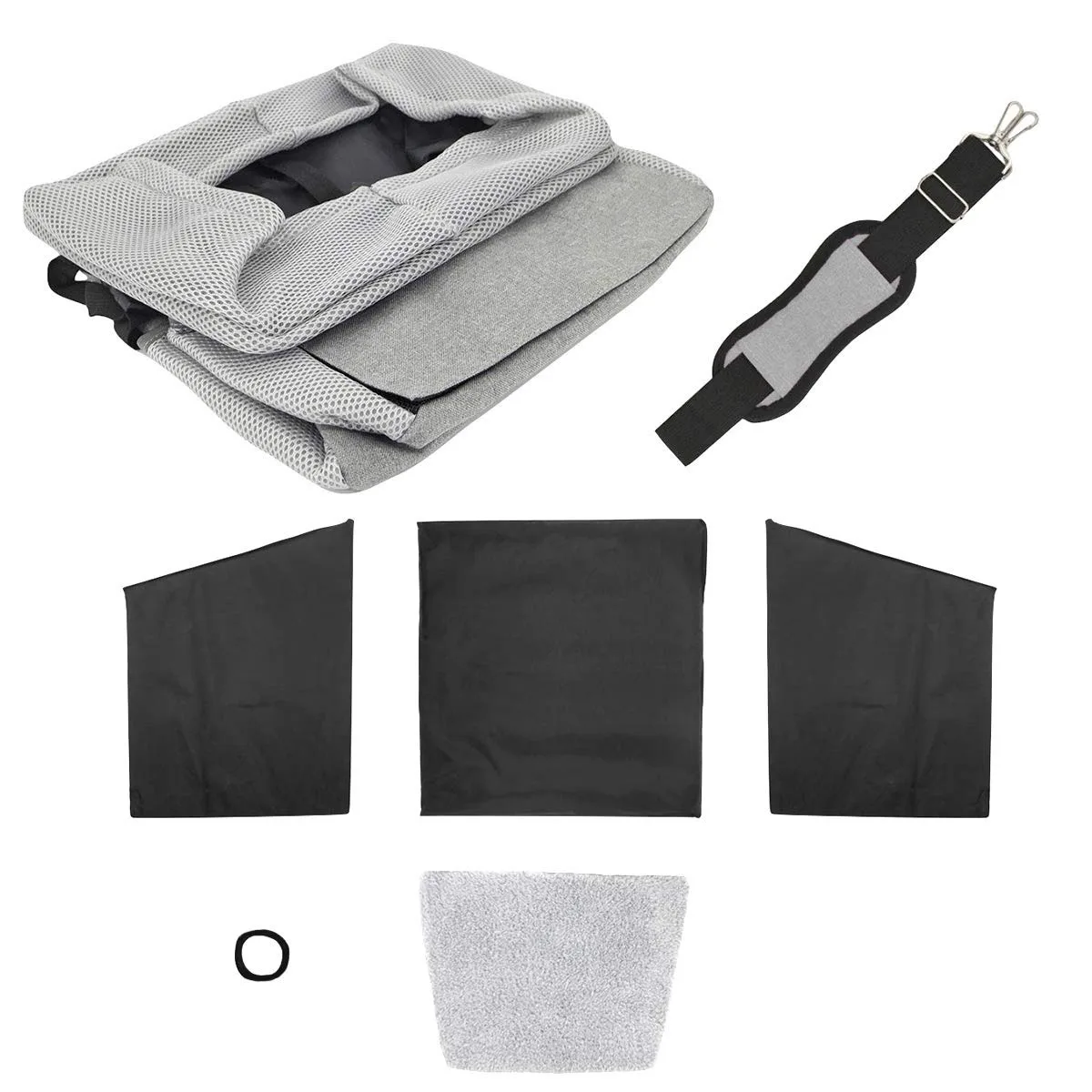
Physical Hazard Screening in a Soft Enclosure
Chemical compliance gets the attention; physical hazards generate the incidents. A soft pet enclosure presents a specific set of physical risks that need to be designed out rather than inspected in, and there are five of them.
Small parts come first. Detachable elements such as riveted trim, snap covers, decorative plaques and zipper pulls represent an ingestion hazard if they detach. The control is twofold: parts that pass through a small-parts gauge must not be detachable at all, and every decorative fixing undergoes a pull test at a defined load, typically 50-70 N, with no detachment and no deformation that would allow later detachment.
Sharp points and sharp edges arise mainly from metal hardware burrs, wire elements and broken or cut plastic edges, including at moulded vent slots. Controls are process-based: tumbling or vibratory finishing on metal parts with a written burr acceptance limit, radiused edges specified on moulded parts, and a defined post-trim inspection for both.
Entanglement and strangulation risk come from loops, cords and loose webbing inside or outside the enclosure. Anything forming a loop that could admit a limb or a head must be either closed permanently or limited in length by specification, and any elastic cord needs restraint against uncontrolled retraction. This is a design review item rather than a defect that inspection reliably finds.
Suffocation risk attaches to flexible film packaging rather than to the product, but it determines the packaging specification: film thickness and warning markings for any poly bag above a defined size are governed by the destination's flexible packaging rules, and the printed warning must be in the right language for the destination.
Needle and broken-metal control closes the list. It is the highest-consequence mechanical hazard in any sewn product, and it is controlled procedurally: a needle issue-and-return log with full fragment accounting, no loose needles permitted at any workstation, a written lost-fragment response, and 100% metal detection at pack-out with sensitivity verified at defined intervals using calibrated test pieces and recorded results.
Structural Performance: Methods and Acceptance Values
Performance testing converts adjectives into numbers. Six tests cover the structural behaviour of this product class, and each has a stated method rather than an opinion attached.
Static base load is the first. With the unit supported at its feet, four times rated load is applied through a distributed platen to the floor for 60 seconds. On a 10 kg rated cat carrier that is 40 kg, and acceptance is recorded deflection rather than a simple pass: floor deflection under load below 8 mm, no seam opening, no structural damage and full recovery within ten minutes of unloading.
Handle and strap assemblies follow. Static hold at five times rated for 60 seconds, plus a dynamic test where the unit is cycled with rated load applied to simulate walking motion for several thousand cycles, then re-tested statically. Acceptance is no stitching failure and deformation below a defined limit, since elastic deformation that recovers is acceptable while permanent extension is not.
Drop testing catches construction weaknesses that static tests miss. The loaded unit is dropped from 200 mm onto a concrete face onto each major face in turn for ten drops, with acceptance of no failure of any load-bearing seam and no detachment of hardware.
Zipper and closure cycling addresses durability of the most-used component: 5,000 open-close cycles with a defined lateral load applied to simulate the closure working against pressure, then re-checking function. Seam strength testing completes the set, testing each seam classification tested destructively against a minimum load expressed per unit length.
Conditioning precedes all of it. Samples are conditioned in a standard atmosphere and - where the destination spans climate extremes - additional sets are tested after cold conditioning and after hot humid conditioning, because a construction that passes at room temperature may fail brittle at low temperature. Where no published method exists for the exact construction, the correct approach is to write a documented internal method stating fixture geometry, load application rate, conditioning and acceptance, so the test can be repeated identically next year rather than being reinvented by whoever happens to be present.
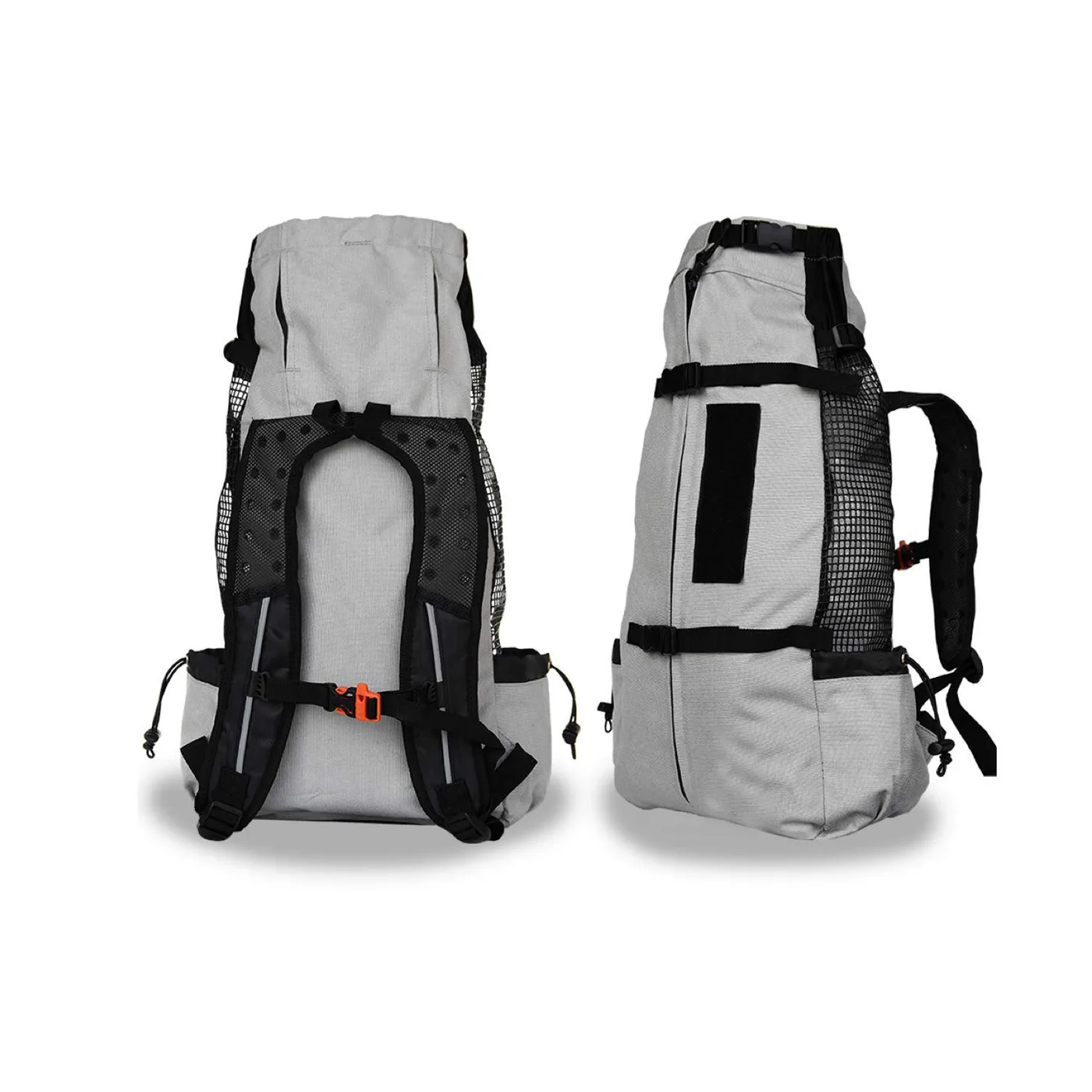
Escape Resistance as an Engineered Requirement
Escape resistance is the claim most often made about cat bags and the one least often tested. It is also the one that produces the incidents customers report, because a cat escaping in a vehicle or an airport terminal is a genuine safety event rather than an inconvenience.
The behaviour driving the requirement is specific. A cat inside an enclosure applies its forepaws to a closure line and works against it with a concentrated, sustained pry force, combined with body weight against the panel. It can also exploit any gap at a seam corner or any closure that behaves differently when loaded from inside rather than outside - which is why testing from outside alone is insufficient.
The construction answer has four elements. A reverse-coil chain places the coil inside where it resists separation under internal pry far better than a conventional chain. A locking slider resists travel once released. A storm flap covers the line so the slider cannot be reached directly. And a secondary mechanical restraint - typically a clip through the slider pull or a tab locked over it - prevents any residual travel from opening a gap.
Testing follows the behaviour. A lateral pry of 30 N applied through a 2.0 mm probe at the slider end and at mid-panel for ten seconds must not separate the coil or create an opening wider than 6 mm. A separate push-out test applies a distributed 100 N outward force against the closure region from inside, held for thirty seconds, with the same acceptance. Both tests are run from inside the enclosure.
Corner geometry deserves specific attention because it is where escape paths originate. The intersection of a base seam and a vertical seam, particularly where three panels meet at a corner with a gusset, creates a point where two closure systems meet and neither fully controls the resulting opening. The design answer is either a bound reinforcement patch covering the intersection or a construction that carries the closure continuously around the corner rather than terminating it.
Interior fittings have their own requirements. View windows or any secondary opening must be either non-openable or fitted with the same closure standard as the main entry, and interior panels must be joined such that a cat cannot work a gap at a corner. Finally, the interior tether point is part of escape control: an anchor tested to 500 N static with the load path reaching the frame gives the handler a means of restraint during transfer.
Ventilation and Thermal Measurement Method
Ventilation claims are made constantly and measured rarely. The relevant quantity is free open area expressed as a percentage of the ventilated face, and the relevant method is area calculation validated by a physical airflow or temperature-rise test rather than a visual estimate.
Calculation starts from aperture geometry: for punched or slotted sheet, the free area per aperture times aperture count divided by panel area; for mesh, the open fraction stated by the material supplier and confirmed by counting yarn and interstice width. Slots narrower than 6 mm deny a claw purchase while contributing useful area. The resulting figure should be recorded per face rather than for the product, because a single large face all located on one side does not generate cross ventilation.
The working target for this class is 22-30% open area per ventilated face across at least three faces, arranged with at least one high and one low aperture so buoyancy-driven exchange occurs even without external airflow. Distribution matters more than the headline number.
The physical verification is a temperature-rise test: the unit is placed in a chamber at 30 °C with a heat source simulating the animal's metabolic output, and interior temperature at the animal's normal position is logged for two hours. Acceptance is a rise of no more than 5 °C above ambient. This test catches the difference between distributed and total open area, and it detects constructions where the lining or spacer fabric bridges the aperture and blocks the flow path that the calculation assumed was open.
Atmospheric hazards complete the section. With urea-based soiling common in transit, a limited-build-up check is useful: the same test rig measures concentration at head height after two hours, with acceptance below 10 parts per million. Species handling welfare framing is cross-checked against guidance published by the American Veterinary Medical Association.
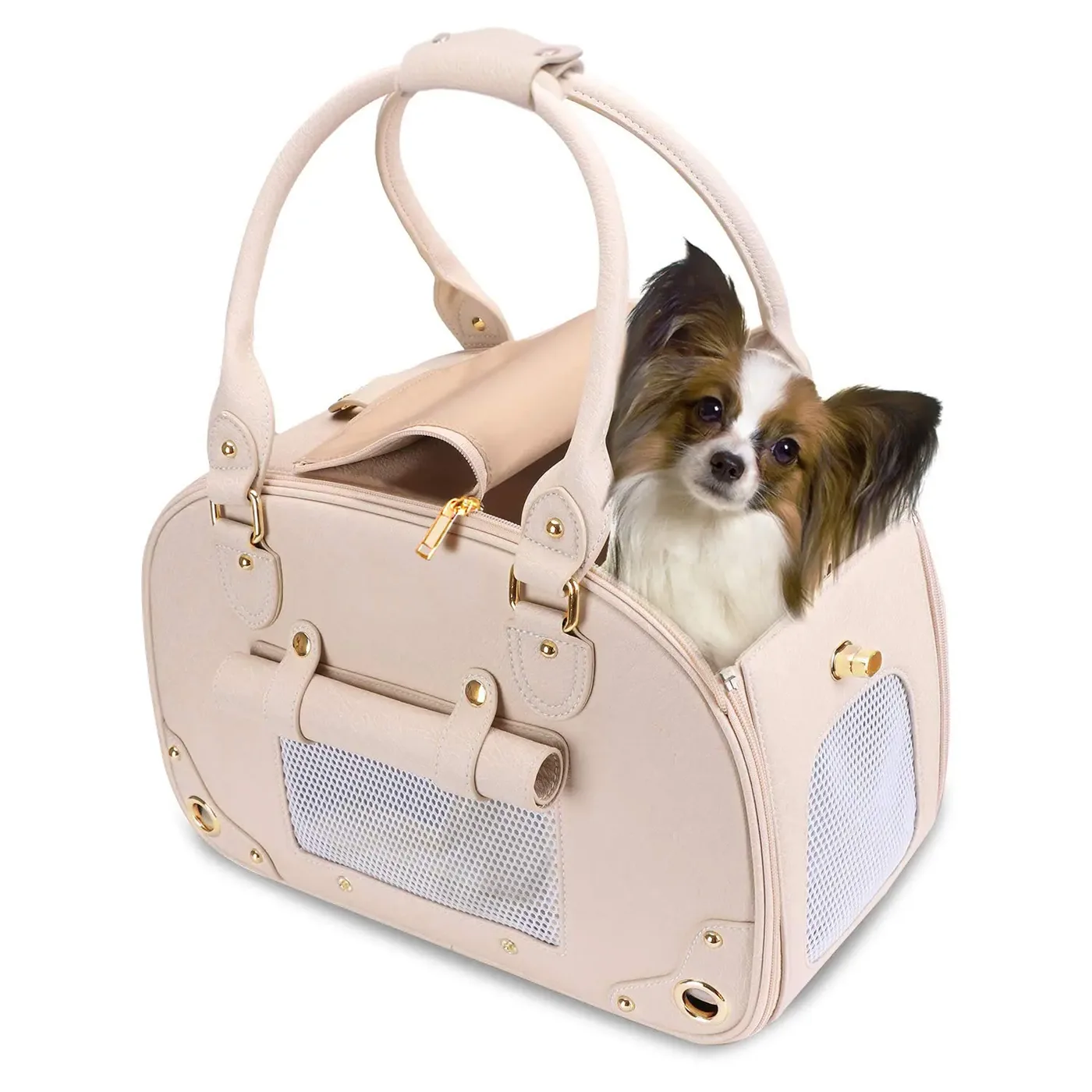
Air Transport Requirements and Honest Claims
Airline capable is the claim most frequently misused in this category, and it is worth being precise because the consequences of getting it wrong land on the customer rather than on the brand.
The binding rules are set by two bodies. Live animal transport requirements are published by IATA and cover container construction, ventilation on at least three sides, leakage containment, labelling and documentation. Individual airlines adopt those rules with their own variations, which is why no single product can honestly be described as universally airline approved without qualification.
Cabin carriage rules add the constraint that determines most soft products: the unit must fit under the seat in front of the passenger, and under-seat dimensions vary by aircraft type and by airline, typically to an envelope around 45 cm x 30 cm x 25 cm for the largest common case and noticeably smaller on some regional aircraft. Because soft units deform, the honest approach is a stated maximum undeformed dimension with the product measured uncompressed, together with a recommendation that the buyer confirm with the carrier. Carrier-specific guidance is published in the United States by the Federal Aviation Administration.
Constructional requirements from the live animal rules matter regardless of cabin or hold. Ventilation on multiple faces, a leak-proof base, no interior protrusions, secure closure that the animal cannot open, adequate space to stand and turn, and labelling with live animal markings and orientation arrows where required.
Claim language should therefore be precise in its own documentation. Stating compliance with a named standard at a stated date, supported by a test report, is legitimate. Stating blanket approval by all airlines is not, and it is the kind of sentence that attracts regulatory attention to an otherwise sound programme. Related reading on this theme is available in the piece covering airline requirements for cat carriers.
Documentation, Validity Dates and Change Control
A compliance system is only as good as its document control, and document control fails in predictable ways. Four practices prevent nearly all of them, and none costs anything but discipline.
Index everything against the bill of materials. Every material and component should have a named document - test report, declaration or supplier statement - referenced by its own item number, so that a questionnaire can be answered by looking up a list rather than by searching folders. Where a single component has several variants, each variant needs its own entry.
Record validity dates and set review triggers. Test reports age out, certificates expire, and declarations are superseded by regulation changes rather than by time. Minimum practice is an annual review date on every item, plus immediate review triggered by any change of material, supplier, plating specification or ink.
Require that every report identify the tested article unambiguously. The most common failure mode in this file is a report describing "polyester fabric, black" when six black polyester fabrics exist in the range. Reports should carry the component reference, the supplier's material code, the date produced and ideally a photograph of the tested article.
Finally, keep an assumption register, and keep it short and written down. Most compliance failures originate in an assumption nobody wrote: that a component was unchanged, that a coating was the same chemistry as last year, that a destination list had not been updated, or that a certificate scope covered the building where the work actually happened. Writing each one down in a single page, with the person who verified it and the date, converts an invisible risk into a reviewable one and takes about twenty minutes a quarter.
Then the file closes out the programme as it does everywhere else: prototypes in 6-10 working days, bulk in 35-50 days after approval, final random inspection to AQL 2.5 with critical characteristics handled by 100% screening rather than sampling, T/T 30/70 payment and FOB Xiamen loading. Compliance stops being a cost centre once the file is organised well enough to answer a retailer question in an afternoon.
Why brands source here
- Pet carrier programs run since 2014; founding team in sewn goods since 2004
- SGS-verified production floor of 4,950 m² with 137 workers across 7 lines
- Monthly capacity of 200,000 units, audited to BSCI and ISO 9001
People Also Ask
Is an ISO 9001 certificate a product safety approval?
No. It certifies that processes are documented and audited, which reduces lot-to-lot variance, but it says nothing about whether a specific product is safe or compliant with any chemical or hazard rule.
How much ventilation does a cat travel bag need?
22-30% open area per ventilated face across at least three faces, with one high and one low aperture so buoyancy exchange occurs, verified by a two-hour test holding interior rise below 5 °C.
What static load should a 10 kg rated cat bag survive?
Four times rated, so 40 kg applied through a distributed platen for 60 seconds, with recorded floor deflection below 8 mm, no seam opening and full recovery within ten minutes.
How is escape resistance actually tested?
From inside: 30 N lateral pry through a 2.0 mm probe at the slider and mid-panel, plus a distributed 100 N outward push held thirty seconds, accepting no separation or gap wider than 6 mm.
What maximum dimension applies to cabin carriage?
Under-seat envelopes vary but commonly reach around 45 x 30 x 25 cm, uncompressed. State the undeformed dimension and tell buyers to confirm with their specific carrier.
How often should restricted-substance testing be repeated?
At introduction for every new material, annually for maintained articles, and immediately on any change of supplier, plating bath, ink batch or coating batch.
Why test vents for restriction rather than just area?
Because lining or fabric bridging across an aperture, and structural losses when a claw damages fine mesh, both reduce effective area to well below the calculated figure without changing the drawing.
Frequently Asked Questions
What are the three tiers of applicable standard?
Management system such as ISO 9001, which governs process control; product safety and chemical rules set by jurisdiction, which are mandatory; and performance test methods, voluntarily adopted by agreement to substantiate claims.
Why should the three tiers be kept in separate files?
They have different scopes and different review triggers. Blending them is why brands cannot answer a retailer compliance questionnaire inside a week, since everything has to be re-read to answer each question.
Which components concentrate chemical risk?
Applied coatings and finishes, dyed or printed surfaces, and metal hardware including plating. Plating baths and ink batches are where contaminants enter, which is why finished parts get tested rather than base metal.
Does a variant finish need its own test?
Yes. A zinc alloy buckle and the same buckle with black nickel plating are two separate test items, because the plating process changes the analytical result.
What pull test applies to decorative fixings?
Typically 50-70 N with acceptance of no detachment and no deformation that would allow later detachment, in addition to ensuring anything that could fit a small-parts gauge is simply not detachable.
How are entanglement risks controlled?
At design review: any loop admitting a limb or head must be closed permanently or limited in length by specification, and elastic cord needs restraint against uncontrolled retraction.
What is the needle control procedure?
A needle issue-and-return log with full fragment accounting, a written lost-fragment response, no loose needles at any workstation, and 100% metal detection at pack-out with sensitivity verified against test pieces on a recorded schedule.
What handle and strap test applies?
Static hold at five times rated for 60 seconds, plus several thousand cycles of simulated walking motion followed by re-testing. Distinction matters: recoverable elastic deformation passes; permanent extension does not.
How is the drop test configured?
Ten drops from 200 mm onto concrete, one per major face, with rated load inside, accepting no failure of any load-bearing seam and no hardware detachment.
Why condition samples before testing?
A construction that passes at room temperature can fail brittle after cold conditioning and lose strength after hot humid conditioning. Testing only at ambient hides both failure modes until they appear in the field.
What makes a closure resist internal pry?
A reverse-coil chain with the coil inside the enclosure, a locking slider, a storm flap over the line, and a secondary restraint such as a clip through the slider pull preventing residual travel.
What should the interior tether anchor withstand?
500 N static applied to the anchor with the load path reaching the frame element through a webbing extension rather than terminating in face fabric, giving the handler control during transfer.
Which air transport rules bind the design?
Live animal requirements published by IATA covering construction, ventilation on multiple faces, leak-proof base, secure closure and labelling, plus individual airline cabin dimensions adopted with variation.
What should a report identify to be usable?
The component reference, the supplier material code, the production date and preferably a photograph. A report reading only black polyester fabric describes six different materials in most ranges.
Talk to QUANZHOU JUNYUAN BAGS about a pet carrier program: MOQ 500 pieces per colourway, samples in 6-10 working days, bulk production in 35-50 days under AQL 2.5 inspection.
Get a free quote Request a sample