Dog Carrier Backpack for Guinea Pigs: Small Pet
A guinea-pig-capable carrier is sized by floor area rather than by volume: the class runs 0.7-1.5 kg over a 200-350 mm body, requiring 0.10-0.15 m² of unbroken solid floor per animal, deflection under 2.5 mm under load, a textured non-abrasive surface with no opening above 6 mm, 16-20% open area with dust filtration, and a stated thermal ceiling of 26 °C.
This page covers the engineering differences between a guinea pig carrier and the rabbit and dog designs it is usually derived from. Guinea pigs are wide, low, social and almost entirely defenceless: they cannot climb or jump, they have no effective cooling mechanism, their footpads are injured by any floor that is not solid and softly textured, and they produce large volumes of urine while living in a substrate that generates respirable dust. Those four facts set floor area, floor surface, thermal performance and filtration respectively, and they run in a different direction from every dog-derived assumption in the tech pack. Because they are also carried in pairs, the load case and the interior layout change with occupant count. Commercial terms follow the standard program: MOQ 500 pieces per colourway, prototypes in 6-10 working days, bulk production 35-50 days after sample approval, final random inspection to AQL 2.5, T/T 30/70 payment and FOB Xiamen loading.
A dog carrier manufacturer is expected to hold the dog carrier backpack pattern card for at least twelve months, so a reorder matches the approved sample rather than drifting.
Mass Class and Floor Area: Sizing by Plan View Rather Than Volume
Guinea pig geometry defeats the volume-based sizing logic used elsewhere in the range. An adult weighs 0.7-1.2 kg with some individuals reaching 1.5 kg, measures 200-350 mm nose to rump, and is roughly as wide as it is tall: the cross-section is a barrel, not a slab. Height is the least useful dimension in the specification because the animal does not climb, does not stand on its hind legs and does not need headroom for any postural reason.
The sizing variable is floor area. A guinea pig rests with its full ventral surface in contact with the floor, and it needs to be able to turn around and to lie fully extended without overhanging an edge. The working figures are 0.10-0.15 m² of unbroken floor for a single animal and 0.18-0.25 m² for a pair, which converts to interior plan dimensions of roughly 280-380 mm by 380-560 mm for one and 380-480 mm by 480-560 mm for two.
Interior height is set by containment rather than by comfort, and it is deliberately low. 200-280 mm suits the class, which is lower than the rabbit figure despite a comparable body length, because a low roof limits the vertical component of a panic jump and because there is no postural requirement pushing it upward. The penalty of a low roof is access: the opening has to be large enough to lift a wide, low, non-compliant animal out one-handed, which argues for a full-perimeter top opening rather than an end opening.
The centre of gravity is the most favourable in the small-pet range. At 1.0-1.5 kg with the mass distributed across a wide, low footprint, the combined centre of mass sits at roughly 20-25% of interior height, which is lower than a dog and much lower than a perched bird. On a backpack that translates into a stable, non-oscillating load, and it means the suspension does not need the roll damping a tall compartment requires.
Width is the dimension that interacts with the wearer. A pair-capable carrier is 380-480 mm wide, which is close to the practical limit for a back-mounted product and is one of the reasons the pair configuration is usually specified with a hand-carry mode as well. Specify guinea pig carriers in square metres of floor, not litres of volume; the animal lives on the plan view.
Floor Engineering: Solid Platform and Pododermatitis Prevention
Pododermatitis — bumblefoot — is the defining floor constraint for this species. A guinea pig has unpadded plantigrade feet with thin skin over the metatarsal and sternal contact points, and sustained pressure on a hard or an uneven surface produces ulceration that is slow to heal and often leads to osteomyelitis. Wire and mesh floors, which are still sold for this species, are the direct cause; a solid floor is not a preference but a hard requirement.
Any floor opening is therefore prohibited above 6 mm, and in practice the floor should be unbroken. A solid moulded tray or a coated board with no perforation is the specification. Where drainage is wanted, the answer is to slope the tray toward a sump rather than to perforate it, with a fall of 2-4 mm over the length and a collection well of 30-50 mm depth at the low end.
Deflection is the second floor requirement and it is tighter here than for a rabbit, because a sagging surface produces the same concentrated load on the sternal contact point that a wire floor does. Under a 1.5 kg single or a 3.0 kg pair, deflection across the span should stay under 2.5 mm. That sets the board at 3.0-4.0 mm for a sewn construction, or a moulded tray with ribs of 8-12 mm depth on a 35-45 mm pitch for a moulded one.
| Construction | Build | Deflection at 3 kg | Urine containment | Tooling | Unit cost |
|---|---|---|---|---|---|
| Moulded PP tray | Injection tray, 20-30 mm upstand | 1.2-2.0 mm | Full | 4,000-9,000 USD | 1.60-3.20 USD |
| Welded coated floor | HF-welded TPU, formed corners | 2.0-2.5 mm | Full at corners | None | 0.50-1.10 USD |
| Stiffener board | 3.0-4.0 mm board in sewn sleeve | 2.2-2.8 mm | Partial, wicks at seams | Die only | 0.35-0.80 USD |
| Foam-backed textile | 8-10 mm foam over 2 mm board | 3.5-5.0 mm | None | None | 0.25-0.55 USD |
Only the first two rows meet the specification. The stiffener board holds most of the containment performance at a fraction of the tooling cost and is the right choice for a first programme; the foam-backed textile floor is the construction that generates the bulk of field complaints and should be rejected at design review regardless of how it performs in a showroom.
Surface texture resolves a genuine contradiction: the floor must be soft enough not to abrade and rough enough not to be slippery, because a guinea pig that cannot get purchase will scramble continuously and raise its own stress level. A closed-cell EVA mat of 3-5 mm with a moulded texture of 0.8-1.5 mm relief works, as does a needled non-woven of 400-600 g/m² bonded to the tray. Loop-pile carpet and any textile with a raised loop are prohibited, because a guinea pig nail enters the loop and is torn on withdrawal.
The mat has to be captive. A loose mat is dug at, shifted and eventually bunched into a corner, and a bunched mat is both a pressure point and an ingestible edge. The specification is a mat retained at all four corners by mechanical fixing or by a welded perimeter, with the fixing points outside the animal's reachable envelope or recessed under a cover.
Prey-Species Behaviour: Cover, Hide Volume and Panic Loads
Guinea pigs are prey animals with a limited behavioural repertoire, and the two responses that matter to a designer are freezing and explosive flight. Both responses are triggered by the same stimuli — sudden motion, an overhead silhouette, an unfamiliar sound — and both impose requirements that a dog-derived carrier does not meet.
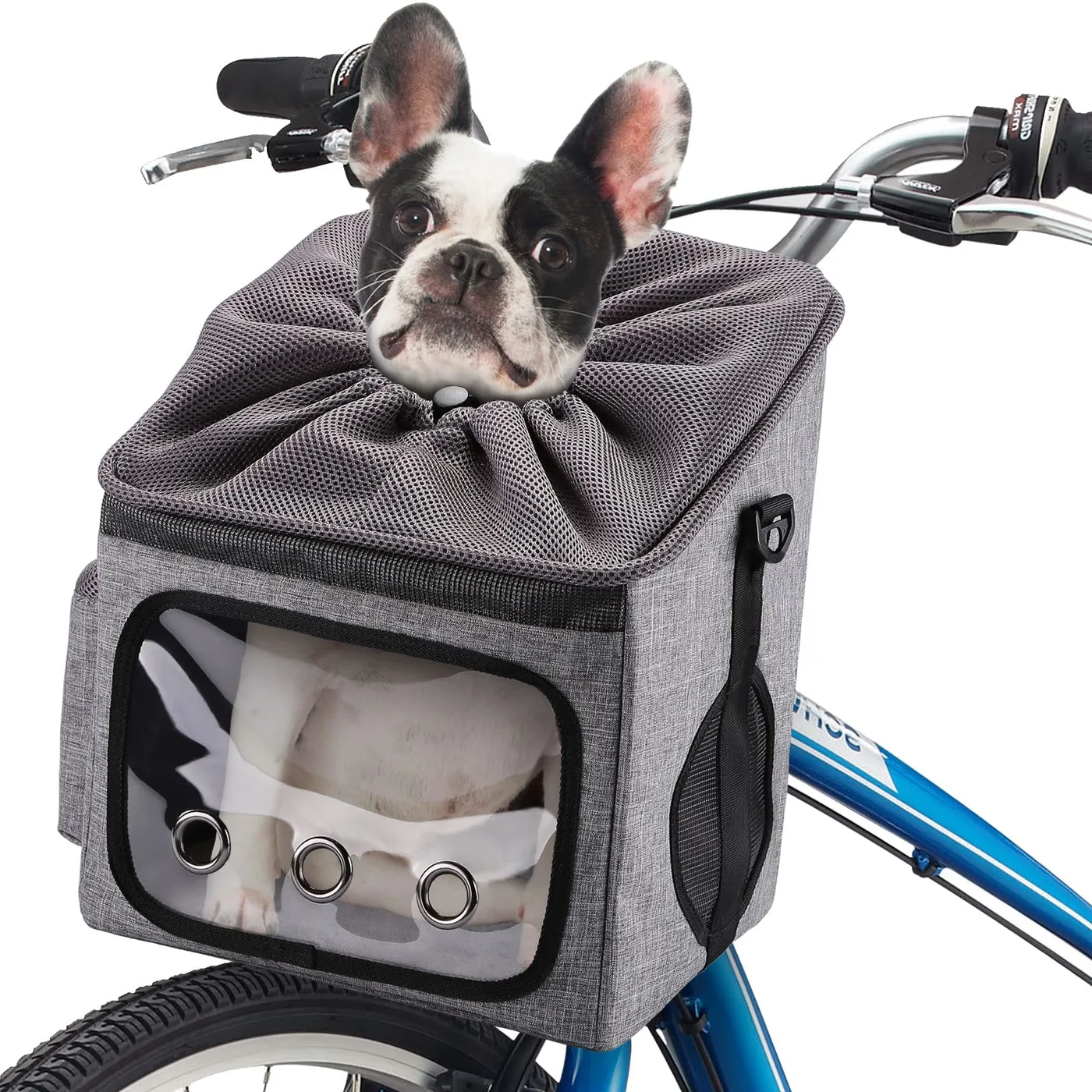
Cover is the primary control. A guinea pig with a dark, enclosed refuge available will use it and will calm; one without will freeze in place or bolt. The specification is shaded volume rather than an accessory: 40-60% of the interior should be visually enclosed, delivered either by a fixed hood over part of the compartment or by a removable hide box. The hide is the cheaper and more retail-legible answer, and it doubles as a packing-space saving if it nests inside the carrier for shipment.
Hide geometry is specified rather than left to styling. The refuge needs an entrance of 90-140 mm for the class — large enough to pass through without contact, small enough to read as enclosed — a floor area of 0.06-0.10 m², and a rigid roof, because a soft roof collapses onto the animal and defeats the purpose. The hide must also be restrained in transit; an unrestrained hide sliding into a corner is a crush hazard, so it is located by a welded pocket or by hook-and-loop pads rated at 30 N of shear.
Panic loads set the roof and wall specification. A guinea pig that bolts will throw itself against a wall at low speed, but it will also jump vertically — the behaviour owners call popcorning — and a vertical jump into a rigid roof is a spinal and head injury risk. The control is a compliant roof element: a soft, non-stretch top with 25-40 mm of controlled travel over a rigid outer frame, which absorbs the vertical component without allowing escape.
Acoustic behaviour is worth a line because it affects retail returns more than animal welfare. Guinea pigs vocalise loudly and continuously when stressed, with sound pressure levels at 0.5 m that are uncomfortable for the wearer. Acoustic damping is not a safety requirement, but a partially lined roof and a hide that is used both reduce vocalisation measurably, which is the practical reason to include the cover rather than treat it as optional.
Load paths close the section. Because the animal cannot climb, all load enters through the floor and through the lower walls; there is no claw load on a vertical panel and no chewing load above roughly 150 mm. Design the lower half of the compartment as a structural basin and the upper half as a soft enclosure.
Chew Resistance and Nail-Snag Control
Guinea pigs gnaw continuously with open-rooted incisors that grow throughout life, and like rabbits they cut fibre rather than snag it. Every surface below roughly 150 mm from the floor is reachable and will be tested by the animal within the first few minutes of occupancy.
The control hierarchy is the same as for rabbits but the reach envelope is different. A guinea pig cannot reach upward and cannot climb, so the reachable zone is a band from the floor to about 150 mm plus anything it can pull down into that band. That means the lower wall panels, the floor mat edge, any hide and any strap or trim entering the compartment are the only surfaces requiring chew-resistant specification, which is a smaller and cheaper zone than a rabbit product demands.
Material selection within that zone follows the rabbit rule with a modification: monofilament mesh at 400-480 g/m² is acceptable on the lower panels, but perforated sheet or a TPU-coated woven panel with a 3-4 mm perforation is better because it removes yarn entirely. Coating weight where a coated woven is used should be at least 30-40 g/m² of dry solids so the yarns are bound and cannot be isolated by an incisor.
Nail-snag control is a distinct requirement with no rabbit equivalent. A guinea pig nail is short, curved and sharp, and it catches in loop pile, in open knit, and in the gap between a binding and the panel it covers. The specification is a tight weave or a closed surface on every interior textile, bindings sewn flat with no free edge above 2 mm, and a pull test of 30 N on any binding or trim inside the compartment.
Edges and corners are where gnawing starts, so every reachable edge is bound or moulded, webbing ends are hot-knife sealed and bar-tacked, and inside corners are radiused at R25 or greater. Ingestion control is unchanged from the rabbit specification: no loose fill or wadding within reach, bonded or quilted construction that cannot be reduced to pieces, a bonded lining over any foam, and a 31.7 mm small-parts screen on detachable trim.
Ventilation, Hay Dust and Draught Sensitivity
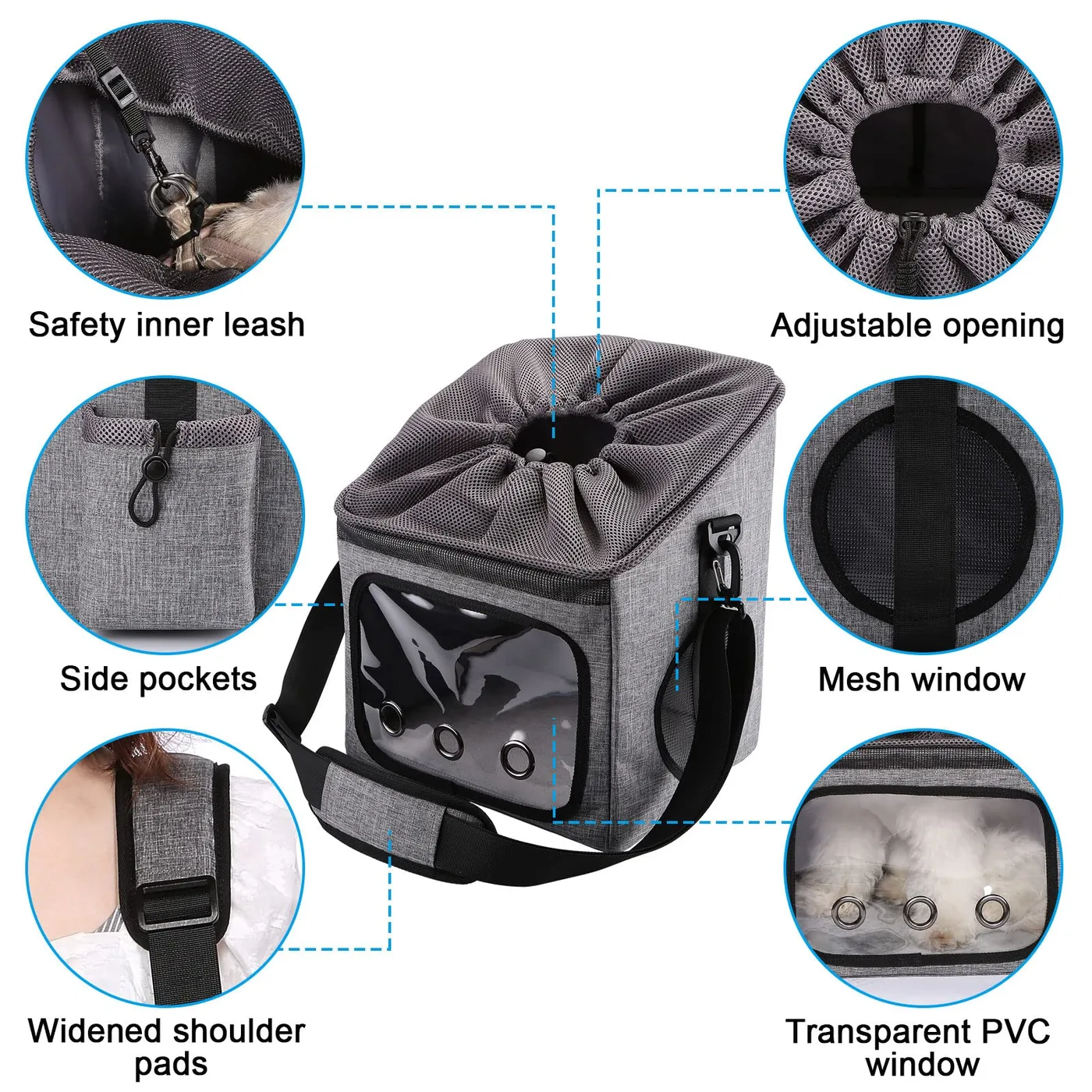
Guinea pig airflow is constrained by two sensitivities that pull in opposite directions. The animal is highly susceptible to respiratory irritation from ammoniated air and from the fine dust generated by hay and by some bedding materials, while at the same time being unusually intolerant of direct draught. The resolution is moderate open area with filtration on the intake and a baffle that prevents any directional jet reaching the animal.
Open area of 16-20% suits the class, which is the lowest figure in the small-pet range apart from the smallest birds. Intake goes low on the front and one side face, exhaust high at the rear, and the two areas should be within 15% of each other. The exhaust should be closable so the carrier can be made still in a cold vehicle without sealing it completely.
Dust control is the part with the clearest engineering content. Hay dust and bedding dust are respirable, and an enclosed compartment concentrates them. The working control is a filter layer over the intake — a non-woven of 30-60 g/m² with filtration efficiency above 70% for particles above 10 micrometres — in a removable frame so it can be changed. Thermally bonded constructions are preferred over resin-bonded ones because the latter shed fibre, which adds to the dust load rather than removing it.
Ammonia control follows from urine volume. Guinea pigs produce a large volume of urine relative to body mass and, unlike rabbits, they have no consistent latrine behaviour, so liquid appears anywhere on the floor. Dilution and absorbency are the only controls: an absorbent layer of 250-450 ml measured capacity for the class, in a quilted needled fabric of 300-450 g/m² with a hydrophobic backing, plus enough intake area that ammonia at head height stays under 10 ppm after two hours.
Draught control is achieved by geometry rather than by closing the aperture. A baffled intake — an offset plate with a 10-15 mm standoff behind the perforated face — removes the directional component of incoming air without measurably restricting flow. Acceptance is a face velocity under 0.25 m/s at the animal's resting position in a 1.5 m/s external cross-draught, which a baffle achieves and an open perforated face does not.
Thermal Limits: Managing Heat Stress Above 26 °C
Guinea pigs are among the most heat-sensitive mammals a carrier programme will encounter. They do not pant effectively, they have limited sweating ability through the footpads, they carry a dense coat, and their thermoneutral zone is narrow, with heat stress becoming a serious risk above roughly 26 °C ambient and a genuine emergency above 30 °C. A carrier derived from a dog specification has no thermal management at all and is unsafe for this species in summer conditions in most markets.
Insulation is therefore a cooling asset rather than a warming one, and it belongs in the roof. A 4-6 mm closed-cell layer in the roof and upper panels slows solar and ambient gain; insulating the floor is counterproductive because the animal dumps heat through contact with a cool surface. The result is an insulating roof over a conductive floor, which is the same inversion the rabbit specification requires and the opposite of the senior-dog arrangement.
Reflective outer finishes are the cheapest effective measure. A light-coloured shell with a solar reflectance above 0.55 on the upper surfaces measurably lowers interior temperature against a dark shell of identical construction, and it costs nothing in unit terms once the colourway is chosen. Programmes that require dark colourways for brand reasons should specify a reflective pigment rather than a standard one.
Phase-change cooling is the engineered option and the only one that holds a threshold. A moulded pack of 250-500 g with a transition at 18-22 °C, held in a sleeve under the floor mat, holds the interior near the transition temperature for two to four hours. Weight is a real penalty at this carrier size and the pack must be declared for the chemical screens applied to the rest of the product, but for hot-climate programmes it is the only reliable control. It must also be sited under the mat and out of reach, because a chewed phase-change pack is a chemical exposure incident.
Stated limits belong on the product. A guinea pig carrier should carry a maximum ambient temperature and a maximum continuous occupancy time, and the documentation should say plainly that the animal must not be left in a parked vehicle. Welfare and handling framing is commonly cross-checked against guidance published by the American Veterinary Medical Association, and thermal test methods follow conditioning practice published by ASTM International.
Urine Load, Cleanability and Multi-Occupant Layout
Urine handling is the first manufacturing problem in this product. A guinea pig produces 15-30 ml per kilogram of body mass per day and voids without warning or pattern, so a travel compartment receives a substantial liquid load within an hour of loading. A coated textile floor with a sewn seam will not contain it; the wicking path along the stitch holes reaches the board sleeve in minutes and the board then delaminates.
The floor must be a welded or moulded basin. An injection-moulded PP tray with a 20-30 mm upstand is the reference construction, a high-frequency-welded TPU-coated floor with formed corners is the no-tooling alternative, and a die-cut stiffener board under a welded coated floor is the low-cost option that holds most of the containment performance. Coating chemistry follows the rabbit rule: TPU or a PVC-free polyolefin coating, because PU coatings hydrolyse under prolonged alkaline exposure.
Cleanability is validated over cycles because the product is cleaned after every use. Fifty wipe cycles with a diluted biocide, then a full wash, with acceptance of no coating degradation, no seam opening, no tray deformation and no residual odour after 24 hours. Odour matters more here than for a dog: guinea pigs have a strong aversion to residual phenolic and ammonia smells and will refuse a compartment that smells of disinfectant, which presents as a behavioural return rather than a quality defect.
Multi-occupant layout is the configuration question most programmes get wrong. Guinea pigs are social and are usually moved in pairs, so the pair-capable layout is the volume configuration rather than a special case. Two options exist: a single undivided floor of 0.18-0.25 m², or a divided floor with a removable partition. The divided floor is useful for separating animals that are not yet bonded, but the partition becomes a chew target, a snag point and a cleaning obstacle, so the undivided floor is the better default and the partition should be an accessory rather than a standard fitting.
Where a partition is supplied, it is specified as a rigid panel with a radiused top edge, retained in a welded pocket with no gap above 3 mm to the floor and no gap in the 3-12 mm band at the sides, pulled-tested at 40 N and finished with the same chew-resistant specification as the lower wall panels.
Test Protocol, Cost and Programme Notes
Guinea-pig-capable release runs the small-pet protocol with four additions: a floor deflection test at pair load, a pododermatitis surface assessment, a hide and panic-load test, and a thermal test. Structural testing is light — 4x rated load at 6 kg is trivial on any shell in the range — so the protocol is dominated by surface, thermal and behavioural checks.
The floor test applies 3.0 kg distributed and 60 N point load at the sternal contact position for 60 seconds, with acceptance of deflection under 2.5 mm, no permanent set and no seam damage. It is repeated at -10 °C and at 50 °C to catch board and coating brittleness. Surface assessment is a documented review against three criteria: no opening above 6 mm, texture relief of 0.8-1.5 mm, and no loop or free edge above 2 mm anywhere on the interior.
The panic test is a drop-and-jump fixture: a 1.5 kg mass dropped 100 mm onto the floor mat 200 times, plus a vertical impactor striking the roof at 5 J twenty times, with acceptance of no mat displacement, no roof-to-frame separation and no exposure of any internal component. The hide is separately pull-tested at 30 N in shear and crush-tested at 150 N on the roof.
Cost sits between the rabbit and bird builds. A moulded floor tray runs 1.60-3.20 USD, the textured mat 0.40-0.90 USD, chew-resistant lower panels 0.50-1.10 USD, the dust filtration package 0.30-0.70 USD, and the hide 0.60-1.60 USD. Total increment over a small-dog carrier of the same size is 3.40-7.50 USD, landing the unit at 13-23 USD FOB, with the phase-change option adding 2.20-4.50 USD where specified.
Programme notes close the page. MOQ is 500 pieces per colourway, prototypes run 6-10 working days and bulk production 35-50 days after approval, with final random inspection to AQL 2.5 and the floor deflection, surface and hide tests added to the defect list. Because the features that matter — floor area, deflection, filtration, thermal ceiling — are invisible at retail, the packaging and copy have to state them numerically or the product competes on price alone. Textile and coating components are screened against OEKO-TEX criteria throughout. The specification that sells a guinea pig carrier is square metres of floor and a stated thermal ceiling, not litres of volume.
Order and quality terms
- MOQ 500 pieces per colourway; samples in 6-10 working days
- Bulk production 35-50 days after approval; AQL 2.5 inspection standard
- T/T 30/70 terms, FOB Xiamen, full document set per shipment
People Also Ask
Why do guinea pigs need a solid floor rather than a wire floor?
Wire and mesh floors cause pododermatitis, or bumblefoot: the species has unpadded plantigrade feet that ulcerate under sustained pressure on a hard or uneven surface. Floor openings must be under 6 mm, and in practice the floor should be unbroken.
How much floor area does a guinea pig carrier need?
0.10-0.15 m² for a single animal and 0.18-0.25 m² for a pair, roughly 280-380 mm by 380-560 mm for one. The species rests with its full ventral surface down and cannot climb, so the plan view is the sizing variable.
How much deflection is allowed in the floor?
Under 2.5 mm across the span at a 1.5 kg single or 3.0 kg pair load, because a sagging surface concentrates load on the sternal contact point the same way a wire floor does. That sets the board at 3.0-4.0 mm.
At what temperature do guinea pigs suffer heat stress?
Around 26 °C ambient, becoming an emergency above 30 °C. Management is an insulating roof over a conductive floor, a reflective outer above 0.55 solar reflectance, and a phase-change pack at 18-22 °C for hot-climate programmes.
How much ventilation does a guinea pig need?
16-20% open area with a baffled intake and a high closable exhaust, plus a 30-60 g/m² non-woven filter above 70% efficiency at 10 micrometres to handle hay and bedding dust.
Do guinea pigs need a hide inside the carrier?
Yes. Without a dark refuge the animal freezes or bolts. The specification is 40-60% shaded interior volume with a rigid-roofed hide of 0.06-0.10 m² floor area and a 90-140 mm entrance.
Can two guinea pigs share one carrier?
Yes, and the pair layout is the volume configuration rather than a special case. Use a single undivided floor of 0.18-0.25 m²; a partition adds a chew target, a snag point and a cleaning obstacle.
Frequently Asked Questions
What interior height suits a guinea pig carrier?
200-280 mm. Height is set by containment rather than comfort and is deliberately lower than the rabbit figure, because a low roof limits the vertical component of a panic jump and there is no postural requirement pushing it upward.
Why is a full-perimeter top opening preferred?
A guinea pig is wide, low and non-compliant, and cannot be lifted through an end opening one-handed. A full-perimeter top opening is the only access geometry that works at a 200-280 mm interior height.
What floor mat specification is correct?
A captive closed-cell EVA mat of 3-5 mm with a moulded texture of 0.8-1.5 mm relief, or a needled non-woven of 400-600 g/m² bonded to the tray, retained at all four corners with fixings outside the reachable envelope.
Why are loop-pile textiles prohibited inside?
A guinea pig nail is short, curved and sharp and catches in a raised loop, tearing on withdrawal. Every interior textile must be a tight weave or a closed surface with no free binding edge above 2 mm.
How should drainage be handled without perforating the floor?
Slope the tray toward a sump, with a 2-4 mm fall over the length and a 30-50 mm collection well at the low end. Perforating the floor reintroduces the pododermatitis risk.
What is the hide entrance size?
90-140 mm for the class — large enough to pass through without body contact, small enough to read as enclosed — with a rigid roof, since a soft roof collapses onto the animal and defeats the purpose.
What limits the vertical component of a panic jump?
A compliant roof element: a soft, non-stretch top with 25-40 mm of controlled travel over a rigid outer frame, which absorbs vertical impact without allowing escape.
How much urine must the floor contain?
The species voids 15-30 ml per kilogram of body mass per day with no latrine behaviour. A moulded PP tray with a 20-30 mm upstand or a welded TPU-coated floor with formed corners is the reference; sewn textile floors wick into the board within minutes.
Which coating resists guinea pig urine?
TPU or a PVC-free polyolefin coating. PU coatings hydrolyse under prolonged alkaline exposure, so hydrolytic ageing at 70 °C and 95% relative humidity for seven days is a useful proxy test.
Why must the carrier not smell of disinfectant after cleaning?
Guinea pigs have a strong aversion to residual phenolic and ammonia odours and will refuse the compartment, which presents as a behavioural return rather than a quality defect. Acceptance is no residual odour 24 hours after washing.
How is the floor load tested?
3.0 kg distributed plus a 60 N point load at the sternal contact position for 60 seconds, accepting deflection under 2.5 mm with no permanent set, repeated at -10 °C and 50 °C.
How is the panic load tested?
A 1.5 kg mass dropped 100 mm onto the floor mat 200 times, plus a 5 J vertical impactor on the roof twenty times, with no mat displacement, no roof-to-frame separation and no exposure of internal components.
What does a guinea-pig-capable build cost?
13-23 USD FOB, an increment of 3.40-7.50 USD over a small-dog carrier of the same size: tray 1.60-3.20 USD, mat 0.40-0.90 USD, chew-resistant panels 0.50-1.10 USD, filtration 0.30-0.70 USD and hide 0.60-1.60 USD.
Where should the phase-change pack be sited?
In a sleeve under the floor mat and out of reach, because a chewed pack is a chemical exposure incident. A 250-500 g pack with a transition at 18-22 °C holds the interior for two to four hours.
Talk to QUANZHOU JUNYUAN BAGS about a pet carrier program: MOQ 500 pieces per colourway, samples in 6-10 working days, bulk production in 35-50 days under AQL 2.5 inspection.
Get a free quote Request a sampleKeep reading
- Dog Carrier Backpack for Rabbits: Small Pet Carrier
- Dog Carrier Backpack for Birds: Portable Travel Cage
- Dog Carrier Backpack for Ferrets: Compact Carrier
- Dog Carrier Backpack Bottom: Reinforcement Options
- Dog Carrier Backpack Padding: Foam Density Guide
- Dog Carrier Backpack Size Guide: Sizing Chart and Specifications