Pet Carrier First Aid Kit: Emergency
A companion first aid kit is built on four figures: a contents list of 24 to 42 line items, a stated shelf life set by the shortest-dated component rather than by the assembly date, verification at 100% by checkweigh plus AQL 2.5 visual inspection, and an MOQ of 500 kits. Every regulated article inside it carries more compliance weight than the pouch.
A kit is not a product with parts, it is a supply chain with a bag around it. Twenty to forty components arrive from perhaps eight suppliers, each with its own minimum, its own documentation and its own stated life, and the assembled unit inherits the most restrictive property of every one of them. That is the idea worth holding onto, because it explains nearly everything that goes wrong in this category: a kit missing one item is defective at the point of sale; a kit containing one item whose own registration status is unresolved makes the whole unit unshippable; and a kit's stated life is the shortest life inside it, not the date it was packed. This page covers all of that from the supply and compliance side. It opens with kit architecture and the critical distinction between ordinary contents and regulated articles, then the shortest-dated-component rule, then pouch construction, then the sterility boundary that determines what a sewn-goods operation should and should not touch. It then covers assembly methods and verification, restricted-substance screening across a mixed set, contents-list editing without going anywhere near prohibited wording, and finally minimum structure and replenishment economics. No instruction or guidance on managing any condition appears here, and none should be inferred: this is about sourcing a physical kit. Terms: MOQ 500 kits, prototypes in 6-10 working days, bulk production 35-50 days after sample approval, final random inspection to AQL 2.5, T/T 30/70, FOB Xiamen.
A custom pet carrier brief for pet carrier accessory is quoted against three variables before the sample is cut: fabric weight, hardware grade and print method.
Kit Architecture: Contents Versus Regulated Articles
The single most important decision in this category is which items go inside the pouch, and it is a compliance decision before it is a merchandising one. Contents fall into two legally distinct groups and mixing them carelessly creates obligations nobody priced.
The first group is ordinary articles: a textile bandage roll without a sterile claim, elastic wrap, a metal tweezer, tick forceps, a foldable bowl, scissors, a blanket, a printed card. These behave like any other accessory, subject to general product safety and substance obligations.
The second group is regulated articles: anything sterile, anything making a bactericidal or antiseptic claim, and anything whose manner of presentation establishes it as intended for intervention in a physiological process. Each of those carries pre-market obligations administered by the relevant authority in the destination market, and each requires a responsible entity holding its own registration.
The distinction is created by presentation and claims, exactly as it is elsewhere in this range. A woven bandage labelled by dimensions is one thing; the identical bandage described in terms of sterile barrier or germicidal action is another.
| Item type | Example | Classification effect | Obligation created | Suppliable by us | Notes |
|---|---|---|---|---|---|
| Plain article | Elastic wrap, tweezer | None beyond general | Origin and substance file | Yes | Default build |
| Textile dressing, non-sterile | Woven pad, gauze roll | Low | Fibre and dye screening | Yes | Declared non-sterile |
| Sterile article | Sterile pad in pouch | High | Registration and validation | Procured only | Barrier untouched |
| Antiseptic wipe | Impregnated sachet | High | Claim substantiation | Procured only | Shortest-dated often |
| Instrument | Forceps, scissors | Low | Metal screening | Yes | Origin marking |
| Printed guidance | Instruction card | Varies | Content review | Supplied blank | Brand content |
| Storage pouch | 600D or EVA shell | None | Standard textile file | Yes | Core capability |
The practical consequence of that table appears at the quotation stage rather than at customs. A programme asking for a twenty-four-item kit of ordinary articles can be quoted immediately. A programme asking for a thirty-item kit including sterile and antiseptic components needs a named responsible entity for those components before anything can be assembled.
Our production team therefore works to two build levels. A standard build contains ordinary articles only, sourced and assembled with our own documentation. A regulated build additionally requires the brand or its nominated supplier to provide those specific articles with their own registration and their own evidence, delivered sealed and packed without opening their primary barrier.
This split is not risk aversion for its own sake. A sewn-goods assembly operation is not a validated sterile facility, and any process that opened a sterile barrier would immediately invalidate the very property that made the component expensive.
The last row deserves a note: the pouch is the one part of this kit that sits squarely inside ordinary sewn-goods capability, and it is where the most value can be engineered for the least compliance friction.
Decide the build level before quoting, keep regulated articles sealed and separately documented, and do maximum engineering work on the pouch.
The Shortest-Dated Component Governs Everything
A kit has no manufacturing date in the sense most products do. It has an assembly date, which is nearly meaningless, and a contents life, which is derived entirely from whichever component expires first. Getting that right is a forecasting problem as much as a quality one.
The working rule is simple: the kit's stated life equals the shortest remaining life among its contents at the moment of assembly, minus whatever buffer the destination's retail partners require. Not the average, not the majority.
In practice most ordinary articles have effectively unlimited lives — a tweezer, an elastic wrap, a bowl — so the governing components are almost always the impregnated items, any materials with a preservative system, and anything with a moisture barrier already ageing at receipt.
This creates a purchasing discipline that most programmes discover too late: components must be bought to a remaining-life specification, not merely to a count. A purchase order stating quantity and price but not minimum remaining life will be filled from whatever stock is nearest.
| Component | Typical stated life | Governing mechanism | Likely shortest in kit? | Replenishment cycle | Minimum remaining at receipt |
|---|---|---|---|---|---|
| Impregnated wipe sachet | 18-30 months | Moisture loss, preservative | Very often | Every run | 75-85% |
| Textile dressing, non-sterile | 36-60 months | Material ageing | Rarely | Annual | 60-75% |
| Sterile article | 24-36 months | Barrier integrity | Sometimes | Per batch | 70-85% |
| Elastic wrap | 48-72 months | Elastane degradation | No | Every 18 months | 50-70% |
| Metal instrument | Indefinite | Corrosion only | No | Every 24 months | n/a |
| Pouch, 600D shell | Indefinite | Handling only | No | Per order | n/a |
| Printed card | 24-48 months | Legibility, content | No | Per revision | n/a |
Read that table alongside a purchase calendar and the operational picture becomes clear. Every run needs fresh impregnated sachets; most other items carry over. That means one purchase order per run against one supplier and a much longer replenishment rhythm for everything else.
Setting minimum remaining life at receipt is the mechanism that protects the kit's own stated life. Requiring 75-85% remaining on the shortest-dated component typically gives the assembled kit 14-24 months from its own assembly date, which satisfies the 60-75% remaining-life rule at most retail receiving desks.
Rotation then has to be real rather than nominal. Components with lives have to be date-directed put away, which means scannable coding on every inbound carton even though nothing in the finished kit technically expires on its own schedule.
Finally, the stated date on the kit should be printed rather than stickered, because a label applied at assembly can be applied incorrectly and because a printed date cannot be swapped by anyone downstream.
Buy every dated component to a minimum remaining-life specification, put away date-directed, and print the kit's own date rather than labelling it.
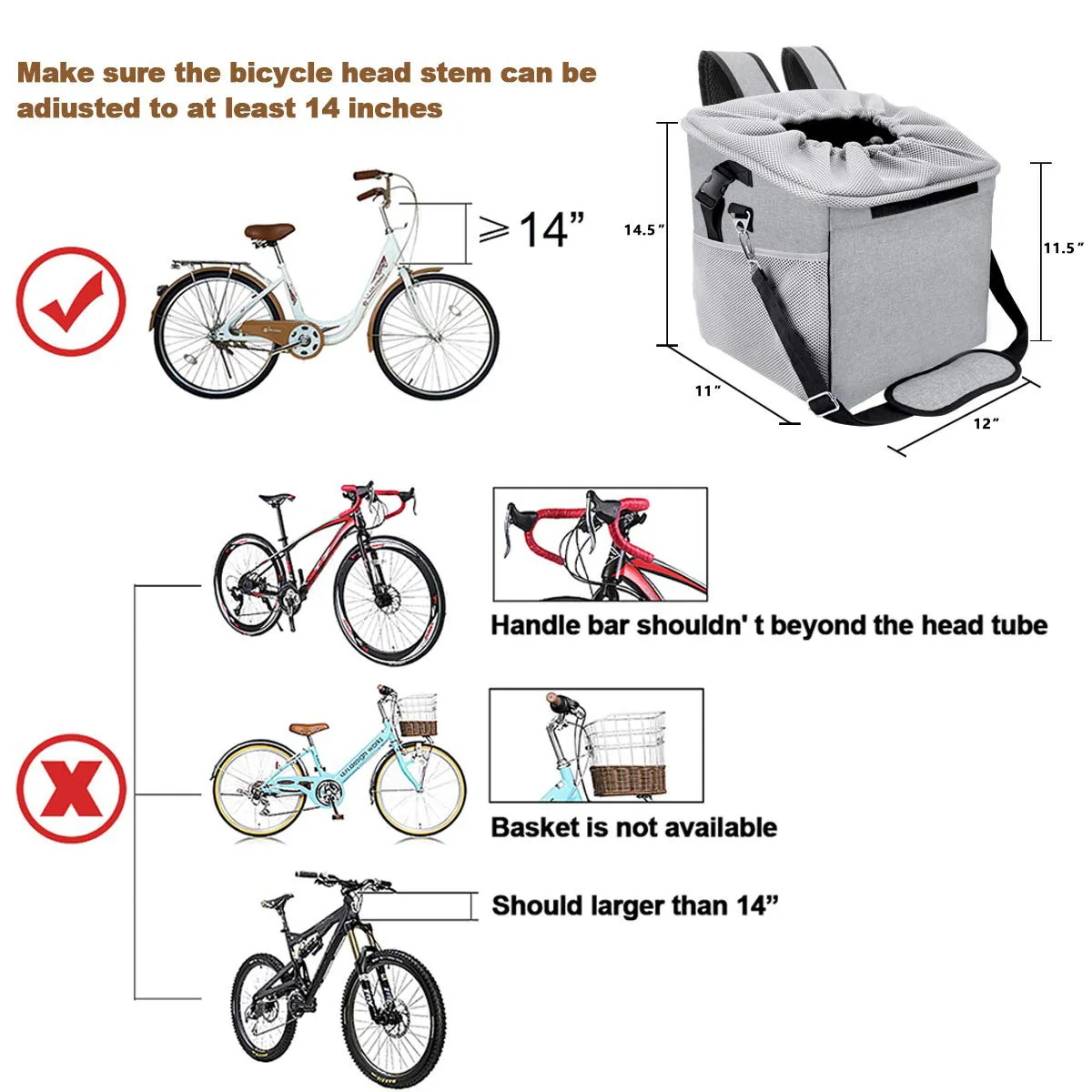
Pouch Construction: Organising Twenty-Four Items in One Envelope
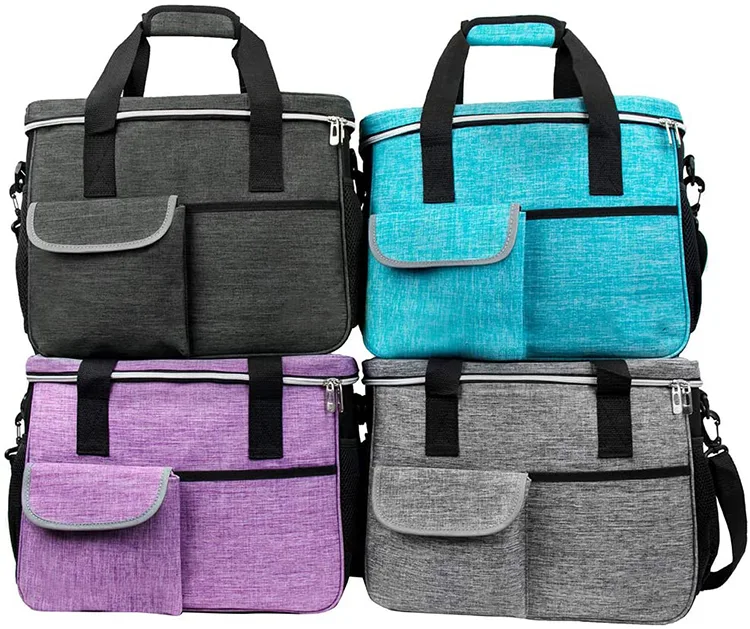
The pouch is the part of this product we can genuinely engineer, and in most kits it is the part that decides whether the contents are findable under stress. Organisational design therefore has practical consequences rather than merely aesthetic ones.
Two material families cover the market. A 600D polyester soft pouch with a stiffened base costs 1.85-4.60 USD, weighs 180-420 grams and compresses to fit inside a carrier pocket. A moulded EVA shell costs 3.60-9.80 USD, weighs 320-720 grams and holds its shape, which matters when the kit is stored loose rather than inside a bag.
Interior organisation is then the design problem. Elastic loops cost 0.02-0.07 USD each, mesh pockets 0.12-0.42 USD each and moulded or die-cut retainers 0.18-0.62 USD. A twenty-four-item kit needs somewhere between twelve and twenty retention features.
Retention stiffness deserves specific attention because it is the specification most often left vague. A loop that holds an item under its own weight in a vertical pouch may not hold it during transport. Specifying a retention force figure rather than a number of loops is what actually works.
| Configuration | Shell material | Retention method | Shell cost (USD) | Interior labour (USD) | Cube (L) | Suits |
|---|---|---|---|---|---|---|
| Soft pouch, flat | 600D | Two mesh pockets | 1.85-4.20 | 0.18-0.44 | 1.6-2.8 | Carrier pocket |
| Soft pouch, zipped gusset | 600D | Loops and pockets | 2.40-5.60 | 0.42-1.10 | 2.2-3.6 | Standard retail kit |
| Soft pouch, roll-up | 420D ripstop | Loops only | 2.10-4.90 | 0.30-0.78 | 1.4-2.4 | Travel bundle |
| Moulded EVA shell | EVA plus 600D cover | Moulded retainers | 3.60-9.80 | 0.20-0.52 | 2.8-4.6 | Loose storage |
| Hard case, ABS or PP | Injection moulding | Moulded dividers | 4.20-11.60 | 0.14-0.38 | 3.2-5.4 | Vehicle storage |
| Fabric wrap and strap | 300D | Loops and roll | 1.40-3.20 | 0.26-0.68 | 1.0-1.8 | Minimal bundle |
Interior labour rather than shell cost is the surprising column. Adding retention features costs 0.02-0.07 USD per loop but adds considerable handling time, so a twenty-loop interior can cost more to fill than the shell it sits in.
Zip specification matters more here than anywhere else in the accessory range, because a failed zip empties the whole kit rather than losing one item. A size 5 reversed-coil zip with a metal slider tested to 1,500-3,000 cycles costs 0.35-1.20 USD; below this level of specification this product should not be built at all.
Abrasion against the host carrier is the last physical consideration. A moulded EVA shell or a hard case has corners that abrade a bag lining over a long voyage, so the bundle build normally wants the soft pouch despite it costing less to make and less to pack.
Colour-coding deserves a mention for practical reasons: a high-visibility shell is easier to locate, and specifying a bright shell costs nothing against a black one while changing the product's practical usability substantially.
Specify retention force rather than loop count, overspecify the zip, and prefer a soft pouch for anything shipping inside a carrier.
The Sterility Boundary: What We Handle and What We Do Not
This section exists because the question comes up in almost every first conversation about this product, and the answer determines whether a programme is viable. Understanding the boundary up front saves weeks.
A validated sterile article is sterile by virtue of a validated process and a validated barrier. Open that barrier and the property is gone instantly, irrecoverably, and no amount of subsequent care restores it. The sterile state is not a level of cleanliness that can be approached by working tidily.
Consequence one: any sterile component must arrive as a finished, sealed unit with its own validation evidence and must be placed into the pouch without opening that unit. This is entirely achievable and we do it routinely.
Consequence two: any process involving cutting, heat sealing or repacking of a sterile article's primary barrier requires a validated environment we do not operate, and we do not represent that we do. Where a programme needs that, it needs a different partner for that step.
| Operation | Effect on sterile state | Environment needed | Available here | Alternative | Cost (USD) |
|---|---|---|---|---|---|
| Place sealed unit into pouch | None | Controlled assembly | Yes | n/a | 0.02-0.08 |
| Group-wrap multiple sealed units | None | Controlled assembly | Yes | n/a | 0.04-0.14 |
| Inspect primary barrier visually | None | Controlled assembly | Yes | n/a | 0.01-0.04 |
| Open and subdivide contents | Destroys it | Validated facility | No | Buy pre-subdivided | n/a |
| Re-seal a damaged barrier | Destroys it | Validated facility | No | Reject and replace | n/a |
| Terminally sterilise the kit | Applies to whole kit | Validated cycle | No | Not applicable | 0.35-1.40 if outsourced |
| Assembled-kit bioburden test only | Not a sterility claim | Laboratory | Yes | n/a | 40-120 |
The last row matters because it is the honest alternative where a programme wants some assurance without making a claim that cannot be supported. Finishing-line bioburden determination is a process-control measurement, costs 40-120 USD per lot and does not assert anything about the kit beyond what was measured.
Terminal treatment of an assembled kit appears tempting and is almost always wrong. Treating a finished kit subjects every component inside it to that process, including things that were never intended to be treated, and the interactions are unpredictable.
Environmental control for ordinary assembly is still necessary and it is cheap to state: covered benches, documented glove and sanitiser routines, weekly environmental monitoring and a component quarantine before release into assembly. None of that makes anything sterile.
The discipline is simply to describe things as they are. A component is either supplied with its own validated sterile state and kept sealed, or it is supplied non-sterile and declared non-sterile. Both are legitimate; pretending otherwise is not.
Keep sealed units sealed, buy pre-subdivided where subdivision is needed, and describe every component exactly as it is.
Assembly Method and Verification at Every Unit
A twenty-four-item kit has twenty-four opportunities for a defect, which is why this category does not work with sampling alone. The right answer is structural: make the verification part of the assembly rather than an inspection after it.
Hand assembly with a physical template is the standard method at this volume. Each component location has a cut-out in a jig board; a worker fills the jig, and a missing location is visible instantly. A jig costs 180-620 USD to build and it changes the defect rate fundamentally.
Checkweighing is the second layer and it should run at 100% rather than at AQL. Missing a tweezer changes mass by 12 grams; no feasible tolerance would hide that if the target was set against a known-good assembled unit rather than calculated from nominal component masses.
Scan verification is the third layer where a programme carries enough value to justify it. Each component location gets a barcode or an RFID check and the unit does not release until every location scans. Equipment costs 8,000-42,000 USD and it is justified above about 40,000 kits a year.
| Layer | Coverage | Cost per unit (USD) | Catches | Misses | Recommended |
|---|---|---|---|---|---|
| Assembly jig board | Visual per location | 0.004-0.014 | Missing items | Wrong variant | Always |
| 100% checkweigh | Every unit | 0.006-0.020 | Missing items, doubles | Substitutions of equal mass | Always |
| AQL 2.5 visual | Sampled | 0.03-0.11 | Wrong variant, damage | Statistical tail | Always |
| Barcode per location | Every unit | 0.02-0.09 plus capital | Substitutions | Damage | Above 40,000 per year |
| Vision check on completion | Every unit | 0.01-0.05 plus capital | Orientation, missing | Mass errors | High volume |
| Case-level count | Every case | 0.002-0.008 | Whole missing units | Contents errors | Always |
The first two layers cost under 0.035 USD per unit combined and they catch almost everything a customer would actually complain about. There is no scale at which they should be skipped.
Setting the checkweigh target correctly is the detail that determines whether it works. Target must come from weighing ten known-good assembled units and taking the mean, not from summing nominal component masses, because component mass varies far more than buyers expect.
Substitutions of similar mass are the residual gap and they matter most where components look alike. A size-a item substituted for size-b is invisible to weighing and often to the eye, which is why the jig board and AQL visual layer pair so well with it.
Rework discipline follows. Units failing any layer are quarantined and rebuilt against the jig rather than corrected in place, because correcting in place is how second defects get introduced into units that had one.
Use a jig plus 100% checkweigh plus AQL visual, set the target from known-good units rather than nominal masses, and rebuild failures rather than patching them.
Restricted Substances Across a Mixed-Component Set
A kit is a screening problem multiplied rather than added, because each of its twenty to forty components brings its own material family: metal, textile, polymer, film, paper, adhesive, elastomer and often a coated printed surface.
Screening forty components individually costs more than any programme will accept, so the practical method is risk-tiered screening: group components by material family and risk, screen a representative from each group, and hold supplier declarations for everything.
Metal items carry alloy composition and coating obligations. A tweezer or a scissor is a metal article; a nickel-plated surface introduces a separate coating screen; a coloured anodised finish introduces a further one.
Textile items carry fibre, dye and finishing obligations. A woven pad, an elastic wrap and a printed card each differ, and an elastic wrap introduces elastane-specific concerns around extractable residues.
| Material family | Components typically | Representatives screened | Cost (USD) | Renewal | Risk level |
|---|---|---|---|---|---|
| Metal instruments | 2-4 | 2 | 180-520 | Alloy or plating change | High |
| Textile and elastic | 6-12 | 4 | 340-1,180 | Colour lot change | High |
| Polymer items | 4-8 | 2 | 240-680 | Resin change | Moderate |
| Film and laminate | 6-14 | 3 | 270-820 | Film source change | Moderate |
| Elastomer and adhesive | 2-5 | 2 | 220-660 | Supplier change | High |
| Printed material | 2-4 | 2 | 170-480 | Artwork change | Low |
| Pouch shell and trim | 1 | 1 | 130-380 | Per colour lot | Low |
| California assessment | Whole set | Whole set | 150-460 | Annual | Market-specific |
Total risk-tiered screening costs 1,700-5,180 USD where screening forty items individually would run 6,000-18,000 USD. The saving is large and it comes from sampling within a family rather than from taking less care.
European obligations run through the substance regime administered by ECHA, covering restriction and, where relevant, authorisation status for anything in the set. United States general product safety presentation falls to the Consumer Product Safety Commission, which governs how such household articles must be presented.
The record structure matters as much as the tests. One file indexed by component number, each with its family, its representative test reference and its supplier declaration reference, answers a retailer questionnaire in a single exchange. A folder of unlabelled reports costs weeks of correspondence and usually loses the order.
Renewal triggers rather than renewal calendars apply again. If any component changes supplier, the file is open. Our production team requires notification of material source changes for every purchased component as a contractual term, which costs nothing and closes the largest gap.
Standardised packaging relevance: standardised test methods referenced by ASTM cover many of the physical determinations in this range, and citing method numbers keeps two parties measuring the same thing.
Screen within material families against a documented risk tiering, index everything by component number, and require contractual notice of supplier changes.
Writing the Contents List Without Writing Claims
The contents list is the one piece of print unique to this product, and it is where most programmes accidentally write themselves into difficulty. Every line describes an item, and each of those descriptions is a statement about intended use.
The safe and sufficient form for each line is physical: item name, dimensions, and quantity. A roll of 50 millimetres by 4.5 metres is a complete and honest description requiring nothing else. Anything added beyond material fact moves toward an area requiring substantiation or registration.
The most common error is adding an adjective. A word describing capability converts a physical description into a claim, and it usually does so without anyone noticing because it reads naturally in the sentence.
The second common error is the instruction card. A programme will ask for guidance content, and supplying it means supplying text that necessarily strays toward describing outcomes. Our position is that we supply the card blank or printed to the brand's supplied artwork, and we do not author the text.
| Line style | Example | Category | Source needed | Position | Reviewer |
|---|---|---|---|---|---|
| Name and dimensions | Woven pad, 100 x 100 mm, 2 | Physical fact | Specification | Acceptable | Supply side |
| Material declaration | Elastic wrap, 50 mm x 4.5 m | Physical fact | BOM | Acceptable | Supply side |
| Sterility statement | Sterile until barrier opened | Regulated statement | Validation evidence | With evidence only | Component supplier |
| Capability adjective | Description of action | Claim | Substantiation | Hold | Brand counsel |
| Outcome statement | Any physiological result | Regulated claim | Approval pathway | Do not print | Brand counsel |
| Instruction content | Usage guidance | Brand content | Author review | Blank or brand-supplied | Brand counsel |
The workflow is the same one used elsewhere in this range: every line either maps to a measurable fact we supplied, or it is reviewed by counsel before print. There is no third category.
Artwork timing then follows the print rather than leading it. Contents lists change late, frequently because a component was substituted at the last minute, and changing a printed card after plates are cut costs 60-220 USD and 5-12 days.
Locking the contents list at the same time as the component BOM, rather than at artwork, prevents the substitution that forces the change.
Multilingual versions compound the problem. A kit sold in six markets needs six contents lists, each reviewed, and each printed onto a card that has its own space constraint. Planning for a multilingual folded insert rather than six separate cards saves both cost and time.
Write every line physically, lock the list with the BOM rather than with the artwork, and keep all guidance content as brand-supplied material.
Minimum Structure and Replenishment Economics
A thirty-component kit sounds like thirty minimum quantities, and it is — unless it is structured deliberately. Getting the structure right is what makes a first order affordable and subsequent ones predictable.
Three mechanisms do most of the work. Consolidating purchase across variants so one order covers several kits; using catalogue components wherever appearance does not matter; and agreeing a shared minimum with any supplier providing several line items from one cell.
Consolidation across programmes is the strongest lever. A brand running three kit variants typically shares 60-80% of components between them, so buying those once at triple quantity usually reduces unit cost 8-20% without increasing total inventory.
The binding constraints are otherwise predictable: printed film components carry high minimum, instruments come in lots of 500-2,000, and textile dressing components often arrive in sealed bulk packs that must be used or quarantined rather than stored open.
| Structure | Components consolidated | Inventory carried | Unit cost index | Replenishment complexity | Suits |
|---|---|---|---|---|---|
| Independent purchase per kit | None | Low | 1.00 | High | Single variant |
| Shared across three variants | 60-80% | Moderate | 0.92-0.80 | Moderate | Range launch |
| Catalogue where possible | All non-signature items | Low | 0.88-0.79 | Low | First order |
| Cell-level shared minimum | Per supplier cell | Moderate | 0.85-0.76 | Moderate | Steady programme |
| Consignment of dated items | Shortest-dated only | Very low | 1.05-1.18 | Low | Short-life contents |
The last row is the interesting one for this product specifically. Holding the shortest-dated components on consignment rather than owning them costs 5-18% more per unit but removes the risk described earlier in this page — that purchased dated stock ages before it is assembled.
Replenishment cadence should be set per component rather than per kit. Every run needs fresh dated items; instruments and textile articles run on 18-24 month cycles; the pouch runs per order. Writing that calendar into the programme prevents both stockouts and expired surplus.
Programme terms hold across every structure. MOQ 500 kits applies regardless of configuration. Prototypes in 6-10 working days cover a fully assembled sample pouch with the agreed component set, which is the only meaningful sample in this category. Bulk production runs 35-50 days after sample approval, of which component procurement rather than assembly accounts for most of it. Final random inspection follows AQL 2.5 alongside the 100% checks already described, with contents completeness classed as a critical defect. Terms are T/T 30/70, FOB Xiamen, with assembly running through the SGS-verified production base under ISO 9001 and BSCI coverage.
Consolidate components across variants wherever possible, consign rather than own the shortest-dated items, and set replenishment per component rather than per kit.
Order and quality terms
- MOQ 500 pieces per colourway; samples in 6-10 working days
- Bulk production 35-50 days after approval; AQL 2.5 inspection standard
- T/T 30/70 terms, FOB Xiamen, full document set per shipment
People Also Ask
How many items does a companion first aid kit contain?
24-42 line items in a typical build, needing 12-20 internal retention features. Each of those is a separate sourcing, documentation and counting problem rather than a single purchase.
What sets a kit's stated shelf life?
The shortest remaining life among its contents at assembly, not the assembly date. Requiring 75-85% remaining on the shortest-dated component typically gives 14-24 months from assembly.
Which components most often govern the expiry date?
Impregnated items almost always, at 18-30 months against 48-72 for textile articles and indefinite for metal instruments.
Can sterile components be repacked during assembly?
No. Opening a validated barrier destroys the sterile state irrecoverably. Sterile articles are placed sealed, or bought pre-subdivided, and the article is described exactly as it is.
How do you verify a twenty-four-item kit is complete?
A jig board plus 100% checkweigh plus AQL 2.5 visual, together costing under 0.035 USD per unit. Target mass must come from ten known-good units rather than nominal sums.
Is screening forty components individually necessary?
No. Risk-tiered screening within material families costs 1,700-5,180 USD against 6,000-18,000 USD for individual testing, and comes from grouping rather than from taking less care.
How should a contents list be written?
Physically: item name, dimensions and quantity. A capability adjective converts a physical description into a claim, and instruction content is supplied blank or to brand artwork.
Frequently Asked Questions
Why decide the kit's build level before quoting?
Because including regulated articles changes the obligation set entirely. A standard build of ordinary articles can be quoted immediately; a regulated build needs a named responsible entity before anything can be assembled.
Why is the pouch the best place to engineer value?
It is ordinary sewn goods with the lowest compliance friction in the whole kit, and organisation design determines whether contents are findable under stress.
Why require minimum remaining life on component purchases?
A purchase order stating quantity but not remaining life is filled from whatever is nearest. That silently shortens the kit's own stated life.
Why print the kit date rather than labelling it?
A label applied at assembly can be applied incorrectly and can be swapped downstream. A printed date cannot be changed by anyone handling the unit.
Why specify retention force rather than loop count?
A loop holding an item under its own weight may not hold it through thirty days of transport. Force is what actually governs the outcome.
Why overspecify the zip on this product?
A failed zip empties the whole kit rather than losing one item. A size 5 reversed-coil zip tested to 1,500-3,000 cycles costs 0.35-1.20 USD and is the minimum viable level.
Why prefer a soft pouch when shipping inside a carrier?
Moulded EVA and hard cases have corners that abrade a bag lining over a long voyage. The soft pouch also costs less to make and less to pack.
Is finishing-line bioburden testing a sterility claim?
No. At 40-120 USD per lot it is a process-control measurement asserting nothing beyond what was measured, which is exactly why it belongs on the file.
Why not terminally treat the assembled kit?
Treating a finished kit subjects every component inside it to that process, including things never intended to be treated, and the interactions are unpredictable.
Why rebuild failed units rather than correct them in place?
Correcting in place is how second defects get introduced into units that originally had one. Quarantine and rebuild against the jig instead.
What does checkweighing miss?
Substitutions of similar mass, most often one size variant for another. That is why the jig board and AQL visual layer are paired with it rather than replaced by it.
Why index the compliance file by component number?
A retailer questionnaire then resolves in one exchange. A folder of unlabelled reports costs weeks of correspondence and frequently loses the order.
When should the contents list be locked?
With the component BOM rather than with the artwork. Lists change late, usually after a substitution, and changing a printed card costs 60-220 USD and 5-12 days.
When is consignment better than ownership for components?
For shortest-dated items. It costs 5-18% more per unit but removes the risk of purchased stock ageing before it is assembled.
Talk to QUANZHOU JUNYUAN BAGS about a pet carrier program: MOQ 500 pieces per colourway, samples in 6-10 working days, bulk production in 35-50 days under AQL 2.5 inspection.
Get a free quote Request a sample