Pet Carrier Replacement Parts: Spare Components
A carrier spare-parts programme stocks seven components: zipper sliders, webbing adjusters, wheel sets, handle buttons, mesh panels, base boards and foam pads. Field data averages 41 claim events per 1,000 units in year one. Budget 2-4% of units shipped as spares, ordered with the first production run.
Spare components are a supply-chain deliverable with their own failure statistics, their own numbering discipline and their own economics, and they fail as a programme when they are treated as an afterthought. This page sets out the manufacturing side: which seven parts account for the overwhelming majority of claim events, what the observed failure rate per 1,000 units actually is by component and by service year, how a part number is constructed so that a replacement ordered three years later still fits the platform revision it was built for, and why a spare should sometimes be specified better than the original rather than identical to it. It also covers the commercial engineering of small spare lots — how a 200-piece spare order reaches a 500-piece minimum through blanket ordering and shared colourways, what kitted spare packs cost, and how AQL 2.5 applies when the lot is small. Programme terms: MOQ 500 pieces per colourway, prototypes in 6-10 working days, bulk production 35-50 days after sample approval, final random inspection to AQL 2.5, T/T 30/70 and FOB Xiamen.
In a private label pet carrier brief for pet carrier accessory, the artwork file and the label compliance text are the two items that most often delay a first shipment.
Why Spare Parts Are an Engineering Deliverable
A pet carrier is a load-bearing textile assembly with mechanical parts attached to it, and every mechanical part in it has a finite service life. That statement has a direct commercial consequence: whatever the warranty period says, the brand will be asked for a replacement slider, a replacement wheel or a replacement panel, and the cost of that request is decided years earlier, at the specification stage.
The engineering deliverable is not the part itself — it is the continuity of the part. A replacement slider that fits the chain on the current production run is trivial to supply. A replacement slider for a run that shipped two years ago, built with a different chain gauge from a supplier that has since changed its tooling, is not trivial at all. Continuity is achieved by three documents: a controlled part number, a platform revision register, and a material equivalence table that records what may be substituted for what without a refit.
There is also a quality signal buried in spare demand. Spare request volume is the cleanest field-failure dataset a brand ever receives, because it is self-reporting and it is dated. A component whose request rate doubles between month six and month twelve is telling the engineering team something that no laboratory test will: that the accelerated cycle test is running at the wrong load, or at the wrong frequency, or that the real failure mode is environmental rather than mechanical.
The commercial reason to take this seriously is retention rather than repair cost. A replacement wheel costs a few dollars; a customer who cannot buy one buys a different carrier next time. Programmes that publish a parts list with part numbers and hold stock convert a failure event into a service event, and the difference shows up in the second purchase rather than in the warranty line.
Practically, the deliverable is produced alongside the carrier: a spare parts list released with the first production order, priced, numbered and packed, with a stated availability window. Building it later costs more and fits worse, because the templates are cut from the same digital patterns as the shell and those patterns are revised the moment the platform moves on.
Two numbers govern the whole plan. The first is the request rate per 1,000 units, which sizes the stock. The second is the release-to-fit interval — how long after a platform revision a spare for the previous revision can still be produced — which sizes the risk. A programme that knows both can commit to a service level honestly instead of guessing.
Failure Rate Data: What Actually Breaks
Claim data aggregated across carrier programmes is remarkably consistent. Across mixed backpack, tote and wheeled platforms, the observed rate is 41 claim events per 1,000 units in the first service year, rising to about 58 per 1,000 by year three, with the increase concentrated in components that degrade with time rather than with use — foam compression set, elastic recovery and coating hydrolysis.
The distribution is heavily skewed. Three components account for roughly two thirds of all events: mesh panel damage, zipper slider failure and wheel or axle failure. Mesh damage leads because it is the component both the animal and the environment act on directly; a claw snag is not a defect in the ordinary sense, it is an interaction, and it is managed by construction rather than by inspection.
Slider failure is different in character. A slider rarely breaks; it loses its grip on the chain, so the zipper opens under load without anything appearing wrong. The root cause is almost always chain wear or a slider body that was specified a half-gauge oversize to make assembly faster, and the field symptom appears at 12-18 months, well after the 5,000-cycle laboratory test would have passed it. The cycle method itself is sound; it is the endpoint that is wrong, because the standard zipper test methods published by ASTM measure chain and slider strength rather than the gradual loss of grip that a worn chain produces in service.
Wheel failure splits into bearing seizure and tread wear, and the two have different signatures: seizure appears early and is usually a sealing problem, while tread wear appears late and is usually a durometer problem. Polyurethane at 78A wears slowly but transmits vibration; at 92A it rolls quieter and wears faster on rough ground.
| Component | Year 1 | Year 2 | Year 3 | Dominant failure mode | Spare unit cost band |
|---|---|---|---|---|---|
| Mesh panel | 12.4 | 13.1 | 14.0 | Claw snag, UV embrittlement | 1.60-3.20 USD |
| Zipper slider | 8.2 | 9.6 | 10.8 | Loss of chain grip, puller break | 0.18-0.55 USD |
| Wheel and axle | 7.1 | 8.9 | 9.4 | Bearing seizure, tread wear | 1.10-2.40 USD |
| Handle mechanism | 4.6 | 6.2 | 7.8 | Button spring fatigue | 1.40-3.10 USD |
| Webbing adjuster | 3.4 | 3.9 | 4.2 | Ladderlock tooth wear | 0.22-0.60 USD |
| Base board | 2.8 | 3.6 | 5.1 | Crease, delamination | 0.85-1.90 USD |
| Foam pad | 2.5 | 4.4 | 6.9 | Compression set | 1.20-2.80 USD |
Reading the table as a purchasing plan: mesh panels and sliders dominate year one and should be the two items held in depth from the first shipment, while foam pads and base boards are the items whose demand arrives late and which therefore need an availability commitment rather than a large initial stock.
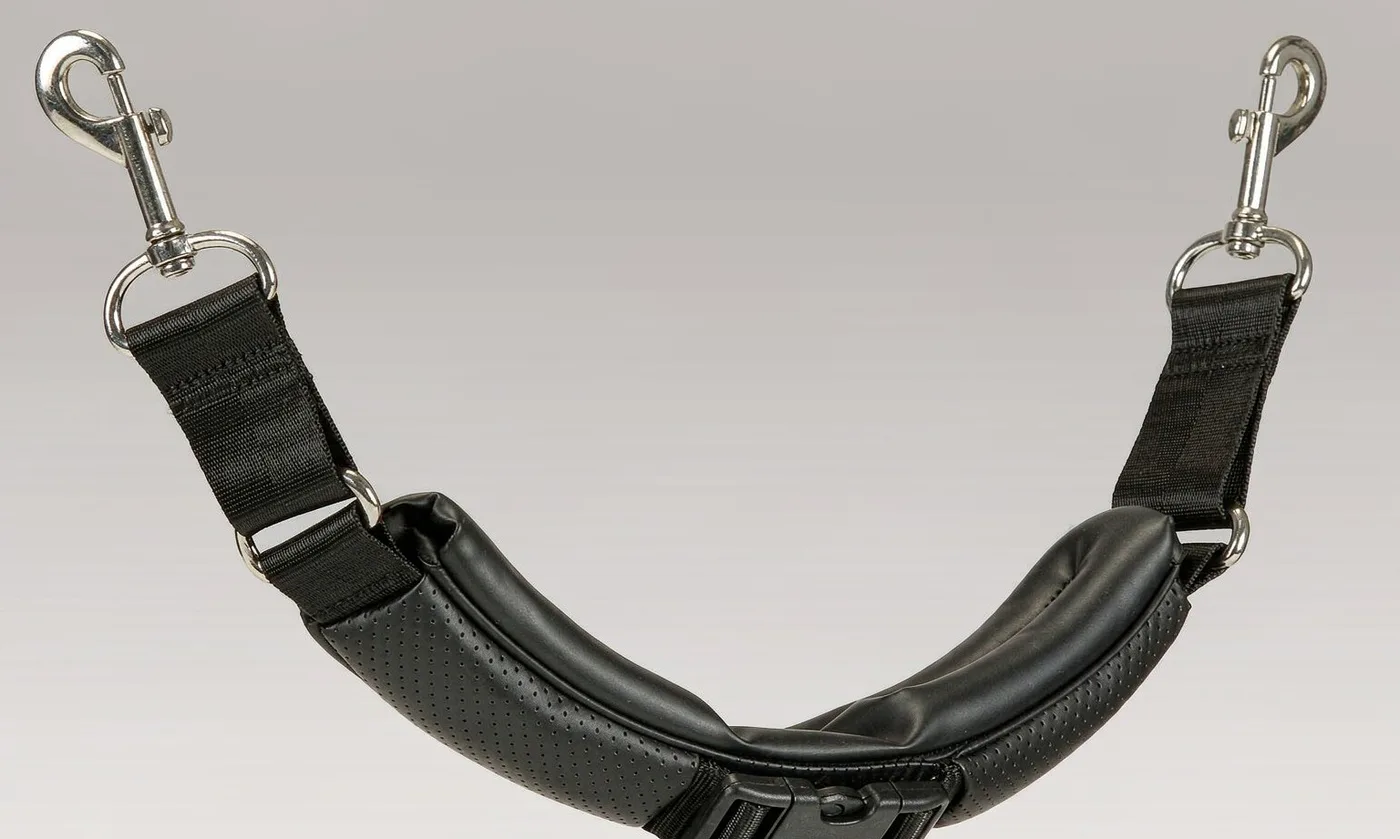
Part Numbering and Platform Revision Control
A part numbering scheme for spares has one job: to let somebody who has never seen the carrier identify the correct replacement. Every scheme that works in practice encodes three things — the platform, the revision and the component.
A workable structure is PLATFORM-REVISION-COMPONENT-VARIANT. The platform token identifies the carrier family and size band, the revision token identifies the drawing release, the component token identifies the part, and the variant token covers colour and handedness. A left-hand 25 mm webbing adjuster for the second release of a medium wheeled platform becomes something like W-M-r2-ADJ25-BK. It is not elegant, but it survives being read over the telephone by a customer service agent who has the carrier in front of them.
The revision token is the one that carries the engineering weight. A shell revision changes door openings, seam positions and reinforcement layout, and any of those can change the part. The rule applied on our production team is that the revision token increments whenever a dimension on the controlled drawing changes by more than 2 mm, and that every increment triggers a review of all seven component templates against the new release.
Handedness is a genuine source of error and it deserves its own token. Zipper chains, trolley handles and asymmetric panels are handed, and a left-hand panel ordered as a right-hand one is not merely wrong, it is unreturnable because the error is only discovered after the packaging is opened. Colour gets a token too, but a different one: colour is a commercial attribute and the material equivalence table may permit a close substitute, whereas handedness never permits one.
The scheme only works if it is printed on the part or on its immediate packaging. A part number that exists only in a spreadsheet is a part number that will be mis-picked, because the person picking it is working from a photograph.
Specifying a Spare: Identical Fit or Improved Fit
There is a standing argument in spare specification between supplying an identical part and supplying an improved one. Both are right in different cases and the distinction is mechanical rather than philosophical.
An identical spare is mandatory where the part mates with something that has already worn. A replacement slider for a chain that has been in service for two years must match the original gauge exactly; a slightly tighter slider will feel better in the hand and will then strip the worn chain within weeks. The same logic applies to a replacement zip-in panel for a shell whose mating chain has stretched, and to a replacement wheel for an axle that has developed a flat.
An improved spare is preferable where the original failure was a specification weakness and the mating interface is unaffected. If a ladderlock tooth profile wore out because the alloy was too soft, the replacement should be a harder alloy — the webbing it grips is unaffected by the change. If a foam pad took a compression set because the density was specified too low, the replacement should be a higher density; the pocket it sits in does not care.
The test for which case applies is a single question: does the replacement touch a surface that has already degraded? If yes, match the original exactly. If no, improve freely, and say so on the packaging, because an improved part that is visibly different from the original generates "wrong part" returns from customers who assume a mismatch.
Cost rarely argues against improving. The difference between a 25 kg/m³ and a 35 kg/m³ foam pad in a 200-piece spare lot is a few cents per unit, and it removes a repeat claim. What argues against improving is fit risk, which is why every improved spare goes through the same three-sample physical fit check as a new part, on a carrier of the oldest revision still in the availability window.
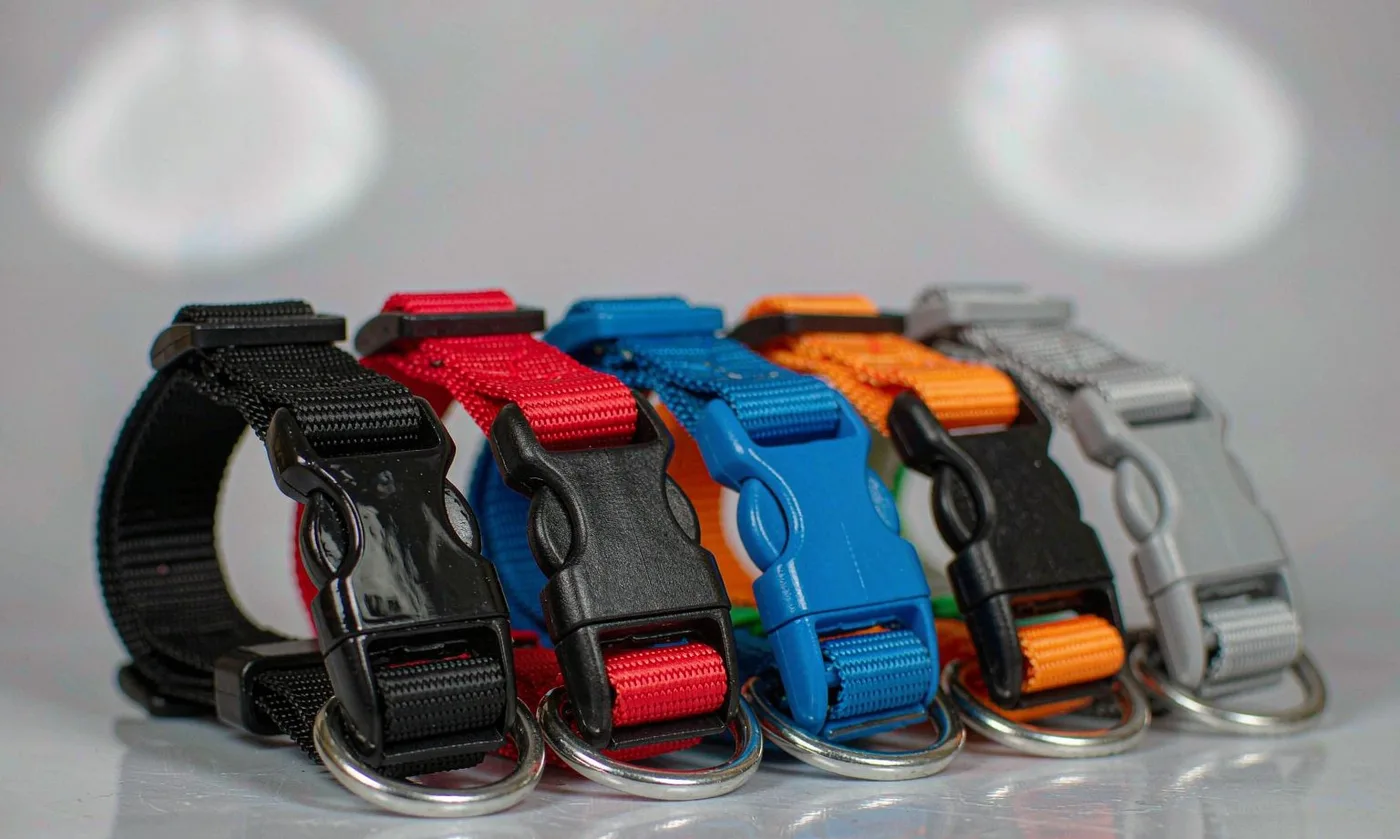
Ordering Economics for Small Spare Lots
The structural difficulty with spares is that the demand is correct in aggregate and wrong in detail. A 20,000-unit programme needs 800 sliders over three years — comfortably above any minimum — but it needs them 200 at a time, and a 200-piece order of a 0.25 USD part cannot carry its own setup.
Three mechanisms resolve it. The blanket order is the most effective: a single 1,000-piece order released against a schedule of four 250-piece deliveries over 24 months. The supplier builds once, holds the balance, and the unit price is the 1,000-piece price from the first delivery. Holding cost on the undelivered balance is typically 0.02-0.05 USD per unit per month, which on a small part is negligible against the setup it avoids.
The annual consolidated order is the second: all seven spare types ordered once a year in one shipment, sharing a carton and a container. Because the parts are small, seven types at 300 pieces each is roughly 18 kg and fits in a single carton, so the freight is effectively free when it rides with a carrier order.
The third is the shared-colourway rule, which works exactly as it does for accessories: spares are specified in the platform black and in one accent, so the colourway commitment is met once across the whole spare list rather than seven times.
| Model | Order quantity | Release | Unit price basis | Holding cost exposure | Best for |
|---|---|---|---|---|---|
| Single small lot | 200 pcs | One delivery | 500-pc price plus setup | None | Urgent one-off |
| Blanket order | 1,000 pcs | 4 releases over 24 months | 1,000-pc price | 0.02-0.05 USD/unit/month | Predictable wear items |
| Annual consolidated | 300 pcs per type | One shipment | 300-pc price, shared freight | 12 months stock | Slow-moving types |
| Booked with first run | 2-4% of units | With parent order | Parent order price | 24-36 months stock | Programme launch |
The bottom row is the one that should be used at launch: booking the spares allowance into the first production order is the cheapest of all four, because the setup is already paid, the dyelot is already matched and the freight is already booked.
Packaging, Kitting and Documentation
Spare packaging has a different job from retail packaging: it has to survive a warehouse, be identifiable without opening, and fit through a postal service. That pushes it towards plain, labelled and small.
The standard pack is a 0.05 mm polyethylene bag, heat-sealed, with a printed label carrying the part number in both human-readable form and as a Code 128 barcode, plus the platform token, the revision token and a short fit note. The fit note is the highest-value element — one line such as "fits W-M r1 and r2, not r3" removes most mis-orders. Bag sizes are standardised to five formats so that a pick face can hold the full catalogue in one bin row.
Kitting is where cost concentrates. A single slider in a bag costs 0.06 USD to pack; a seven-part kit with a folded insert costs 0.35-0.55 USD. The usual split is therefore to pack fast-moving items singly and to assemble the slow-moving items into a "service kit" that covers a whole platform, which is also easier for a customer to order correctly.
Documentation is a compliance item rather than a marketing one. Every spare that leaves the warehouse should be traceable to a production lot, because a spare is the item most likely to be involved in a safety question, and a lot number on the label is what makes a targeted recall possible instead of a blanket one. Traceability is maintained under the ISO 9001 system that the ISO 9001 certified production base operates, with lot records retained for the full stated availability window.
Fitting instructions are included where the part takes more than two minutes to fit — wheels, handles and zip-in panels. A single-page diagram with a torque figure where a fastener is involved is enough, and it measurably reduces the rate of "part did not fit" claims, which are in practice usually "part was fitted wrongly".
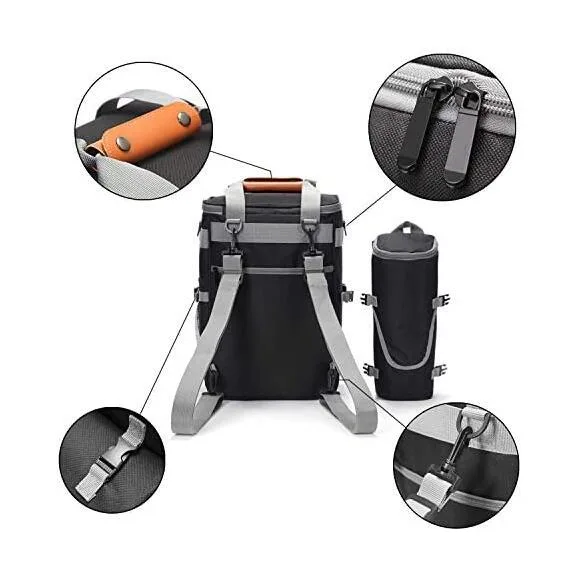
Inspection and Traceability for Spare Lots
Spare lots are inspected to the same AQL 2.5 standard as production lots, with one practical adjustment: spare lots are small, and a fixed-percentage sample of a 200-piece lot is statistically meaningless. The adjustment used is to inspect spares under ISO 2859-1 special inspection level S-4, which gives a sample of 20 for a 200-piece lot with acceptance 1 and rejection 2 at AQL 2.5, and to pair that with a dimensional check on three pieces against the oldest platform revision still in the window.
The defect classification for spares is tighter than for production in one respect: a spare has no cosmetic tolerance at all for dimensional deviation, because the whole point of it is to fit something already in the field. A zip-in panel that is 3 mm short is a minor defect in a production lot and a critical defect in a spare lot. Classification tables are therefore written per part type rather than copied from the carrier standard.
Traceability runs in both directions. Incoming, every spare lot carries the supplier lot number of its raw material — the chain, the alloy, the foam batch — because a foam pad with a compression-set complaint is traced to the foam batch, not to the cutting date. Outgoing, every shipment records which platform revisions the lot was validated against, so that when revision 3 is released, the stock of revision-1 spares is known and the availability commitment can be honoured precisely.
Record retention is set by the availability window rather than by the warranty period. A three-year availability commitment needs at least three years of lot records plus the production year, and in practice records are held five years because the last spare shipped in year three may be fitted in year four.
Service Level, Availability Windows and Reverse Logistics
The availability window is the commitment that makes a parts programme credible, and it should be stated in years from the last production date rather than from the purchase date, because the two diverge as soon as a carrier is given as a gift or resold.
A three-year window from last production is the mainstream commitment and it is achievable for all seven components, provided the material equivalence table was built at launch. Beyond that, the components that remain available indefinitely are the generic ones — sliders, adjusters, wheels — because they are bought to a standard gauge rather than to a platform drawing. The components that expire are the panels, boards and pads, because they are cut to a platform-specific template.
Service level is a separate commitment and it should be stated as a lead time, not as an intention. A held-stock spare ships in 1-3 working days; a spare that must be produced ships in 20-30 days for a generic item and 35-50 days for a cut-to-template one. Publishing both figures honestly is better than publishing one optimistic figure, because the customer who waits 40 days having been told 5 is the customer who leaves a review.
Reverse logistics is usually ignored and should not be. A replaced part is a small, cheap object, and asking for it back costs more in postage than it returns in material. The workable policy is to require a photograph rather than the part: the photograph confirms the failure mode, feeds the failure statistics that drive the next specification revision, and costs nothing to return. Where a failure looks safety-related, the part is recalled for physical examination and the postage is prepaid.
Putting it together, the programme is run by the same production team that built the carrier: MOQ 500 pieces per colourway on the consolidated spare order, prototypes in 6-10 working days if a revised part is needed, bulk production 35-50 days, final random inspection to AQL 2.5, T/T 30/70 and FOB Xiamen, with the launch spares allowance booked into the first parent order.
Production capability
- SGS-verified production space of 4,950 m², 149 machines, 7 assembly lines
- Pet carrier and pet bag output since 2014 from a 137-person team
- 200,000 units shipped monthly under BSCI and ISO 9001 systems
People Also Ask
Which pet carrier parts fail most often?
Mesh panels lead at 12.4 requests per 1,000 units in year one, followed by zipper sliders at 8.2 and wheels at 7.1. Those three are roughly two thirds of all claim events, and they should be the items held in depth from the first shipment.
How many spare parts should a brand stock?
A 2-4% allowance of units shipped, booked into the first production order. At 2% on a 20,000-unit programme that is 400 sets, which covers the first two service years for every component except mesh panels, which run higher.
How long should spare parts stay available?
Three years from the last production date is the mainstream commitment. Generic parts bought to a standard gauge — sliders, adjusters, wheels — remain available indefinitely; cut-to-template parts such as panels and pads expire with the platform.
Should a replacement part be identical to the original?
Match the original exactly if the part touches a worn surface, such as a slider on a used chain. Improve freely where the mating interface is unaffected, such as a harder alloy in an adjuster or a higher-density foam pad.
How are small spare lots inspected?
Under ISO 2859-1 special level S-4 rather than general level II: a 200-piece lot takes a sample of 20 with acceptance 1 and rejection 2 at AQL 2.5, paired with a dimensional check on three pieces against the oldest live platform revision.
What is the cheapest way to order spare parts?
A blanket order: one 1,000-piece order released as four 250-piece deliveries over 24 months, priced at the 1,000-piece level from the first delivery. Holding cost on the undelivered balance is 0.02-0.05 USD per unit per month.
Do spare parts need their own part numbers?
Yes, encoding platform, revision, component and variant. The revision token increments whenever a controlled dimension moves by more than 2 mm, which is what lets a part ordered three years later still fit the platform it was built for.
Frequently Asked Questions
What is the minimum order for spare components?
MOQ 500 pieces per colourway on a consolidated spare order, but small lots are handled through blanket ordering or an annual consolidated shipment rather than by dropping below the minimum. A one-off urgent lot of 200 is possible at the 500-piece price plus the setup charge.
How long does a spare part sample take?
6-10 working days for a revised or newly specified part. A spare that is simply drawn from an existing component store needs no sampling at all, which is why the launch allowance should be booked with the parent order.
What is the bulk lead time for spares?
35-50 days for cut-to-template parts such as panels, boards and pads. Generic parts held as stock ship in 1-3 working days, and generic parts that must be produced take 20-30 days.
Can spares share a colourway across part types?
Yes. Specifying the whole spare list in the platform black plus one accent means the colourway commitment is met once. This is the standard approach and it is what makes a seven-part spare list economically viable.
Should customers return the failed part?
Normally no — a photograph is requested instead, which confirms the failure mode and feeds the failure statistics at no postage cost. Physical return is requested only where a failure looks safety-related, and then postage is prepaid.
What causes mesh panel failures?
Claw snag and ultraviolet embrittlement. Snag is managed by construction, using a monofilament weft that resists a hook pulling through; embrittlement is managed by a UV-stabilised yarn and by a coating that does not chalk.
Why do zipper sliders fail after a year?
Usually because the slider body was specified a half-gauge oversize to speed assembly, so it grips the chain loosely and opens under load after 12-18 months. The fix is a correct gauge and a chain wear check, not a stronger slider.
How is a spare part traced to its material batch?
Every spare lot records the supplier lot number of its raw material — chain, alloy, foam batch — held under the ISO 9001 system for at least five years. That is what makes a targeted recall possible instead of a blanket one.
What does a seven-part service kit cost to pack?
0.35-0.55 USD including a folded insert, against 0.06 USD for a single part in a labelled bag. The usual approach is to pack fast-moving parts singly and assemble slow-moving ones into a platform service kit.
How much does holding spare stock cost?
0.02-0.05 USD per unit per month on the undelivered balance of a blanket order. On small parts that is negligible against the setup charge it avoids, which is why blanket ordering is normally the cheapest model.
Can a spare part be improved over the original?
Yes, where the mating interface is unaffected. A harder alloy adjuster or a higher-density foam pad are standard improvements; a slider on a worn chain is not, because a tighter slider will strip the chain within weeks.
What is the stated availability window?
Three years from the last production date, stated that way rather than from purchase date because carriers are often given or resold. Generic gauge parts stay available beyond the window; cut-to-template parts expire with it.
Talk to QUANZHOU JUNYUAN BAGS about a pet carrier program: MOQ 500 pieces per colourway, samples in 6-10 working days, bulk production in 35-50 days under AQL 2.5 inspection.
Get a free quote Request a sample