Lightweight Dog Carrier Backpack: Material Selection Guide
A lightweight dog carrier backpack is engineered by removing mass from the panel stack, not from the structure. A size M build at 210D to 420D ripstop nylon (68 to 96 g/m2), 6 mm EVA at 45 kg/m3 and polymer hardware lands at 1.15 to 1.35 kg empty while still carrying a rated 12 kg load. One denier step down saves 60 to 90 g per unit; foam density below 40 kg/m3 saves 40 g and costs more in returns.
Executive summary. This guide addresses product and sourcing teams specifying a lightweight dog carrier backpack for a 2026 programme. Every number comes from bills of material currently running through the QUANZHOU JUNYUAN BAGS production network, where lightweight programmes start at MOQ 500 pieces per colourway. Development samples are cut, sewn and weighed in 6-10 working days, and the first report includes a full component weight breakdown plus a static load result. Bulk production runs 35-50 days after sample approval, governed by fabric dye-lot slots and hardware plating lead time. Finished goods are released under AQL 2.5 inspection with zero tolerance for critical defects, and each carton is weighed to confirm the unit mass stays inside the plus or minus 3 percent tolerance agreed at sampling. Weight reduction is treated here as a cost and freight decision as much as a comfort decision: a 350 g saving on a 20,000-unit order removes roughly 7 tonnes of shipped mass and changes the volumetric tariff band on most air and sea lanes. Weight targets are agreed at sampling and held to plus or minus 3 percent in bulk, and the component weight report issued with the first sample becomes the reference for every later round.
The economics of wholesale pet carriers move with carton cubage, so dog carrier backpack programmes are quoted both by unit price and by filled container.
Weight Budget: Where the Grams Go in a Lightweight Build
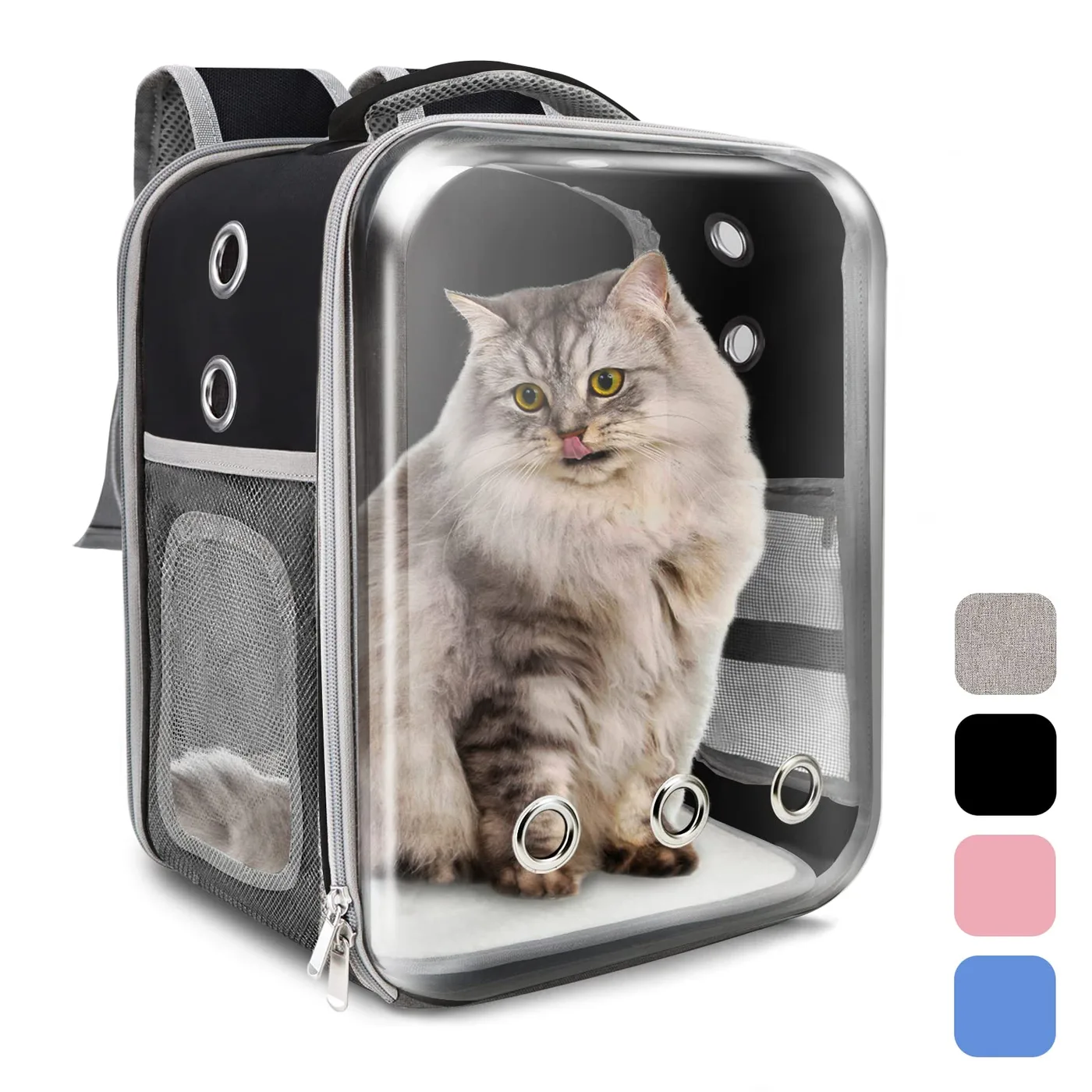
Lightweight specification starts as an arithmetic problem, not a fabric problem. Before any swatch is chosen the target empty mass is split across eight component groups, and each group receives a ceiling. A conventional size M dog carrier backpack with a 420D shell, 5 mm EVA base board and metal hardware weighs about 1.29 kg empty. The same carrying volume built to a lightweight target weighs 0.93 kg, and the reduction is distributed rather than concentrated in one place. A size M dog carrier backpack can be brought from 1.62 kg to 1.24 kg without losing carrying capacity, provided every gram removed comes from the panel stack or the hardware schedule rather than from seam width or handle reinforcement.
The budget below reflects a production spec that has passed a 12 kg static load test and a 300 mm drop test. Each lever is independent, so a programme can adopt three or four of them without triggering a full re-test, but adopting all eight requires a new structural validation round because the load path changes.
| Component group (size M) | Standard build (g) | Lightweight build (g) | Reduction lever |
|---|---|---|---|
| Shell fabric | 330 | 215 | Downshift 420D to 210D ripstop |
| Mesh and ventilation panels | 95 | 72 | Mono mesh instead of 3D spacer |
| Foam stack | 205 | 145 | 6 mm EVA at 45 kg/m3, zoned |
| Base board | 240 | 165 | 3 mm honeycomb PP replaces 5 mm EVA |
| Webbing and binding | 120 | 92 | 15 mm webbing on non-load paths |
| Hardware | 155 | 118 | Polymer buckles, alloy-free sliders |
| Zippers | 110 | 88 | No.5 coil replaces No.8 |
| Thread and adhesive | 38 | 30 | Bonded nylon 40s, trimmed seam allowance |
| Total | 1293 | 925 | 368 g saved, 28 percent |
Programme teams should treat the 925 g figure as a floor rather than a goal. Pushing below it usually means thinning the base board under the point where a 12 kg animal can be lifted safely, and the resulting deflection shows up as a sagging floor after roughly 40 hours of use. The practical brief is therefore: hit 0.95 to 1.05 kg, bank the freight saving, and spend the remaining engineering effort on ventilation area and shoulder strap geometry.
Shell Fabric Selection: Denier, GSM and Ripstop Geometry
Denier describes yarn thickness and GSM describes finished fabric mass, and the two are only loosely coupled because weave density and coating both move independently. A 210D ripstop at 68 g/m2 and a 210D plain weave at 78 g/m2 use the same yarn; the difference is pick count and the reinforcement grid. For a dog carrier backpack the useful comparison is tear strength per gram, and on that measure ripstop wins consistently. Ripstop grid spacing of 6 mm raises tear resistance by roughly 30 percent over a plain weave of the same GSM, because the reinforcement yarn arrests crack propagation at the grid boundary instead of letting a tear run the full panel.
Coating is the quiet weight penalty. A single-sided PU coating adds 12 to 18 g/m2, a second side adds the same again, and a 1,000 mm hydrostatic rating typically needs two passes. Teams chasing weight often specify coating only on the base panel and the lower 200 mm of the side walls, which keeps the splash zone protected while saving 40 to 55 g per unit.
The table below is the working shortlist used for lightweight programmes. All values are measured on production rolls, not on lab coupons, and abrasion is run to ISO-documented in-house procedures calibrated against the Martindale method.
| Fabric | GSM | Tear (N) | Martindale cycles | Weight share of shell |
|---|---|---|---|---|
| 210D ripstop nylon, 1-side PU | 68 | 18 | 18,000 | 100 percent baseline |
| 300D ripstop polyester, 1-side PU | 84 | 24 | 22,000 | 124 percent |
| 420D oxford nylon, 2-side PU | 112 | 35 | 30,000 | 165 percent |
| 600D polyester, PVC back | 178 | 52 | 40,000 | 262 percent |
| 20D siliconised ripstop, liner only | 38 | 9 | 8,000 | 56 percent |
A practical rule for the shell: pick the lowest denier that clears 18,000 Martindale cycles and 18 N tear. Below that the panels abrade at the strap contact points within one season, and warranty claims exceed the freight saved. Where the brief calls for a heavier aesthetic, the weight can be faked with a 300D face laminated to a 20D backer, which gives the hand feel of a heavier cloth at 60 percent of the mass.
Ventilation Panels: Airflow per Gram
Ventilation is the one area where removing weight can improve the product. A 3D spacer mesh at 5 mm thickness and 320 g/m2 moves roughly 180 cfm per square metre at 125 Pa but adds 95 g to a size M shell. A mono mesh at 140 g/m2 moves 240 cfm at the same pressure and adds 42 g. Airflow per gram therefore improves by a factor of about three when the panel switches from spacer to mono, and the shell also gains usable interior volume because the panel stack is 4 mm thinner on each side.
The engineering constraint is not airflow but open area versus snag resistance. Mono mesh filaments at 0.25 mm diameter resist claw penetration up to a 300 N point load, which covers dogs to roughly 14 kg. Above that, a laminated mesh with a 0.35 mm filament and 42 percent open area is specified even though it costs 18 g, because claw damage at the door panel is the single most common field failure in this category.
- Open area target: 38 to 48 percent of the panel footprint on two opposing faces plus the door.
- Frame bond: mesh is bound with 15 mm bias tape at 8 stitches per 25 mm; raw mesh selvedge fails in 60 hours of use.
- Placement: panels must sit above the animal load line; low panels are occluded by bedding and contribute nothing.
- Test: airflow measured at 125 Pa on a 100 mm circular orifice, three readings per panel, lowest value recorded.
- Snag test: 300 N point load applied through a 6 mm probe for 10 seconds, no filament breakage.
Ventilation geometry also carries a compliance dimension. Several carriers specify mesh on three faces to satisfy airline ventilation rules, and the same panel layout is what lets a lightweight build pass without adding mass. Where a programme sells into air travel, the panel plan should be frozen before the fabric is ordered, because re-cutting the door panel after sampling pushes the 6-10 working day window out by another cycle.
One more variable deserves attention at this stage: condensation. A high open-area panel in a humid climate moves moisture as well as air, and the inner face of the shell can wet out during long transit. The standard mitigation is a 12 mm air gap between the mesh and the outer shell on the two side faces, created by a spacer tape rather than by extra foam, which adds 6 g and eliminates the wetting problem in most lane conditions.
Foam and Structural Cores: Density, Thickness and Compression Set
Foam is where lightweight programmes most often go wrong. The mass of a foam panel is area multiplied by thickness multiplied by density, so a 12 percent density reduction looks like a free 12 percent saving. It is not. EVA below 40 kg/m3 shows compression set above 18 percent after 72 hours at 70 degrees C, which means the base panel permanently flattens under a resting animal and the carrier loses its floor stiffness within a season.
The structural answer is zoning rather than thinning. Padding is specified at 6 mm in the shoulder straps and back panel where the human feels it, 3 mm on the side walls where it only prevents panel collapse, and 8 mm in a 200 mm wide band directly under the animal load line. Total foam mass drops from 205 g to 145 g while the load-bearing zone gets heavier, and static deflection under 12 kg improves from 14 mm to 9 mm.
- EVA 45 kg/m3, 6 mm: general padding, compression set 12 percent, the default choice.
- PE foam 33 kg/m3, 3 mm: side wall stiffener only, never used as a primary comfort layer.
- Honeycomb PP 3 mm: base board, 165 g, deflection 9 mm at 12 kg, recyclable and mono-material friendly.
- Lamination method: flame lamination adds 4 g per panel but avoids the adhesive weight and the VOC documentation burden.
- Compression set test: 72 hours at 70 degrees C, 50 percent deflection, recovery measured after 30 minutes.
Where a programme needs a fold-flat carrier, the foam stack is the limiting factor. A 3 mm PE board scores and folds cleanly; a 5 mm EVA board cracks at the score line after about 30 cycles. Specifying the thinner board is both a weight decision and a durability decision, and it should be settled at the same time as the folding geometry.
Hardware and Trim: The Weight of Small Parts
A size M dog carrier backpack carries between 22 and 34 discrete hardware items, and collectively they are the second heaviest group after the shell. Switching from zinc alloy to engineering polymer removes 30 to 45 g with no functional loss on any part that is not in the primary load path. The exceptions are the handle D-ring and the shoulder strap adjusters, which stay metal because they see cyclical shock loading and a polymer failure there is a safety event rather than a warranty event.
Zipper choice is the largest single trim lever. A No.8 chain with an alloy slider weighs 110 g per unit; a No.5 coil with a polymer slider weighs 88 g and, on a carrier door, is structurally sufficient because the door zipper is loaded in shear rather than in cross-wise tension. The chain must still clear 5,000 open and close cycles under a 2 kg side load, and that is verified on every new chain before it enters the approved parts list.
- Buckles: POM at 8 g per pair versus nylon at 11 g; POM holds 220 N static, nylon 180 N.
- Ladder locks: polymer at 3.5 g, acceptable above 6 mm webbing width only.
- D-rings: remain zinc alloy or stainless; 12 g per pair, salt spray 48 hours.
- Foot studs: four TPE studs at 2 g each protect the base panel and add 8 g.
- Finish: any metal part is verified to nickel release limits before it is approved for EU-bound orders.
Trim weight interacts with compliance. Metal parts on products destined for the EU market need nickel release documentation, and polymer parts need to be checked against REACH substance lists. Those checks add nothing to the unit mass but they do add 3 to 5 working days to the sampling window if the hardware is sourced after the sample is built, which is why the hardware schedule is locked in the same week as the fabric order.
Base Board and Load Path: Structure at Low Mass
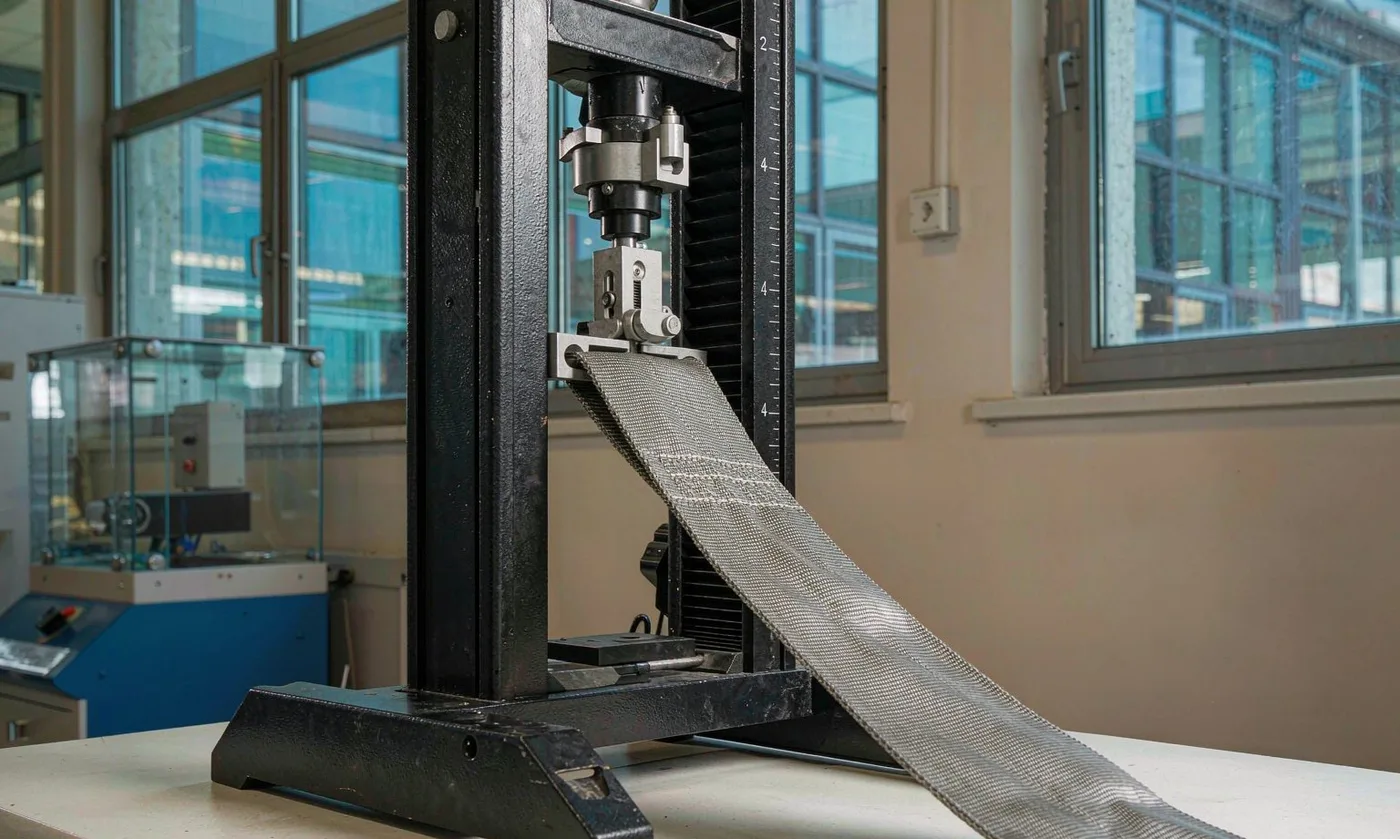
The base board carries the whole animal load and it is the component most sensitive to weight cutting. Deflection is proportional to the cube of thickness, so removing 2 mm from a 5 mm board roughly triples deflection under the same load. The engineering response is to change material rather than thickness: a 3 mm honeycomb PP board deflects 9 mm under 12 kg where a 5 mm EVA board deflects 14 mm, and it weighs 165 g instead of 240 g. A carrier floor that deflects more than 15 mm under rated load reads as unsafe to the end user regardless of what the test report says.
The load path from the base board to the shoulder straps runs through four stitch groups, and each one is a potential failure point. Handle webbing is specified at 25 mm with a box-X bar-tack of 42 stitches, and the strap-to-body junction carries a 40 mm reinforcement patch that spreads the load over 9 stitches per 25 mm. Reducing stitch density here is the fastest way to cut cost and the fastest way to create a critical defect classification in the inspection report.
- Static load: 12 kg held for 30 minutes, permanent deflection under 3 mm after unloading.
- Dynamic lift: 1,000 cycles at 8 kg on a 100 mm stroke, no stitch elongation above 2 mm.
- Drop test: 300 mm onto concrete with 10 kg ballast, four orientations, no structural failure.
- Seam strength: ISO 13935-2, minimum 200 N on all load-bearing seams.
- Handle test: 4 times rated load held for 60 seconds, which for a 12 kg rating means 48 kg.
Where the brief includes wheels or a telescoping handle, the base board specification changes again because the load path is no longer purely vertical. Those builds are quoted separately and always carry a heavier board, which is why a wheeled unit rarely qualifies as lightweight under the 1.05 kg target used here.
Weight Test Matrix and Acceptance Limits
Weight claims need a test matrix, not a marketing sentence. Every lightweight programme is released against eleven measurements, and five of them are re-run on production units at AQL 2.5 sampling rather than only on the golden sample. The reason is simple: unit mass drifts with fabric lot, foam density tolerance and adhesive pickup, and a drift of 60 g is enough to move a product out of the shipping band it was costed for.
| Test | Method reference | Acceptance limit | Frequency |
|---|---|---|---|
| Empty unit mass | Internal SOP-014 | Plus or minus 3 percent of approved sample | Per carton, 5 units |
| Static load | Internal SOP-021 | 12 kg, 30 min, permanent set under 3 mm | Per production lot |
| Dynamic lift | Internal SOP-022 | 1,000 cycles at 8 kg, no seam growth | Per production lot |
| Drop | Internal SOP-025 | 300 mm, 4 orientations, no failure | Per colourway |
| Seam strength | ISO 13935-2 | 200 N minimum | Per fabric lot |
| Abrasion | Martindale, ISO 12947-2 | 18,000 cycles to break | Per fabric lot |
| Tear strength | ASTM D2261 | 18 N minimum | Per fabric lot |
| Zipper cycling | Internal SOP-031 | 5,000 cycles under 2 kg side load | Per hardware lot |
| Colour fastness to rubbing | ISO 105-X12 | Grade 4 dry, 3-4 wet | Per dye lot |
| Compression set, foam | 72 h at 70 degrees C | Under 18 percent | Per foam lot |
| Salt spray, metal trim | ASTM B117 | 48 h, no base metal corrosion | Per hardware lot |
Failure handling is graded by severity. A critical defect is any condition that creates a safety risk, including a load-bearing seam below 200 N or a buckle that releases under 150 N, and critical defects carry zero acceptance. Major defects are cosmetic or functional issues that a retail buyer would reject, and minor defects are workmanship variances inside tolerance. The AQL 2.5 table sets the sample size and the accept and reject numbers by lot size, and the same table governs the pre-shipment report.
Cost, MOQ and Sampling: Turning a Lightweight Spec Into Production
Weight reduction has a cost curve. The first 150 g come free, taken out of the shell denier and the hardware schedule with no tooling and no new validation. The next 150 g require a new base board, a re-test, and sometimes a new cutting die, and they typically add 0.40 to 0.70 USD per unit in material and amortised tooling. Beyond 300 g the cost rises steeply because the shell fabric moves into specialty territory with its own minimum order and its own lead time.
Order structure matters as much as material. Lightweight programmes run at MOQ 500 pieces per colourway, which is the point where a dye lot and a hardware plating lot both become economic. Below 500 pieces the fabric is bought from stock colour at a 9 to 14 percent premium, which usually exceeds the saving from the lightweight spec itself. Above 2,000 pieces the fabric can be woven to order and the GSM tolerance tightens from plus or minus 5 percent to plus or minus 3 percent, which is what makes a tight weight tolerance enforceable.
The sampling path is three rounds for a new lightweight build. Round one is a fit and weight prototype in stock fabric, delivered in 6-10 working days with a component weight report. Round two is a spec sample in production fabric with production hardware, and it carries the full test matrix. Round three, if needed, is a pre-production unit built on the bulk line and used as the reference for AQL 2.5 inspection. Bulk production follows in 35-50 days, and the window is driven mainly by fabric dyeing and hardware plating rather than by sewing capacity.
Freight is the final variable. A 350 g reduction on a 20,000-unit order removes about 7 tonnes of shipped mass and, on air freight, returns more than the material premium within a single season. On sea freight the saving shows up in container utilisation: lighter units with the same volume do not reduce cost per container, so the lightweight brief pays back on air lanes and on last-mile parcel tariffs, not on full container loads.
The handover package matters as much as the numbers. A lightweight programme should ship with a signed component weight report, the test matrix result sheet, a fabric and hardware schedule with lot references, and the approved sample retained as the inspection reference. With those four documents in place, a repeat order can skip the prototype round entirely and go straight to a pre-production unit, which shortens the development path by roughly two weeks on the second season.
Order and quality terms
- MOQ 500 pieces per colourway; samples in 6-10 working days
- Bulk production 35-50 days after approval; AQL 2.5 inspection standard
- T/T 30/70 terms, FOB Xiamen, full document set per shipment
People Also Ask
What is the lightest fabric that still works for a dog carrier backpack?
210D ripstop nylon at 68 g/m2 with a single-sided PU coating is the practical floor. It clears 18 N tear strength and 18,000 Martindale cycles, which is the minimum needed to survive strap abrasion for one season. Below 210D the shell abrades at contact points and warranty cost exceeds the freight saving.
How much weight can be removed without weakening the carrier?
About 28 percent, or 368 g on a 1,293 g size M build, distributed across shell, foam, board and hardware. The limit is set by the base board: deflection beyond 15 mm under rated load reads as unsafe, so thickness reductions must be paired with a honeycomb PP board rather than a thinner EVA board.
Does a lighter carrier mean lower freight cost?
On air freight and parcel lanes yes, because both are billed on chargeable weight. On full container loads no, because the units are volume-limited rather than weight-limited and a lighter pack does not change carton count per container.
Why does foam density matter more than foam thickness?
Thickness drives comfort and deflection linearly, but density drives compression set, which is permanent. EVA below 40 kg/m3 shows over 18 percent compression set after 72 hours at 70 degrees C, so the floor flattens permanently even if the initial feel is acceptable.
Can polymer hardware replace metal on a pet carrier?
Everywhere except the primary load path. Buckles, ladder locks and sliders can be POM or nylon and save 30 to 45 g per unit. Handle D-rings and strap adjusters should stay metal because polymer failure under shock loading is a safety event.
How is unit weight verified during bulk production?
Five units per carton are weighed against the approved sample and the tolerance is plus or minus 3 percent. Drift above that triggers a check of fabric lot GSM, foam density and adhesive pickup, because those three variables account for most of the variance.
What is the sampling window for a lightweight build?
6-10 working days for the first prototype including a component weight report, then a spec sample round in production fabric, then bulk production in 35-50 days. Hardware schedules are locked in the same week as the fabric order so compliance checks do not extend the window.
Frequently Asked Questions
What denier should I specify for a lightweight dog carrier backpack?
Specify 210D ripstop for the shell if the rated load is 12 kg or less, and 300D ripstop above that. Both should carry a single-sided PU coating on the base and lower side panels only, which keeps splash protection while saving 40 to 55 g per unit.
Is GSM or denier the better specification parameter?
Specify both. Denier fixes the yarn and therefore the tear behaviour, while GSM fixes the mass and therefore the weight budget. A fabric can meet a GSM target with a loose weave and fail tear strength, which is why the purchase spec states GSM, denier and minimum Martindale cycles together.
How thick should the base board be on a lightweight build?
3 mm if it is honeycomb PP, 5 mm if it is EVA. The honeycomb structure gives lower deflection at lower mass, and it also survives fold-flat scoring better than EVA, which cracks at the score line after roughly 30 cycles.
What is a safe rated load for a size M lightweight carrier?
12 kg is the working rating for a size M shell built to the budget in this guide. The rating is set by static deflection and by the handle test at four times rated load, not by the fabric strength, which is always the stronger element.
How much does a lighter shell affect product cost?
The first 150 g of reduction is close to cost neutral because it comes from denier and hardware selection. The next 150 g adds 0.40 to 0.70 USD per unit once a new board, a re-test and sometimes a new cutting die are involved.
Can mesh panels be made lighter without losing airflow?
Yes. Mono mesh at 140 g/m2 moves more air per gram than a 3D spacer mesh at 320 g/m2, because open area rises as filament thickness falls. The constraint is snag resistance, not airflow: below 0.25 mm filament diameter, claw damage becomes the dominant field failure.
Do lightweight materials change the compliance documentation?
The documents are the same, but the timing changes. Polymer hardware still needs REACH screening and any remaining metal needs nickel release data. Those checks are run at sample stage so they do not delay the 35-50 day bulk window.
What tolerance should be written into the weight spec?
Plus or minus 3 percent of the approved sample mass is the standard tolerance, and it is tightened to plus or minus 2 percent for orders above 2,000 pieces where fabric is woven to order with a tighter GSM tolerance.
How does coating weight affect a lightweight target?
Each PU pass adds 12 to 18 g/m2. A two-sided coating on a 0.9 m2 shell adds roughly 25 to 32 g, which is why most lightweight specs coat the base and lower panels only and accept a lower hydrostatic rating on the upper side walls.
Are recycled fabrics available for lightweight builds?
Recycled polyester ripstop at 210D and 300D is available at comparable GSM, with tear strength within 8 percent of virgin yarn. It carries a 6 to 10 percent material premium and needs its own dye-lot minimum, so it is quoted at MOQ 500 pieces per colourway or above.
What causes weight drift between the sample and bulk production?
Fabric lot GSM variance, foam density variance and adhesive pickup during lamination. Together they account for most of a 60 g drift, which is why the production contract fixes GSM tolerance and foam density rather than only the finished mass.
Should the lightweight spec be tested differently from a standard build?
The test list is identical, but the pass limits on static deflection and seam strength matter more because there is less material margin. Load-bearing seams are held at 200 N minimum and any result below that is classified as a critical defect with zero acceptance under AQL 2.5.
Talk to QUANZHOU JUNYUAN BAGS about a pet carrier program: MOQ 500 pieces per colourway, samples in 6-10 working days, bulk production in 35-50 days under AQL 2.5 inspection.
Get a free quote Request a sample