Private Label Dog Carrier Backpack: Complete Guide
A private label dog carrier backpack is built to an exclusive specification owned by the brand: dedicated tooling, custom fabric shade, proprietary moulded parts and brand-specific trim. MOQ is 500 pieces per colourway, samples take 6-10 working days, and bulk production runs 35-50 days under AQL 2.5. Tooling for a moulded part costs 3,000-18,000 USD and is amortised over the first three seasons.
Executive Summary
Private label differs from white label in one decisive respect: the specification is exclusive and the tooling that produces it is paid for by the brand. In a pet carrier program that means a custom panel pattern, a shade matched to the brand palette, moulded or plated hardware carrying the brand mark, and a trim set that is not shared with any other customer. The exclusive elements are what create the barrier to a competitor copying the product, and they are also what lengthen development.
Commercial terms are stable across private label programs: MOQ 500 pieces per colourway, samples in 6-10 working days, bulk production 35-50 days after sample approval, and AQL 2.5 as the final inspection standard, shipped FOB Xiamen under T/T 30/70. Development cost sits on top of unit price and is quoted separately: steel rule dies at 60-180 USD each, print plates at 25-60 USD per colour, woven label loom setup at 80-150 USD, and injection or die-cast tooling at 3,000-18,000 USD depending on cavity count and part complexity.
Working as a pet carrier manufacturer on dog carrier backpack ranges means the technical file is shared before any quotation: pattern, bill of materials, test report and packing specification.
Private Label, White Label, OEM and ODM: Where the Line Sits
Four commercial models circulate in pet carrier sourcing and they are routinely confused, which leads to specifications that are negotiated twice. The distinction that matters commercially is who owns the design and who owns the tooling.
White label means an existing product is taken from a catalogue and rebadged. The tool set already exists, the pattern is fixed, and the only brand-specific element is the label and the packing. Development is measured in days because there is nothing to develop. Private label means the product is engineered for one brand: the panel geometry, the shade, the hardware finish and usually at least one moulded component are exclusive. Development is measured in weeks. OEM, original equipment manufacturing, means the brand supplies the design and the manufacturer executes it; ODM, original design manufacturing, means the manufacturer proposes the design and the brand selects and modifies it.
Most serious pet carrier programs are a hybrid: an ODM base pattern selected from an existing platform, then converted to private label by changing the panel geometry, the shade, the trim and one structural component. This hybrid is worth understanding because it is where the best cost-to-differentiation ratio sits. A full ground-up private label development on a carrier with a moulded shell costs five figures in tooling before a single unit is sewn; a modified platform with one new moulded part gets most of the visual differentiation for perhaps a fifth of that.
The contractual marker is tooling ownership. If the brand pays for the tool, the tool is the brand's property, it should be marked as such, and it should not be used for another customer's production without written consent. If the manufacturer absorbs the tooling cost into unit price, the tool remains available to the production network and the exclusivity is only as strong as the commercial relationship behind it. Buyers who care about exclusivity should expect to pay for tooling and should say so explicitly in the first enquiry.
Defining the Exclusive Specification: What Is Actually Yours
Exclusivity has to be engineered into specific line items. A vague request for a unique product produces a shared product with a different label, because the production team has no instruction to do anything else. The specification below is the set of levers that actually create a defensible difference in a dog carrier backpack.
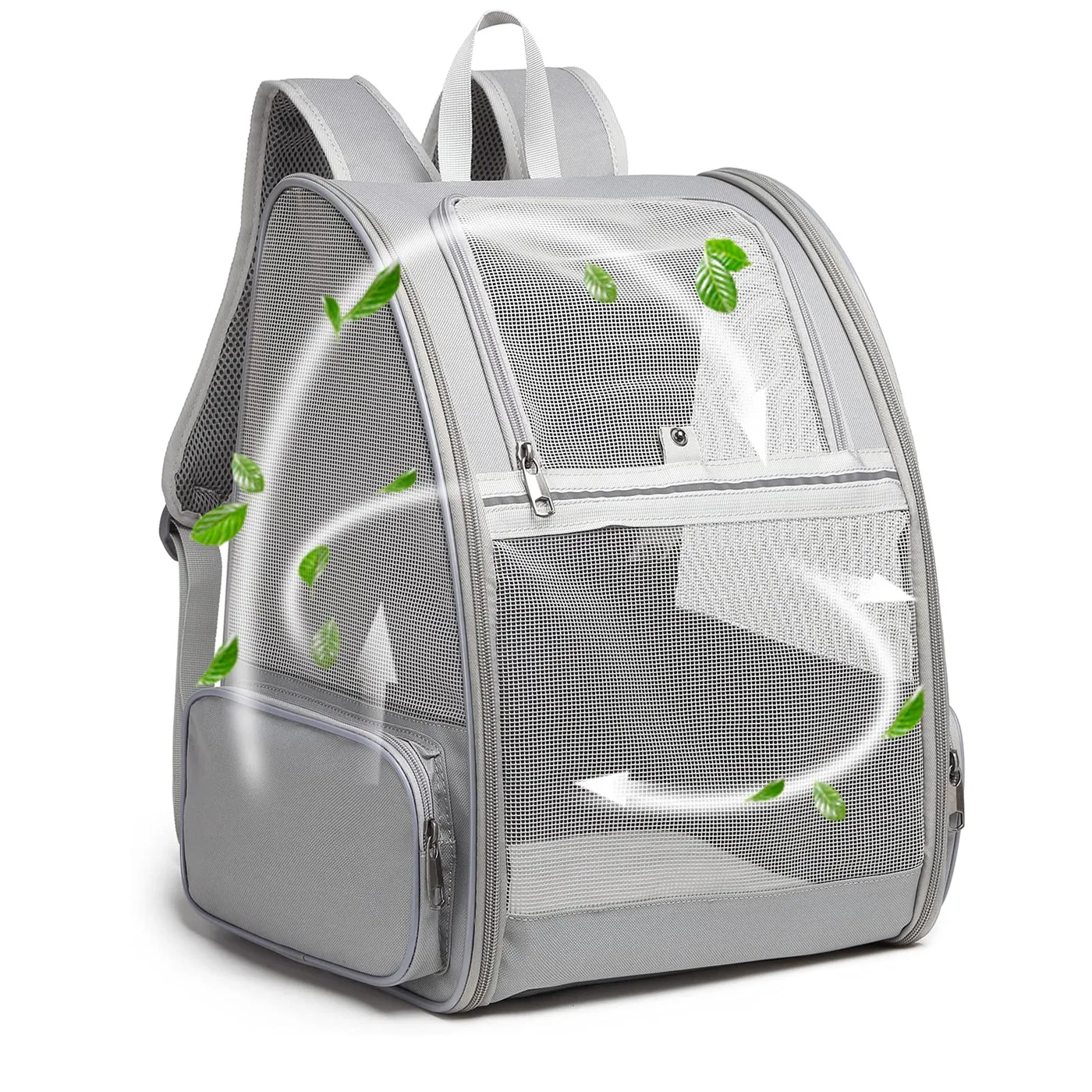
Structural geometry is the strongest lever and the hardest to copy quickly. Interior volume, the ratio of floor area to height, entry orientation - top, front, or side - and the placement of the ventilation array determine whether a carrier fits a specific animal comfortably, and they are visible to the consumer the moment the product is compared side by side. Changing the interior floor from 42 cm by 28 cm to a tapered 46 cm by 30 cm with a 6 cm expandable gusset is a genuine design decision with a genuine cost and a genuine mould or pattern consequence.
Material specification is the second lever. Shell denier and coating, mesh aperture and grammage, foam density and thickness, and base board material all sit on a spec sheet with numbers on them. A 600D polyester shell with PU coating and a 3,000 mm hydrostatic head is a different product from a 900D shell with PVC coating at 5,000 mm, and the difference is measurable by any competitor with a test lab - but it is also visible to the consumer in hand feel and to the retailer in a specification comparison.
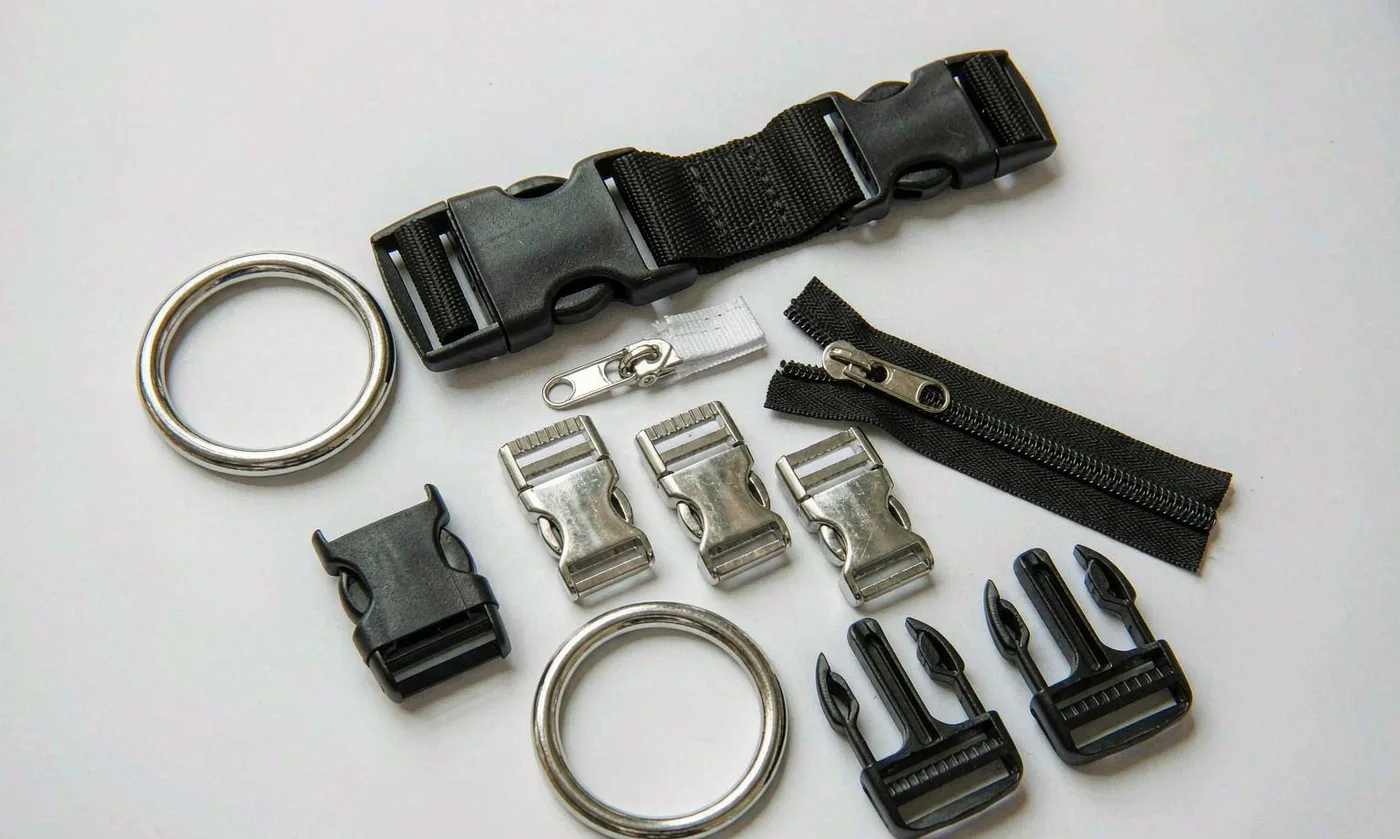
Hardware and trim are the third lever and the cheapest to make exclusive. A moulded zipper puller, a laser-marked slider, a custom-anodised D-ring finish, a jacquard-woven webbing with the brand name running along the strap: each of these is a few hundred to a few thousand dollars of tooling and each is immediately recognisable. For brands whose first season cannot support a structural development, hardware and trim exclusivity is the recommended starting point.
The specification should also state explicitly what is not exclusive. Standard components - zippers, webbing, foam, buckles - are stock items shared across programs, and pretending otherwise creates an argument later. A clean spec names the exclusive elements, and everything else is understood to be stock.
Tooling, Moulds and Plates: Cost, Ownership and Amortisation
Tooling is the capital item in a private label program and the one most often discovered late. Every exclusive element has a tool behind it, and every tool has a cost, a lead time and an owner. The table below gives the typical figures for a dog carrier backpack program.
| Item | Typical cost (USD) | Lead time | Life |
|---|---|---|---|
| Steel rule cutting die, per die | 60-180 | 3-4 days | 20,000-50,000 cuts |
| Screen print plate, per colour | 25-60 | 2-3 days | 5,000-10,000 prints |
| Heat transfer film setup | 40-90 | 2-3 days | Single run |
| Embroidery tape digitisation | 30-70 | 1-2 days | Unlimited |
| Woven label loom setup | 80-150 | 7-10 days | Per design |
| Injection mould, single cavity | 3,000-8,000 | 20-30 days | 100,000+ shots |
| Injection mould, multi cavity | 9,000-18,000 | 30-45 days | 300,000+ shots |
| Zinc die-cast mould for puller | 2,500-6,000 | 18-28 days | 80,000+ shots |
| Silicone or rubber patch mould | 400-1,200 | 8-14 days | 20,000+ pieces |
Amortisation is the number that decides whether a tooling investment is sensible. A 6,000 USD mould amortised over 500 pieces adds 12 USD to unit cost, which is uneconomic. The same mould over three seasons at 3,000 pieces per season adds 0.67 USD, which is trivial. The practical rule for pet carrier programs: do not commission injection tooling for a first season below roughly 2,500 units of the part, and use a laser-marked or printed stock component for the first run instead.
Ownership clauses matter more than most buyers expect. A tool paid for by the brand should be physically marked with the brand name or a tool number, photographed, and listed in an annex to the supply agreement with its storage location. That annex is what allows the brand to move the program later if it needs to. Without it, moving production means paying for the tool a second time.
Tooling also has a maintenance cost. Injection tools need periodic polishing and ejector service; steel rule dies need blade replacement after 20,000-50,000 cuts. Who pays for maintenance should be stated, because it is the kind of item that generates an invoice in season two.
Brand Asset Package: Woven Labels, Hangtags, Barcodes and Artwork
The brand asset package is the set of physical items that carry the brand onto the product and onto the shelf. It is specified separately from the product because it has its own suppliers, its own lead times, and its own approval loop.
Woven labels are the primary mark. A damask woven label at 60-80 picks per centimetre carries fine text cleanly; a satin woven label is cheaper and reads better for large simple marks. Labels are supplied cut and folded or on a roll for automated feeding, and the fold configuration - end fold, mitred fold, or centre fold with a care label attached - has to be decided before the sewing operation is planned, because the label is inserted between operations rather than after them.
Care and content labels are compliance documents, not marketing. A sewn-in care label for the US market needs fibre content by percentage, a registered identification number or the name of the importer, and country of origin. The European market requires fibre composition in the official language of the destination market. Getting these wrong triggers a customs hold rather than a customer complaint, which makes it a far more expensive class of error.
Hangtags, insert cards and barcode labels sit on the packing side. A GS1-issued GTIN is required for most retail channels and is applied as a printable barcode on the hangtag or the polybag. The brand supplies the GTIN; the production team applies it. Artwork should be delivered as vector PDF with Pantone references and a 3 mm bleed, and a printed proof should be approved against a physical drawdown rather than a screen image, because screen colour is not a specification.
One practical note on asset timing: woven labels and printed hangtags run 7-12 days and require artwork approval before they start. They are frequently the reason a program that was otherwise ready slips by a week. Approving label artwork at the same time as the pre-production sample, rather than after it, removes this from the critical path entirely.
Quantity planning for brand assets is its own trap. Label and hangtag suppliers work to minimum lot quantities, typically 1,000 to 5,000 pieces per design, which does not align with a 500-piece first order. The result is either a surcharge for a short run or leftover assets that become obsolete the moment the artwork is revised. The workable compromise is to specify stock-size hangtags with a single-colour print for the first season and move to a fully custom tag once volume supports the minimum.
Cost Structure of a Private Label Program
Unit price is the last thing a private label buyer should negotiate and the first thing most buyers ask about, because the price is an output of the specification rather than an input to it. Understanding the structure lets a buyer change the number deliberately.
A conventional mid-size dog carrier backpack breaks down roughly as follows: shell and lining fabric 22-30 percent of material cost, mesh and ventilation 8-12 percent, foam and base board 10-14 percent, hardware and zippers 14-20 percent, webbing and trim 8-12 percent, and packaging 4-7 percent. Direct labour is 18-26 percent of ex-factory price depending on operation count, and factory overhead and margin account for the remainder. Fabric is the largest single variable and hardware is the second.
Two specification decisions dominate the total. The first is shell denier and coating: moving from 600D PU to 900D PVC adds roughly 0.8-1.6 USD per unit on a mid-size carrier and adds weight. The second is zipper brand and size: a genuine No. 8 or No. 10 coil set from a recognised maker costs two to three times a generic equivalent and is the single most visible quality signal on the finished product, because it is the part the consumer touches every time they use the carrier.
MOQ interacts with price in a way that surprises first-time buyers. The 500-piece per colourway minimum is set by the economics of fabric dyeing and cutting: below roughly 400 metres of a custom shade, the mill surcharge and the cutting setup cost more per unit than the fabric itself. Splitting 3,000 pieces into six colourways of 500 therefore costs more per unit than three colourways of 1,000, even though the total order is identical. Brands launching a colour range should expect to price the first season accordingly and consolidate colours for replenishment.
Development cost should be tracked separately from unit cost in the brand's own costing model. Amortising 8,000 USD of tooling over a first season of 1,500 units and a retail margin multiplier produces a very different launch decision from amortising it over three seasons of 4,000 units.
Freight and duty belong in the same model and are frequently omitted at the quoting stage. A folded carrier at 0.9 kg packed 10 per carton lands at a materially different per-unit freight cost than the same product shipped assembled, because the assembled version fills the container before it reaches the weight limit. Duty rates on pet travel articles also differ between the US and EU tariff classifications, and that difference is often larger than the whole tooling amortisation per unit.
Compliance Responsibility: Who Signs the Declaration
Private label changes the compliance position in a way that is easy to miss. When a brand buys a catalogue product, the compliance file often travels with the product. When a brand specifies an exclusive product, the brand is the party placing the product on the market and the declarations are the brand's to make, supported by test evidence from the production side.
For the US market, a pet carrier that may be used by a child or sold alongside children's products is frequently asked for a children's product certificate supported by third-party testing for lead content and phthalates. The relevant rules sit with the US Consumer Product Safety Commission, and the practical requirement is a test report from an accredited laboratory covering the specific materials in the specific build. California adds a Proposition 65 warning assessment, administered through OEHHA, which is a warning obligation rather than a ban.
For the European market, REACH restrictions on substances of very high concern apply to textile and coated components, and the enforcement framework is maintained by ECHA. A private label brand selling into the EU should hold a restricted substance list in its own tech pack and require conformance evidence per material, not per product.
The division of labour that works in practice: the production side provides material-level test reports, a bill of materials with supplier names for each component, and a declaration of conformance against the brand's restricted substance list. The brand holds the certificate, registers the identification number, and keeps the technical file. Both parties should agree in writing which test reports are provided at whose cost, before sampling starts rather than after the first shipment is held.
Quality Agreement: Tolerances, AQL and Corrective Action
A private label program needs a written quality agreement because the product is exclusive and there is no catalogue specification to fall back on. The agreement is short - one page is enough - and it fixes four things that otherwise get argued about at final inspection.
Tolerances come first. Dimensional tolerance on a sewn textile product is typically plus or minus 5 mm on interior dimensions and plus or minus 3 mm on strap lengths up to 1 metre. Shade tolerance is Delta E 1.0 against the approved swatch under D65, or the brand's own commercial tolerance if it has one. Weight tolerance is plus or minus 5 percent of the approved sample. Stating these numbers prevents the most common inspection dispute, which is not whether a defect exists but whether it is within tolerance.
Inspection standard comes second. AQL 2.5 at general inspection level II is the default for major defects, with zero tolerance for critical defects. Critical defects on a pet carrier are defined in the agreement, not discovered during inspection: a broken load-bearing bar tack, a zipper that separates under test, an exposed sharp edge, or a non-conforming chemical result.
Corrective action comes third. The agreement should state the rework window, who pays for re-inspection, and what happens if a lot fails twice. A two-failure clause that allows the buyer to cancel the balance with a deposit refund is standard and is worth asking for.
Retained samples come fourth. Both parties should hold a sealed reference sample from the approved pre-production build, counter-signed and dated, together with a copy of the approved lab dip. Every subsequent dispute resolves against that physical reference; a photographed reference on a server does not resolve a shade argument.
Launch Sequence: From Brief to First Shipment
A private label launch is a sequence with dependencies, and the order matters more than the speed. The sequence below is the one that keeps a first program inside the standard window.
Step one is the brief: target retail price, target animal size range, channel, destination market and launch date worked backward from the freight transit time. Step two is platform selection, where an existing base geometry is chosen and the modification list is agreed. Step three is the tech pack, including the exclusive elements named explicitly and the restricted substance list attached. Step four is sampling at 6-10 working days. Step five is sample approval and, in the same meeting, approval of label and hangtag artwork. Step six is tooling release and material procurement. Step seven is bulk production at 35-50 days. Step eight is AQL 2.5 inspection and shipment.
The single highest-value discipline in that sequence is step five. Approving the product sample and the brand asset artwork in one decision removes a 7-12 day label procurement loop from the path and is entirely within the buyer's control. The second is booking freight at step six against the projected completion date rather than waiting for a confirmed date, which removes the vessel cut-off interface risk at no cost.
Brands should also plan the second season at the point of launching the first. Tooling amortisation, fabric shade retention, and the learning curve benefit all depend on continuity, and a private label program that changes specification every season pays development cost repeatedly and never reaches the mature production rate.
The final item is the post-launch data loop. Field returns, retailer complaints and warranty claims should be routed back into the specification as measurable changes rather than as instructions to improve quality. A returned carrier with a separated strap root is a specification problem with a specific fix: increase bar tack length, raise stitch count, or widen the reinforcement patch. Programs that convert returns into spec revisions typically see warranty rates fall by half between season one and season three.
Production capability
- SGS-verified production space of 4,950 m², 149 machines, 7 assembly lines
- Pet carrier and pet bag output since 2014 from a 137-person team
- 200,000 units shipped monthly under BSCI and ISO 9001 systems
People Also Ask
What is the difference between private label and white label pet products?
White label rebadges an existing catalogue product; the pattern and tooling already exist and development is measured in days. Private label engineers an exclusive specification with brand-owned tooling, and development is measured in weeks including mould lead time.
How do you start a private label pet carrier line?
Issue a brief with target price, animal size range, channel and market; select a base platform; write a tech pack naming the exclusive elements; sample in 6-10 working days; approve the sample and label artwork together; then release tooling and bulk production.
Is private label manufacturing worth the tooling investment?
Only above roughly 2,500 units of the moulded part across the amortisation period. Below that, tooling adds more per unit than the differentiation is worth, and printed or laser-marked stock components are the better first-season choice.
Who is legally responsible for compliance on a private label product?
The brand placing the product on the market. The production side supplies material-level test reports and a bill of materials with supplier names; the brand holds the certificate, the registered identification number and the technical file.
What does a private label tech pack need to specify?
A dimensioned spec sheet, a bill of materials with denier and grammage, a hardware list with finish codes, a stitch and construction sheet, vector artwork with Pantone callouts, a packing specification, and a restricted substance list.
Can two brands share one production platform?
Yes, provided the shared elements are stock components and the exclusive elements are contractually protected. Sharing a platform is normal; sharing a moulded part is not, unless both parties agree in writing.
Frequently Asked Questions
Who owns the tooling in a private label pet carrier program?
The party that paid for it. If the brand funds the mould, die or plate, the tool is the brand's property and should be physically marked, photographed and listed in an annex to the supply agreement with its storage location. If tooling cost is absorbed into unit price, the tool remains available to the production network and exclusivity rests on the commercial agreement alone.
What is the minimum quantity for a private label carrier?
MOQ is 500 pieces per colourway. The floor is set by fabric dyeing economics and cutting setup rather than by sewing capacity; below roughly 400 metres of a custom shade, the mill surcharge exceeds the value of the fabric saved.
How much does injection tooling for a custom buckle cost?
3,000-8,000 USD for a single-cavity tool and 9,000-18,000 USD for a multi-cavity tool, with 20-45 days of lead time depending on cavity count and part complexity. Zinc die-cast tooling for a zipper puller runs 2,500-6,000 USD at 18-28 days.
Can private label branding be added without any tooling cost?
Yes, partially. Heat transfer, screen printing and laser marking on stock components require only a plate or a digitised file at 25-90 USD. Woven labels need a loom setup at 80-150 USD. Only moulded parts require real tooling capital.
Is a private label product automatically exclusive to one brand?
No. Exclusivity has to be specified as named line items and, for moulded parts, paid for. A shared platform with a different label is a white label product regardless of what the contract calls it.
How long does private label development take before bulk starts?
Sampling is 6-10 working days. Adding moulded tooling extends this by 18-45 days because the tool has to be made and trialled before a production sample can be built. Programs without moulded parts stay inside the standard sampling window.
What test reports should a brand request for the US market?
Material-level third-party reports for lead content and phthalates on coated textiles and plastics, plus a mechanical test set covering seam strength, strap pull and zipper cycling. The brand holds the resulting certificate and the technical file.
Does the brand or the manufacturer register the GS1 barcode?
The brand. A GS1-issued GTIN belongs to the brand that registers it, and the production side applies it to the hangtag or polybag as a printable barcode from artwork supplied by the brand.
What dimensional tolerance is normal on a sewn carrier?
Plus or minus 5 mm on interior dimensions, plus or minus 3 mm on strap lengths up to 1 metre, and plus or minus 5 percent on weight against the approved sample. Tolerances belong in the quality agreement, not in an email.
Can a private label program start from an existing platform?
Yes, and it is the recommended route for a first season. An ODM base pattern modified in geometry, shade, trim and one hardware component delivers most of the differentiation at a fraction of ground-up tooling cost.
What happens if a lot fails AQL 2.5 inspection twice?
The quality agreement should provide for cancellation of the balance with a deposit refund after two failures. Without that clause the buyer has no defined remedy beyond repeated rework.
Are labels and hangtags produced by the same supplier as the fabric?
No. They are a separate supply channel with a 7-12 day lead time and their own artwork approval. Approving label artwork together with the pre-production sample keeps them off the critical path.
Talk to QUANZHOU JUNYUAN BAGS about a pet carrier program: MOQ 500 pieces per colourway, samples in 6-10 working days, bulk production in 35-50 days under AQL 2.5 inspection.
Get a free quote Request a sample