Cat Carrier ODM: Design and Development
An ODM cat carrier programme runs 14-24 weeks from brief to first shipment and costs 4,000-14,000 USD in non-recurring development. Three prototype rounds at 6-10 working days each absorb 55-70% of the iterations, and design-for-manufacture review typically removes 3-6 minutes of labour content, worth 0.90-2.60 USD per unit.
ODM is the tier in which the product does not yet exist, and the risk sits in the sequence rather than in the factory. This page lays out that sequence as a stage model with durations, deliverables and decision gates, and it prices development as a line item rather than burying it in unit cost. The central discipline is a numeric brief: every requirement written as a metric with a target and a test method, so that a design can be assessed rather than admired. Prototype iteration, tooling, validation and design-for-manufacture are each treated as a stage with a cost and a calendar, and the closing section builds the total development cost and the per-unit amortisation at three volumes. Production terms once the design is frozen are unchanged: MOQ 500 pieces per colourway, pre-production samples in 6-10 working days, bulk production 35-50 days after sample approval, final random inspection to AQL 2.5, T/T 30/70 and FOB Xiamen.
Most cat carrier buyers choose between pet carrier OEM and pet carrier ODM on one question: who owns the pattern and the tooling once the programme is approved.
Where the Design Work Sits in ODM Versus OEM
OEM and ODM are often sold as the same service and they place the design work in different hands. The distinction is visible in who signs the drawing, and that is the question to ask at the start of a programme.
Under OEM the buyer supplies the design: a dimensioned drawing or a reference sample, a bill of materials, and a specification. The supplier's engineering contribution is manufacturability — whether the design can be cut, sewn and assembled at volume, and what it will cost. Development is 4-8 weeks and non-recurring engineering is 900-3,800 USD.
Under ODM the supplier originates the design against a buyer's brief. The engineering contribution is the geometry itself: panel shape, aperture layout, frame strategy, ventilation path, and the pattern that produces them. Development is 14-24 weeks and non-recurring engineering is 4,000-14,000 USD.
| Work item | OEM | ODM | Deliverable | Typical duration |
|---|---|---|---|---|
| Concept geometry | Buyer | Supplier | Sketch set | 2-4 weeks |
| Dimensioned drawing | Buyer | Supplier | Technical pack | 3-6 weeks |
| Pattern and markers | Supplier | Supplier | CAD pattern | 1-3 weeks |
| Material selection | Buyer or shared | Shared | BOM with sources | 2-5 weeks |
| Prototype build | Supplier | Supplier | Physical samples | 2-4 weeks |
| Validation protocol | Shared | Supplier | Test plan and report | 3-6 weeks |
| Design for manufacture | Supplier | Supplier | Content and cost review | 1-2 weeks |
Material selection is the item that is genuinely shared in both models and it is worth saying why. A supplier knows which fabrics weld, which coatings survive biocide and which hardware is available at what minimum; a buyer knows their market's price point and positioning. Neither party has the full picture alone, and a programme in which one side dictates materials produces either an unbuildable specification or a product with no market fit.
A third model exists and it is the most common in practice: a hybrid in which the buyer supplies a reference sample and asks for a variant. That is ODM in engineering terms — the geometry changes — and it should be budgeted as ODM rather than priced as OEM, which is the single most frequent cause of a development budget overrun.
Intellectual property should be settled at this stage rather than later: who owns the drawing, whether the design is exclusive, and for how long. Exclusivity is normally granted by market or by term, typically 12-24 months, and it is a commercial rather than an engineering term. The question that separates OEM from ODM is who signs the drawing, and a variant of a reference sample is ODM however it is described.
The Brief: Writing Requirements as Numbers
An ODM brief that reads as adjectives produces an ODM design that can only be assessed by opinion. Writing each requirement as a metric with a target and a test method converts the review from taste to measurement, and it is the highest-value hour in the whole programme.
The brief has six blocks. Capacity and dimensions define the envelope: target animal mass, internal length, width and height, and the collapsed dimension if the product folds. Structure defines the frame strategy and the load path. Materials define the shell, lining, mesh and hardware families. Function defines apertures, closures, ventilation and restraint. Compliance defines the destination markets and the standards that apply. Commercial defines the target FOB, the order volume and the calendar.
| Requirement | Metric | Target | Test method | Priority |
|---|---|---|---|---|
| Internal volume | Litres | 38-46 | Water displacement | Fixed |
| Base flatness | Deviation mm | Under 3 | Surface plate | Fixed |
| Ventilation area | Per cent of shell | 18-28 | Area calculation | Fixed |
| Seam strength | Newtons | Over 400 | Seam pull | Fixed |
| Closure cycles | Cycles | Over 8,000 | Zipper cycle test | High |
| Product mass | Grams | 900-1,300 | Scale | High |
| Target FOB | USD | 9-12 | BOM build-up | Fixed |
| Collapsed height | mm | Under 120 | Measurement | Medium |
The priority column is what makes the brief usable. A design cannot hit every target simultaneously — ventilation area and structural stiffness trade against each other, as do product mass and seam strength — so the brief has to declare which targets are fixed and which can move. Marking six of eight as fixed is the same as marking none.
Deriving the numbers rather than copying them is the discipline that prevents an unusable brief. Internal volume for a cat is around 6-8 litres per kilogram of animal for a resting carrier, so a 6 kg cat needs 38-46 litres; ventilation of 18-28% of shell area is the range that keeps interior carbon dioxide below 2,500 ppm without weakening the structure.
Commercial targets belong in the same table because they are engineering constraints. A target FOB of 9-12 USD rules out a moulded frame and most welded construction before a line is drawn, and a designer who learns that at week eight rather than week one has wasted seven weeks. A brief is six blocks of metrics with a priority against each, and a target FOB is an engineering constraint that eliminates options at week one.
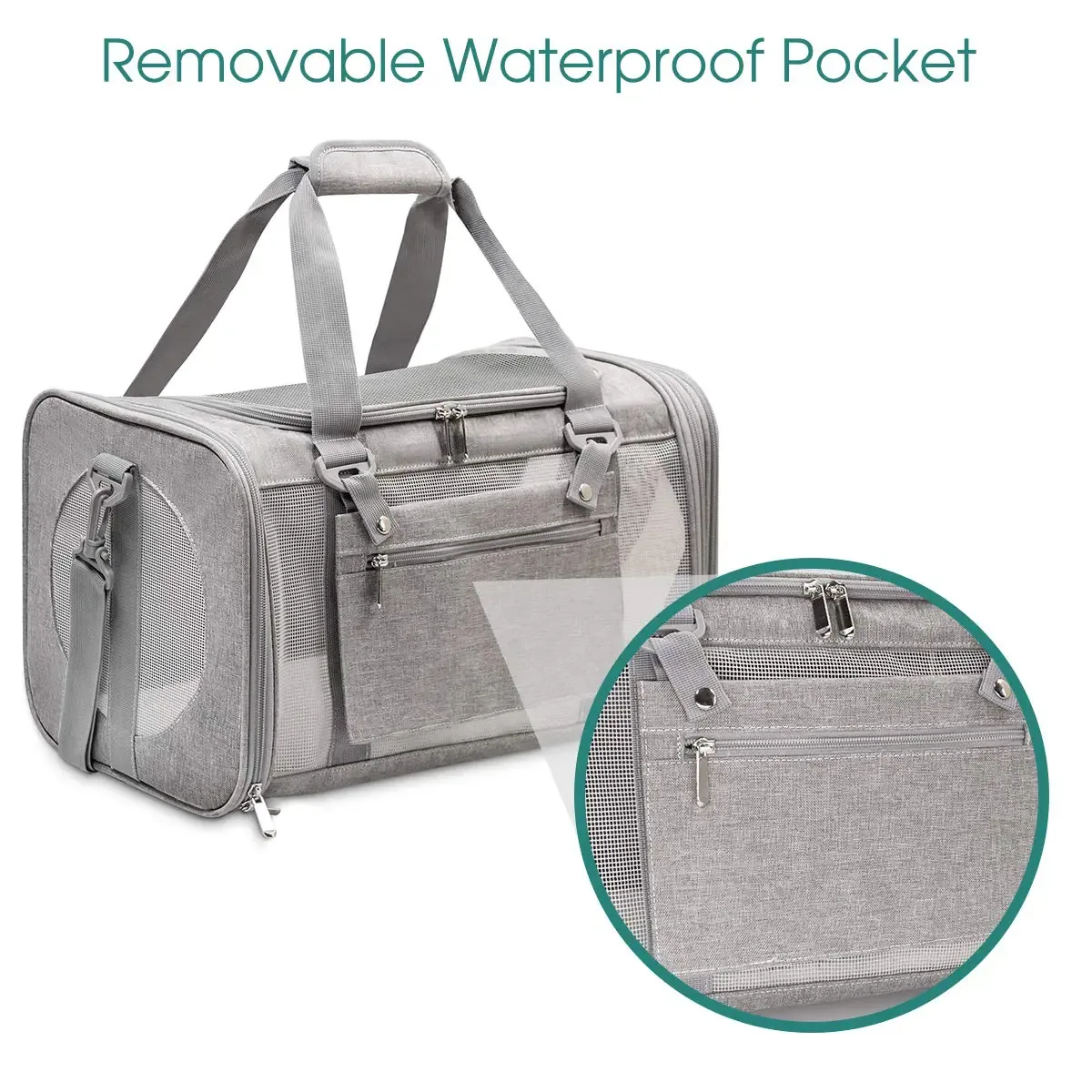
Concept to Pattern: Geometry, Tolerance and Panel Development
Between an approved concept and a buildable pattern sits a body of geometry work that is invisible in the finished product and decisive for its cost. Three decisions in this stage account for most of the difference between a carrier that assembles cleanly and one that fights the line.
Panel count is the first. A soft carrier can be built from 9 to 24 panels; fewer panels means less sewing, fewer alignment problems and lower cost, more panels means better fit to a curved form and a more resolved appearance. The working range for a mid-market carrier is 12-18 panels, and each panel removed saves 1.5-3.5 minutes of sewing content, worth 0.10-0.45 USD per unit at volume.
Tolerance is the second and it is the one most often omitted from a technical pack. Soft goods do not hold the tolerances that moulded parts do, and specifying 0.5 mm on a sewn panel is specifying scrap. The realistic tolerances are 2-3 mm on cut panels, 3-5 mm on assembled dimensions and 1-2 mm on hardware placement; writing them into the drawing is what makes a dimensional dispute resolvable.
Seam allowance is the third and it is where assembly problems originate. An allowance of 10 mm is standard for a plain seam, 12-15 mm where the seam is bound, and 15-20 mm where it is topstitched or where the fabric frays. An allowance that is too small produces seam slippage at 15-25% below target strength; one that is too large wastes material and creates bulk at the corners.
| Decision | Range | Content effect | Cost effect USD | Quality effect |
|---|---|---|---|---|
| Panel count | 9-24 | 1.5-3.5 min per panel | 0.10-0.45 | Fit versus speed |
| Seam allowance | 10-20 mm | None | 0.04-0.14 | Slippage versus bulk |
| Corner radius | 15-50 mm | 0.3-1.2 min | 0.02-0.15 | Cleanliness of turn |
| Binding width | 12-22 mm | 0.8-2.4 min | 0.06-0.30 | Edge durability |
| Symmetry of parts | Yes or no | 0.5-1.8 min | 0.04-0.22 | Assembly error rate |
Symmetry deserves a specific note because it is free at the drawing stage and expensive later. A panel set in which left and right parts are identical halves the number of distinct pieces, removes an entire class of assembly error, and reduces the cutting die count. Where a design does not require asymmetry, symmetric parts should be specified as a default.
Corner radius is the other free decision. A radius of 15-25 mm turns cheaply and produces a tight corner; 35-50 mm turns cleanly and produces a soft one. The design consequence is visual, the manufacturing consequence is 0.3-1.2 minutes, and the quality consequence is that a tight corner on a bound seam is where binding wear begins.
Pattern output is a CAD file with a graded size set, a marker and a cut-ticket list, and it is the artefact that goes to the cutting station. Panel count, seam allowance and symmetry are free decisions at the drawing stage and cost 0.10-0.45 USD each to change afterwards.
Prototype Rounds: Three Builds and What Each One Is For
Prototype iteration is where ODM schedules are won or lost, and the discipline is to give each round a defined question rather than to build until it looks right. Three rounds resolve most programmes; two is optimistic and four usually indicates an unclear brief.
Round one answers geometry. It is built in the nearest available material rather than the specified one, because the question is whether the volume, the apertures and the proportions work. Delivered in 6-10 working days, cost 180-600 USD including courier, and it should be assessed physically — loaded with a mass equivalent to the target animal and carried.
Round two answers material and structure. It is built in the specified fabric, hardware and frame, with the specified seam construction. This is the round that produces real test data. Delivered in 6-10 working days at 220-750 USD, and it is the round at which a design either meets the brief's fixed metrics or the brief changes.
Round three is the pre-production sample, built on production tooling with production operators at production settings. It is the sample that is approved for bulk, and it is the reference against which final inspection is judged. Delivered in 6-10 working days at 260-900 USD.
| Round | Question answered | Cost USD | Duration | Exit criteria |
|---|---|---|---|---|
| 1, concept | Does the geometry work | 180-600 | 6-10 days | Volume and proportion accepted |
| 2, specification | Does it meet the metrics | 220-750 | 6-10 days | Fixed targets met or brief revised |
| 3, pre-production | Can it be built at volume | 260-900 | 6-10 days | Built on production tooling |
| 4, if needed | Residual defect closed | 180-600 | 5-9 days | One specific issue closed |
Should a buyer reorder or compress the rounds? Compressing to two saves 6-10 days and 180-600 USD, and it moves the material and structure question into bulk production, where the cost of a wrong answer is a full run rather than a sample. The arithmetic strongly favours three rounds for any programme above 1,000 units.
The fourth round, when it happens, is usually diagnostic of a process problem rather than a design one. It should be scoped to a single issue with a single exit criterion — a specific seam, a specific panel, a specific closure — and it should be closed in one iteration. A fourth round that addresses five things is a sign that round two was not assessed against the brief.
Courier is a schedule item that buyers underestimate. A sample from Xiamen to Europe or North America is 3-6 days by express at 40-120 USD, and it is 20-40% of the elapsed time of a prototype round. Sending two rounds together rather than sequentially, where the questions are independent, recovers 3-6 days at no engineering cost. Each prototype round answers one question: geometry, then metrics, then buildability — and compressing to two moves the material question into bulk, where a wrong answer costs a full run.
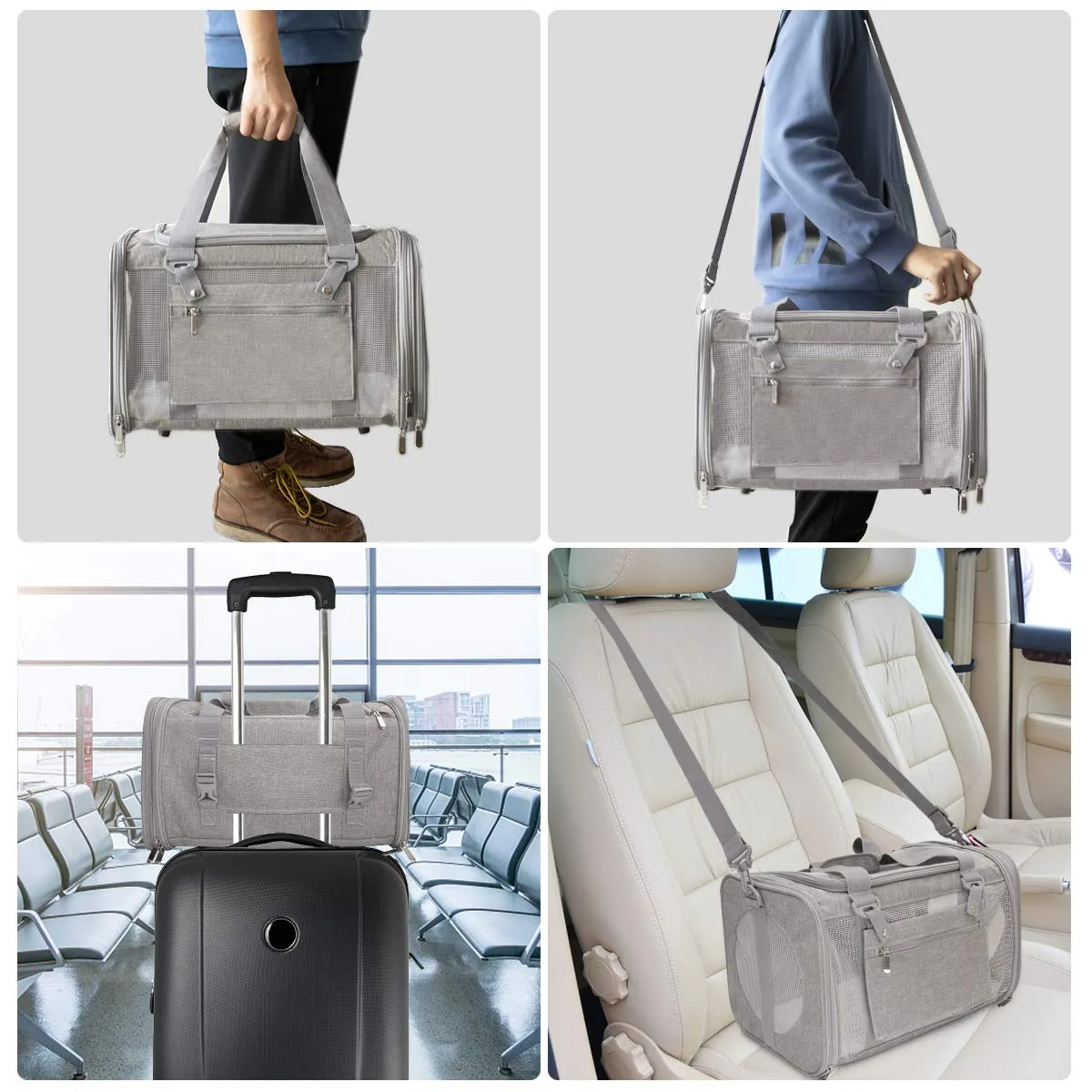
Tooling and Non-Recurring Engineering in Development
Development tooling is the money that converts a design into something that can be repeated. It is the largest single line in an ODM budget and it is the one that determines whether a second run is cheap or expensive.
Cutting dies are the first item and they are required for any panel set going to volume. A die set for a 12-18 panel carrier is 180-650 USD, produced in 7-14 days, and it cuts to 0.5-1.0 mm against 1.0-2.0 mm for a manual knife. Above roughly 2,000 units the die pays for itself in marker efficiency alone.
Welding electrodes are the second and the most expensive common item. An electrode for a welded liner or a welded structural seam is 900-2,400 USD with 14-24 days of build and tuning. Tuning is not optional: a new electrode requires 4-12 hours of parameter development to find the dwell and power window, and that time is inside the quoted lead time.
Moulded components are the third and the most expensive overall. A moulded buckle, a moulded frame hoop or a moulded corner is 1,200-3,800 USD with 20-38 days including first-article trials. This is the item that pushes a programme past 20 weeks and it should be identified at the brief stage rather than discovered at the drawing stage.
| Item | Cost USD | Build days | Tuning | Per unit at 500 | Per unit at 5,000 |
|---|---|---|---|---|---|
| Cutting die set | 180-650 | 7-14 | None | 0.36-1.30 | 0.04-0.13 |
| Welding electrode | 900-2,400 | 14-24 | 4-12 h | 1.80-4.80 | 0.18-0.48 |
| Moulded component | 1,200-3,800 | 20-38 | 4-16 h | 2.40-7.60 | 0.24-0.76 |
| Bending die, frame | 180-650 | 7-16 | 1-4 h | 0.36-1.30 | 0.04-0.13 |
| Emboss or badge tool | 250-900 | 10-22 | None | 0.50-1.80 | 0.05-0.18 |
| Test and validation | 650-3,000 | 18-30 | None | 1.30-6.00 | 0.13-0.60 |
The amortisation columns are the argument for volume planning. The same electrode that costs 4.80 USD per unit at 500 pieces costs 0.48 at 5,000, which is the difference between a product that can meet a 12 USD FOB target and one that cannot.
Holding terms matter as much as cost. Tooling is maintained for 24-36 months of activity, and a buyer planning a second run inside that window pays only material and labour. Outside it, tooling is typically re-made, which is why a dormant design should be re-ordered before the window closes rather than after.
Ownership and transfer should be written down at the point of payment: who holds the tool, where, and what happens on transfer. A tool held at a production base is not the same as a tool in a buyer's warehouse, and the difference matters when a programme moves. An electrode is 4.80 USD per unit at 500 pieces and 0.48 at 5,000, which is the arithmetic that decides whether a design can hit its FOB target.
Validation: What a New Design Has to Prove
A new design is a hypothesis until it is tested, and the validation protocol is how an ODM programme converts a hypothesis into a file. The protocol should be written at the brief stage, because a test specified after the build is a test of what was built rather than of what was needed.
Structural validation comes first and it covers the load path: seam strength at 400 N or above on load-bearing seams, handle and strap assembly at 600-1,400 N, base flatness within 3 mm, and a drop test from 600 mm with the carrier loaded to its rated mass. Four tests, 5-10 working days, 400-1,200 USD.
Functional validation is second and it covers the moving parts: zipper cycles at 3,000-8,000, closure retention under a 150-250 N internal load, buckle release force of 30-70 N — high enough to resist a cat, low enough for an adult to operate — and ventilation measured as open area and as air change.
Chemical validation is third and it is market-driven. Textile components are screened against OEKO-TEX criteria, and products destined for the United States are assessed against the consumer safety framework administered by the U.S. Consumer Product Safety Commission. Screening is 250-1,200 USD and 8-18 days.
| Test | Method | Acceptance | Duration | Cost USD |
|---|---|---|---|---|
| Seam strength | Pull at 100 mm per min | Over 400 N | 1-2 days | 60-180 |
| Handle assembly | Proof pull | Over 600 N | 1 day | 50-140 |
| Base flatness | Surface plate | Within 3 mm | 0.5 day | 30-90 |
| Drop, loaded | 600 mm, 6 faces | No structural failure | 1-2 days | 80-220 |
| Zipper cycles | Mechanical cycling | Over 8,000 | 2-4 days | 120-320 |
| Ventilation area | Open area calculation | 18-28 per cent | 0.5 day | 30-80 |
| Chemical screening | Laboratory analysis | Pass at limit | 8-18 days | 250-1,200 |
| Abrasion, shell | Martindale 9 kPa | Over 20,000 cycles | 3-6 days | 90-260 |
Sequencing the protocol is what keeps it inside the schedule. Chemical screening is the longest item at 8-18 days and it runs in parallel with prototype round three, not after it. Structural tests are short and they run on round two samples, so a failure is found while the drawing can still change.
Failure handling should be pre-agreed. A structural failure at round two costs a drawing revision and a re-test, 5-12 days; the same failure found at pre-production costs tooling revision, 14-30 days; found at final inspection it costs the run. That gradient is the argument for testing early and for refusing to skip round two.
The output is a test report referencing the drawing revision, and it is the document that a retail compliance portal or a marketplace will ask for. Validation is eight tests written at brief stage, and the same failure costs 5-12 days at round two, 14-30 at pre-production and the whole run at final inspection.
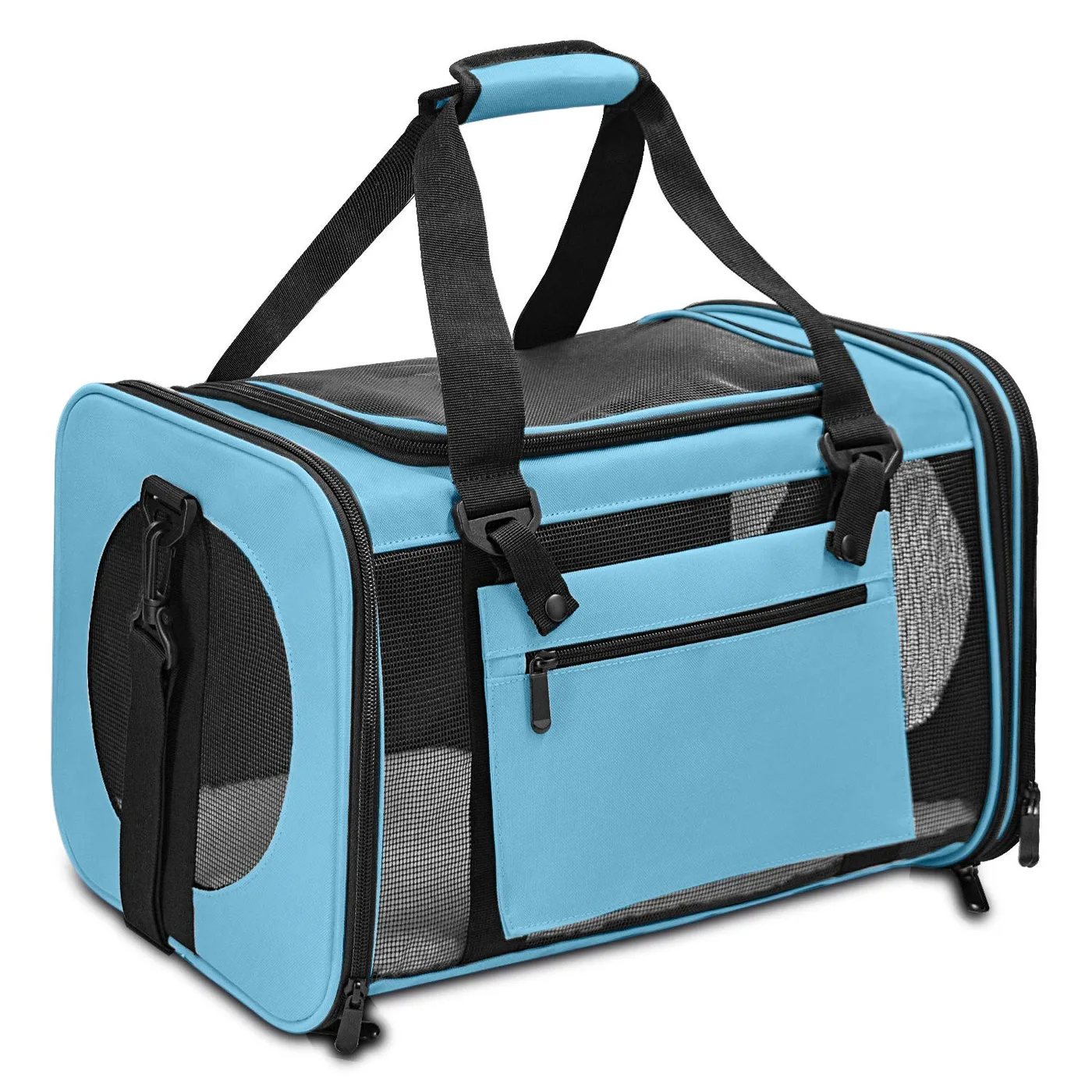
Design for Manufacture: Removing Minutes and Cost
Design for manufacture is the review that happens after the design works and before it is frozen, and it is the highest-return engineering activity in the programme. Its output is measured in minutes of labour content and in dollars per unit.
The method is a station-by-station walk of the routing against the prototype, asking four questions at each station: can this operation be eliminated, can it be combined with another, can it be done on a cheaper machine, and can it be made foolproof. Four questions, one to two days of review, and a typical outcome of 3-6 minutes removed from a 25-minute product.
Elimination is the most productive question. A second topstitch pass that exists for appearance rather than strength is 1.2-2.4 minutes and 0.08-0.28 USD; a decorative binding on an interior seam that is never seen is 0.8-1.6 minutes. Two such items remove 2.0-4.0 minutes, which is 8-16% of total content.
Combination is the second. Two separate operations that can be done in one handling — a pocket set and a label set that are adjacent, a binding pass and a topstitch pass that follow the same path — save the handling time rather than the machine time, typically 0.3-0.8 minutes per pair, and they reduce work in progress.
Foolproofing is the third and it is about defect rate rather than time. A symmetric part that can be assembled either way round cannot be assembled backwards; a panel with a notched corner cannot be rotated; a zipper tape cut to a marked length cannot be short. Each of these removes a defect class from the Pareto, at a typical saving of 0.5-1.5 percentage points of defect rate.
| Action | Minutes removed | Cost saving USD | Defect effect | Risk |
|---|---|---|---|---|
| Remove second topstitch | 1.2-2.4 | 0.08-0.28 | None | Appearance |
| Simplify pocket set | 0.8-1.8 | 0.06-0.22 | Lower error | Function |
| Symmetric panels | 0.5-1.8 | 0.04-0.22 | Removes a defect class | None |
| Combine binding passes | 0.3-0.8 | 0.02-0.10 | Lower handling | Seam bulk |
| Standardise hardware | 0.2-0.6 | 0.10-0.40 | Lower fit error | Supply |
| Total typical | 3.0-6.0 | 0.90-2.60 | 0.5-1.5 points |
The risk column is the discipline on this activity. Removing a topstitch changes appearance; simplifying a pocket changes function. Every removal should be assessed against the brief's priority list, and nothing marked fixed should be traded away for 0.28 USD.
Standardising hardware is the item with the best saving-to-risk ratio and it is often the easiest to agree. Moving from a custom buckle to a catalogue one with the same rating removes a 1,200-3,800 USD mould, 20-38 days from the schedule and 0.10-0.40 USD per unit, with no visible change to the product if the finish is matched. Design for manufacture removes 3-6 minutes and 0.90-2.60 USD per unit in one to two days of review, and nothing marked fixed in the brief should be traded for it.
Development Cost Model and Amortisation
Development cost is a real line in the product's economics and it behaves like tooling: fixed, front-loaded, and recoverable only through volume. Building the total explicitly is what lets a buyer decide whether a design is worth doing at all.
The total for a mid-complexity ODM carrier is 4,000-14,000 USD. Design and pattern work is 900-3,200; prototype rounds are 660-2,250; tooling is 1,080-4,700; validation is 650-3,000; and samples, courier and administration are 300-1,100. The ranges are wide because a programme with one moulded component sits at the top of every band and a programme with none sits at the bottom.
| Cost block | Amount USD | At 500 units | At 2,000 units | At 10,000 units |
|---|---|---|---|---|
| Design and pattern | 900-3,200 | 1.80-6.40 | 0.45-1.60 | 0.09-0.32 |
| Prototype rounds | 660-2,250 | 1.32-4.50 | 0.33-1.13 | 0.07-0.23 |
| Tooling | 1,080-4,700 | 2.16-9.40 | 0.54-2.35 | 0.11-0.47 |
| Validation | 650-3,000 | 1.30-6.00 | 0.33-1.50 | 0.07-0.30 |
| Samples and admin | 300-1,100 | 0.60-2.20 | 0.15-0.55 | 0.03-0.11 |
| Total | 3,590-14,250 | 7.18-28.50 | 1.80-7.13 | 0.36-1.43 |
At 500 units, development amortisation of 7.18-28.50 USD per unit can exceed the entire manufacturing cost of the product. This is the single most important fact in ODM economics and it explains why ODM is a volume decision: below roughly 2,000 cumulative units, a white label or private label programme delivers 80-90% of the differentiation at 20-30% of the development cost.
The recovery rule follows from the margin. At a 45-60% gross margin and a 30-60% retail-to-cost multiple, incremental development of 4,000 USD above a private label alternative is recovered at roughly 1,500-2,500 cumulative units; incremental development of 12,000 USD is recovered at roughly 5,000-8,000.
Two structuring options reduce the exposure. The first is staged development: fund concept and round one, then decide. That costs 1,080-3,800 USD to reach a decision point and it converts a 14,000 USD commitment into a 3,800 USD option. The second is partial tooling: use cutting dies and manual welding for the first run, add the electrode or mould on the second, which defers 900-3,800 USD until volume justifies it.
Terms after freeze are unchanged: MOQ 500 per colourway, pre-production sample in 6-10 working days, bulk production 35-50 days, AQL 2.5, T/T 30/70, FOB Xiamen. Development is 7.18-28.50 USD per unit at 500 pieces and 0.36-1.43 at 10,000, which is why ODM is a decision about cumulative volume rather than about design ambition.
Production capability
- SGS-verified production space of 4,950 m², 149 machines, 7 assembly lines
- Pet carrier and pet bag output since 2014 from a 137-person team
- 200,000 units shipped monthly under BSCI and ISO 9001 systems
People Also Ask
What is the difference between ODM and OEM for cat carriers?
Who signs the drawing. Under OEM the buyer supplies the design and development is 4-8 weeks at 900-3,800 USD; under ODM the supplier originates it and development is 14-24 weeks at 4,000-14,000 USD.
How long does ODM development take?
14-24 weeks from brief to first shipment. Concept 2-4 weeks, drawing 3-6, pattern 1-3, material selection 2-5, prototypes 2-4, validation 3-6 and design for manufacture 1-2.
How much does it cost to develop a new cat carrier?
3,590-14,250 USD in total: design and pattern 900-3,200, prototypes 660-2,250, tooling 1,080-4,700, validation 650-3,000 and administration 300-1,100.
How many prototype rounds does a carrier programme need?
Three: geometry in round one, material and structure in round two, buildability on production tooling in round three. Each is 6-10 working days at 180-900 USD.
What should a design brief contain?
Six blocks of metrics with a priority against each: capacity and dimensions, structure, materials, function, compliance and commercial targets. A target FOB is an engineering constraint that eliminates options at week one.
How much cost does design for manufacture remove?
3-6 minutes of labour content and 0.90-2.60 USD per unit, from one to two days of review. Standardising hardware is the best saving-to-risk item at 0.10-0.40 USD and no visible change.
How many panels should a soft cat carrier have?
12-18 for a mid-market product. Each panel removed saves 1.5-3.5 minutes of sewing content, worth 0.10-0.45 USD per unit at volume.
What tolerances are realistic on sewn soft goods?
2-3 mm on cut panels, 3-5 mm on assembled dimensions and 1-2 mm on hardware placement. Specifying 0.5 mm on a sewn panel is specifying scrap.
Frequently Asked Questions
What is MOQ for an ODM cat carrier programme?
500 pieces per colourway, the same as any other tier. The commercial barrier to ODM is not the MOQ but the amortisation: development is 7.18-28.50 USD per unit at 500 pieces.
Can a variant of an existing carrier be developed as OEM?
Not honestly. If the geometry changes, the pattern, the dies and the validation all change, which is ODM work. Budgeting a variant as OEM is the most common cause of a development overrun.
How much does a welding electrode cost and how long does it take?
900-2,400 USD with 14-24 days of build, plus 4-12 hours of parameter tuning to find the dwell and power window. That tuning time is inside the quoted lead time.
Should prototype rounds be compressed to save time?
No for programmes above 1,000 units. Compressing to two saves 6-10 days and 180-600 USD but moves the material question into bulk, where a wrong answer costs the whole run.
How long does chemical screening take and can it run in parallel?
8-18 days at 250-1,200 USD, and yes — it should run in parallel with prototype round three rather than after it, because it is the longest item in the protocol.
What is the cost of finding a structural failure late?
A failure at round two costs a drawing revision and a re-test, 5-12 days. The same failure at pre-production costs tooling revision at 14-30 days, and at final inspection it costs the run.
How long is development tooling held?
24-36 months of activity. A second run inside that window pays material and labour only; outside it the tooling is typically re-made, so a dormant design should be re-ordered before the window closes.
What is the realistic cost of a moulded component?
1,200-3,800 USD with 20-38 days including first-article trials. It is the item that pushes a programme past 20 weeks and it should be identified at brief stage.
How much does courier add to a prototype round?
3-6 days by express at 40-120 USD, which is 20-40% of the elapsed time of a round. Sending two rounds together where the questions are independent recovers that time.
Can development be staged to reduce exposure?
Yes. Funding concept and round one costs 1,080-3,800 USD and converts a 14,000 USD commitment into a 3,800 USD option to decide.
Is partial tooling a sensible option for a first run?
Yes. Cutting dies and manual welding for the first run, then the electrode or mould on the second, defers 900-3,800 USD until volume justifies it.
What exclusivity is normally granted on an ODM design?
Exclusivity by market or by term, typically 12-24 months. It is a commercial term that should be settled at the start of the programme rather than after the drawing is signed.
How much ventilation area should a cat carrier have?
18-28% of shell area, which keeps interior carbon dioxide below 2,500 ppm without weakening the structure. It trades against structural stiffness, so it needs a priority in the brief.
What internal volume does a 6 kg cat need?
38-46 litres, derived at 6-8 litres per kilogram of animal for a resting carrier. Deriving it rather than copying it is what prevents an unusable brief.
Talk to QUANZHOU JUNYUAN BAGS about a pet carrier program: MOQ 500 pieces per colourway, samples in 6-10 working days, bulk production in 35-50 days under AQL 2.5 inspection.
Get a free quote Request a sample