Cat Carrier Own-Brand: White Label Program
White label changes the mark on an existing carrier, own-brand changes the configuration, and full OEM changes the tool set. At MOQ 500 per colourway the three cost 6.40-9.80, 8.20-14.60 and 11.50-23.00 USD FOB respectively, and they reach first shipment in 47-62, 58-85 and 96-140 days.
White label and own-brand are treated as the same thing in most buying conversations and they are not: they differ in what is modified, in how much is paid once, and in how long the first shipment takes. This page separates them along three measurable axes — unit cost build-up, non-recurring engineering, and calendar days — and adds full OEM as the third point on the same scale so a buyer can place a real programme on it. The cost model is a build-up rather than a quote: materials, conversion labour, branding, packing, factory overhead and a declared margin, each stated as a range and a share. The timeline model is a day-by-day allocation rather than a single number, because the difference between 47 and 140 days is entirely in the front end, not in production. Terms are consistent across all three tiers: MOQ 500 pieces per colourway, prototypes and pre-production samples in 6-10 working days, bulk production 35-50 days after sample approval, final random inspection to AQL 2.5, T/T 30/70 and FOB Xiamen.
A custom pet carrier brief for cat carrier is quoted against three variables before the sample is cut: fabric weight, hardware grade and print method.
Three Programmes Defined by What Is Actually Modified
The distinction between the three programmes is not marketing positioning; it is a measurable statement about which documents change. Counting the changed documents gives a definition that a buyer and an engineer can both work from.
White label modifies two documents: the branding artwork file and the packing specification. The product drawing, the bill of materials, the tooling list and the test file are all inherited unchanged from an existing catalogue style. A buyer receives a carrier that has been produced before, with different marks and different packing.
Own-brand modifies five: the artwork, the packing specification, the bill of materials, the colourway definition, and the trim schedule. The product drawing usually survives, because the panel geometry is unchanged; what changes is what it is made of and what is hung off it. A buyer receives a carrier whose shell geometry is proven but whose specification is theirs.
Full OEM modifies eight or more, adding the product drawing, the tooling list and the test protocol. New panel geometry means new cutting dies, possibly a new welding electrode, and a new validation programme. A buyer receives a carrier that did not exist before.
| Programme | Documents changed | New tooling | New test protocol | First shipment days |
|---|---|---|---|---|
| White label | 2 | None to plates only | No | 47-62 |
| Own-brand | 5 | Plates, labels, maybe trim die | Partial | 58-85 |
| Full OEM | 8 or more | Cutting dies, electrodes, moulds | Yes | 96-140 |
The commercial consequence of the document count is direct. Each changed document carries approval time, and each new artefact carries both cost and calendar. A programme that looks like a small step up from white label to own-brand — a different fabric and a different zipper — in fact moves the buyer from a two-document to a five-document programme, with three additional approval gates.
Risk follows the same curve. A white label programme inherits a test file that has already been executed, so the product's structural behaviour is known before the buyer commits. A full OEM programme generates that knowledge during the programme, which is why it carries a validation phase of 18-30 days that the other two do not.
Minimum quantity is the one variable that does not move: all three run at MOQ 500 pieces per colourway, because the constraint is fabric and trim procurement rather than tooling. The programmes differ by documents changed, not by ambition, and the document count predicts both cost and calendar.
The White Label Catalogue: What Can Be Changed Without Tooling
A white label programme is bounded by what can be changed without cutting anything. Knowing that boundary in advance is what makes the tier fast, and it is wider than most buyers expect.
Marks are the obvious change and they span a wide range with no tooling beyond plates: a woven main label, a care and origin label, a heat-transfer or printed front mark, a hang tag, a barcode label and a polybag print. Six marks, 0.40-1.40 USD per unit at 500 pieces, and 4-12 days of procurement.
Colour is the second and it is more flexible than it appears. A carrier offered in four stock colourways can usually be produced in a buyer's colour above a fabric dye-lot minimum, which for a 600D polyester woven is 300-800 m per colour — enough for 900-2,600 carriers depending on the marker. Below that minimum the alternative is a stock colour with custom trim, which changes the visual identity at a fraction of the cost.
Trim is the third and it is where a white label product can be differentiated substantially without tooling. Zipper pull, puller cord, webbing colour, binding tape colour, mesh colour and lining print are all stock-variable items at no tooling cost, subject to their own minimums — typically 300-1,000 m of webbing and 500-2,000 pulls.
Packing is the fourth and it is entirely free of tooling up to a printed carton, which carries a plate of 60-220 USD. Retail box, hang tag, insert card, polybag print and carton print can all be specified at will.
What cannot change without tooling is the geometry: panel shape, aperture position, frame construction, and any welded or moulded component. Changing any of those moves the programme to own-brand or OEM, with the corresponding tooling and calendar consequences.
The pragmatic reading is that white label is sufficient for a buyer whose differentiation is brand, colour and presentation rather than product architecture. For a market test, a regional launch or a channel-specific SKU, that is usually the right answer, and the 47-62 day first shipment is a genuine advantage against a season. White label changes marks, colour, trim and packing — six marks and a colourway — and the geometry is the line that cannot be crossed without tooling.
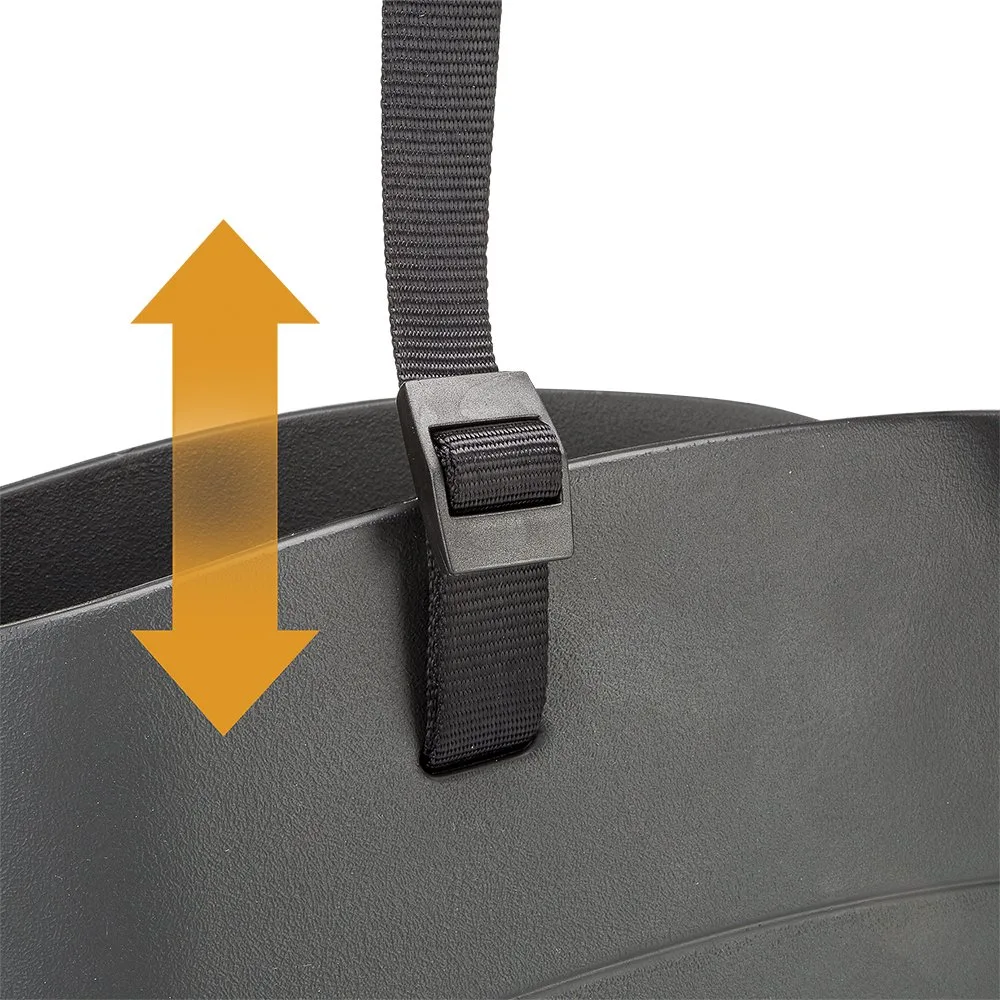
Own-Brand Depth: How Far the Configuration Goes
Own-brand is the tier at which a buyer owns the specification while borrowing the geometry, and it is the most commonly mis-scoped of the three. The scope is best defined by listing the configuration decisions and stating the cost of each.
Shell material is the first decision and the most expensive one to exercise. Moving from a 600D polyester to a 900D or to a recycled content woven changes the price by 0.60-2.40 USD per unit and it changes the marker yield, the needle and thread specification, and the welding parameters if any seam is welded. It also triggers a partial re-test, because the seam strength and abrasion results are material-dependent.
Frame and structure is the second. A soft carrier usually carries a wire or moulded frame at the base and sometimes at the aperture; changing from a 3 mm steel wire to a 4 mm one, or from a wire to a moulded polypropylene hoop, changes cost by 0.40-1.80 USD and requires a new bending die at 180-650 USD or a mould at 1,200-3,800 USD.
Hardware is the third and it is the most visible to the end customer. A zipper upgrade from a standard coil to a reversed coil or a water-resistant coil is 0.30-1.10 USD; a branded moulded pull is 0.18-0.70 USD plus a mould; a buckle change is 0.25-1.40 USD plus tooling if moulded.
Interior configuration is the fourth and it is where differentiation is cheapest. Pad specification, liner construction, pocket layout, divider panel and restraint points can all be changed with cutting dies only, at 0.20-1.60 USD and 180-520 USD in tooling.
| Lever | Unit cost change USD | Tooling USD | Re-test needed | Calendar add days |
|---|---|---|---|---|
| Shell fabric upgrade | +0.60 to +2.40 | None | Partial | 4-9 |
| Frame change | +0.40 to +1.80 | 180-3,800 | Yes | 10-28 |
| Hardware upgrade | +0.30 to +1.10 | None to 3,800 | No | 3-14 |
| Interior reconfiguration | +0.20 to +1.60 | 180-520 | No | 5-12 |
| Ventilation layout change | +0.10 to +0.90 | 180-520 | Airflow only | 4-10 |
| Added welded component | +0.80 to +2.60 | 900-2,400 | Yes | 14-30 |
The right-hand column is the one that decides scope. Each lever adds calendar days largely independently, and a buyer who exercises four levers at once is adding 20-60 days rather than the 5-12 days of the largest single lever. The disciplined approach is to exercise two levers on the first programme and hold the rest for the second.
Where own-brand becomes OEM is stated precisely: the moment the panel geometry drawing changes, or the moment a component requires a mould rather than a die, the programme has moved. That is not a reason to avoid it — it is a reason to budget the 96-140 days rather than the 58-85. Own-brand owns the specification and borrows the geometry, and the boundary is the drawing: change the drawing and the programme has become OEM.
Unit Cost Build-Up Under Each Programme
Quotes are compared as single numbers and should be compared as build-ups. A six-line build-up exposes where the money is and it makes a supplier conversation productive rather than adversarial.
The six lines are materials, conversion labour, branding, packing, factory overhead and margin. Materials dominates at 42-58% of FOB for a soft carrier; conversion labour is 14-22%; branding is 2-11% depending on tier and volume; packing is 4-9%; overhead is 8-14%; and margin is 8-16%. The ranges are wide because fabric and hardware selection move materials hard.
| Cost line | White label | Own-brand | Full OEM | Share of FOB |
|---|---|---|---|---|
| Shell and lining materials | 2.60-4.10 | 3.40-6.20 | 4.20-8.40 | 42-58% |
| Hardware and trim | 1.10-1.90 | 1.60-3.10 | 2.10-4.60 | 16-24% |
| Conversion labour | 1.10-1.70 | 1.30-2.10 | 1.60-2.90 | 14-22% |
| Branding | 0.40-1.40 | 0.90-2.40 | 1.40-3.60 | 2-11% |
| Packing | 0.35-0.85 | 0.45-1.20 | 0.60-1.80 | 4-9% |
| Overhead and margin | 0.85-1.85 | 1.55-3.60 | 2.60-5.70 | 16-30% |
| FOB total | 6.40-9.80 | 8.20-14.60 | 11.50-23.00 | 100% |
The overhead and margin line deserves an explanation because it is where the tiers diverge most in relative terms. A white label programme inherits the amortised development of the catalogue style, so a smaller share of overhead is allocated to it; a full OEM programme carries the non-recurring engineering of the programme itself, amortised over the first run, which is why the line more than triples.
Volume moves every line except materials. Conversion labour falls 8-18% between 500 and 5,000 units as the line reaches steady state and the set-up is amortised; branding falls 55-70% as tooling is amortised; packing falls 10-20% on carton and print minimums; materials fall only 3-8% on fabric and hardware volume brackets.
Reading the build-up as a decision tool gives one clear rule: at 500 units, the cheapest way to improve a product is to spend on materials, because branding and tooling are still being amortised. A build-up shows what a quote hides: at MOQ 500, materials are 42-58% of FOB and branding amortisation is the fastest-falling line as volume grows.
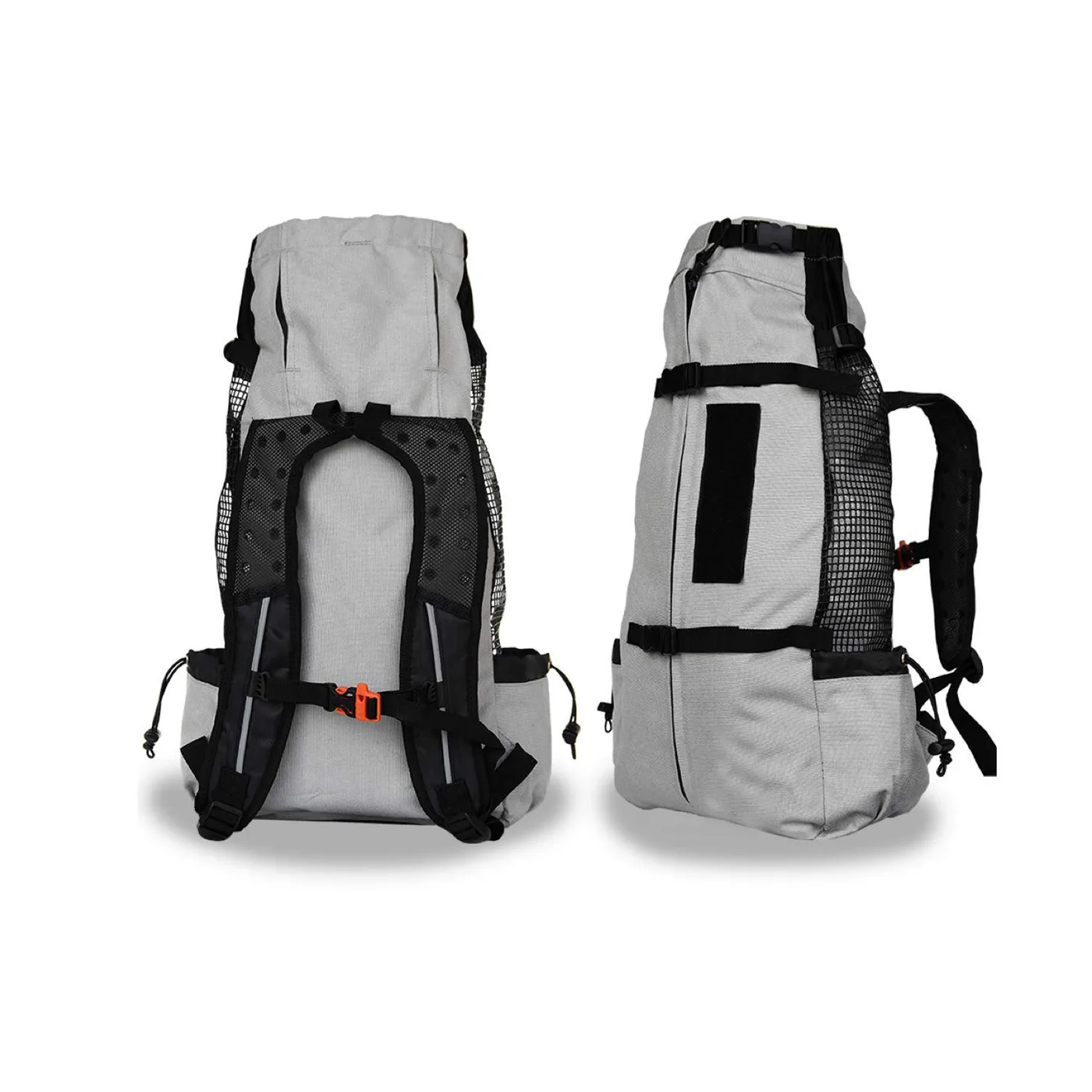
Non-Recurring Engineering: Bought Once or Bought Every Run
Non-recurring engineering is the money that buys the ability to make the product, and the critical question about it is whether it is paid once or paid every run. Sorting NRE into three buckets makes the answer visible.
Bucket one is bought once and held: cutting dies, welding electrodes, moulds, plates and digitised embroidery files. Held tooling is maintained for 24-36 months and it is the reason a second run costs less than the first. A cutting die set for a soft carrier panel set is 180-650 USD, a high-frequency welding electrode is 900-2,400 USD, and a moulded buckle tool is 1,200-3,800 USD.
Bucket two is bought every run: artwork revision, colour standards, sample making and courier. These are not tooling but they recur, and at 120-600 USD per programme they are the reason a buyer should consolidate changes into one revision rather than three.
Bucket three is bought once per market rather than once per product: test reports, certificates and compliance files. A structural test report is 400-1,800 USD and it is usually valid for 12-24 months or until the specification changes; a chemical screening report is 250-1,200 USD per material set and valid for 12 months.
| NRE item | Cost USD | White label | Own-brand | Full OEM | Per unit at 500 |
|---|---|---|---|---|---|
| Artwork and plates | 180-520 | Yes | Yes | Yes | 0.36-1.04 |
| Label and trim dies | 120-380 | No | Yes | Yes | 0.24-0.76 |
| Cutting die set | 180-650 | No | Sometimes | Yes | 0.36-1.30 |
| Welding electrode | 900-2,400 | No | Sometimes | Yes | 1.80-4.80 |
| Moulded component tool | 1,200-3,800 | No | Sometimes | Yes | 2.40-7.60 |
| Test and compliance file | 650-3,000 | No | Partial | Yes | 1.30-6.00 |
| Samples and courier | 120-600 | Yes | Yes | Yes | 0.24-1.20 |
The per-unit column at 500 units is the sobering one: NRE can add 6.70-22.70 USD per unit at the full OEM end, which is more than the entire material content of a white label carrier. This is the arithmetic that makes the tier decision a volume decision, and it is why the break-even figures quoted earlier — roughly 1,500 units for the mid tier and 5,000 for full OEM — exist.
Amortisation planning is straightforward and worth doing explicitly. If a buyer expects three runs of 500 units over two years, NRE of 2,000 USD is 1.33 USD per unit across 1,500 units; if the buyer expects one run, it is 4.00 USD per unit. The same tooling, two different products economically.
Ownership is the last item and it should be in writing: who holds the tooling, where it is held, what happens to it after 36 months of inactivity, and whether it can be transferred. NRE is 6.70-22.70 USD per unit at MOQ 500, and the only thing that reduces it is cumulative volume across runs.
Timeline Model: Days From Enquiry to First Shipment
A programme timeline is not one number; it is a sequence of gates, each with its own duration and each capable of running in parallel with another. Laying them out as a day allocation shows where the 47-140 day range actually comes from.
The front end — enquiry to sample approval — is where the tiers diverge. White label needs artwork, a colourway decision and a packing specification: 8-16 days. Own-brand adds a BOM and trim schedule decision plus partial testing: 20-35 days. Full OEM adds drawing, tooling and a validation programme: 55-90 days.
Production itself is nearly constant across the three: 35-50 days after sample approval. That is the surprising part for most buyers and it is the single most useful fact in this section — the tiers differ almost entirely in what happens before production starts, not in how long production takes.
The back end — inspection, documentation and booking to vessel — is also nearly constant at 6-14 days. Final random inspection to AQL 2.5 takes one to two days for a 500-unit lot including the report; documentation and booking take three to seven; and the cut-off to vessel departure is typically two to five days.
| Stage | White label | Own-brand | Full OEM | Parallel with |
|---|---|---|---|---|
| Specification and quotation | 3-6 | 5-10 | 8-16 | Nothing |
| Artwork and colour approval | 4-8 | 5-10 | 6-12 | Quotation |
| Drawing and BOM freeze | 0-1 | 3-7 | 10-20 | Artwork |
| Tooling build | 0 | 0-14 | 20-38 | Material booking |
| Material procurement | 7-14 | 10-20 | 14-28 | Tooling |
| Sample build | 6-10 | 6-10 | 8-14 | Nothing |
| Sample approval | 2-5 | 3-7 | 4-9 | Nothing |
| Validation testing | 0 | 0-8 | 18-30 | Production start |
| Bulk production | 35-50 | 35-50 | 35-50 | Nothing |
| Inspection and documentation | 6-14 | 6-14 | 6-14 | Nothing |
| Total | 47-62 | 58-85 | 96-140 |
The parallel column is where schedule is recovered. Material procurement and tooling build overlap in most programmes, and validation testing for a full OEM programme starts during early production rather than after it. A buyer who insists on sequential gates pays 10-25 extra days for no additional information.
The critical path is almost always artwork approval, because it gates plates, labels and packing print simultaneously. Two to four revision rounds at 1-3 days each is the norm, so the cheapest schedule intervention available to a buyer is arriving at enquiry with final artwork. Production is 35-50 days in all three programmes; the 47-to-140-day spread is entirely front-end, and artwork approval is the critical path.
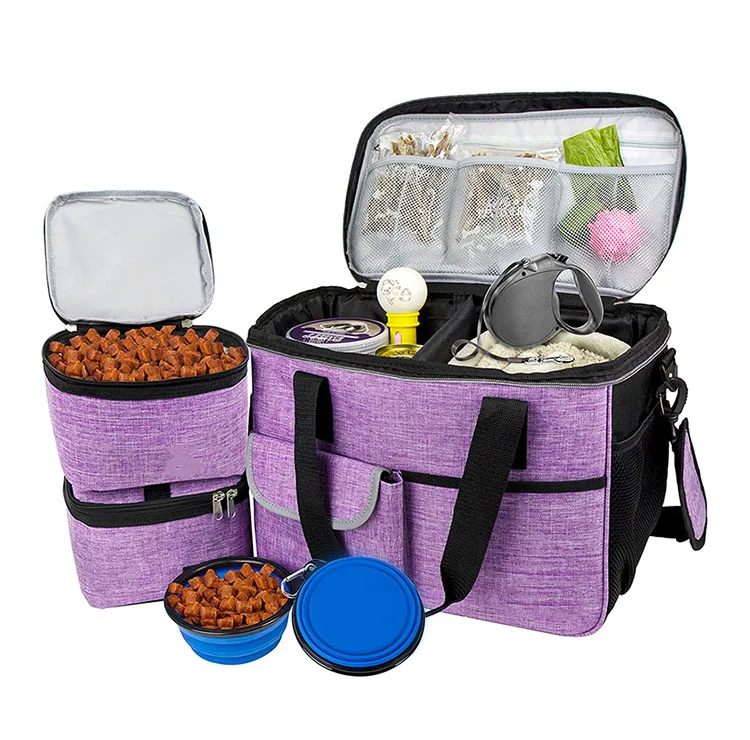
Quality and Compliance Inheritance Across Tiers
What a buyer inherits — and what they have to generate — is as important as cost. Compliance files are expensive and slow, and knowing which ones carry over changes the tier arithmetic.
White label inherits the most. The existing style has a structural test file, a chemical screening file for its material set, and a factory audit certificate. The buyer receives references to those files rather than new test reports, and the only new items are the marking and packing compliance of their own market.
Own-brand inherits selectively. Structural results carry over if the shell geometry is unchanged; chemical screening has to be re-run if the material set changes, at 250-1,200 USD and 8-18 days; and any change to a load-bearing component requires a re-test of that assembly.
Full OEM inherits nothing about the product and inherits everything about the facility. The quality system certificate and the social compliance audit cover the production base, but every product-level result has to be generated: structural, chemical, and any market-specific requirement.
Facility-level compliance is common to all three and it is worth stating precisely. The SGS-verified production base operates to ISO 9001 for quality management and to BSCI for social compliance, and those certificates are the documents a retailer's compliance portal will ask for before a product-level file is ever opened. Chemical screening of textile components runs against OEKO-TEX criteria, and product safety in the United States is considered against the framework administered by the U.S. Consumer Product Safety Commission.
Inspection is identical across the tiers: attributes sampling to AQL 2.5 at general level II, with critical defects at zero tolerance, majors at 2.5 and minors at 4.0. At a 500-piece lot that is 50 units sampled with 3 accepted and 4 rejected on majors.
Documentation handover closes the programme and it should be specified as a deliverable: test report references, a declaration of conformity where the market requires one, a packing list with carton-level detail, and photographs of the pre-production sample as approved. Compliance inheritance is the hidden value of white label: the structural and chemical file already exists, and regenerating it costs 650-3,000 USD and 18-30 days.
Choosing a Programme: Volume, Margin and Speed
The tier decision is not a preference; it is a function of expected cumulative volume, gross margin and time to market. Putting those three numbers into a simple rule resolves most cases in a few minutes.
Volume sets the ceiling on justifiable NRE. At a 45-60% gross margin, a mid-tier programme with incremental NRE of 1,200-2,800 USD over entry tier is recovered at roughly 1,500 cumulative units; a full OEM programme with incremental NRE of 4,000-12,000 USD is recovered at roughly 5,000. Below those volumes the tooling cannot pay for itself and the money is better spent on materials.
Margin sets the tolerance for unit cost. A carrier retailing at 49 USD with a 4.5x retail-to-FOB multiple lands at roughly 11 USD FOB, which sits inside the own-brand band and below most full OEM builds. A carrier retailing at 89 USD with the same multiple lands at roughly 20 USD FOB, which supports full OEM comfortably.
Speed sets the constraint that overrides both. If the product has to be on shelf in 60 days, white label is the only tier that fits; if there are 140 days, all three fit and the decision reverts to volume and margin.
| Scenario | Cumulative volume | Retail USD | Calendar days | Recommended |
|---|---|---|---|---|
| Market test | 500-1,000 | 39-59 | Under 70 | White label |
| Regional launch | 1,000-2,500 | 49-79 | 70-100 | Own-brand |
| National retail | 2,500-8,000 | 59-99 | 100-150 | Own-brand or OEM |
| Flagship differentiated | Over 8,000 | 89-149 | Over 150 | Full OEM |
| Channel-specific SKU | 500-2,000 | 39-69 | Under 70 | White label |
Where the matrix conflicts — a flagship product with only 90 days — the correct resolution is to start white label and move to own-brand on the second run, using the first run's sales data to fund the tooling. That path costs a little more per unit in year one and it removes the risk of a 12,000 USD tool for a product that sells 900 units.
Commercial terms are identical across all three and should not influence the decision: MOQ 500 per colourway, samples in 6-10 working days, bulk production 35-50 days, AQL 2.5, T/T 30/70 and FOB Xiamen. Choose the tier from cumulative volume and available calendar, not from ambition, and use a white label first run to fund the tooling for the second.
Running Two Programmes in Parallel Without Doubling Cost
A buyer who needs speed and differentiation simultaneously does not have to choose one tier; a staged sequence gets both at a lower total cost than either tier run twice. The method is to share artefacts between runs.
The first shared artefact is the artwork set. Branding artwork developed for a white label run is reusable on an own-brand run in the same family, which saves the 180-520 USD art and plate charge and, more importantly, saves the 4-8 days of approval.
The second is the colourway definition. A custom colour developed against a dye-lot minimum for the first run is already on file for the second, so the second run avoids the 300-800 m minimum or negotiates it against the first run's surplus.
The third is the test file. A chemical screening report on the first run's material set is valid for 12 months, so a second run that keeps the same fabric and hardware inherits it at no cost and no delay.
The fourth is the tooling held from the first run. A cutting die or an electrode bought in year one is maintained for 24-36 months, so an own-brand conversion in year two pays only the incremental tooling rather than the full set.
Cash planning is the discipline that makes the sequence work. Staging means paying NRE twice in a compressed period, which for a mid conversion is 900-2,800 USD in year one and 900-2,800 USD in year two, against 4,000-12,000 USD for an immediate full OEM programme. The staged path is cheaper in total and it produces revenue in year one.
The sequence closes with a re-order rule that buyers rarely write down: consolidate changes. Every configuration change triggers a partial re-test and a revised BOM, so batching three changes into one revision costs one revision charge of 120-600 USD rather than three. Staging shares artwork, colourway, test file and tooling across runs, which is why white label first and own-brand second costs less than either path run alone.
Order and quality terms
- MOQ 500 pieces per colourway; samples in 6-10 working days
- Bulk production 35-50 days after approval; AQL 2.5 inspection standard
- T/T 30/70 terms, FOB Xiamen, full document set per shipment
People Also Ask
What is the difference between white label and own-brand for cat carriers?
White label changes the marks and packing on an existing style; own-brand also changes the bill of materials, colourway and trim. Two documents change versus five, and first shipment is 47-62 days versus 58-85.
How much does an own-brand cat carrier cost at MOQ 500?
8.20-14.60 USD FOB Xiamen, against 6.40-9.80 for white label and 11.50-23.00 for full OEM. Materials are 42-58% of that and NRE amortisation is the fastest-falling line as volume grows.
What can be changed on a white label carrier without tooling?
Six marks, the colourway above a 300-800 m dye-lot minimum, the trim schedule, and the entire packing specification. Panel geometry, frame construction and any welded or moulded component cannot change.
When does an own-brand programme become full OEM?
The moment the panel geometry drawing changes, or the moment a component needs a mould rather than a cutting die. At that point tooling rises to 1,200-3,800 USD and the calendar to 96-140 days.
How long does bulk production take under each programme?
35-50 days in all three. The entire 47-to-140-day spread between white label and full OEM is in the front end: drawing, tooling, procurement and validation.
What compliance files carry over between programmes?
White label inherits the structural and chemical file entirely. Own-brand inherits structural results if geometry is unchanged but re-runs chemical screening at 250-1,200 USD if the material set changes.
Is it cheaper to start white label and convert later?
Yes for most cases. Staging shares artwork, colourway, test file and tooling, so two runs cost 1,800-5,600 USD of NRE against 4,000-12,000 USD for an immediate full OEM programme, and it produces revenue in year one.
Frequently Asked Questions
What is MOQ for an own-brand cat carrier programme?
500 pieces per colourway across all three tiers. The constraint is fabric and trim procurement rather than tooling, so it does not move between white label, own-brand and OEM.
How much non-recurring engineering should a buyer budget?
180-520 USD for white label, 900-2,800 USD for own-brand and 4,000-12,000 USD for full OEM. At 500 units that is 0.36-1.04, 1.80-5.60 and 8.00-24.00 USD per unit respectively.
What is the fastest realistic first shipment?
47 days for white label with final artwork supplied at enquiry. Of that, 35-50 days is production, so the front end is the only place where time can be recovered.
Which stage is most likely to delay a programme?
Artwork approval. It gates plates, labels and packing print simultaneously, and averages two to four revision rounds at 1-3 days each.
What sampling plan applies to a 500-unit first run?
AQL 2.5 at general inspection level II: 50 units sampled, 3 accepted and 4 rejected on majors, with critical defects at zero tolerance and minors assessed at 4.0.
How long are tooling and test reports held or valid?
Tooling is held and maintained for 24-36 months of activity. A structural test report is typically valid 12-24 months and a chemical screening report 12 months, provided the specification has not changed.
Can a custom colour be produced below the dye-lot minimum?
Not directly — a 600D woven runs 300-800 m per colour minimum. Below that, use a stock colour with custom trim, which changes the visual identity at a fraction of the cost.
What retail price supports a full OEM programme?
About 89 USD and above at a 4.5x retail-to-FOB multiple. That lands near 20 USD FOB, which sits inside the full OEM band; at 49 USD retail the same multiple gives about 11 USD, which does not.
How much does conversion labour fall between 500 and 5,000 units?
8-18%, as the line reaches steady state and set-up is amortised. Materials fall only 3-8% over the same range, which is why volume does not rescue a badly specified product.
Who owns the tooling at the end of a programme?
It should be stated in writing: who holds it, where, what happens after 36 months of inactivity, and whether it can be transferred. This is the clause most often left out of a first programme.
What is the cost of a structural validation programme?
400-1,800 USD for the test report plus 18-30 days of calendar for a full OEM programme. White label and most own-brand programmes inherit the existing file instead.
Should configuration changes be batched or applied individually?
Batched. Each change triggers a partial re-test and a revised BOM, so three changes in one revision cost one 120-600 USD charge instead of three, and one approval cycle instead of three.
Does the production base hold quality and social compliance certificates?
Yes. The SGS-verified production base operates to ISO 9001 for quality management and to BSCI for social compliance, and those are the documents a retail compliance portal requests first.
What does the back end of a programme take after production?
6-14 days: one to two days for final inspection and report, three to seven for documentation and booking, and two to five to the vessel cut-off.
Talk to QUANZHOU JUNYUAN BAGS about a pet carrier program: MOQ 500 pieces per colourway, samples in 6-10 working days, bulk production in 35-50 days under AQL 2.5 inspection.
Get a free quote Request a sample