Cat Carrier Pet Instagrammer: Visual Content
A visual-first cat carrier needs stitch density of 7-9 stitches per cm with seam wander under 1.5 mm, edge binding held within 1.5 mm of the seam line, a logo process with clean edges at 1:1 macro, and carton print registration within 0.5 mm. Colourway sets start at three colours at 500 each.
Static imagery is examined rather than watched, and the examination happens at close range. A product that photographs well at arm's length can fail completely when a creator crops to a zipper, a seam or a logo, because magnification exposes construction detail that distance hides. This page sets out what a close-up frame actually reveals and how each of those details is specified: stitch density and seam regularity, edge finishing tolerances, coating uniformity, logo edge quality under magnification, carton print registration, and the sampling kit that lets a creator plan a feed before the bulk run exists. The commercial consequence of a visual-first programme is colourway proliferation, so the MOQ ladder behind a grid aesthetic gets its own treatment. Standard terms apply: MOQ 500 pieces per colourway, prototypes in 6-10 working days, bulk production 35-50 days after sample approval, final random inspection to AQL 2.5, T/T 30/70 and FOB Xiamen. What changes is the inspection level on visible detail and the sampling kit sent ahead of the run.
Choose a pet bag supplier that keeps the cat carrier pattern card on file for at least twelve months, so a repeat order matches the approved sample instead of drifting.
Macro Detail: What a Close-Up Frame Reveals About Construction
A phone camera at 100-300 mm from a subject resolves detail at roughly 0.05-0.15 mm, which is finer than any visual inspection standard used in soft goods. AQL 2.5 inspection is performed at arm's length with a 3-second look; a macro crop is the equivalent of inspecting with a loupe, and it finds a different class of defect entirely.
The defects that matter at macro are small, regular and repetitive. Stitch irregularity, seam wander, thread tension variance, uneven edge binding, coating pinholes, slubs in the yarn, and adhesive squeeze-out at bonded seams are all invisible at inspection distance and obvious in a crop. The specification has to address them, because they are the difference between a product that survives a close-up and one that does not.
Not every defect needs controlling, and this is where cost is saved. A defect is worth specifying against if it is both visible at the distance a creator shoots and present at a rate that will show up in a sample of images. A single slub in one panel is not; stitch irregularity running the length of a seam is.
| Defect | Size (mm) | Visible at 1 m | Visible at 200 mm | Control priority | Tolerance |
|---|---|---|---|---|---|
| Seam wander | 1.5-4.0 | Sometimes | Always | High | Under 1.5 mm |
| Uneven stitch tension | 0.3-1.2 | No | Always | High | No visible pucker |
| Edge binding variance | 0.8-3.0 | No | Always | High | Plus or minus 1.5 mm |
| Coating pinhole | 0.1-0.5 | No | Usually | Moderate | Under 3 per 100 cm2 |
| Yarn slub | 0.5-2.0 | No | Usually | Low | Under 2 per panel |
| Adhesive squeeze-out | 0.3-1.5 | No | Always | High | None visible |
| Thread tail | 2-8 | Sometimes | Always | High | Trimmed under 3 mm |
| Corner asymmetry | 2-6 | Usually | Always | High | Under 2 mm |
The inspection implication is a second inspection pass at close range on a small sample. Rather than raising the AQL level across the whole lot — which costs 0.30-0.80 USD per unit and slows the line — the practical approach is a detail audit on 5-10 units inspected at 200-300 mm, with the results used to tune the process rather than to reject the lot.
Lighting interacts with all of it. Raking light, which is what a creator uses for texture, exaggerates surface irregularity by an order of magnitude compared with flat light. A seam pucker invisible under flat warehouse lighting becomes a shadow line under a window-light flat-lay, which is why the detail audit should be done under raking light rather than under inspection lighting.
Macro inspection is a separate discipline from AQL inspection: five to ten units at 200-300 mm under raking light, used to tune the process rather than to reject the lot.
Stitch Density, Seam Regularity and Edge Finishing Tolerances
Stitch density is the most visible construction variable in a close-up, because it sets the visual rhythm of every seam on the product. Too sparse reads as cheap and too dense perforates the fabric; both are obvious in a crop.
The working specification for a visual-first soft carrier is 7-9 stitches per cm on structural seams and 6-8 on topstitching, with a tolerance of 1 stitch per cm within any single seam run. Variance within a run is what shows in a photograph, not the absolute value, so the tolerance on consistency matters more than the target.
Thread selection is the second variable. A thread one shade lighter than the shell reads as a highlight line under raking light and draws the eye to the seam; a thread matched to within Delta-E 1.0 of the shell disappears. Matching thread costs nothing extra at volume and requires only that the trim schedule specify the thread colour per colourway rather than a default.
| Element | Specification | Tolerance | Visible failure at macro | Process control | Cost impact |
|---|---|---|---|---|---|
| Structural seam density | 7-9 per cm | 1 per cm in run | Irregular rhythm | Machine setting, audit per shift | Neutral |
| Topstitch density | 6-8 per cm | 1 per cm in run | Sparse or perforated | Same | Neutral |
| Seam allowance | 10 mm | Plus or minus 1 mm | Uneven seam line | Seam gauge | Neutral |
| Edge binding width | 18-22 mm finished | Plus or minus 1.5 mm | Wavy edge | Binding attachment, tension | 0.05-0.15 |
| Binding to seam distance | Constant | Plus or minus 1.5 mm | Drifting edge line | Operator training | Training |
| Thread colour match | Within Delta-E 1.0 | Delta-E 1.0 | Highlight line at seam | Trim schedule per colourway | 0 |
| Thread tail trimming | Under 3 mm | None over 3 mm | Visible whiskers | End-of-line trim pass | 0.04-0.10 |
Edge finishing is where most visual-first programmes lose points, because a bound edge is the longest continuous line on the product and any variance in it runs the full perimeter. A binding that varies by 3 mm along its length produces a wavy edge that is unmistakable in a photograph and that no amount of styling hides.
Bound versus turned edge is a design decision with a visual consequence. A bound edge gives a clean, deliberate line and hides raw fabric; a turned and topstitched edge gives a softer line and shows two stitch rows. For a structured product photographed from the side, the bound edge reads better and costs 0.12-0.35 USD more.
Corner geometry closes the section. A radius cut corner finishes cleanly; a square corner on a bound edge bunches. The specification is a minimum corner radius of 12-20 mm on any bound edge, with both corners of a panel matched to within 2 mm, because asymmetry between two nominally identical corners is one of the most noticeable defects in a symmetrical composition.
The three numbers that decide a close-up are stitch density consistency, binding width within 1.5 mm, and matched corners within 2 mm.
Fabric Surface at Macro: Weave, Coating Uniformity and Slubs
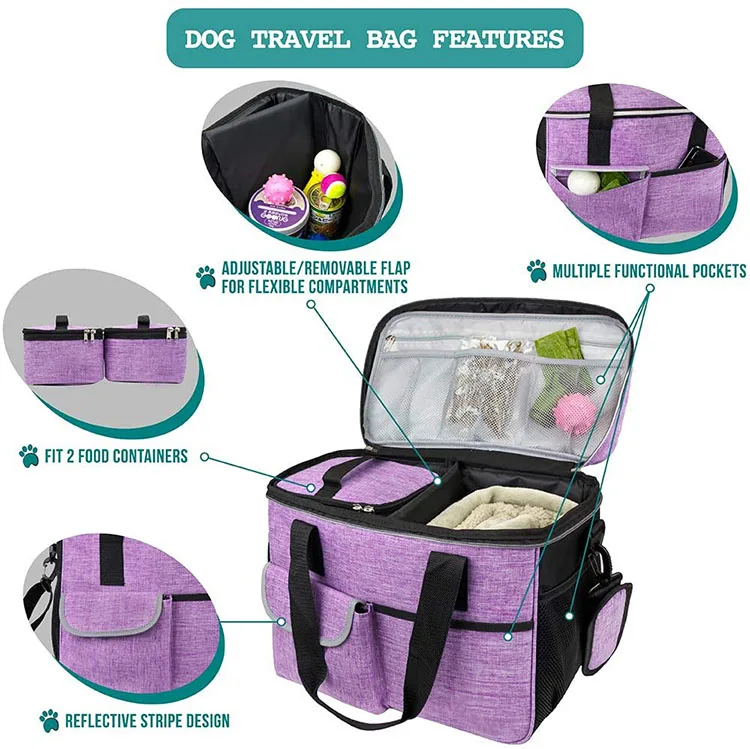
Fabric surface is the largest area in any frame and the element that sets the perceived quality of a photograph. At macro, three properties matter: weave regularity, coating uniformity and the absence of surface contamination.
Weave regularity is a mill specification. A fabric with a yarn count variance above about 4% shows visible thick-and-thin banding across a panel, which under raking light appears as a stripe. The control is a mill specification on yarn count variance plus an incoming inspection that rejects rolls showing banding under raking light — a 10-second check per roll that prevents the most expensive kind of defect.
Coating uniformity is a finish specification. Variation in coating weight across a roll of more than 8-10% produces visible variation in sheen, which reads as a patch on camera. The control is a coating weight certificate per roll with a tolerance, plus a gloss measurement at six points per roll held within 4 GU of each other.
| Property | Specification | Test | Frequency | Action on fail | Cost (USD) |
|---|---|---|---|---|---|
| Yarn count variance | Under 4% | Mill certificate plus visual | Per roll | Reject roll | 0 |
| Coating weight variance | Under 8% | Weight per unit area | Per roll | Reject or downgrade | 0.02 per roll |
| Gloss spread within roll | Within 4 GU | Gloss meter, 6 points | Per roll | Reject roll | 0.05 per roll |
| Pinhole count | Under 3 per 100 cm2 | Visual at 300 mm | Per roll, 3 samples | Reject roll | 0.03 per roll |
| Slub count | Under 2 per panel | Visual at 300 mm | Per roll, 3 samples | Nest around | 0.04 per roll |
| Colour, Delta-E | 1.5 camera-facing | Spectrophotometer | 8 points per lot | Hold lot | 0.05 per unit |
Surface contamination is the third property and it is entirely a handling issue. Dust, fibre lint, adhesive residue and handling marks are all invisible to the assembly line and glaring at macro. The controls are cheap: covered storage of cut panels, a lint-roll pass at end of line, nitrile gloves on the packing bench, and individual polybagging.
Fabric hand interacts with photography in a way worth noting. A stiff fabric holds a crisp silhouette but creases sharply and the creases photograph; a soft fabric drapes and hides creases but slumps. For a product that will be styled and shot repeatedly, a mid-hand fabric with a crease recovery angle above 120 degrees is the better compromise.
Every textile is declared against OEKO-TEX criteria on release, and incoming inspection follows published test practice at ASTM International. Fabric release for a macro-critical programme is six checks per roll, and the most valuable one is a ten-second look under raking light.
Logo Craft Under Magnification: Edge Definition and Process Choice
Logo process selection for a visual-first programme is decided at the opposite end of the scale from a distance-led one. Where a distance view needs legibility, a macro view needs edge definition — and the two do not always point to the same process.
Embroidery is the classic macro failure. At 7-9 stitches per cm the individual stitches are resolved at close range, and any variance in tension shows as a ridge. An embroidered mark can look excellent at 1 m and poor at 200 mm. Where embroidery is used, the specification is a satin stitch at 0.8-1.2 mm width with a underlay stitch to stabilise, and a tension check on every setup.
A moulded silicone or TPU patch is the strongest macro performer because it has no thread structure: the edge is defined by the mould, and a mould holds its edge for its whole life. Edge radius is the specification item, at 0.3-0.6 mm, because a sharp mould edge shows a flash line and a large radius looks soft.
| Process | Edge definition at macro | Detail resolution | Failure mode at macro | Tooling (USD) | Unit cost (USD) |
|---|---|---|---|---|---|
| Embroidery, satin stitch | Fair | 1.2 mm minimum | Stitch ridges, tension variance | 60-140 | 0.45-1.20 |
| Silicone or TPU patch | Excellent | 0.5 mm minimum | Flash line at edge | 180-450 | 0.55-1.40 |
| Woven label, damask | Good | 0.8 mm minimum | Frayed cut edge | 0-60 | 0.12-0.35 |
| Heat transfer | Poor | 1.5 mm minimum | Visible film edge, cracking | 40-120 | 0.08-0.25 |
| Laser-etched panel | Excellent | 0.3 mm minimum | Discolouration at edge | 0 | 0.80-1.80 |
| Metal plate, matte | Excellent | 0.4 mm minimum | Scratches show at macro | 120-320 | 0.60-1.50 |
Placement tolerance tightens at macro. A mark placed 2 mm off centre is invisible at 1 m and obvious at 200 mm in a symmetrical composition. The specification for a visual-first programme is placement within 1.5 mm of the pattern reference on the camera-facing panel, with a placement jig rather than a mark-and-sew method.
Colour of the mark is the last decision and it interacts with the gloss discussion. A tonal mark one to two shades from the shell reads as deliberate and photographs as depth; a high-contrast mark reads as loud and dominates a crop. A metallic thread looks good at distance and poor at macro, where the individual filament reflection breaks up the edge.
Attachment method shows at macro too. A patch sewn with a visible stitch line adds a second line to the composition; a heat-activated patch with no visible stitching is cleaner and is the preferred method where the substrate tolerates the activation temperature of 130-160 degrees.
At macro, a moulded patch with a 0.3-0.6 mm edge radius placed within 1.5 mm outperforms embroidery, and heat-activated attachment removes a visible stitch line.

Colourway Proliferation and the MOQ Ladder Behind a Grid Aesthetic
A visual feed rewards variety. A grid of nine images showing the same product in one colour is weaker than one showing a considered colour range, and creators know it. The manufacturing consequence is that a visual-first programme asks for more colourways at lower volume each, which is exactly the order shape that MOQ structures penalise.
The economics are governed by three fixed costs per colourway: fabric minimums, trim minimums, and setup and changeover. Fabric minimums are the binding one, because a mill will not dye less than 300-600 m of a custom colour and 500 units of a medium carrier consumes 350-550 m. Below that the surplus fabric is paid for and scrapped.
The ladder therefore has a floor. At 500 pieces per colourway the unit cost index is 100 and fabric is fully consumed. At 350 the index rises to 112-118, mostly from fabric surplus. At 250 it rises to 130-142, and below 200 it rises steeply because trim minimums start to bind as well.
| Colourways | Units each | Programme total | Unit cost index | Fabric surplus (m) | Changeovers | Grid range |
|---|---|---|---|---|---|---|
| 1 | 1,500 | 1,500 | 88 | 0 | 1 | Poor |
| 2 | 750 | 1,500 | 94 | 0 | 2 | Weak |
| 3 | 500 | 1,500 | 100 | 0 | 3 | Adequate |
| 4 | 400 | 1,600 | 108 | 40-90 | 4 | Good |
| 5 | 350 | 1,750 | 115 | 70-140 | 5 | Strong |
| 6 | 300 | 1,800 | 124 | 110-200 | 6 | Strong |
| 8 | 250 | 2,000 | 136 | 180-320 | 8 | Best, costliest |
Three colourways at 500 each is the efficient point and five at 350 is the aesthetic point; the 15% difference in unit cost is the price of range. Programmes that want more range without more cost should vary trim and lining rather than shell colour, since a contrast lining or a contrast webbing reads as a different product in a photograph and costs 0.20-0.70 USD instead of a full colourway setup.
A second cost lever is shared-hardware colourways. Running four shell colours on one hardware colour removes four trim setups and cuts the changeover cost by 40-60%, at the cost of some visual variety — a trade most programmes should take, because hardware is a small part of the frame.
Sequencing stays the same rule as elsewhere: light to dark, to avoid full machine cleans. Across a five-colourway run that saves 1.5-3.5 days of line time, which at a 1,500-unit programme is worth more than the fabric surplus it is being traded against.
Range is bought at about 3-4 index points per extra colourway; buy it with trim and lining variation first and shell colour second.
Packaging and Unboxing: Board Grade, Print Registration and Inserts
A visual programme almost always opens with packaging, and the carton is the first surface a creator photographs. It is also the component most often specified last and least carefully, which is why unboxing content is where visual-first programmes most often look cheap.
Board grade is the first decision. A 300-350 g/m2 coated board with an E-flute or B-flute liner gives a carton that photographs square and resists corner crush; a 250 g/m2 single-wall board crushes in transit and every crushed corner appears in the opening frame. The cost difference is 0.35-0.90 USD per carton.
Print registration is the second. A carton printed with registration variance above 0.5 mm shows a visible fringe where two colours meet, and at macro it is unmistakable. The specification is registration within 0.5 mm on all colours, with a print tolerance of Delta-E 2.5 against the approved artwork — the same tolerance as the product, because the two appear in the same frame.
| Element | Specification | Visual failure | Cost (USD) | Upgrade option | Upgrade cost (USD) |
|---|---|---|---|---|---|
| Board | 300-350 g/m2, E or B flute | Crushed corners | 0.55-1.30 | Rigid set-up box | 1.80-4.20 |
| 4 colour, Delta-E 2.5 | Off-brand colour | 0.30-0.80 | Plus spot varnish | 0.18-0.45 | |
| Registration | Within 0.5 mm | Colour fringe at macro | Included | Tight, 0.3 mm | 0.08-0.20 |
| Surface | Matte lamination | Glare in unboxing light | 0.22-0.55 | Soft-touch | 0.45-1.10 |
| Insert card | 250-300 g/m2, matte | Curling, cheap feel | 0.08-0.22 | Textured stock | 0.20-0.50 |
| Tissue wrap | 17-22 g/m2, unprinted | Wrinkles in frame | 0.05-0.14 | Printed tissue | 0.12-0.32 |
Matte lamination is the single highest-value packaging upgrade for camera work, because a gloss carton reflects the unboxing light and the reflection moves as the creator moves. At 0.22-0.55 USD it removes the most common visual defect in unboxing content.
Interior packing matters as much as the carton. A product shipped with minimal void fill arrives compressed and the compression shows; one shipped with tissue and a paper void fill arrives shaped. The specification is a 5-10 mm void on all sides with paper rather than plastic fill, at 0.18-0.45 USD, and it also removes the plastic that reads badly in a sustainability-conscious feed.
Insert cards are a content asset in their own right. A 250-300 g/m2 matte card with the care instructions and the specification summary gives a creator something to photograph flat, and it is the cheapest branded surface in the whole package at 0.08-0.22 USD.
Packaging for camera is a board grade, a matte lamination and a print tolerance, and the carton is held to the same Delta-E as the product it contains.
Swatch Kit Sampling: Colour Rings and Pre-Production Flat-Lay Sets
A creator plans a feed before the product exists, and the planning tool is physical: a swatch kit and a flat-lay set. Producing those is cheaper than producing samples and more useful for the purpose, and it should be a scheduled step rather than an afterthought.
A swatch kit is a card carrying every shell colour, every lining colour, every webbing colour and every trim finish in the programme, cut to 50 x 70 mm and mounted in a fixed order. It lets a creator test colour combinations against surfaces, props and backgrounds weeks before bulk. Cost is 25-70 USD per kit including assembly, and three kits per programme is normal.
A flat-lay set is one unit per colourway, built to final specification but without retail packaging, shipped flat. It is more expensive at 30-70 USD per unit and it is what allows an actual composition test rather than a colour test. For a five-colourway programme the set is 150-350 USD, and it is the sample investment with the highest return in a visual programme.
| Kit type | Contents | Production (USD) | Courier (USD) | Lead time | Answers |
|---|---|---|---|---|---|
| Swatch ring only | 5 shell, 3 lining, 4 trim | 25-70 per kit | 35-90 | 5-8 working days | Colour combinations |
| Swatch ring plus chips | Above plus hardware samples | 40-110 per kit | 40-100 | 6-10 working days | Colour and trim |
| Flat-lay set | 1 unit per colourway, unpacked | 150-350 | 90-220 | 10-16 working days | Composition, silhouette |
| Flat-lay plus packaging | Above plus retail cartons | 220-480 | 110-280 | 14-22 working days | Unboxing sequence |
| Full pre-production set | 2 units per colourway, packed | 400-900 | 140-380 | 18-30 working days | Full shoot readiness |
Timing is the value in the kit. A swatch ring produced 5-8 working days after colourway approval reaches a creator 3-4 weeks before the first production sample, and it allows feed planning, prop sourcing and background selection to happen in parallel with sampling rather than after it. On a 35-50 day production cycle that parallelism is worth 2-4 weeks of calendar.
Sample rounds work alongside the kit rather than replacing it. A visual programme still runs three rounds — construction, colourway and pre-production — at 6-10 working days each, but the colourway round can be approved from the swatch kit for shell colours, which saves one full round where the programme is a recolour of an established pattern.
Swatch kits also survive a programme. A kit kept as the colour reference for the life of a SKU, stored dark and sealed, is what allows a year-two reorder to be matched against a year-one decision — and it costs less than the retained-unit programme it supplements.
A swatch kit costs 25-70 USD, arrives three to four weeks before the first sample, and moves feed planning into parallel with sampling.
Freight and Cost Model for a Visual-First Programme
A visual-first programme costs more per unit than a wholesale one and the extra is concentrated in three places: visible-detail inspection, packaging, and colourway count. Seeing them together is what makes the trade-offs legible.
Visible-detail inspection is the cheapest addition. A detail audit on 5-10 units at 200-300 mm under raking light, plus the per-roll fabric release checks, adds 0.10-0.28 USD per unit in inspection time and rework. Against the alternative — raising the AQL level across the lot at 0.30-0.80 USD — it is the better buy.
Packaging is the second. A camera-grade carton with matte lamination, tight registration and an insert card runs 1.20-2.97 USD against 0.65-1.40 USD for a standard transit carton. On a 16.90 USD unit that is 3-8% of unit cost for the surface that appears in the opening frame of every piece of content.
| Cost element | Wholesale baseline | Visual-first | Delta | Where it shows |
|---|---|---|---|---|
| Base product | 15.40 | 15.40 | 0 | Everywhere |
| Macro-grade fabric release | 0 | 0.22 | 0.22 | Weave and coating uniformity |
| Detail inspection and rework | 0 | 0.19 | 0.19 | Seam and edge regularity |
| Moulded patch logo | 0.18 | 0.95 | 0.77 | Logo edge at macro |
| Camera-grade carton | 0.95 | 2.05 | 1.10 | Unboxing frames |
| Colourway uplift at 350 units | 0 | 2.35 | 2.35 | Grid variety |
| Flat-lay and swatch kits, amortised | 0 | 0.28 | 0.28 | Pre-production planning |
| Total per unit | 16.53 | 21.44 | 4.91 | 30% uplift |
The largest single line is the colourway uplift, and it is the one most easily reduced. Moving from five colourways at 350 to three at 500 removes 2.35 USD per unit — nearly half the entire uplift — at the cost of two colours in the grid. Where those two colours can be replaced by a contrast lining and a contrast webbing at 0.20-0.70 USD, most of the visual variety is retained for a fifth of the cost.
Freight behaves normally for this programme type. Bulk moves by sea at 0.75-2.40 USD per unit on the standard 26-38 day lane; sample kits, flat-lay sets and pre-production units move by air courier at 35-380 USD per shipment depending on weight. Across a five-colourway programme the total sample freight is 300-900 USD, which is 0.20-0.60 USD per unit on a 1,500-unit run and is the cheapest line in the model.
The programme runs on standard commercial terms throughout: MOQ 500 pieces per colourway, prototypes in 6-10 working days, bulk production 35-50 days after sample approval, final random inspection to AQL 2.5, T/T 30/70 and FOB Xiamen, with the quality system certified to ISO 9001. Our production team builds visual-first programmes through the SGS-verified production base under ISO 9001 and BSCI coverage. A visual-first specification costs about 30% over a wholesale one, and nearly half of that is the colourway count.
Production capability
- SGS-verified production space of 4,950 m², 149 machines, 7 assembly lines
- Pet carrier and pet bag output since 2014 from a 137-person team
- 200,000 units shipped monthly under BSCI and ISO 9001 systems
People Also Ask
What stitch density should a camera-facing cat carrier use?
7-9 stitches per cm on structural seams and 6-8 on topstitching, with variance held to 1 stitch per cm within any single seam run. Consistency matters more than the absolute value.
Why does edge binding matter in close-up photography?
It is the longest continuous line on the product, so variance of 3 mm along its length produces a wavy edge that is unmistakable in a photograph. Tolerance is 1.5 mm.
Which logo process looks best at 1:1 macro?
A moulded silicone or TPU patch with an edge radius of 0.3-0.6 mm. It has no thread structure, so no stitch ridges appear, and a mould holds its edge for its full life.
How much does an extra colourway add to unit cost?
Roughly 3-4 index points, rising from 100 at 500 units each to 115 at 350 each and 136 at 250 each, driven mostly by fabric surplus from mill dye minimums.
What board grade should a retail carton use for unboxing?
300-350 g/m2 coated board with an E or B flute, at 0.55-1.30 USD. A 250 g/m2 single-wall board crushes in transit and every crushed corner shows in the opening frame.
Why specify matte lamination on packaging?
A gloss carton reflects the unboxing light and the reflection moves as the creator moves. Matte lamination at 0.22-0.55 USD removes the most common visual defect in unboxing content.
What is a flat-lay sample set?
One unit per colourway built to final specification without retail packaging, shipped flat, at 150-350 USD for five colours. It allows a composition test rather than just a colour test.
How much does a visual-first specification add per unit?
About 4.91 USD on a 16.53 USD baseline, a 30% uplift. The colourway count accounts for 2.35 USD of it and is the line most easily reduced.
Frequently Asked Questions
Why is AQL inspection not sufficient for close-up content?
AQL inspection is performed at arm's length with a short look, while a macro crop resolves 0.05-0.15 mm. It finds stitch tension variance, coating pinholes and thread tails that arm's-length inspection misses entirely.
What is the right approach to macro-level inspection?
A detail audit on 5-10 units at 200-300 mm under raking light, used to tune the process rather than reject the lot. Raising the AQL level across the lot costs 0.30-0.80 USD per unit and slows the line.
Why should thread be matched to the shell within Delta-E 1.0?
A thread one shade lighter reads as a highlight line under raking light and draws the eye to the seam. Matching costs nothing at volume and only requires the trim schedule to specify thread per colourway.
What corner radius suits a bound edge?
12-20 mm minimum, with both corners of a panel matched within 2 mm. A square corner on a bound edge bunches, and asymmetry between two nominally identical corners is glaring in a symmetrical composition.
What coating weight variance is acceptable across a roll?
Under 8%. Beyond that, sheen variation appears as a visible patch on camera, controlled by a coating weight certificate per roll and gloss measurements within 4 GU at six points.
Why does yarn count variance above 4% matter?
It produces thick-and-thin banding across a panel that appears as a stripe under raking light. A ten-second per-roll visual check under raking light prevents the most expensive kind of defect.
What fabric hand suits a repeatedly styled product?
A mid-hand fabric with a crease recovery angle above 120 degrees. A stiff fabric holds a silhouette but creases sharply and the creases photograph; a soft one drapes but slumps.
What is the minimum detail size for an embroidered logo?
1.2 mm, set by the satin stitch at 0.8-1.2 mm width. Below that the stitches resolve individually at macro and any tension variance shows as a ridge.
How precise should logo placement be for macro work?
Within 1.5 mm of the pattern reference on the camera-facing panel, achieved with a placement jig rather than a mark-and-sew method. A 2 mm offset is invisible at 1 m and obvious at 200 mm.
How can a programme get more visual range without more colourways?
Vary trim and lining instead. A contrast lining or webbing reads as a different product in a photograph and costs 0.20-0.70 USD against 2.35 USD for a full colourway at 350 units.
What is shared-hardware colourway running?
Running several shell colours on one hardware colour, which removes trim setups and cuts changeover cost by 40-60%. Hardware is a small part of the frame, so the trade is usually worth taking.
How much void fill should a retail carton have?
5-10 mm on all sides with paper rather than plastic fill, at 0.18-0.45 USD. It prevents compression showing in the opening frame and removes plastic from a sustainability-conscious feed.
How long does a swatch kit take and what does it answer?
5-8 working days to produce plus 3-5 days courier, at 25-70 USD. It answers colour combinations against surfaces, props and backgrounds weeks before bulk exists.
How much is total sample freight across a five-colourway programme?
300-900 USD, or 0.20-0.60 USD per unit on a 1,500-unit run. It is the cheapest line in the cost model and the one with the highest return.
Talk to QUANZHOU JUNYUAN BAGS about a pet carrier program: MOQ 500 pieces per colourway, samples in 6-10 working days, bulk production in 35-50 days under AQL 2.5 inspection.
Get a free quote Request a sample