Cat Carrier Custom Label: Branding Options
A cat carrier carries six to nine usable branding positions totalling 180-420 cm², and each position accepts a different construction. Budget 0.18-0.65 USD per unit at 500 pieces for a three-mark set, 260-900 USD in one-time tooling, and allow 8-22 days of procurement before assembly can start.
Branding on a soft cat carrier is constrained by geometry before it is constrained by budget: a panel that folds, a seam that curves, or a mesh window that has to stay open removes most methods from consideration on that position. This page inventories the positions that actually exist on a carrier, matches each to the constructions that survive there, and then prices the set as a fixed-plus-variable stack rather than as a single per-unit number. That distinction matters because 55-70% of first-run branding cost is tooling amortisation, not material. Colour is treated as a measured property with a delta E limit rather than as a preference, and validation is treated as a cycle test rather than as a visual check. Programme terms are standard: MOQ 500 pieces per colourway, prototypes and pre-production samples in 6-10 working days once artwork is signed, bulk production 35-50 days after sample approval, final random inspection to AQL 2.5 with appearance defects classed as minor and legibility defects as major, T/T 30/70 and FOB Xiamen.
Pet carrier OEM and ODM work on cat carrier platforms splits at the pattern - OEM builds to your drawing, ODM adapts an existing platform and removes the tooling cost.
Branding Surface Inventory: How Much Usable Area Exists
The first step in a branding programme is a surface inventory, because a carrier does not offer one large flat area — it offers several small ones with different constraints. Measuring them changes the conversation from taste to capacity.
A typical soft cat carrier of 420-480 mm length presents six to nine usable positions. The front panel is the largest at 180-260 cm² but it is usually interrupted by a mesh window or a zipper, which removes 40-60% of the apparent area. The side panels offer 90-150 cm² each and are flat, which makes them the most technically forgiving. The top panel offers 120-200 cm² but it is the load path for the handle, so any applied element there sits under tension.
The remaining positions are small and they are the ones that carry the detail. The webbing loop at the handle offers 25-45 cm² of continuous repeat area, ideal for a woven name tape. The zipper pull offers 2-5 cm², which is enough for a moulded logo at 8-12 mm. The interior lining offers 150-300 cm² and is the correct place for a care and origin label, because it is protected from abrasion. The underside offers 200-400 cm² and is used for a large printed legal block where the market requires one.
Each position has a structural veto. A panel that folds in packing cannot take a rigid patch, because the patch will crease the fabric or delaminate. A panel across a load path cannot take a stitched patch with a perimeter stitch, because the stitch perforates the load path — a welded patch is the correct alternative there. A mesh window cannot take anything applied, so branding near a window has to be placed on the frame tape rather than on the mesh.
Curvature is the second veto and it is easily quantified. An application surface with a radius under 150 mm cannot take a flat rigid patch of more than 25 mm width without edge lift; the same surface takes a woven label or a transfer without difficulty because both conform.
Surface energy is the third. A carrier shell is usually a coated polyester with a surface energy of 32-42 mN/m; an adhesive-backed element applied to it needs a primer or a mechanical fix, and a heat-transfer needs a coating compatible with the shell coating. Applying a PVC transfer to a PU-coated shell is the classic mismatch and it fails in 20-60 days. Branding capacity on a carrier is 180-420 cm² across six to nine positions, and geometry vetoes more methods than budget does.
Woven, Printed and Transfer: Process Windows and Fabric Limits
The three base constructions — woven label, direct print, and heat transfer — cover the majority of positions and they differ in what they can be applied to rather than in how they look. Understanding the process window prevents most first-run failures.
A woven label is produced on a needle loom or a jacquard loom at 1,200-2,600 picks per minute and it is the only construction that carries fine text legibly at small size. A damask weave resolves 6 pt text at 3-5 mm cap height; a satin weave resolves 8 pt at 4-6 mm. Minimum order from the label mill is 1,000-3,000 pieces per design, which is the reason a 500-piece carrier run often carries a label quantity that covers several future runs.
Direct screen print works on flat coated panels and is the cheapest route at 0.04-0.12 USD. Its limits are real: minimum stroke width of 0.25-0.40 mm before fill-in, minimum reverse gap of 0.30 mm, and no fine halftones below 40-60 line screen on a coated woven. Registration across two colours is 0.3-0.6 mm, so a design with tight colour adjacency will show misregistration on every unit.
Heat transfer sits between the two. It resolves finer detail than screen print — strokes down to 0.15-0.25 mm and halftones to 85 line screen — because the image is printed on a carrier film and then applied. The cost is 0.06-0.18 USD plus a plate of 80-220 USD, and the constraint is the coating chemistry match described above.
| Construction | Min stroke mm | Min text pt | Halftone lpi | Registration mm | Unit cost USD |
|---|---|---|---|---|---|
| Screen print, 1 colour | 0.25-0.40 | 8 | 40-60 | None | 0.04-0.08 |
| Screen print, 3 colour | 0.30-0.45 | 9 | 40-60 | 0.3-0.6 | 0.09-0.18 |
| Heat transfer | 0.15-0.25 | 6 | 70-85 | None | 0.06-0.18 |
| Woven damask | 0.20 | 6 | None | None | 0.08-0.30 |
| Woven satin | 0.35 | 8 | None | None | 0.10-0.34 |
| Sublimation on polyester | 0.10 | 5 | 100-150 | None | 0.12-0.32 |
Sublimation deserves a note because it is the only method that puts ink into the fibre rather than onto it. It requires a polyester substrate at 65% or more and it produces a mark with no hand and no thickness, which survives 40,000-60,000 abrasion cycles. Its limitation is substrate and colour gamut — it does not work on nylon or on dark grounds without a white base.
Application temperature is the parameter that decides whether a substrate survives. A heat transfer applies at 130-160 °C for 8-15 seconds at 0.3-0.5 MPa; a shell with a PVC coating begins to glaze above 140 °C, and a shell with a foam laminate begins to compress above 0.4 MPa. The transfer press parameters are therefore a material decision, not a machine setting. Method selection is a substrate and resolution question: sublimation for polyester, transfer for detail, woven for fine text, screen for volume.
Patch Constructions: Silicone, TPU, PU, Leather and Embroidery
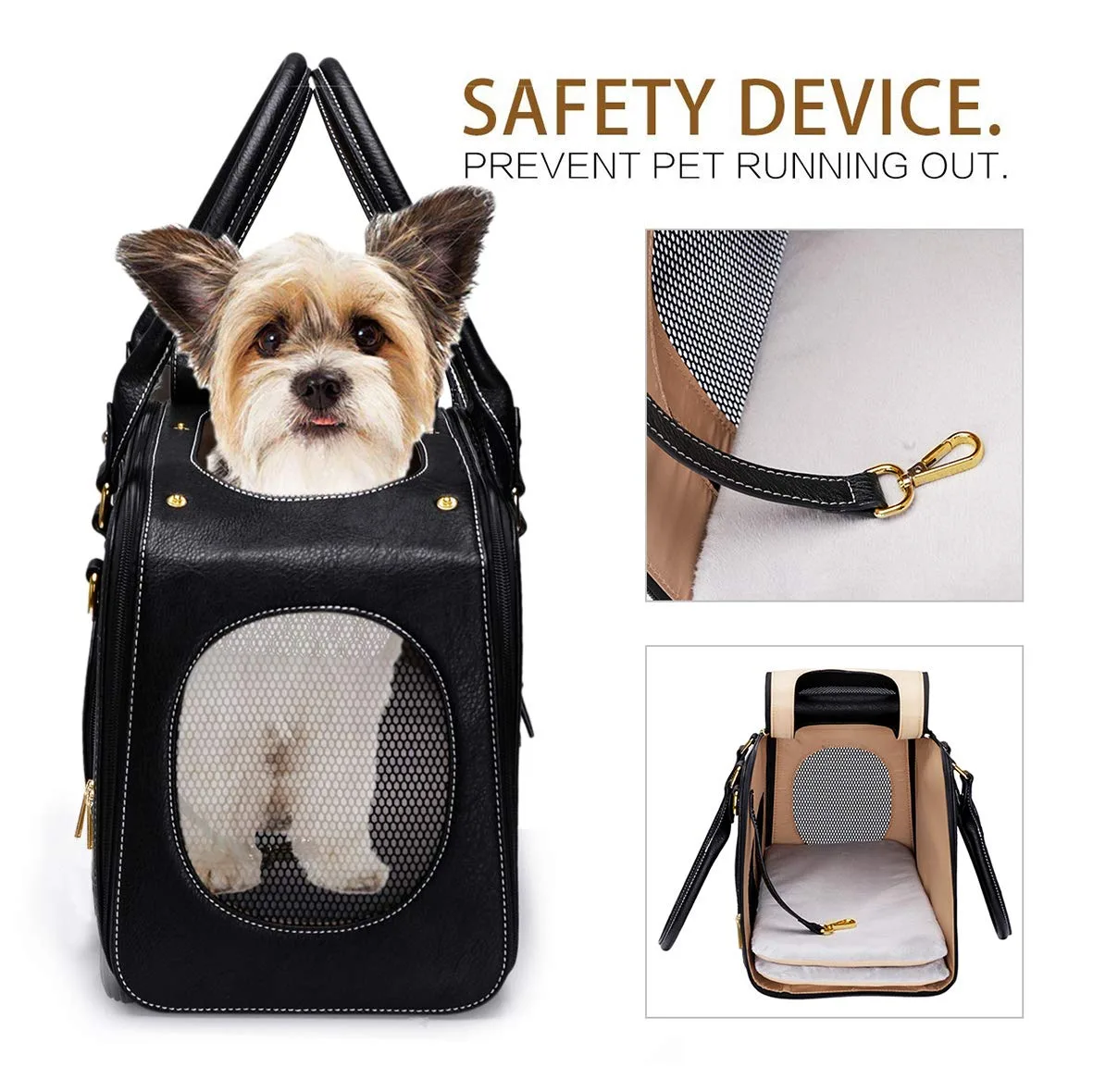
Patches are used where the brand needs relief, where the mark has to survive heavy abrasion, or where the carrier is positioned at a price point that justifies the cost. Five constructions are in regular supply and they differ in tooling by a factor of eight.
Silicone patches are the most durable soft option. They are produced by dispensing or compression moulding into an aluminium tool at 150-180 °C, and they survive 25,000-40,000 abrasion cycles plus repeated flex at -20 to +60 °C without cracking. Tooling is 350-900 USD with a 14-22 day lead time, unit cost is 0.30-0.95 USD, and they can be either stitched or heat-applied depending on the backing.
TPU patches are the lighter alternative at 0.22-0.70 USD with tooling of 180-520 USD. They weld directly to a TPU-coated shell, which gives a bond with no stitch line and no needle holes — the correct choice on a panel that is part of the load path or that has to be wipe-clean. Their limitation is temperature: TPU softens in the range that a silicone patch ignores, so it is not the choice near a handle or a strap anchor.
Polyurethane and leather-look patches are the lowest-cost relief option at 0.18-0.55 USD and tooling of 120-380 USD. They carry fine embossing well and they are the standard choice for a heritage or outdoor positioning. Their failure mode is hydrolysis: a PU patch in a humid climate begins to break down at the surface in 18-36 months, which is acceptable for a fashion cycle and not acceptable for a veterinary or clinical product.
Embroidery is unique in that it requires no hard tooling — only a digitised file at 40-120 USD — and it scales from 200 units upward. It adds 1.5-4.0 minutes of machine time per unit, which at a fully loaded labour rate of 0.06-0.12 USD per minute is 0.09-0.48 USD of labour on top of the thread cost. Stitch count is the driver: a 4,000-stitch logo takes 1.5-2.5 minutes, a 12,000-stitch one takes 4-7 minutes.
| Construction | Tooling USD | Unit cost USD | Abrasion cycles | Flex range °C | Weight g |
|---|---|---|---|---|---|
| Silicone, moulded | 350-900 | 0.30-0.95 | 25,000-40,000 | -20 to +60 | 3-9 |
| TPU, welded | 180-520 | 0.22-0.70 | 25,000-40,000 | -10 to +50 | 2-6 |
| PU, embossed | 120-380 | 0.18-0.55 | 15,000-25,000 | 0 to +45 | 2-7 |
| Leather-look, stitched | 120-380 | 0.25-0.75 | 20,000-30,000 | 0 to +45 | 3-10 |
| Embroidery, direct | 40-120 | 0.25-0.90 | 30,000-45,000 | No limit | 1-4 |
Weight is the last column and it is not cosmetic. A carrier positioned as lightweight typically carries a target of 900-1,400 g total; a nine-gram patch on each of two positions is 1.3-2.0% of that budget, which is real when the rest of the specification is being shaved by grams. Patch selection is a tooling-versus-life decision, and silicone is the only soft option that holds at -20 °C and survives 40,000 cycles.
The Branding Cost Stack: Fixed Tooling and Variable Application
Branding is quoted per unit and bought as a stack. Separating the fixed from the variable component is what lets a buyer predict the cost of a second colourway, a re-order, or an artwork change without asking for a new quote.
The fixed layer contains artwork digitising, plates, dies, moulds and first-article set-up. For a representative three-mark set — a woven main label, a heat-transfer front mark and a silicone side patch — the fixed layer totals 470-1,240 USD. None of it changes with order quantity; all of it is paid again if the artwork changes.
The variable layer contains the label or patch itself, the ink or thread, and the application labour. Application labour is the part usually omitted from buyer-side estimates: a woven label sewn in two sides takes 25-45 seconds, a transfer press cycle takes 15-30 seconds plus load and unload, and a patch takes 40-90 seconds. At 0.06-0.12 USD per minute that is 0.03-0.18 USD per mark, which is comparable to the material cost.
| Order qty | Fixed total USD | Fixed per unit | Variable per unit | Set cost per unit | Share of FOB |
|---|---|---|---|---|---|
| 500 | 470-1,240 | 0.94-2.48 | 0.42-0.86 | 1.36-3.34 | 6-11% |
| 1,000 | 470-1,240 | 0.47-1.24 | 0.40-0.82 | 0.87-2.06 | 4-7% |
| 2,500 | 470-1,240 | 0.19-0.50 | 0.38-0.78 | 0.57-1.28 | 2-5% |
| 5,000 | 470-1,240 | 0.09-0.25 | 0.36-0.74 | 0.45-0.99 | 2-4% |
| 10,000 | 470-1,240 | 0.05-0.12 | 0.35-0.70 | 0.40-0.82 | 1-3% |
Two conclusions follow directly. The first is that a second colourway is cheap: the fixed layer is already paid, so a second run costs only the variable layer plus any per-colour plate at 60-220 USD. The second is that an artwork change is expensive: it re-opens the entire fixed layer, which is why artwork sign-off should be treated as a gate rather than as a step.
Minimum quantities interact with the stack in a way that surprises buyers. A label mill minimum of 1,000-3,000 pieces means a 500-unit run buys two to six runs' worth of labels; the surplus is not wasted but it is cash, typically 80-900 USD held in inventory, and it should be planned for rather than discovered.
The share-of-FOB column is the sanity check. Branding at 6-11% of FOB on a first run is normal for a premium positioning; above 12% the money is usually better spent on the hardware or the frame, because buyers do not return a carrier for having too little branding and they do return it for a failed zipper. Branding is 55-70% fixed cost below 1,000 units, so the artefact to protect is the signed artwork, not the unit price.
Colour Matching: Delta E Limits and Artwork Constraints
Brand colour is the item that generates the most rework in a branding programme, because it is usually specified as a name rather than as a number. Converting it to a measured tolerance removes the argument.
The working specification is a physical standard plus a numeric tolerance. A Pantone reference defines the target; a spectrophotometer measures the production sample against it; acceptance is delta E of 2.0 or less for a brand-critical mark and 3.0 or less for a secondary one. Below 1.0 the difference is not visible to a trained eye; between 1.0 and 2.0 it is visible side by side; above 3.0 it is visible at arm's length.
Substrate moves the achieved colour even when the ink is correct. A transfer printed on white film and applied to a grey shell reads 2-4 delta E darker than the same ink on white, because the shell shows through. The fix is an opaque white base layer of 20-40 micrometres under the colour, which costs 0.02-0.06 USD and is the difference between a match and an argument.
Metamerism is the second trap. Two samples that match under a store light at 4,000 K can differ by 3-6 delta E under daylight at 6,500 K. The standard practice is to evaluate under two illuminants, D65 and a store-typical fluorescent, and to accept only if both pass.
Artwork constraints are equally numeric and they are where most files fail. Vector artwork with outlined fonts, minimum stroke 0.15-0.45 mm depending on method, minimum reverse gap 0.30 mm for print, and no gradients below a 5% step for screen. A raster file supplied at 150 dpi is unusable for a 250 mm wide print, which needs 300 dpi at final size — a 2,950-pixel-wide file.
Colourfastness closes the item and it is tested, not assumed, under the quality system maintained to ISO 9001 at the SGS-verified production base. The relevant ratings are 4-5 for rubbing, 4-5 for washing at 40 °C, and 5-6 on the blue wool scale for light fastness on an exterior mark. A mark that matches perfectly on day one and fades to delta E 8 after 200 hours of xenon exposure has failed the specification even though it passed the approval. Colour is a delta E with a declared illuminant and an opaque base, and a name is not a specification.
Durability Validation: Wash, Abrasion, Light and Chemical Cycles
Branding validation is a cycle test, not a visual inspection, and each construction has a dominant failure mode that the test should target. Writing the test into the specification before the first article prevents the most common dispute: a mark that looked right on the sample and failed on the shelf.
Abrasion is the primary mode for external marks. The method follows the textile abrasion standards maintained by ASTM International, run as Martindale at 9 kPa or Taber at 500 g load, with an endpoint of visible contrast loss rather than total removal. Acceptance for an external mark is 15,000 cycles minimum and 25,000 for a premium positioning; a printed mark at 5,000-8,000 cycles will not meet either and should not be specified externally.
Washing is the primary mode for labels. A woven label is tested to 50 domestic cycles at 40 °C with a standard detergent, with acceptance of no more than one grey-scale step of change and no edge fray beyond 2 mm. A heat transfer on a shell is tested to 30 cycles, because the shell coating rather than the transfer is usually the limiting component.
Light fastness is the mode for anything visible in a retail window or a vehicle. Xenon-arc exposure to 200-600 hours equivalently, with acceptance of blue wool 5-6 for an exterior mark. Pigment inks and solution-dyed yarns reach this; some disperse-dye transfers do not, which is a reason to specify the ink system and not just the colour.
| Position | Dominant mode | Test | Acceptance | Typical result |
|---|---|---|---|---|
| Front panel, external | Abrasion | Martindale 9 kPa | 25,000 cycles | Silicone pass, print fail |
| Side panel, external | Abrasion and UV | Martindale plus xenon | 20,000 cycles, blue wool 5 | Transfer pass |
| Top panel, load path | Tension at edge | 500 N pull, 60 s | No lift over 2 mm | Welded TPU pass |
| Handle webbing | Flex and abrasion | 10,000 flex cycles | No crack, no fray | Woven tape pass |
| Interior lining | Wash and chemical | 50 cycles at 40 °C | One grey-scale step | Woven damask pass |
| Zipper pull | Impact | 1 m drop, 10 times | No crack, no detach | Moulded pass |
Chemical exposure is the mode that pet products add to general textile practice. A mark on a carrier is wiped with a biocide at label concentration, and a printed ink film that survives 30 water washes can fail in 10 biocide wipes. The test is 50 wipes with the specified agent at 5 N, with acceptance of no contrast loss beyond one grey-scale step.
Test scheduling matters commercially. Abrasion and wash testing take 3-8 working days and they are the reason a branding change late in a programme is expensive: the test has to be repeated, and 3-8 days inside a 35-50 day production window is 6-20% of the schedule. Validation is a cycle count with a declared endpoint, and the biocide wipe is the test that pet equipment adds to standard textile practice.
Programme Tiers: Matching a Branding Set to an Order Size
Three tiers cover the market and each has a defensible cost position. Choosing the tier at enquiry rather than at sample stage saves an entire revision cycle.
The entry tier is a single woven main label plus a printed or transferred front mark. Fixed tooling is 180-420 USD, unit cost at 500 pieces is 0.55-1.30 USD, and procurement adds 6-12 days. This tier suits a first private-label run where the buyer is testing a market and wants the option to change artwork on the second run without a large sunk cost.
The mid tier adds a patch — silicone or TPU — on the side panel and a woven name tape on the handle webbing. Fixed tooling rises to 470-1,240 USD, unit cost at 500 pieces is 1.36-3.34 USD, and procurement adds 14-22 days because of the mould. This is the tier at which a brand starts to look manufactured rather than decorated, and it is the standard choice for a retail-distributed product.
The full tier adds hardware branding: a moulded zipper pull, a custom moulded buckle, and a metal or silicone badge. Fixed tooling reaches 1,800-6,500 USD because a moulded buckle tool is 1,200-3,800 USD on its own, unit cost at 500 pieces is 2.60-7.20 USD, and procurement adds 25-45 days. It is justified above roughly 5,000 units per year or where hardware branding is the product's differentiation.
| Tier | Marks | Tooling USD | Unit cost at 500 | Procurement days | Break-even |
|---|---|---|---|---|---|
| Entry | 2 | 180-420 | 0.55-1.30 | 6-12 | Any volume |
| Mid | 4 | 470-1,240 | 1.36-3.34 | 14-22 | About 1,500 units |
| Full | 6-7 | 1,800-6,500 | 2.60-7.20 | 25-45 | About 5,000 units |
The break-even column is the decision rule. It is the volume at which the tooling cost of the higher tier, amortised across the units, is recovered in margin: a mid-tier branding set on a carrier selling at a 45-60% gross margin recovers its incremental tooling against the entry tier at roughly 1,500 cumulative units, and the full tier at roughly 5,000.
Re-order economics are the reason to pick a tier above the immediate need. A second run in the same tier costs only the variable layer — 0.35-0.86 USD per unit for the mid tier — because the mould is held and maintained for 24-36 months. Changing tier on the second run means paying the fixed layer again.
The commercial terms wrap the tier without changing: MOQ 500 per colourway applies to all three, samples in 6-10 working days assume artwork is signed at enquiry, and bulk production runs 35-50 days. The only variable is how much of that window the branding procurement occupies at the front. Tier selection is a break-even calculation on cumulative volume, and the mould held for 24-36 months is what makes a re-order cheap.
Artwork, Approval and the Sampling Sequence
The branding schedule runs in parallel with the product schedule and it is longer at the front and shorter at the back. Putting both on one timeline is what prevents a finished carrier waiting on a label.
The sequence has six gates. Artwork supplied in vector form with outlined fonts and a Pantone reference is the first. Position drawing with dimensions to 2 mm is the second. Method and tier selection against the surface inventory is the third. Colour standard agreement with a delta E tolerance and two illuminants is the fourth. Pre-production sample with marks applied is the fifth. Test report against the validation matrix is the sixth.
Gates one to four happen at enquiry and they cost calendar days rather than money — typically 4-9 days of email. This is the cheapest time to change anything, and it is where disciplined buyers save the most time, because every change after gate five costs a plate or a mould.
Gate five is where branding meets the product. The pre-production sample should be evaluated for position against the drawing, contrast after a 500-cycle rub, adhesion after a tape test, and colour under two illuminants. Four checks, 30-45 minutes, and they catch essentially every branding defect that would otherwise be found at final inspection.
Gate six produces the record. A test report covering abrasion, wash, light and chemical exposure for each mark is 3-8 working days and it is the document that settles a dispute nine months later about whether the mark was specified or assumed.
Two supplier-side disciplines close the sequence. The first is holding artwork under revision control, with the revision number referenced on the purchase order and on the packing list, so a re-order in month fourteen uses the same file. The second is holding 3-5% spare marks from the first run, at 8-40 USD, which converts a replacement from a procurement event into a stock withdrawal. The branding schedule is six gates, and the only free place to change anything is before gate five.
Production capability
- SGS-verified production space of 4,950 m², 149 machines, 7 assembly lines
- Pet carrier and pet bag output since 2014 from a 137-person team
- 200,000 units shipped monthly under BSCI and ISO 9001 systems
People Also Ask
How many branding positions does a cat carrier have?
Six to nine usable positions totalling 180-420 cm². The front panel is largest at 180-260 cm² but a mesh window usually removes 40-60% of it; side panels at 90-150 cm² each are the most technically forgiving.
What does a custom branding set cost at 500 units?
0.55-1.30 USD per unit for an entry two-mark set and 1.36-3.34 USD for a mid four-mark set. Between 55% and 70% of that is amortised tooling rather than material.
Which branding method survives the most abrasion?
Silicone and embroidery, at 25,000-45,000 cycles. Screen print begins to fail at 5,000-8,000, which is why it should not be specified on an external panel that sees floor contact.
What colour tolerance should a brand specify?
Delta E of 2.0 or less for a brand-critical mark and 3.0 for a secondary one, measured under two illuminants. An opaque white base of 20-40 micrometres prevents the shell colour reading through.
Why does a PVC transfer fail on a PU-coated shell?
Coating chemistry mismatch. The adhesive system in a PVC transfer does not bond to a polyurethane coating and the mark lifts in 20-60 days; the transfer coating has to be matched to the shell coating.
How much machine time does an embroidered logo add?
1.5-4.0 minutes per unit depending on stitch count: a 4,000-stitch mark takes 1.5-2.5 minutes and a 12,000-stitch one takes 4-7 minutes.
When is moulded hardware branding justified?
Above roughly 5,000 cumulative units. A moulded buckle tool alone is 1,200-3,800 USD, and at a 45-60% gross margin that is recovered at about that volume.
Frequently Asked Questions
What is the minimum stroke width a printer can hold?
0.15-0.25 mm for a heat transfer and 0.25-0.45 mm for screen print. Below those figures the ink fills in and fine detail disappears, so a logo with hairline elements should be transferred rather than printed.
Why is a label mill minimum of 1,000 pieces a problem at MOQ 500?
It is not a problem, it is a cash planning item. A 500-unit run buys two to six runs' worth of labels at 80-900 USD held in inventory, and that surplus should be planned rather than discovered.
Can a rigid patch be applied to a folding panel?
No. A patch on a panel that folds will crease the fabric or delaminate at the fold. Use a woven label or a transfer on any panel that folds for packing.
What panel radius rules out a flat patch?
A radius under 150 mm cannot take a flat rigid patch wider than 25 mm without edge lift. The same surface takes a woven label or a transfer without difficulty because both conform.
What press parameters does a heat transfer need?
130-160 °C for 8-15 seconds at 0.3-0.5 MPa. A PVC-coated shell glazes above 140 °C and a foam laminate compresses above 0.4 MPa, so the settings are a material decision.
How is colourfastness to light specified?
Blue wool 5-6 for an exterior mark, measured by xenon-arc exposure equivalent to 200-600 hours. Pigment inks and solution-dyed yarns reach this; some disperse-dye transfers do not.
Why test under two illuminants rather than one?
Metamerism. Two samples matching at 4,000 K can differ by 3-6 delta E under daylight at 6,500 K, so acceptance should require both D65 and a store-typical fluorescent to pass.
How long does branding validation testing take?
3-8 working days for abrasion, wash, light and chemical cycles. That is 6-20% of a 35-50 day production window, which is the real cost of a late branding change.
What resolution must artwork be supplied at?
Vector for any print or patch, and 300 dpi at final size for raster. A 250 mm wide print needs a file about 2,950 pixels wide; a 150 dpi file is unusable.
How long is a branding mould held between runs?
24-36 months is standard. That is what makes a re-order cheap — the second run in the same tier costs only the variable layer at 0.35-0.86 USD per unit.
Should spare branding components be ordered on the first run?
Yes, 3-5% spare labels and patches costs 8-40 USD and converts a replacement from a procurement event into a stock withdrawal.
What is the largest branding position on a carrier?
The underside at 200-400 cm², which is where a large printed legal block goes. The largest visible position is the front panel at 180-260 cm², less whatever the mesh window removes.
Does sublimation work on any carrier fabric?
Only on polyester at 65% or more, and not on dark grounds without a white base. Where it works it gives 40,000-60,000 abrasion cycles with no added hand or thickness.
How much of FOB should branding represent?
6-11% on a first run is normal for a premium positioning. Above 12% the money is usually better spent on hardware or frame, because buyers return carriers for failed zippers, not for too little branding.
Talk to QUANZHOU JUNYUAN BAGS about a pet carrier program: MOQ 500 pieces per colourway, samples in 6-10 working days, bulk production in 35-50 days under AQL 2.5 inspection.
Get a free quote Request a sample