Cat Carrier Pet Zoomark: Bologna Exhibition Strategy
At a specialist pet exhibition every visitor understands the category, so present a range architecture rather than products: three tiers at 19-89 EUR retail, with private label options from 500 units and Italian labelling ready. Range decisions made there land 9-16 months later, so the sampling window is the whole cycle.
A specialist pet exhibition is the only venue in this programme where every person in the aisle already knows what a cat carrier is and what a good one costs. That removes the explaining and moves the conversation straight to range architecture, price architecture and private label terms, which is where the value actually sits. It also means the preparation is different: fewer samples but deeper ones, a range ladder rather than a product list, and a private label capability statement with real minimums. This page works through that from the manufacturing side: who attends a specialist pet show and what each buyer type wants, how a three-tier range is constructed and presented, what a private label conversation requires in data and minimums, and how samples should be chosen when the buyer knows the category. It also covers Italian and Southern European market requirements, the practical logistics of exhibiting in Bologna, and the long range-planning calendar that follows. Standard terms apply: MOQ 500 pieces per colourway, prototypes in 6-10 working days, bulk production 35-50 days after sample approval, final random inspection to AQL 2.5, T/T 30/70 and FOB Xiamen.
The economics of wholesale pet carriers move with carton cubage, so cat carrier programmes are quoted both by unit price and by filled container.
A Category-Literate Audience: Who Attends and What They Want
The distinguishing feature of a specialist pet exhibition is that the explaining is already done. A visitor knows what a soft carrier costs, what a hard shell weighs, which airlines allow what, and how a range is merchandised. The conversation therefore starts at a much higher level and it is unforgiving of vagueness.
Five buyer types dominate and each wants something different. Pet chain buyers want range architecture and a private label programme. Independent retailers want margin structure and small minimums. Distributors want exclusivity and documentation. E-commerce buyers want dimensional data and packaging that survives parcel handling. Grooming and boarding operators want durability and cleanability.
The consequence for the booth is that one presentation cannot serve all five. What works is a range wall that shows the architecture at a glance, plus a private label table that serves the chain and distributor conversations, plus a durability station that serves the professional-use buyer.
| Buyer type | Share | Primary requirement | Typical first order | Decision cycle | Conversion |
|---|---|---|---|---|---|
| Pet chain | 14-24% | Range architecture, private label | 2,400-14,000 units | 6-14 months | 11-22% |
| Distributor | 16-28% | Exclusivity, documentation | 1,800-9,600 units | 4-11 months | 13-26% |
| Independent retailer | 18-32% | Margin, small minimums | 200-1,400 units | 1-5 months | 16-32% |
| E-commerce operator | 12-22% | Dimensional data, parcel packaging | 600-4,800 units | 2-8 months | 14-28% |
| Grooming and boarding | 6-14% | Durability, cleanability | 100-800 units | 1-4 months | 18-34% |
| Veterinary and clinic | 4-10% | Cleanability, restraint features | 100-600 units | 2-6 months | 12-24% |
The decision cycle column is the one that changes how a programme should behave after the show. A chain buyer deciding over 6-14 months is not going to be closed by a week-two follow-up; they need a range proposal, a sample set and a pricing structure, and then patience. An independent retailer deciding in 1-5 months will be lost if the follow-up waits for the chain.
Segmenting the follow-up by buyer type rather than by enquiry grade is the operational consequence. A chain conversation gets a range proposal within 14 days and a check-in every 6-8 weeks. An independent retailer gets a price and a sample offer within 48 hours. Treating them the same loses one or the other.
One more pattern worth naming: a distributor will ask about exclusivity early, and the answer should be prepared rather than improvised. Exclusivity by territory is a commercial instrument with a volume commitment attached, and stating the commitment level at which it is available, typically 4,000-12,000 units a year, is better than either refusing or conceding.
Segment follow-up by buyer type rather than by grade: a chain decides over 6-14 months and needs a range proposal, an independent retailer over 1-5 months and needs a price in 48 hours.
Range Architecture: Presenting a Programme, Not Products
A specialist pet buyer is not buying a carrier; they are filling a range. What they need from a supplier is a coherent ladder with clear steps, defensible price points and consistent design language, and they will evaluate it as a whole rather than item by item.
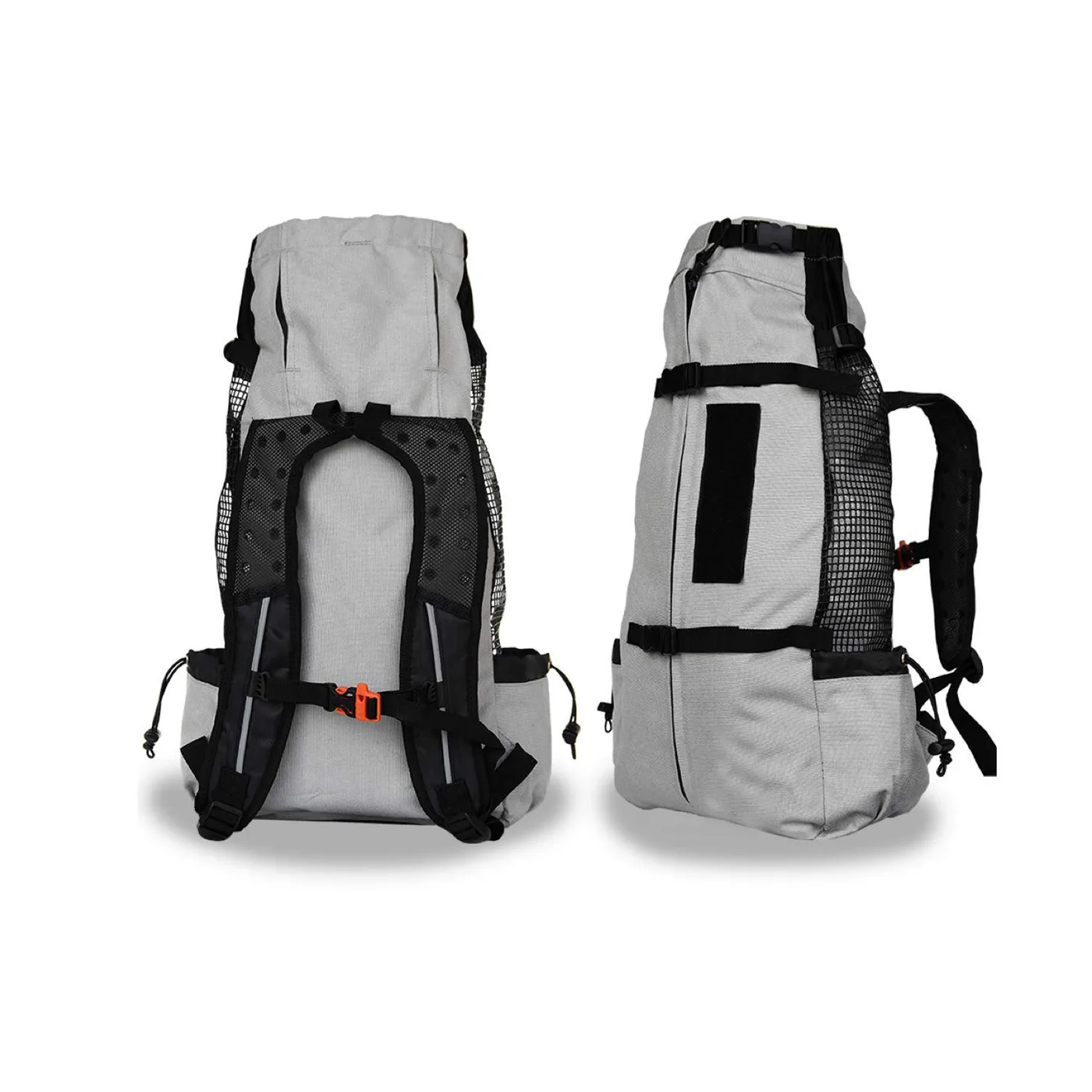
A working architecture for cat carriers is three tiers. An entry tier in 300D polyester with a basic frame, a single entry point and a standard carton, retailing at 19-29 EUR. A mid tier in 600D with a padded strap, two entry points, a washable base pad and a printed carton, retailing at 39-59 EUR. A premium tier in 900D or a coated canvas with moulded hardware, a removable liner and a structured base, retailing at 69-89 EUR.
The steps between tiers have to be visible and explicable. A buyer will ask why the mid tier costs twice the entry tier, and the answer has to be a list of named differences in material, hardware and construction, not a statement about quality. Building that comparison into the presentation costs 120-450 USD and it is the most-used document at the stand.
| Tier | Shell | Hardware | FOB cost (USD) | Retail (EUR) | Buyer margin | Share of range |
|---|---|---|---|---|---|---|
| Entry | 300D polyester | Standard zip, webbing | 9.40-12.10 | 19-29 | 42-56% | 30-45% |
| Mid | 600D polyester, WR finish | Branded zip, padded strap | 13.90-17.60 | 39-59 | 48-62% | 38-52% |
| Premium | 900D or coated canvas | Moulded hardware, liner | 19.80-26.40 | 69-89 | 52-66% | 12-24% |
| Professional | 600D, cleanable coating | Heavy-duty zip, reinforce | 16.20-21.80 | 49-69 | 44-58% | 4-12% |
Buyer margin matters more than FOB cost at this show, because a European retailer works to a target margin band and will back-solve from the retail price. Presenting the retail positioning alongside the FOB price lets them do that at the stand rather than later, which shortens the decision by weeks.
Share of range is the planning number and it follows a predictable shape: the mid tier carries 38-52% of units, entry 30-45% and premium 12-24%. A supplier whose sample set is evenly split across tiers is misrepresenting what the buyer will actually order, and a buyer will notice.
Design language consistency across tiers is what makes a range read as a range. A common strap geometry, a common zip pull family and a common colour palette across all three tiers, with differentiation expressed in material and feature count rather than in shape, is the approach that works. It also reduces component count, which lowers cost.
Present three tiers with named differences and retail positioning alongside FOB: the mid tier carries 38-52% of units, and margin structure decides the range faster than cost does.
Private Label: What the Conversation Actually Requires
A specialist pet exhibition is the venue where private label programmes are started, because chains and distributors attend with a range plan and a brand to put on it. The conversation is technical and it is decided on minimums, lead times and artwork handling.
Four questions are always asked and they should be answerable from a printed sheet. What branding methods are available, what is the minimum for each, what does the artwork process cost and how long does it take, and can the packaging be branded as well as the product.
The answers are a matrix of method, minimum, cost and lead time. A woven label from 500 units at 0.12-0.35 USD, a moulded patch from 1,000 units at 0.55-1.40 USD plus a 180-450 USD tool, an embroidered mark from 500 units at 0.45-1.20 USD plus digitising, and a branded retail carton from 1,000 units at 0.28-0.97 USD plus a 60-340 USD print setup.
| Method | Minimum | Cost per unit (USD) | Tooling (USD) | Lead time | Durability |
|---|---|---|---|---|---|
| Woven label, sewn | 500 | 0.12-0.35 | 0-60 | 2-6 days | 40-70 cycles |
| Embroidered mark | 500 | 0.45-1.20 | 60-140 digitising | 3-6 days | 50-80 cycles |
| Moulded silicone patch | 1,000 | 0.55-1.40 | 180-450 | 12-25 days | 80-150 cycles |
| Branded zipper pull | 1,000 | 0.18-0.62 | 180-620 | 8-18 days | Life of zip |
| Branded retail carton | 1,000 | 0.28-0.97 | 60-340 print | 5-12 days | n/a |
| Hang tag and insert | 500 | 0.14-0.48 | 40-180 print | 4-10 days | n/a |
| Custom colourway | 500 per colour | 0.30-1.10 | 0 | 10-20 days | n/a |
The artwork handling question is the one that separates a credible programme from an aspirational one. A buyer needs to know that submitting a vector file produces a production-ready artwork in a stated time, that colour is matched to a spectral target, and that a physical approval sample is produced before bulk. Stating that process on the sheet costs nothing and it answers the question a private label buyer most cares about.
Tooling ownership belongs in the same conversation and it should be written rather than verbal. The buyer owns a tool they paid for, held and maintained by the production partner, with a written release condition. Stating it at the point of the private label conversation prevents the argument that otherwise arrives at the second order.
Minimums are the friction point and they should be explained rather than defended. A 1,000-unit minimum on a moulded patch exists because the mould cost of 180-450 USD has to amortise, and saying so is more persuasive than simply refusing 500. Where a buyer wants a lower minimum, the answer is a different method rather than an exception.
Print the private label matrix with minimums, tooling and lead times, state the artwork process and put tooling ownership in writing at the first conversation.
Sample Selection for a Buyer Who Knows the Category
A category-literate buyer evaluates differently from a general buyer. They will open the unit, look at the seam allowance, feel the base board, work the zip, and check whether the interior pad is removable. Samples have to survive that inspection and reward it.
Breadth is less important here than at a general fair: 22-38 units against 46-88, heavily weighted to the mid and premium tiers where the margin and the differentiation are. Every size in every tier, plus the private label applications, plus cut-aways and a durability sample, is the working set.
The durability sample is specific to this venue and it is worth building: a unit that has been through the wash cycle test, the zip cycle test and the abrasion test, presented alongside the test report and the unused equivalent. A buyer can then see what the product looks like after its specified life rather than taking a claim on trust.
| Category | Units | Weight (kg) | What it answers | Handling rate | Order attribution |
|---|---|---|---|---|---|
| Full range, all tiers and sizes | 8-14 | 20-40 | Range architecture | Highest | 38-54% |
| Private label applications | 4-8 | 8-16 | Branding capability | High | 22-38% |
| Cut-away constructions | 2-4 | 4-10 | Build quality | Highest | Indirect |
| Durability sample with report | 2-4 | 4-10 | Life-cycle claim | High | Indirect |
| Packaging and display | 3-6 | 10-24 | Retail readiness | Medium | 14-26% |
| Colourway variants | 3-6 | 6-12 | Palette | High | 18-30% |
Cut-aways earn more at this venue than anywhere else, because the buyer looking at them knows exactly what they are looking at. A sectioned unit showing the base board construction, the seam allowance, the reinforcement at the strap anchor and the zip installation answers four questions at once and it does so without the supplier being present.
Finish quality on samples matters disproportionately here. A buyer who knows the category will notice a loose thread, a mis-registered print or a stiff zip on a sample, and they will generalise from it to the production run. Preparing samples to a higher finish standard than bulk, and saying that this is what they are, is the honest and effective approach.
One more item that pays off specifically with professional-use buyers: a cleanability demonstration. A unit with a soiled liner panel next to the same liner after the specified wash cycle answers the grooming and boarding buyer directly, at 40-180 USD to prepare, and those buyers convert at 18-34%.
Bring 22-38 units weighted to the mid and premium tiers, and include a durability sample shown with its test report and its unused equivalent.
Italian and Southern European Market Requirements
Exhibiting in Italy means the largest single buyer group is Italian, and Italian market requirements are specific enough to deserve preparation. The same is broadly true of Spain, France and Greece, which together form the Southern European buyer pool at this show.
Labelling is the first requirement. Consumer-facing labelling has to be in the destination language, and for Italy that means Italian on the carton, the hang tag and the instructions. A product labelled in English alone is not placeable in the Italian retail channel, and a buyer will say so at the stand.
The second is the importer identification requirement: the packaging has to carry the economic operator placing the goods on the market, which for an imported product is the buyer. Leaving a designated space in the artwork for their details, rather than printing a fixed importer, is the practical accommodation and it costs nothing if designed in.
| Market | Language | Instructions (USD) | Labelling artwork (USD) | Lead time | Asked at stand |
|---|---|---|---|---|---|
| Italy | Italian | 180-940 | 60-320 | 6-18 days | 62-86% |
| Spain | Spanish | 180-940 | 60-320 | 6-18 days | 34-58% |
| France | French | 180-940 | 60-320 | 6-18 days | 38-62% |
| Germany | German | 180-940 | 60-320 | 6-18 days | 44-68% |
| Greece | Greek | 220-1,100 | 80-380 | 8-22 days | 12-28% |
| Portugal | Portuguese | 200-980 | 70-340 | 7-20 days | 10-24% |
Italian and German alone cover most of the buyer pool at this show, and preparing those two languages costs 360-1,880 USD in instructions and 120-640 USD in artwork. Against a show costing 16,000-58,000 USD to attend, that is the highest-return preparation line available.
Chemical compliance documentation is the same across the European Union and it should be carried in full: a restricted substance declaration with the candidate list maintained by the European Chemicals Agency, plus textile declarations issued against OEKO-TEX criteria. Southern European buyers ask for these at 58-84% at the stand, slightly below the Northern European rate but high enough to be decisive.
Packaging preferences in Southern Europe favour a printed retail carton over a plain one, because a large share of the channel is independent retail where the carton is the display. A printed carton at 0.28-0.97 USD more than a plain one is expected rather than optional, and quoting the plain option as the base with print as an adder is the correct structure.
Prepare Italian and German instructions and labelling at 480-2,520 USD combined, and leave a designated importer space in the artwork rather than printing a fixed one.
Logistics: Getting a Set to Bologna and Back
Bologna is a straightforward destination logistically, but the exhibition calendar is dense and the venue handling rules are strict. The planning constraint is not distance; it is delivery windows and the return.
Three modes are practical. Sea freight to a northern Italian port runs 28-46 days at 420-1,340 USD for a 60-140 kg set, plus inland. Consolidated air runs 12-24 days at 780-2,340 USD. Air express runs 4-10 days at 1,320-4,180 USD. Given a fixed opening date and a dense calendar, consolidated air with a three-week buffer is the standard choice.
A temporary admission carnet applies, as at any European venue: 5-20 days to raise, 180-720 USD, and re-export required to discharge it. Italian venues are thorough about matching carnet entries to physical items, so the packing list has to match the carnet item by item.
| Item | Cost (USD) | Lead time | Book by | Note |
|---|---|---|---|---|
| Carnet | 180-720 | 5-20 days | 25-40 days out | List must match items |
| Sea freight plus inland | 420-1,340 | 28-46 days | 55-75 days out | Cheapest, slowest |
| Consolidated air | 780-2,340 | 12-24 days | 30-42 days out | Standard choice |
| Air express | 1,320-4,180 | 4-10 days | 12-18 days out | Late or urgent |
| Venue handling | 180-980 | n/a | With delivery window | By case or weight |
| Return movement | 640-2,800 | n/a | Before travel | Discharges the carnet |
Venue handling is the line most often underestimated. Italian halls charge by case or by weight and require a booked delivery window, at 180-980 USD for a set, and a missed window leaves samples at the dock. Consolidating into four to six flight cases rather than loose cartons reduces both the charge and the handling damage risk.
Staff travel is simpler than for most venues: Bologna is served by a major airport with direct connections, and accommodation within walking distance of the exhibition centre removes the daily transfer problem that costs an hour a day at larger venues. Budgeting 4,200-14,800 USD for three staff across five days covers it.
One practical point specific to Italian venues: electrical supply and stand power are ordered in advance and the specification is strict, so ordering at booking at 180-620 USD rather than on site at two to three times the cost is standard practice, and a stand with no power on build day is a stand with no lighting.
Consolidated air booked 30-42 days out with the carnet raised 25-40 days out, four to six flight cases, and a pre-booked return to discharge the carnet.
After the Show: The Range Planning Calendar
A specialist pet exhibition feeds a range planning cycle that runs 9-16 months, longer than any other venue in this programme. Understanding that shape is what stops a supplier from abandoning a chain conversation that is simply proceeding at its own pace.
The cycle has a fixed rhythm. Range decisions are made at the show, ranges are built over the following two to four months, samples and compliance are exchanged over months three to seven, orders are placed in months six to eleven, and goods land in months nine to sixteen. A supplier who expects an order in month three will misread the silence as a loss.
What keeps a conversation alive through that is a sequence of substantive contacts rather than repeated check-ins: a range proposal in month one, a sample set in month two, a compliance pack in month three, a revised range with pricing in month five, and a slot availability note in month eight. Each has content, and each arrives when the buyer has a use for it.
| Month | Supplier action | Buyer action | Response rate | Cost (USD) |
|---|---|---|---|---|
| 1 | Range proposal with ladder and retail positioning | Internal review | 44-68% | 240-1,100 |
| 2-3 | Sample set, private label samples | Evaluation | 52-74% | 1,400-9,400 |
| 3-4 | Compliance pack, market documentation | Compliance review | 38-62% | 240-1,400 |
| 5-6 | Revised range and pricing, tooling quotes | Range sign-off | 28-52% | 300-1,600 |
| 6-11 | Slot availability, deposit request | Order placement | 22-44% | 300-1,600 |
| 9-16 | Production, 35-50 days, transit 28-46 days | Receipt | n/a | n/a |
Working the conversion through: 100 qualified chain or distributor conversations produce 44-68 responses, 23-50 sample sets, 9-26 range sign-offs and 4-11 orders over a 9-16 month horizon. That is a slow funnel with a high value per conversion, and it requires a follow-up system that can maintain contact for a year without becoming a nuisance.
Slot availability is the lever that closes it. A buyer working to a range launch date needs to know that capacity exists for their window, and offering a reserved slot against a forecast commitment converts 18-34% more sign-offs than an estimated lead time. The reservation costs 300-900 USD and is worth far more than that.
The professional-use and independent retail buyers run on the fast part of the same calendar, deciding in 1-5 months, and they should not be held to the chain schedule. Running two follow-up tracks simultaneously is the discipline that captures both.
100 qualified chain conversations yield 4-11 orders over 9-16 months: run a substantive contact sequence in months one, two, three, five and eight, and offer a reserved slot to close it.
Cost Model: Specialist Pet Show Against General Consumer Fair
A specialist pet exhibition costs less to attend than a general European consumer fair and converts fewer programmes at higher value. The comparison is close enough that the deciding factor is usually the fit between the product and the audience rather than the cost.
Attendance runs 16,000-58,000 USD against 20,000-72,000 USD for a general European fair: the stand is smaller because the sample set is smaller, staff travel is similar, and sample freight is lower at 780-2,340 USD against 620-3,240 USD for a heavier set. The compliance file is identical at 820-3,660 USD.
The return is concentrated. Programme count is lower at 3-9 against 3-11, but the private label share is far higher at 42-68% against 14-32%, and private label programmes run larger and last longer because they are attached to a retail brand rather than to a listing.
| Metric | Specialist pet show | General consumer fair | Advantage |
|---|---|---|---|
| Attendance cost (USD) | 16,000-58,000 | 20,000-72,000 | Specialist |
| Sample set size | 22-38 units | 46-88 units | Specialist |
| Sample freight (USD) | 780-2,340 | 620-3,240 | Specialist |
| Programmes converted | 3-9 | 3-11 | General |
| Private label share | 42-68% | 14-32% | Specialist |
| Average first order | 1,600-9,800 units | 1,800-9,400 units | Comparable |
| Decision cycle | 1-16 months | 2-14 months | Comparable |
| Cost per programme (USD) | 1,778-19,333 | 1,818-24,000 | Specialist |
The specialist show wins on cost per programme and decisively on private label share, which is the metric that matters for a supplier whose value is in manufacturing rather than in brand. A 42-68% private label share means most of what is sold there is made to a buyer specification, which is where a production partner's capability is worth most.
The precondition is the same as for any European venue and it is not negotiable: the compliance file, the market documentation and the language preparation. A specialist audience is more likely to check and more likely to notice, and 62-86% of Italian buyers ask about language and labelling at the stand.
Commercial terms are identical at both: MOQ 500 pieces per colourway, prototypes in 6-10 working days, bulk production 35-50 days after sample approval, final random inspection to AQL 2.5, T/T 30/70 and FOB Xiamen. Our production team presents the same range architecture and the same private label matrix at every venue, with physical testing referenced to ASTM International methods and process documentation under ISO 9001 coverage. The specialist pet show costs 1,778-19,333 USD per programme against 1,818-24,000 USD and converts 42-68% of them into private label work, which is where manufacturing capability is worth most.
Order and quality terms
- MOQ 500 pieces per colourway; samples in 6-10 working days
- Bulk production 35-50 days after approval; AQL 2.5 inspection standard
- T/T 30/70 terms, FOB Xiamen, full document set per shipment
People Also Ask
How is a specialist pet exhibition different from a general trade fair?
Every visitor already knows the category, so the conversation starts at range architecture and private label terms rather than at product explanation. Sample sets are smaller at 22-38 units against 46-88.
What range architecture should a cat carrier programme present?
Three tiers: entry at 9.40-12.10 USD FOB retailing 19-29 EUR, mid at 13.90-17.60 retailing 39-59 EUR, premium at 19.80-26.40 retailing 69-89 EUR, with named differences between them.
What private label minimums apply to cat carriers?
Woven label and embroidery from 500 units, moulded patch and branded zipper pull from 1,000 with tooling at 180-620 USD, and a branded retail carton from 1,000 with print setup at 60-340 USD.
Which buyer types attend a specialist pet exhibition?
Pet chains at 14-24%, distributors at 16-28%, independent retailers at 18-32%, e-commerce operators at 12-22%, and grooming, boarding and veterinary buyers at 10-24%.
What language preparation is needed for an Italian exhibition?
Italian first, then German: 360-1,880 USD for instructions and 120-640 USD for labelling artwork. 62-86% of Italian buyers ask about language and labelling at the stand.
How long is the range planning cycle after the show?
9-16 months for chain and distributor buyers, against 1-5 months for independent retailers. 100 qualified chain conversations yield 4-11 orders over that horizon.
How should the booth serve different buyer types?
A range wall for architecture, a private label table for chains and distributors, and a durability station for professional-use buyers. One presentation cannot serve all five types.
Is a specialist pet show cheaper than a general European fair?
Yes on attendance at 16,000-58,000 USD against 20,000-72,000 USD, and on cost per programme at 1,778-19,333 USD against 1,818-24,000 USD.
Frequently Asked Questions
Why segment follow-up by buyer type rather than by enquiry grade?
A chain decides over 6-14 months and needs a range proposal; an independent retailer decides in 1-5 months and needs a price in 48 hours. Treating them the same loses one or the other.
How should an exclusivity request be answered?
With the volume commitment at which it is available, typically 4,000-12,000 units a year. Stating it is better than refusing outright or conceding without a commitment.
Why show retail positioning alongside FOB cost?
A European retailer works to a target margin band and back-solves from the retail price. Giving both lets them do it at the stand rather than weeks later.
What share of a range should each tier carry?
Mid 38-52% of units, entry 30-45%, premium 12-24%. An evenly split sample set misrepresents what the buyer will order, and they will notice.
Why keep design language consistent across tiers?
A common strap geometry, zip pull family and palette, with differentiation in material and feature count, makes a range read as a range and reduces component count, lowering cost.
What belongs on the private label capability sheet?
Methods, minimums, tooling, lead times, durability and the artwork process. Stating that a vector file produces production-ready artwork against a spectral target answers what a private label buyer cares about most.
Why explain a 1,000-unit moulded patch minimum rather than refuse 500?
Because the 180-450 USD mould has to amortise. Where a buyer wants a lower minimum, the answer is a different method rather than an exception.
What is a durability sample and why build one?
A unit that has been through the wash, zip and abrasion tests, shown with the report and the unused equivalent. It lets a buyer see the product after its specified life rather than take a claim on trust.
Why prepare samples to a higher finish than bulk?
A category-literate buyer notices a loose thread or a stiff zip and generalises from it to the production run. Preparing them better and saying so is honest and effective.
What accommodation should packaging artwork make for the importer?
Leave a designated space for their details rather than printing a fixed importer. It costs nothing designed in and it is a market requirement.
Why do Southern European buyers prefer a printed carton?
A large share of the channel is independent retail where the carton is the display. Print adds 0.28-0.97 USD and should be quoted as an adder on a plain base.
What is the standard sample freight choice for Bologna?
Consolidated air booked 30-42 days out at 780-2,340 USD, with the carnet raised 25-40 days out. Sea at 420-1,340 USD but 28-46 days is the cheapest alternative.
Why consolidate samples into flight cases for Italian venues?
Handling is charged by case or weight at 180-980 USD and requires a booked delivery window. Four to six cases reduce the charge, the damage risk and the chance of missing the window.
What closes a chain conversation after a long cycle?
A reserved production slot against a forecast commitment, converting 18-34% more sign-offs than an estimated lead time, at 300-900 USD.
Talk to QUANZHOU JUNYUAN BAGS about a pet carrier program: MOQ 500 pieces per colourway, samples in 6-10 working days, bulk production in 35-50 days under AQL 2.5 inspection.
Get a free quote Request a sample