Dog Carrier Backpack for Cats: Dual Pet Use
A dual-use carrier for cats and small dogs is built to a shared envelope of 3-9 kg, 30-50 cm chest girth and 30-48 cm body length, with the cat driving the containment specification. Gap control tightens to 6-8 mm, sliders must be locking with a 90 N pull-off test, and panels take a claw snag test at 60 N plus 12,000 abrasion cycles. Floor area, not volume, is the dimension that matters for feline use.
This page covers what changes when a carrier designed around dog geometry has to work for a cat. Cats are lighter, more flexible, better at escaping and far more destructive with their claws, so containment, closure architecture and abrasion resistance move to the top of the specification while load rating becomes almost irrelevant. It sets out the body-parameter differences, the shared structural envelope, escape and claw engineering, ventilation and visual environment, floor and cleanability requirements, the dual-species test protocol, and the programme planning consequences of one SKU serving two species. Commercial terms follow the standard program: MOQ 500 pieces per colourway, prototypes in 6-10 working days, bulk production 35-50 days after sample approval, final random inspection to AQL 2.5, T/T 30/70 payment and FOB Xiamen loading.
A custom pet carrier brief for dog carrier backpack is quoted against three variables before the sample is cut: fabric weight, hardware grade and print method.
Cat Body Parameters and Why They Differ from Dog Geometry
The first thing to understand about feline fit is that cats are not small dogs in any dimension that matters. A 5 kg cat and a 5 kg dog have similar mass, very different proportions and completely different behavioural envelopes, so a carrier that fits both is not a scaled-down dog carrier — it is a compromise structure whose dimensions are set by whichever species is more demanding in each parameter.
Three measurements define the cat. Body length, measured from the nose to the base of the tail rather than to the tail tip, runs 35-50 cm for the domestic cat against 25-42 cm back length for the small-dog class. Chest girth runs 30-45 cm. Weight runs 3-8 kg for the majority of the population, with some breeds outside that band. The derived interior dimensions land at 200-260 mm wide, 420-560 mm long and 240-300 mm high.
Proportion is where the conflict appears. Cats are longer relative to their girth than dogs, so a compartment sized for a dog's chest girth is too wide and too short for a cat of the same mass. Cats also spend far more of their time lying flat and far less standing, so floor area matters more than interior height; the design implication is that a dual-use compartment should trade height for length against a dog-only design of the same volume.
| Parameter | Dog-driven value | Cat-driven value | Dual-use resolution |
|---|---|---|---|
| Interior length | 1.25x back length | 1.15-1.25x nose-to-base length | Use the larger figure, 480-560 mm |
| Interior width | Girth / pi + 40-60 mm | Girth / pi + 20-30 mm | Use dog figure, add pad to reduce for cats |
| Interior height | 55-60% of shoulder height | 1.2x lying height, lower is better | Compressible soft top panel |
| Floor area | Secondary | Primary comfort metric | Maximise floor, minimise height |
| Gap limit | 8-10 mm | 6-8 mm | Use the cat figure |
| Panel abrasion | 10,000 Martindale cycles | 12,000 cycles plus snag test | Use the cat figure |
Flexibility is the second behavioural difference and it drives the containment specification entirely. A cat can pass its head through any opening it can get its skull through, which is a much smaller dimension than the corresponding dog measurement, and it can then work the rest of its body through by folding rather than by pushing. This is why the gap limit tightens to 6-8 mm for dual-use designs and why every closure needs a positive lock rather than friction.
Dual-Use Envelope: One Structure Serving Two Species
Building one structure for two species means deciding, parameter by parameter, which species sets the value. The rule used in production is that the more demanding value wins in every case where the cost of adopting it is low, and a compromise is engineered only where the cost is high. Applying that rule produces a compartment that is slightly larger and slightly more sealed than a dog-only design and noticeably more abrasion-resistant.
Where the dimensions conflict directly — width and height — the resolution is an adjustable interior rather than a middle value. A removable padded liner reduces interior width by 30-50 mm for feline use and is removed for canine use, and a compressible soft top panel lets interior height drop for a cat that prefers to lie low. Both adjustments cost less than running two SKUs and both are removable for cleaning, which matters more for cats than for dogs.
Load rating is the one parameter where the cat is less demanding and no compromise is needed. A dual-use carrier rated at 12-15 kg covers the whole cat population and the small-dog class simultaneously, with the rating set by the dog rather than the cat. The structural consequence is minimal: the base board, webbing and hardware specified for a 12 kg rating are the same parts used in a small-dog carrier, so nothing has to be upgraded.
The real cost of dual use is in containment and surface durability, and it is not trivial. Locking sliders, tighter gap tolerances, heavier mesh and a fully closable interior add 1.80-3.60 USD to the unit against a dog-only design of the same size. Programmes should decide early whether that is worth carrying across the whole range or only on the SKUs that will actually be marketed to cat owners, because the cost applies whether or not the feature is advertised.
Branding and labelling deserve a note. A product marketed for dual use needs a label and a size chart that states both species' ranges, and the cat range should be given in weight and body length rather than in breed terms. Stating the fit envelope in measurements rather than breed names is what keeps a dual-use product defensible when a customer's animal does not match the photograph on the box.
Escape Resistance: Gaps, Sliders and Closure Architecture
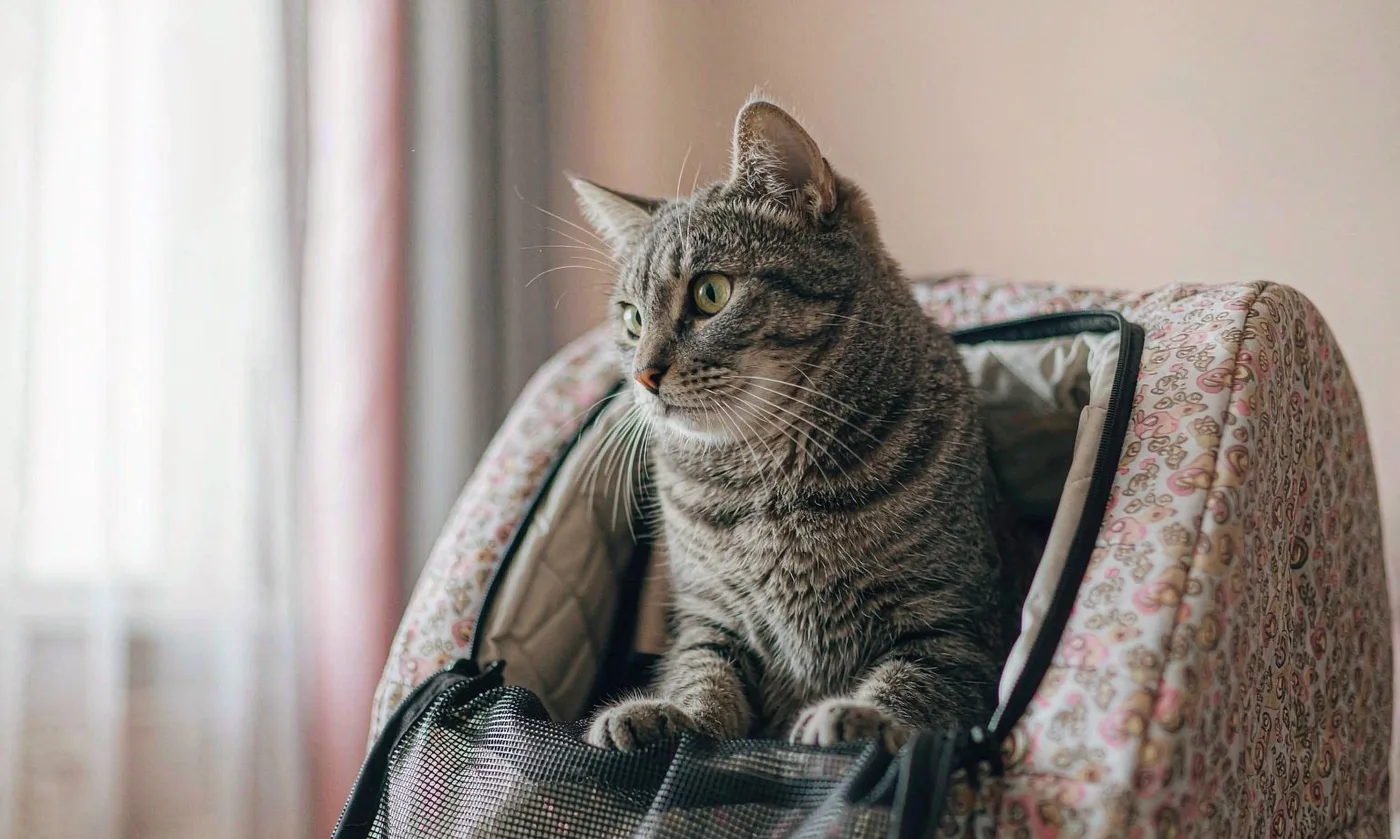
Escape prevention for cats is the engineering core of a dual-use design, and it has three parts: gap control, positive locking and structural stiffness at the closure line. Cats defeat all three by different mechanisms — squeezing, working a slider, and deforming a flexible opening until it gaps.
Gap control is the first part and the limit is 6-8 mm, tighter than the 8-10 mm used for dogs. The probe test is the same — a rigid probe of the specified diameter at 10 N — but the number of probe points rises, because a cat will find the one location that was not checked. In practice that means probing every seam intersection, both zipper terminations, every hardware passage and every panel junction, which is typically 12-18 points on a mid-size carrier rather than the 8 used on a dog design.
Positive locking is the second part. A standard coil zipper slider with no lock can be pushed open from inside by a determined cat working the tape with its paws; the control is a locking slider with a positive detent, tested by applying 90 N to the slider in the opening direction with acceptance of no movement. A secondary control is a hook-and-loop or snap storm flap over the zipper line, which also removes the gap at the tape. Both together are standard on dual-use designs, and the storm flap is the one that actually stops the paw.
Structural stiffness at the closure line is the third part and the one most often missed. A flexible opening can be deformed by an animal pushing from inside until the gap exceeds the probe diameter even though no component has moved. The control is a stiffener — a 2.0-3.0 mm cord or a moulded band — running around the opening perimeter inside the binding, plus a closure geometry that puts the zipper in tension rather than in shear. Testing this is straightforward: the opening is probed while a 100 N outward load is applied from inside, rather than unloaded.
Top-loading architecture deserves specific mention because it is the configuration cat owners prefer and the hardest to seal. A 180-degree top zip with a locking slider, a stiffened perimeter and a full-width storm flap works; a partial top zip with a fabric flap and hook-and-loop does not, because the flap can be pushed aside from inside. Where a top opening is specified, the flap should be retained at three or more points rather than continuously, so that pushing at one point does not open a gap elsewhere.
Claw and Abrasion Resistance: Test Method and Material Selection
Cats scratch, and they scratch with a hooked claw under meaningful force applied to a very small area. The failure mode is not abrasion in the Martindale sense but snagging: the claw engages a yarn or a filament and pulls it, which propagates into a run and then a hole. Material selection for dual-use carriers is therefore driven by snag resistance first and abrasion resistance second.
Monofilament construction is the answer for mesh. A monofilament yarn cannot be unravelled once engaged, and the claw tends to slip over it rather than catch, so monofilament mesh at 380-480 g/m² is specified for all feline-reachable panels against the 250-350 g/m² multifilament used in dog designs. For woven panels, a high thread count in a plain weave resists engagement better than a twill or a ripstop, because there are fewer floats for the claw to lift.
Coatings change the picture. A PU or TPU coating fills the interstices between yarns and gives a surface a claw cannot engage, which is why coated shells outperform uncoated ones of higher denier in snag testing. The trade-off is that once the coating is breached, the tear propagates faster than in an uncoated fabric, so a coated shell in a dual-use design should carry a ripstop grid underneath.
The test method has to reproduce a hook, not a rubbing surface. A claw fixture with a 1.5-2.0 mm radius tip, drawn across the material under 60 N of normal force for 150 mm, repeated 50 times in two directions, is the practical approach. Acceptance is no yarn pull-out beyond 2 mm, no hole and no visible run. Martindale abrasion at 12,000 cycles is run in addition, not instead, because the two failure modes are independent and a material can pass one and fail the other.
Panel placement is the cheapest control of all. Claws reach what the animal can touch while lying down, which is the lower 250-300 mm of the side panels and the entire floor. Panels above that line can use lighter materials; panels below it cannot. Zoning the material specification by reach height is worth 0.30-0.70 USD per unit against specifying the heavy material everywhere.
Ventilation and Visual Environment for Feline Use
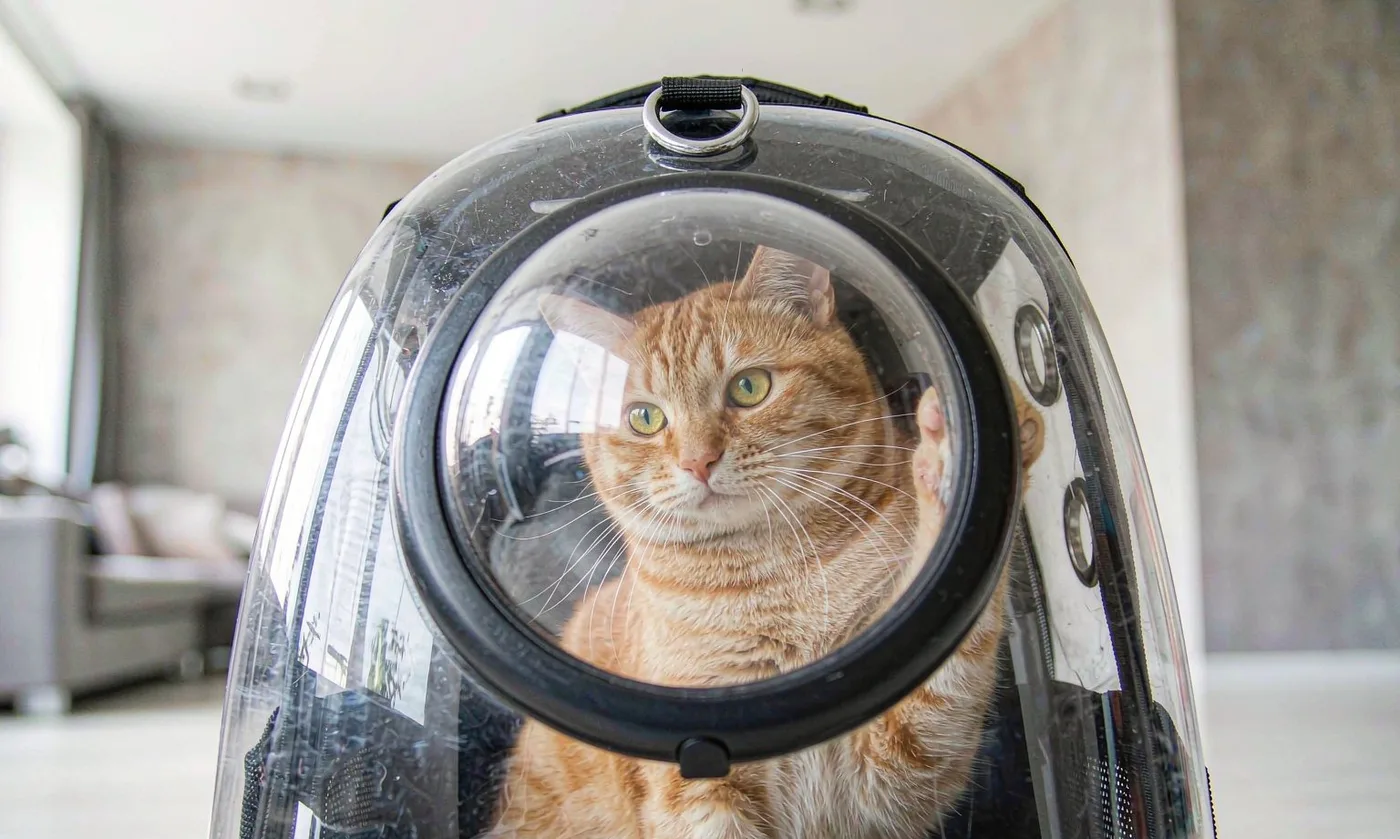
Feline ventilation requirements are modest in absolute terms and awkward in placement. A 4-6 kg cat generates less metabolic heat than a dog of the same mass and grooms efficiently, so the open-area target for the cat side of the envelope is 20-25%, against 30-35% for the large-dog class. The awkward part is that cats use ventilation panels as purchase points for escaping, so every square centimetre of open area is also a square centimetre of containment risk.
The resolution is a two-layer opening: a heavy monofilament mesh panel for airflow, plus a closable opaque flap over it. With the flap open the carrier ventilates; with it closed the carrier becomes a dark, enclosed den. Both states are useful and cat owners use both deliberately, which is why the flap should be operable from outside without opening the main closure.
Visual environment matters more for cats than for dogs and is an engineering parameter, not a soft one. Cats settle better with a sightline blocked on three sides and a small viewing aperture rather than with all-round visibility. The practical specification is an opaque shell on three faces, a mesh or clear panel on one face of 20-25% of that face's area, and a flap that can close it entirely. A carrier with mesh on all four faces is a carrier most cats will not settle in.
Airflow path follows the same rule as any other class: a low intake and a high exhaust, exploiting the stack effect, with the two areas within 20% of each other. At this size the absolute airflow is small, so a 30-40 mm gap at the base of the door panel plus a high rear panel is sufficient, and the flap over the rear panel should close from outside.
Transport regulation is the last consideration and it is worth stating precisely. Carriers used for air travel are subject to the live-animal requirements published by IATA, and national carriers add their own rules on top; the practical reference for US travellers is maintained by the U.S. Federal Aviation Administration. A dual-use carrier should be dimensioned against those requirements if air travel is a marketed use case, which usually means a smaller external envelope than a dog-only design of the same interior volume.
Floor, Litter and Cleanability Requirements
The floor of a dual-use carrier does more work than in a dog-only design, because cats use it differently and because feline accidents are more frequent and more penetrating. Three requirements follow: a flat, firm, non-slip surface; liquid containment; and a cleanable construction throughout.
Flatness matters because a cat lies on the floor rather than sitting against a wall. A floor that sags into a hammock — which is what happens when the base board is too thin for the span — is uncomfortable and unstable, and a cat will shift constantly in it. Board thickness of 3.0-4.0 mm for a span of 400-500 mm holds deflection under a 9 kg load to less than 5 mm, against 1.5-2.0 mm for a small-dog-only design where the animal weighs less and sits differently.
Non-slip performance is specified at a coefficient of friction above 0.55 verified at 30 degrees, and the surface should be a moulded EVA tray or a textured PU-coated panel rather than a fabric. Fabric floors snag claws, absorb liquid and cannot be adequately cleaned, which fails all three requirements at once. Where a removable absorbent layer is used, it should be a quilted item with a hydrophobic backing that can be pulled out without disturbing the tray.
Liquid containment is the requirement that separates a cat-capable floor from a dog floor. A moulded tray with a 15-25 mm upstand and sealed corners contains an episode; a sewn textile floor does not, and liquid reaching the base seam will wick into the board sleeve and stay there. Where weight and packability rule out a moulded tray, the alternative is a welded-seam coated floor with a perimeter upstand formed by high-frequency welding, which adds 0.40-0.90 USD and keeps the carrier foldable.
Cleanability is tested rather than assumed. The floor is soiled with a standard soil, cleaned with a damp cloth and a diluted biocide, and assessed for residual staining at grade 4 or better, with a second cycle after 24 hours to check for odour. Disinfectant compatibility over 50 wipe cycles is run on the tray material, because cats are more sensitive to residual biocide odour than dogs and an owner who can smell the cleaner will not put the animal back in.
Testing Protocol for Dual-Species Release
Dual-species release runs the small-dog protocol with three additions and one substitution. The additions are a claw snag test, a loaded gap probe, and a slider lock test. The substitution is a species-specific fit check using a shaped load for each animal rather than a single generic mass.
The claw snag test is described in the material section: a 1.5-2.0 mm radius tip at 60 N normal force, 150 mm stroke, 50 repetitions in two directions, at every location within 300 mm of the floor. Acceptance is no yarn pull-out beyond 2 mm and no hole. Locations are listed in the test plan because the reachable set changes with every design.
The loaded gap probe is the escape test that matters. A 100 N outward load is applied from inside the compartment — by an inflatable bladder or a shaped former — while the 6-8 mm probe is applied at every closure and junction. Acceptance is that the probe does not pass at any point while the carrier is loaded. Testing unloaded is the most common reason a product passes development and fails in a customer's living room.
The slider lock test applies 90 N in the opening direction to every slider with acceptance of no movement, run after 3,000 open-close cycles so that the detent is tested in its worn state rather than new. A locking slider that holds when new and slips after cycling is a real and common finding.
Structural testing is unchanged from the small-dog class: 4x rated load for 24 hours, 300 mm drops in base and corner orientations, and 5,000 loaded zipper cycles. Fit checking is run with two shaped formers — one at the cat proportion, one at the dog proportion — verifying interior length, floor area and shoulder clearance against the derived dimensions for each.
Conditioning and method references follow practice published by ASTM International, with species handling and welfare guidance cross-checked against material from the American Veterinary Medical Association. Every report records measured values, so that drift across production lots is visible.
Cost, MOQ and Programme Planning for Dual-Use SKUs
Dual-use engineering adds cost in four places: locking sliders and storm flaps at 0.60-1.30 USD, heavier monofilament mesh and coated panels at 0.50-1.10 USD, a moulded or welded-seam floor at 0.80-2.00 USD, and the adjustable liner that reconciles the two fit envelopes at 0.40-0.90 USD. Total increment is 2.30-5.30 USD against a dog-only design of the same size, which on a 12-18 USD base is a meaningful move but still far less than running two separate SKUs with two tooling sets and two size runs.
The programme argument for dual use is inventory rather than unit cost. One dual-use SKU replaces two single-species SKUs, halving the number of colourways to be held in stock, halving the photography and packaging spend, and concentrating volume so that each colourway clears the 500-piece MOQ more comfortably. For a brand launching a range, that concentration is usually the deciding factor.
The argument against is marketing clarity. A product that fits both species fits each slightly less well than a dedicated design, and some retail channels list by species. The resolution most programmes adopt is a dual-use core structure with species-specific liners and packaging: one shell, one tooling set, two retail presentations. The liner is the cheap part to differentiate and the expensive part to inventory.
Schedule terms are unchanged: MOQ 500 pieces per colourway, prototypes in 6-10 working days, bulk production 35-50 days after approval, final random inspection to AQL 2.5 with the gap probe, slider lock and claw coupons added to the defect list, T/T 30/70 and FOB Xiamen. Moulded trays and any custom liners follow the eight to twelve week tooling path and should be commissioned before the sampling path begins.
One planning caution closes the section: the dual-use decision should be made before the first pattern is cut, not after a dog design is approved and someone asks whether it also works for cats. Retrofitting containment and claw resistance into an approved dog design costs more than specifying them at the start, and the result is usually a compromise that satisfies neither species. Dual use is a specification decision made at quotation, not a marketing decision made at launch.
Order and quality terms
- MOQ 500 pieces per colourway; samples in 6-10 working days
- Bulk production 35-50 days after approval; AQL 2.5 inspection standard
- T/T 30/70 terms, FOB Xiamen, full document set per shipment
People Also Ask
Can one carrier really fit both a cat and a small dog?
Yes, if the shared envelope is 3-9 kg with interior dimensions near 200-260 mm wide, 420-560 mm long and 240-300 mm high. Width is reconciled with a removable liner that trims 30-50 mm for cats, and height with a compressible soft top panel.
Why do cats escape from carriers dogs cannot?
Cats pass their head through any opening that admits the skull and then fold the body through, and they can deform a flexible closure to widen a gap. That is why the limit tightens to 6-8 mm and every closure needs a positive lock.
What mesh resists cat claws?
Monofilament mesh at 380-480 g/m². A monofilament yarn cannot be unravelled once a claw engages it, and the claw tends to slip over the surface rather than catch.
How is claw damage tested?
A claw fixture with a 1.5-2.0 mm radius tip drawn across the panel under 60 N for 150 mm, 50 repetitions in two directions. Martindale abrasion at 12,000 cycles is run in addition, not instead.
How much ventilation does a cat need?
20-25% open area, lower than the dog figure, with a low intake and a high exhaust. Panels double as escape purchase points, so each one needs a closable flap operable from outside.
Should a cat carrier be see-through on all sides?
No. Cats settle better with sightlines blocked on three faces and one viewing aperture of 20-25% of that face. All-round mesh is a configuration most cats will not settle in.
How much does dual-use engineering add to unit cost?
2.30-5.30 USD against a dog-only design of the same size, against the cost of two separate SKUs with two tooling sets and two size runs.
Frequently Asked Questions
How is cat body length measured for sizing?
Nose to the base of the tail, not to the tail tip, running 35-50 cm for the domestic cat. Interior length is then set at 1.15-1.25x that figure, giving 420-560 mm.
Why is floor area more important than height for cats?
Cats spend most of the journey lying flat rather than standing, so floor area is the primary comfort metric. The design trades interior height for length against a dog-only carrier of the same volume.
What load rating covers both species?
12-15 kg covers the whole cat population and the small-dog class, set by the dog rather than the cat. Base board, webbing and hardware are the same parts used in a small-dog carrier, so nothing needs upgrading.
How many probe points are checked on a dual-use design?
Typically 12-18 against 8 on a dog design, covering every seam intersection, both zipper terminations, every hardware passage and every panel junction, because a cat will find the unchecked location.
Why is a storm flap specified over the zipper line?
It removes the gap at the zipper tape and, more importantly, it stops a paw working the slider from inside. A locking slider alone is often insufficient without it.
How is a flexible opening kept from gapping?
A 2.0-3.0 mm stiffener cord or moulded band around the opening perimeter, plus a closure geometry that puts the zipper in tension rather than shear, verified by probing under a 100 N outward load.
What makes a top-loading opening secure?
A 180-degree zip with a locking slider, a stiffened perimeter and a full-width storm flap retained at three or more points, so pushing at one point does not open a gap elsewhere.
Why do coated shells outperform heavier uncoated ones against claws?
The coating fills the interstices between yarns so a claw cannot engage. The trade-off is faster tear propagation once breached, so a coated shell in a dual-use design carries a ripstop grid underneath.
How can material cost be zoned by reach?
Claws reach the lower 250-300 mm of the side panels and the whole floor, so heavy monofilament and coated materials are specified there and lighter materials above, saving 0.30-0.70 USD per unit.
What floor specification suits feline use?
A flat, firm, non-slip moulded EVA tray with a 15-25 mm upstand and sealed corners, or a welded-seam coated floor if the carrier must fold. Fabric floors snag claws, absorb liquid and cannot be cleaned.
How thick should the base board be for a cat?
3.0-4.0 mm for a span of 400-500 mm, holding deflection under a 9 kg load to less than 5 mm. A thinner board sags into a hammock and the animal shifts constantly.
Why is the gap probe run under load?
An animal pushing from inside deforms the opening until the gap exceeds the probe diameter even though nothing has moved. Testing unloaded is why products pass development and fail in the customer's home.
How is slider locking verified over time?
90 N applied in the opening direction after 3,000 open-close cycles, so the detent is tested worn rather than new. Sliders that hold when new and slip after cycling are a common finding.
When should the dual-use decision be made?
Before the first pattern is cut. Retrofitting containment and claw resistance into an approved dog design costs more than specifying them at quotation and usually satisfies neither species.
Talk to QUANZHOU JUNYUAN BAGS about a pet carrier program: MOQ 500 pieces per colourway, samples in 6-10 working days, bulk production in 35-50 days under AQL 2.5 inspection.
Get a free quote Request a sampleKeep reading
- Dog Carrier Backpack for Small Dogs: Compact Design
- Dog Carrier Backpack Mesh: Airflow and Durability
- Dog Carrier Backpack Zippers: YKK vs SBS Comparison
- Dog Carrier Backpack Bottom: Reinforcement Options
- Dog Carrier Backpack for Puppies: Safety Features
- Airline Approved Dog Carrier Backpack: Compliance Requirements