Dog Carrier Backpack for Mastiffs: Giant Breed
A Mastiff-class carrier is a mass-dominant problem rather than a span problem: 55-90 kg over a 900-1050 mm length, giving floor pressures of 45-60 kPa. Specify a ribbed tray or 12 mm board on a load-spreading frame, punch-through resistance at 450 N, a wheeled frame mandatory above 70 kg, and pallet planning against a 145 kg carton limit.
This page separates the mass-driven design case from the span-driven one. A Great Dane is long and comparatively lean; a Mastiff is shorter, wider and dramatically heavier, and the governing criterion changes accordingly. Where the Dane class is limited by bending over length, the Mastiff class is limited by floor pressure, punch-through and the fact that a loaded product above roughly 70 kg cannot be lifted at all and must be moved on wheels. The sections below cover the pressure case, the envelope, floor structure, the frame and load path at giant scale, wheeled configurations, pallet and container planning with weight declaration, test methodology and rig limits, and the cost structure and viability of the programme. Commercial terms follow the standard programme: MOQ 500 pieces per colourway, prototypes in 6-10 working days, bulk production 35-50 days after sample approval, final random inspection to AQL 2.5, T/T 30/70 payment and FOB Xiamen loading.
The difference between one dog carrier factory and another is rarely the stitch count - it is whether the dog carrier backpack pattern survives a 1.5x static load without permanent set.
Mass-Dominant Design: Pressure, Not Span
The distinction between the giant breeds is the first engineering decision, and it is a real one. A Great Dane at 70 kg has a body length of 900-1,100 mm and a comparatively narrow chest; an English Mastiff at 80 kg has a body length of 900-1,050 mm but a chest girth of 110-140 cm against the Dane's 90-120 cm, a broader shoulder, and a substantially larger proportion of its mass in bone and heavy muscle over the forequarters.
The consequence is that the two classes fail differently. The Dane class is governed by bending: a long, relatively slender load over a long span, and the design response is section modulus in the frame and the floor. The Mastiff class is governed by pressure: a shorter, wider, heavier load applied over a smaller floor area, and the design response is pressure distribution and punch-through resistance.
The arithmetic makes it concrete. A 90 kg Mastiff standing puts its mass through four paws with a total contact area of roughly 200 square centimetres, giving a mean floor pressure of 45 kPa, and a lying animal distributes 90 kg over perhaps 0.35 square metres, giving roughly 2.5 kPa. The standing case is therefore eighteen times the lying case, and it is the standing case that specifies the floor. Add a dynamic component — the animal shifting, or the product being set down — and the instantaneous figure reaches 60-75 kPa.
Pressure alone is not the failure mechanism, because 45 kPa is a modest number in absolute terms; a person standing exerts far more. The mechanism is pressure applied through a claw and through a paw pad edge, where the local contact area is a few square millimetres and the local pressure is in the megapascal range. Floor specification in this class is therefore a punch-through and indentation specification rather than a bending specification, and the board is chosen for local resistance as much as for span.
Mass also governs the handling case absolutely. A loaded product at 90 kg of animal plus 8-12 kg of product is 100 kg, which is beyond a safe two-person lift over any distance and beyond a one-person lift entirely. Above roughly 70 kg of animal, a wheeled configuration is not an upgrade, it is the only viable handling method, and the product has to be designed around that from the first sketch.
The Mastiff class is specified around floor pressure, punch-through and wheeled handling; a span-driven design from the Dane class will pass a deflection test and fail a pressure test.
Geometry and Envelope for the 55-90 kg Band
English Mastiffs run 55-90 kg, with males at 70-90 kg and females at 55-70 kg, and Neapolitan and Tibetan Mastiffs sit in similar bands with different proportions. Height at the shoulder is 640-760 mm, body length 900-1,050 mm, chest girth 110-140 cm and chest depth 360-430 mm. The declared envelope for a stock programme is 55-90 kg, with the upper figure treated as a hard limit rather than as a nominal one.
Derived interior dimensions are 600-700 mm wide, 950-1,100 mm long and 680-780 mm high. The width is the distinguishing figure: at 600-700 mm this product is 80-100 mm wider than the Great Dane class and it is at or beyond the practical limit for a vehicle tailgate aperture, which is 620-680 mm clear in most sport utility vehicles and estate cars. Programmes in this class should be sold with a vehicle compatibility statement, because the failure mode in the field is a product that arrives and does not fit the customer's car.
Load rating uses the standard convention: declared 90 kg gives a working load of 135 kg, a proof load of 270 kg and an ultimate of 405 kg, roughly 4.0 kN. The ultimate figure is the one that drives the frame, the wheel assembly and the lift point specification, and it is high enough that catalogued hardware is mostly unusable: the specification moves to fabricated steel brackets and to 50 mm webbing at 22-26 kN with hardware proof-tested above 5.0 kN.
Load distribution is front-biased at 58:42, because a Mastiff carries a large share of its mass in the forequarters and shoulder girdle. That has a specific consequence for a wheeled configuration: the wheel axle has to be positioned forward of the compartment's geometric centre, at 40-44% of length from the front, or the product tips forward onto the wheels when it is set down.
Centre of mass height is lower than the Dane class at roughly 380-430 mm, which helps: the overturning moment at the floor joint is smaller despite the greater mass, and a Mastiff is less likely to stand in a compartment than a Dane because the compartment is a tighter fit. The lateral design case is therefore a shifting or leaning animal at 400-600 N sustained rather than a standing one.
Access is the last geometric constraint and it is severe. A chest girth of 140 cm cannot be admitted through an end opening; the specification is a full-length side opening with a clear width of at least 700 mm, or a two-piece construction in which the entire top and one side unzip and fold away so the animal can be moved in laterally rather than longitudinally.
Floor Structure: Pressure Distribution and Punch-Through
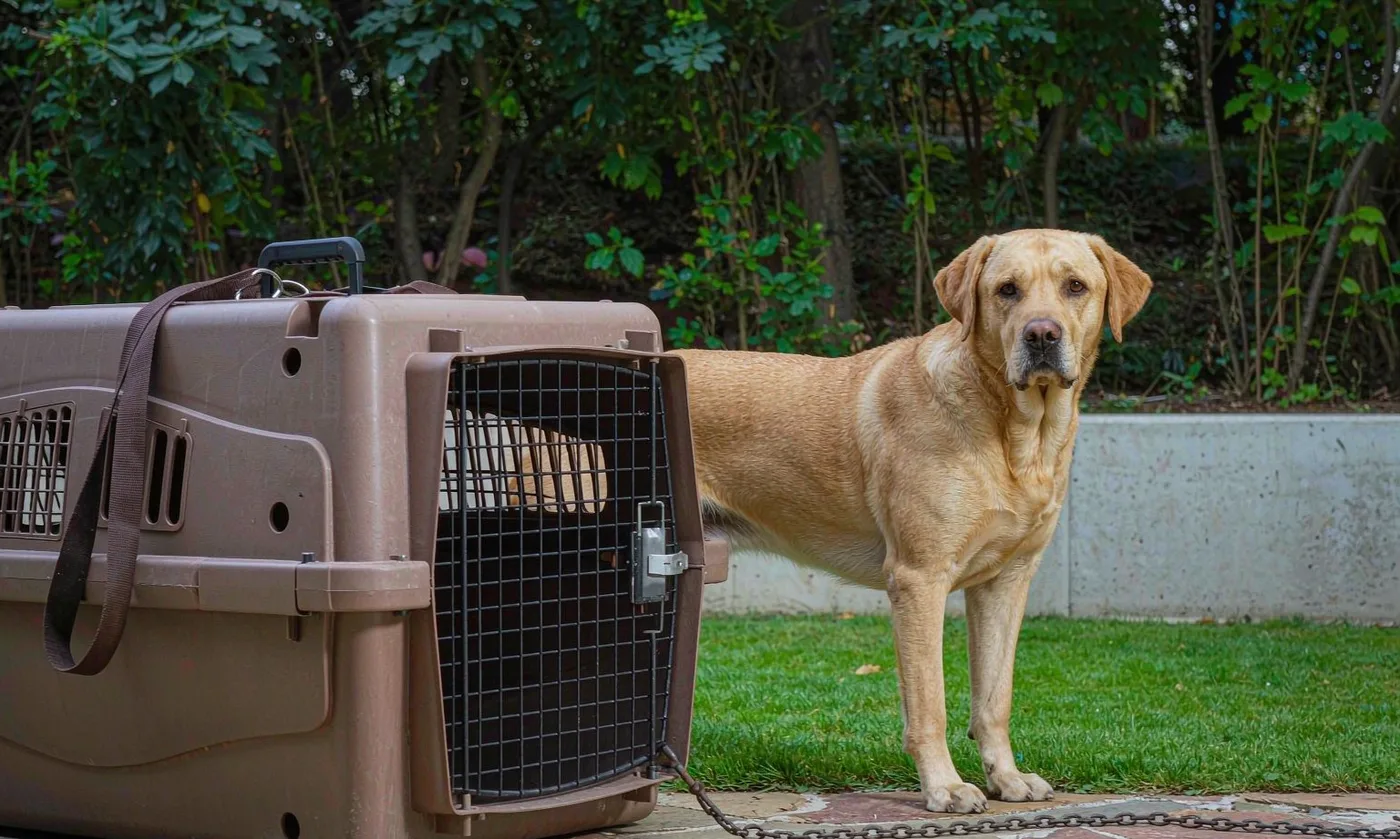
Floor specification at this mass starts from the local contact, not from the span. A hollow-board floor that passes a deflection test will still fail here, because hollow board is a fluted structure: between the flutes it has no material at all, and a paw pad edge or a claw landing between two flutes indents the top skin with nothing behind it.
The specification therefore requires either a solid section or a flute pitch small enough to bridge the contact. A moulded tray with a solid top skin of 2.5-3.5 mm over ribs of 22-26 mm depth on a 45-55 mm pitch is the correct construction, giving a continuous support path under any contact point and a section modulus adequate for the 950-1,100 mm span at the same time. A 12 mm hollow board is acceptable only with a continuous 3 mm closed-cell or EVA interlayer bonded to its top face, which bridges the flutes and costs 1.20-2.40 USD.
Punch-through is tested rather than calculated. A 450 N load through a 6 mm hemispherical indenter, held 60 seconds at twelve locations including two positioned directly over a flute void, with acceptance of no perforation, no delamination of the interlayer and a permanent indent under 1.5 mm. The over-flute locations are the ones that fail, and a test programme that positions indenters only over the ribs will pass a product that fails in the field.
Load spreading into the frame is the second half of the floor problem. A tray that simply sits inside a sleeve transfers its load into the shell, and at 135 kg working the shell will not hold it. The specification is a direct mechanical connection: the tray is bolted to the frame at six points with 30 mm load-spreading washers, and the tray's own perimeter upstand of 35-45 mm is captured in a channel in the frame so lateral movement is impossible.
The mat above the tray does real structural work at this mass. A moulded or bonded mat of 12-16 mm closed-cell foam at 60-90 kg per cubic metre density spreads a paw contact over a larger area and reduces peak indentation by 40-60% in testing. It has to be bonded rather than loose, because a loose mat at this size shifts, bunches and becomes both a pressure concentrator and a trip surface.
| Construction | Punch-through at 450 N | Deflection at 135 kg | Mass (g) | Verdict |
|---|---|---|---|---|
| Moulded tray, 3 mm skin, 22-26 mm rib | Pass, including over-rib and between-rib | 3-4 mm | 1,300-1,900 | Specification of choice |
| 12 mm hollow board plus 3 mm bonded interlayer | Pass with interlayer, fail without | 4-5 mm | 1,500-2,000 | Acceptable below 2,000 units a year |
| 12 mm hollow board, bare | Fail between flutes | 4-5 mm | 1,400-1,800 | Rejected |
| Fabric hammock over frame rails | Fail | 18-25 mm | 600-900 | Rejected |
| 10 mm board carry-over from 40 kg class | Fail | 11-14 mm | 900-1,200 | Rejected |
Liquid containment is a free benefit of the tray at this size and should be taken: a giant breed produces a correspondingly large volume of urine and saliva, and a tray with a 35-45 mm upstand contains 8-14 litres, which is a realistic accident volume for the class.
Frame and Load Path at Giant Scale
At 405 kg ultimate the frame stops being a stiffener and becomes a chassis, and the design method changes accordingly. Deflection is no longer the governing criterion; the governing criteria are local bearing at the joints, buckling of the compression members, and the load path from the floor to the wheels or the handles.
Tube specification moves up: aluminium tube at 22-25 mm outside diameter with a 2.0-2.5 mm wall, or a rectangular section of 25 by 20 mm at 2.0 mm, which gives a much better section modulus in the bending plane for the same mass. A 25 by 20 by 2.0 mm aluminium rectangular section has a section modulus of roughly 1,100 cubic millimetres, which is more than double the 20 mm round tube used in the Dane class and is the right choice where the load is applied over a shorter span but at a higher magnitude.
Joint design dominates the engineering effort. Every corner is a moment connection rather than a pinned one, because a pinned frame at this load racks: the compartment becomes a parallelogram and the floor-to-frame bolts take the whole of the resulting shear. The specification is a welded or a cast corner with a gusset of at least 3 mm thickness, and bolted joints are avoided in the primary load path entirely.
Welding aluminium brings its own requirements. A 6061-T6 tube welded at the corner loses roughly 40-50% of its strength in the heat-affected zone unless it is re-heat-treated, and a production programme that does not want a heat-treatment step should size the joints for the annealed condition. A 6063-T5 section welded with 4043 filler and sized for the annealed figure is the practical answer, and it is why the frame mass at this size is 1.8-2.8 kg rather than the 0.9-1.4 kg of the Dane class.
The load path to the handling system is the part that most designs get wrong. In a wheeled configuration the load runs from the tray bolts into the frame rails, along the rails to the axle brackets, and into the wheels. The axle brackets are the highest-stressed component in the product: a fabricated steel bracket with a 4 mm wall, a bearing area above 1,200 mm² against the frame, and a through-bolt rather than a self-tapping fastener.
Lift points are specified even though the product is wheeled, because it has to be lifted into a vehicle. Eight lift points rather than four — two at each upper corner, one vertical and one horizontal — each rated to 2.0 kN minimum breaking strength with a 1.0 kN proof test, because an uneven lift at 100 kg total puts a transient well above the static share on a single point.
Wheeled and Skid Configurations: Why They Stop Being Optional
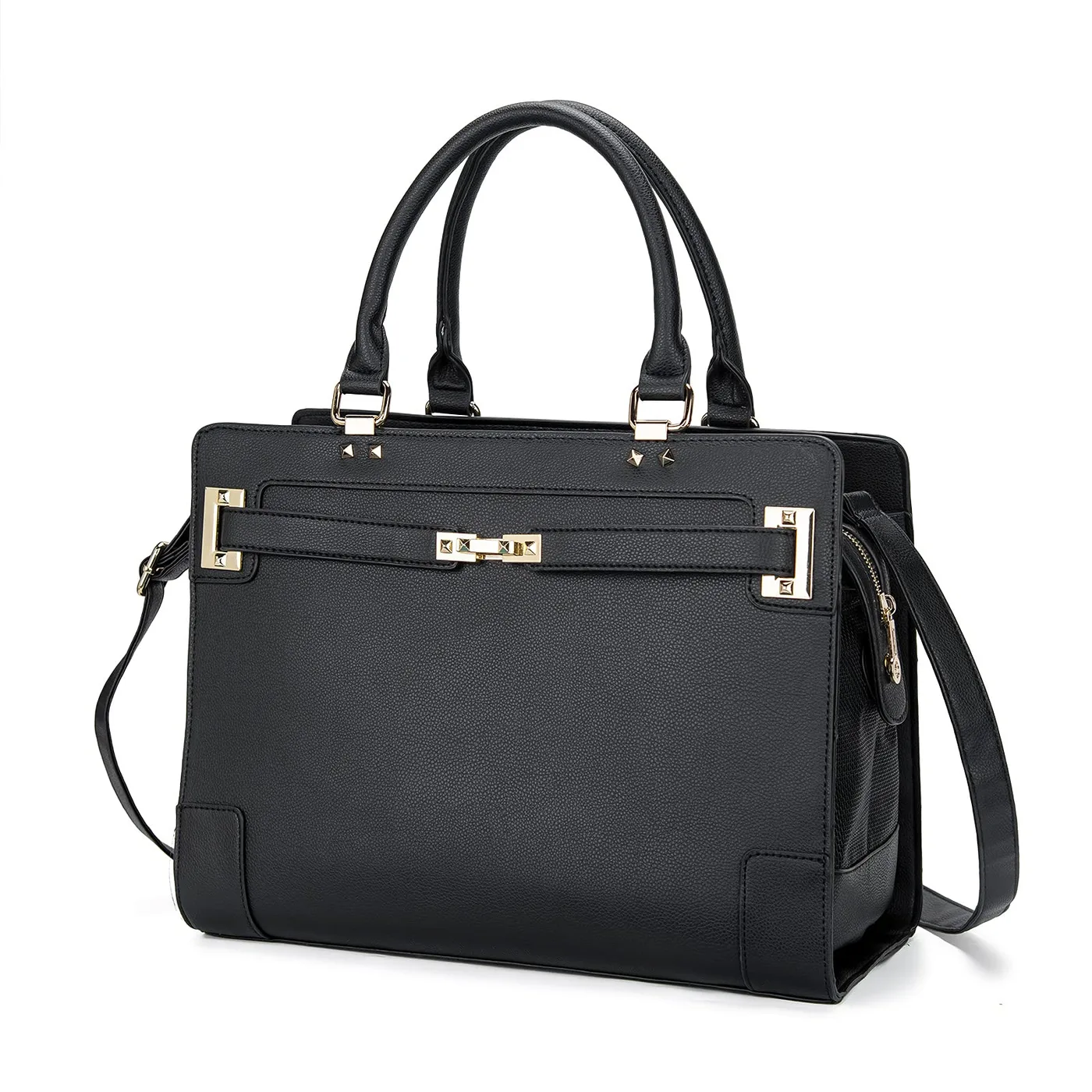
Above roughly 70 kg of animal, wheels are not an accessory. The loaded product is at 100 kg, no user can lift it, and the alternative is dragging, which destroys the product and is unsafe. The wheeled configuration is therefore part of the base specification rather than an option, and it is designed in from the start rather than added.
Two configurations are used. The two-wheel trolley has a pair of wheels at one end, a pull handle at the other, and stands on a skid when parked. It is cheaper at 14.60-24.80 USD, lighter at 1.6-2.6 kg, and manoeuvrable, but it puts 30-40% of the load on the user's arms at the pull handle and it is unstable if the animal shifts. The four-wheel platform has a castor at each corner, is fully supported, and is the specification for any product above 80 kg of animal; it costs 22.40-38.60 USD and adds 2.8-4.4 kg.
Wheel specification is dictated by the surface, not by the catalogue. A 125-150 mm diameter wheel with a 35-45 mm tread width, a sealed deep-groove bearing, and a solid or foam-filled polyurethane tyre is the working configuration. Pneumatic tyres give better ride and cannot be repaired in the field; small hard castors below 100 mm will not roll over a gravel surface or a threshold at this load. Dynamic load rating is 120-150 kg per wheel, which gives a 2.4-3.0 safety factor on a static corner load at 100 kg total with an uneven distribution.
Castor specification matters more than wheel diameter on a four-wheel platform. Two fixed and two swivelling castors give directional stability; four swivelling castors wander. The swivels need a brake, because an unbraked platform on any slope will move with 100 kg on it. And the castor stem — not the wheel — is the part that fails: a 12 mm threaded stem in a 1.5 mm wall tube pulls out, and the specification is a plate-mounted castor with four fasteners into a 3 mm backing plate.
Skid and rail geometry is the parking provision. Two longitudinal rails of 12-18 mm height with a thermoplastic elastomer contact surface keep the fabric off the ground when parked, provide the thermal break needed in cold climates, and give a defined contact patch so the product does not rock. They are specified with a 2.5-3.5 degrees of clearance from the wheel contact plane so the product sits on its rails rather than on three points.
Braking and restraint close the section. A wheeled product with 90 kg of animal inside needs a parking brake on at least two wheels, and a restraint point at each corner so the product can be secured in a vehicle with ratchet straps rated to 1.5 kN each. Vehicle restraint is not optional at this mass; an unrestrained 100 kg object in a moving vehicle is a serious hazard.
Pallet Patterns, Container Loading and Weight Declaration
Freight planning for the giant class is a weight problem where the Dane class is a volume problem. A carton of 1,180 by 700 by 420 millimetres is 0.347 cubic metres and weighs 14-18 kg gross, and at 12 cartons per pallet that is 168-216 kg per pallet, which is past the 145 kg figure most palletised distribution systems handle and past the safe manual handling limit at destination.
The pallet pattern therefore changes. Six cartons per layer and two layers gives 12 cartons and 168-216 kg, which is too heavy; the correct pattern is four cartons per layer and two layers, giving 8 cartons per pallet at 112-144 kg and a stacked height of 1.04 metres including the pallet. A 40-foot high-cube takes 20-22 pallets, or 160-176 cartons, and it is weight-limited against a 26-28 tonne payload ceiling only in the sense that the pallet count is governed by floor area: 20-22 pallets occupies the container floor almost exactly.
Weight declaration is the compliance item that catches programmes out. A declared gross carton weight above 15 kg triggers manual-handling assessment in most European markets, above 23 kg triggers a warning label in the United Kingdom under manual handling guidance, and above 32 kg is treated as a team lift. The declaration should be accurate to within 1 kg and printed on two faces of the carton, because an under-declared weight discovered at destination causes far more disruption than an honest one.
| Parameter | Value | Limit being respected |
|---|---|---|
| Carton dimensions | 1,180 x 700 x 420 mm | 1,200 x 800 pallet footprint |
| Carton volume and gross weight | 0.347 m³, 14-18 kg | Manual handling assessment above 15 kg |
| Cartons per pallet | 8 (4 per layer, 2 layers) | Pallet under 145 kg |
| Pallets per 40-foot high-cube | 20-22 | Container floor area |
| Cartons per container | 160-176 | Floor-area limited |
| Volumetric weight, air | 57.8 kg per carton | Air is 6-8 times sea per unit |
| Sea freight per unit | 9.40-15.60 USD | 9-14% of FOB cost |
Container weight distribution needs one further instruction. A 40-foot high-cube loaded with 22 pallets of dense product puts 3.0-3.4 tonnes into roughly half the container floor, and the payload has to be distributed fore-and-aft rather than loaded from the door inward. Load plans for this class should specify pallet positions by number rather than leaving it to the loading crew.
Destination delivery is the last link and the one most often forgotten in planning. A 1.18 metre carton weighing 16 kg is not deliverable through a parcel network in any major market, so the programme needs a palletised freight forwarder, a tail-lift or a forklift at destination, and a returns process built around a pallet collection rather than a prepaid label.
Test Methodology: Sandbag Ballast, Rig Capacity and Safety Factors
Testing a 90 kg-class product requires decisions that do not arise elsewhere: what the ballast is, whether the rig can take the load, and what safety factor applies when the consequence of failure is a large animal on the floor.
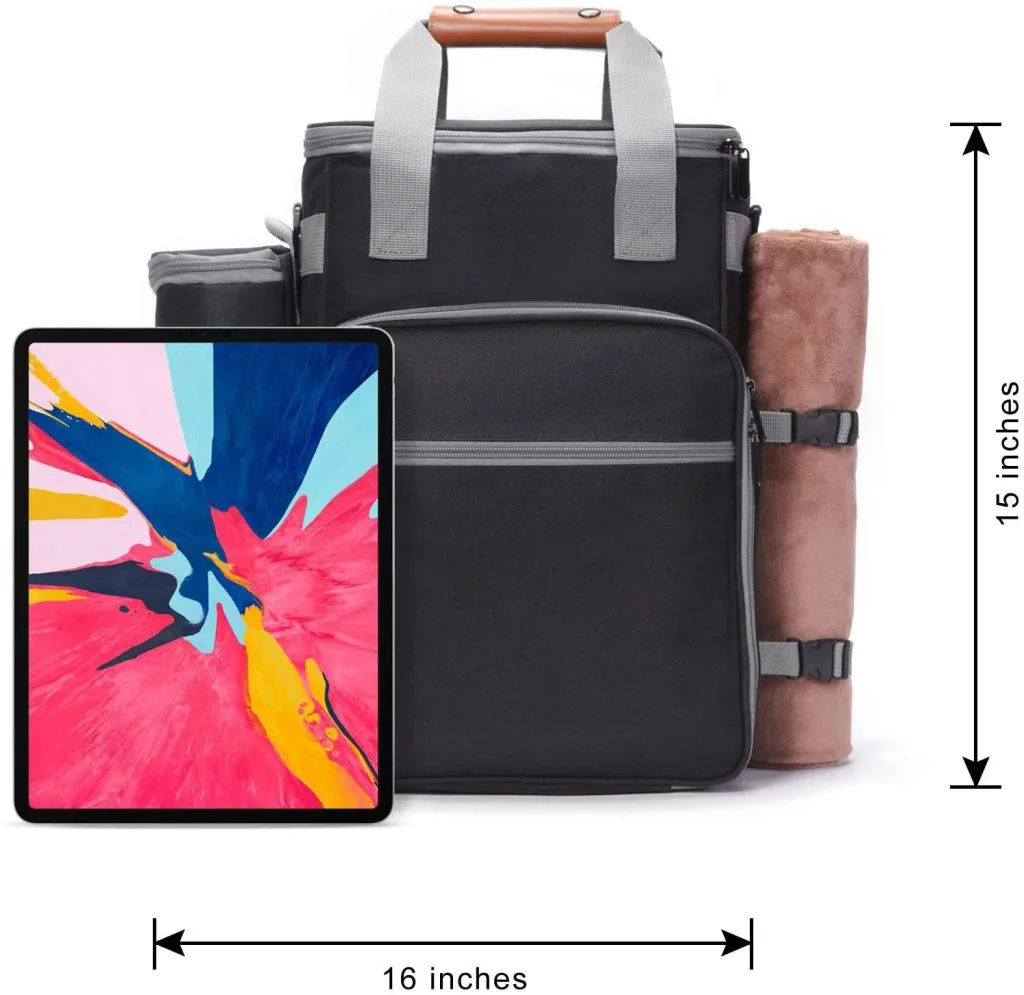
Ballast method is the first decision. Water bladders conform to the floor and reproduce a distributed load well, but at this mass the volume is 135-270 litres, which is a leak risk and a floor-loading risk in the laboratory. Sandbags are the better answer: 25 kg bags of dry sand in a woven polypropylene inner and a sewn outer, placed to reproduce the standing-paw case at four positions with additional bags distributed along the spine. Sand does not conform as well as water, so a 10-15 mm closed-cell interlayer is used between bags and floor to reproduce a paw's compliance.
Rig capacity is the second. A 270 kg proof load plus a 405 kg ultimate test needs a 10 kN frame with a 1,500 mm clear span, and it needs a floor capable of taking it. Most commercial laboratories run to 5 kN, so the ultimate test is frequently performed as a component test on the frame and tray assembly rather than on the complete product, with the complete product tested to proof only. That split should be stated in the test report rather than implied.
Safety factors rise in this class. Webbing is specified at 8-10 times working load rather than the 5-6 used elsewhere, hardware at 4-5 times, and the frame at 2.5-3.0 times on the yield rather than on the ultimate. The reason is consequence: a failure at 90 kg of animal is not a warranty claim, it is an injured animal and an injured handler, and the cost of the extra margin is a few dollars against that.
The wheeled assembly gets its own test regime because it is the handling system. A 500-cycle roll test over a specified course with threshold strips and a 5 mm step, at 135 kg, followed by inspection of the castor stems, the axle brackets and the backing plates. A 1,000-hour static load test at 135 kg on the wheels checks for flat-spotting of the tyre and for creep in the bracket.
Documentation completes the regime, and at this class it is a liability document as much as a quality one. Dated reports with photographs, measured values, ballast configuration, rig identification and the name of the responsible engineer, retained for the life of the style plus five years rather than the two used elsewhere. Independent test-method references from ASTM International and quality-system conformity to ISO 9001 are the two frameworks buyers ask to see documented.
Cost Structure and Programme Viability
Unit cost for a compliant wheeled giant-class build lands at 96-152 USD FOB Xiamen. The chassis and tray are 26.40-44.60 USD, the wheel assembly 22.40-38.60 USD, panels and mesh 16.80-26.40 USD, webbing, handles and hardware 14.60-24.80 USD, lining and mat 6.20-11.40 USD and labour 22.60-34.80 USD. Sea freight adds 9.40-15.60 USD, giving a landed cost before duty of 105-168 USD.
Those numbers put the product at a retail of 340-620 USD, which is a real price point for a veterinary, rescue or working-dog channel and a difficult one for consumer retail. The viable channels are the ones where the product replaces a stretcher, a trolley or a hired transport service, and where the buyer is an organisation rather than an individual.
Tooling is substantial and is the main barrier to entry: pattern development 1,800-3,200 USD, a tray tool of this size 22,000-38,000 USD, frame bending and welding fixtures 8,000-16,000 USD, and castor bracket tooling 5,000-11,000 USD. A full programme is 37,000-68,000 USD and needs roughly 2,200-3,000 units over three years to recover, which is a large share of the total addressable market.
Two cost levers are worth knowing. The tray is the largest single tooling item and can be replaced at low volume by a 12 mm hollow board with a bonded 3 mm interlayer and a fabricated sub-frame, which costs 3.20-6.40 USD more per unit and avoids 22,000-38,000 USD of tooling. And the wheel assembly should be built from catalogued castors with a fabricated bracket rather than from a custom moulded unit, which saves 5,000-11,000 USD of tooling at a cost of 2.80-5.60 USD per unit.
The viability guidance is blunt. Build if the buyer has an institutional channel at 500-900 units a year, if the product is freight-delivered rather than parcel-delivered, and if the range already covers the 25-45 kg grades so that this is the top of a platform rather than a standalone. Decline if the channel is consumer e-commerce, if the forecast is below 400 units a year, or if the buyer is unwilling to handle palletised delivery and returns.
For most buyers who ask, the right answer is the made-to-measure route: a reinforced 45 kg-class platform with a graded-up floor and a bolt-on wheel kit, produced at the standard 500-piece minimum and shipped as a parcel. It covers animals to roughly 65 kg, it is a third of the cost, and it is a product the customer can actually receive.
Production capability
- SGS-verified production space of 4,950 m², 149 machines, 7 assembly lines
- Pet carrier and pet bag output since 2014 from a 137-person team
- 200,000 units shipped monthly under BSCI and ISO 9001 systems
People Also Ask
Why is a Mastiff carrier designed for pressure rather than span?
The breed is shorter, wider and far heavier, so the governing criterion is floor pressure of 45-60 kPa and punch-through at the claw, not bending over length. A span-driven design passes deflection and fails pressure.
What floor construction is correct at 90 kg?
A moulded tray with a 2.5-3.5 mm solid skin over 22-26 mm ribs on a 45-55 mm pitch, or a 12 mm hollow board with a bonded 3 mm interlayer. Bare hollow board fails between the flutes.
Are wheels optional in the giant class?
No. Above roughly 70 kg of animal the loaded product is at 100 kg and cannot be lifted. A four-wheel platform with braked castors is specified above 80 kg of animal.
Why is the axle positioned forward of centre?
Load distribution is front-biased at 58:42, so an axle at the geometric centre lets the product tip forward onto the wheels when set down. The axle sits at 40-44% of length from the front.
How many cartons fit a 40-foot high-cube?
160-176 cartons on 20-22 pallets at 8 cartons per pallet. The pattern is four per layer and two layers to keep the pallet under 145 kg.
What is the alternative for most buyers?
A reinforced 45 kg-class platform with a graded-up floor and a bolt-on wheel kit at the standard 500-piece minimum, covering animals to roughly 65 kg and shipping as a parcel.
Frequently Asked Questions
What interior dimensions suit the Mastiff class?
600-700 mm wide, 950-1,100 mm long and 680-780 mm high, from a body length of 900-1,050 mm, chest girth of 110-140 cm and chest depth of 360-430 mm at 55-90 kg.
What load ratings apply at 90 kg declared?
135 kg working, 270 kg proof and 405 kg ultimate, roughly 4.0 kN, with 50 mm webbing at 22-26 kN, hardware proof-tested above 5.0 kN and fabricated steel brackets rather than catalogued hardware.
Why is a full-length side opening specified?
A chest girth of 140 cm cannot be admitted through an end opening, and the animal cannot be turned inside the compartment. The whole top and one side unzip and fold away so the animal is moved in laterally.
Why are frame corners moment connections?
A pinned frame racks into a parallelogram at this load and the floor-to-frame bolts take the whole of the resulting shear. Welded or cast corners with a 3 mm gusset are specified, with bolts kept out of the primary load path.
Why is welded aluminium sized for the annealed condition?
6061-T6 loses 40-50% of its strength in the heat-affected zone unless re-heat-treated. A production programme without a heat-treatment step sizes joints for the annealed figure, which is why frame mass is 1.8-2.8 kg.
How many lift points are specified?
Eight rather than four: two at each upper corner, one vertical and one horizontal, each rated to 2.0 kN minimum breaking strength with a 1.0 kN proof test, because an uneven lift at 100 kg puts a high transient on a single point.
Which wheel specification is used?
125-150 mm diameter, 35-45 mm tread, sealed deep-groove bearing, solid or foam-filled polyurethane tyre and a dynamic rating of 120-150 kg per wheel. Small hard castors below 100 mm will not cross a threshold at this load.
Why is a plate-mounted castor specified?
The stem is the part that fails. A 12 mm threaded stem pulls out of a 1.5 mm wall tube, so a plate-mounted castor with four fasteners into a 3 mm backing plate is required.
What safety factors apply in the giant class?
Webbing at 8-10 times working load, hardware at 4-5 times and the frame at 2.5-3.0 times on yield. The margin costs a few dollars against the consequence of a failure involving a large animal and a handler.
Why are sandbags used rather than water ballast?
At 135-270 litres, water is a leak and floor-loading risk. Dry sand in 25 kg bags with a closed-cell interlayer reproduces the paw case without the hazard.
Why is the ultimate test split from the product test?
Most commercial laboratories run to 5 kN and the ultimate case needs 10 kN. The frame and tray assembly is tested to ultimate as a component and the complete product to proof, and the split is stated in the report.
What does a compliant wheeled build cost?
96-152 USD FOB Xiamen plus 9.40-15.60 USD sea freight, with the chassis and tray at 26.40-44.60 USD and the wheel assembly at 22.40-38.60 USD, giving a retail of 340-620 USD.
Which tooling can be avoided at low volume?
The tray tool at 22,000-38,000 USD, replaced by a hollow board and fabricated sub-frame at 3.20-6.40 USD more per unit, and custom castor mouldings at 5,000-11,000 USD, replaced by catalogued castors on a fabricated bracket.
Talk to QUANZHOU JUNYUAN BAGS about a pet carrier program: MOQ 500 pieces per colourway, samples in 6-10 working days, bulk production in 35-50 days under AQL 2.5 inspection.
Get a free quote Request a sampleKeep reading
- Dog Carrier Backpack for Great Danes: Extra Large
- Dog Carrier Backpack for Large Dogs: Design Considerations
- Dog Carrier Backpack for Alaskan Malamutes: Heavy Duty
- Dog Carrier Backpack Bottom: Reinforcement Options
- Dog Carrier Backpack Size: Sizing Chart and Specifications
- Dog Carrier Backpack Hardware: Zinc Alloy vs Iron