Dog Carrier Backpack for Vizslas: Hungarian Breed
A Vizsla carrier is specified for an 18-30 kg animal with a 5-10 mm single coat and thin skin, which makes thermal mode switching the governing design problem. The class takes a 340-400 mm interior width, a 5 mm floor board with a 5 mm interface pad, a removable 100-160 g/m² liner with a measured switch-over at 14-16 C ambient, 38-44% open area, and a #8 zipper with a hair-shielded chain.
This page treats a lean pointing breed as a dual-mode thermal problem. The animal has almost no coat and very little subcutaneous fat, so it needs insulation at rest in cool air and maximum airflow under exertion, and a carrier built for either mode alone will fail in the other. The specification below defines the switch-over point, the interface requirements imposed by thin skin, and the closure detailing needed because fine hair migrates into slider mechanisms. Commercial terms follow the standard program: MOQ 500 pieces per colourway, prototypes in 6-10 working days, bulk production in 35-50 days after sample approval, final random inspection at AQL 2.5, T/T 30/70 payment and FOB Xiamen loading. Textile compliance is screened to OEKO-TEX criteria, thermal limits are read against guidance from the American Veterinary Medical Association, and production is executed by our production team at an SGS-verified production base.
The economics of wholesale pet carriers move with carton cubage, so dog carrier backpack programmes are quoted both by unit price and by filled container.
Vizsla Mass, Proportion and the Carry Weight Budget
The Vizsla is a medium-sized pointing breed, lighter and finer than the other gundogs in this set. Males run 20-30 kg and females 18-25 kg, standing 53-64 cm at the withers with a chest depth of 26-32 cm and a body length of 56-66 cm. The frame is square to slightly long, with a deep but narrow chest and a pronounced tuck, so the animal is at once deep-chested and slight in beam.
Derived interior dimensions are 340-400 mm wide, 680-760 mm long and 560-620 mm high. Width is the tightest dimension and is what separates this class from the heavier gundogs: a Vizsla turns around in a narrower compartment than a dog five kilograms heavier, because the rib cage is narrow and the animal is comfortable in a close fit. Height is set by withers minus 40-50 mm of clearance.
Because the animal is light, this is the first class in the set where the handler actually carries the full load for a meaningful distance, and that changes the weight budget. Design mass is 30 kg plus 2 kg of gear at a dynamic factor of 2.2, giving 0.69 kN, which is modest. The consequence is that structural material can be reduced and the saving spent on thermal and interface performance, which is where this breed's real requirements sit.
Empty mass therefore becomes a specification target rather than a result. The target is 2.4-3.2 kg for the mid size, and it is achieved by using a 2.0 mm HDPE perimeter frame instead of aluminium tube, a 5 mm laminated board instead of 6-7 mm, and 600D shell material on the upper panels. The HDPE frame saves 0.4-0.6 kg at a stiffness penalty of about 12%, which is acceptable at this load and is the reason the frame material changes here but not in the 45 kg-plus classes.
Carry geometry follows from the lighter load: the hip belt is narrower at 60-80 mm rather than 100-130 mm, and the shoulder strap spacing is 160-200 mm, which suits a smaller handler frame and is a genuine market consideration for this breed, whose owners skew toward the lighter end of the handler population.
Dual-Mode Thermal System and the Measured Switch-Over
A Vizsla has a short, smooth single coat of 5-10 mm with no undercoat and a thin dermis. The animal radiates heat fast in cool air and overheats fast under work, so a fixed insulation level is wrong in both directions. The specification resolves this with a removable liner and, critically, a defined switch-over point that a buyer can communicate to an end user.
The liner is a quilted shell of 100-160 g/m² needle-punched polyester covering the roof, the rear panel and both side panels, retained by six snap fasteners and a 20 mm perimeter hook-and-loop tape. With the liner fitted, total thermal resistance rises from 0.16-0.24 to 0.42-0.58 m² K/W measured on a guarded hot plate. Removal takes under thirty seconds and the liner packs to 240 x 240 x 90 mm.
The switch-over point was determined by chamber measurement rather than estimated. With a 30 W heat source representing the animal at rest, interior temperature was logged across ambient steps of 8, 12, 16, 20, 24 and 30 C with and without the liner. Without the liner, interior temperature fell more than 4 C below the comfort band below roughly 16 C ambient; with the liner, interior temperature rose more than 4 C above the band above roughly 15 C. The switch-over is therefore stated as 14-16 C ambient for a resting animal, and above 6 C for an active one, because activity roughly doubles the internal heat input.
Those two numbers are the most useful output of the whole development program and are printed on the liner label. They also justify the SKU split: the liner is sold as a separate item rather than bundled, so a warm-market buyer does not pay for a component that will not be used, and a cold-market buyer gets a defined performance figure rather than a marketing claim.
Condensation Control Across the Two Modes
A dual-mode system creates a condensation risk that a single-mode design does not have. In lined mode the inner face of the shell can fall below the dew point of the interior air, so the liner carries a 12 micron vapour-permeable membrane rather than a solid film, with a water vapour transmission rate above 3000 g/m² per 24 hours. In unlined mode the same membrane faces the interior directly and sheds condensate into the floor channels. Both modes were run for four hours at 10 C ambient with the 30 W source, and the maximum accumulated condensate was 18 ml, which the floor mat absorbs without reaching the animal.
Thin Skin, Seam Interface and Chafe Mapping
Thin skin and a near-absent fat layer make this breed unusually sensitive to localised contact, more so than any of the larger gundogs. The load of a lying animal is carried on the tuber coxae, the elbow and the sternum, and with no padding between skin and bone the contact pressure limit has to be set lower than for a heavier breed with more cover.
Measurement uses a capacitive pressure mat of 32 x 32 sensors at 12.5 mm pitch, with a ballasted dummy at the design mass or a cooperative animal. Acceptance is a peak contact pressure under 3.2 kPa at the hip and under 2.6 kPa at the elbow in lateral recumbency, against 4.0 and 3.2 kPa respectively for the heavier athletic classes. Contact area must exceed 55% of the torso projection.
The interface layer that meets this is 5 mm of closed-cell EVA at 60-80 kg/m³, faced with a 4-way stretch knit of 200-260 g/m² and finished with a 25 mm chamfer at the perimeter. A lower-density foam at greater thickness was tested and rejected: at 35 kg/m³ it bottomed out and the peak pressure rose above the limit even at 10 mm.
Seam placement is driven by the same sensitivity. No seam is permitted within 100 mm of a bony prominence, which is a wider exclusion zone than the 80 mm used for heavier breeds, and every interior seam is bound with a 12 mm tape and laid flat. Stitch density is 9-10 stitches per 25 mm in a soft 30 tex polyester, and thread ends are trimmed flush and back-tacked rather than knotted, because a knot at a contact point is enough to raise a local pressure spike above the limit.
Shell and Lining Selection for a Fine, Slightly Oily Coat
The Vizsla coat is short, fine and carries more surface oil than the Weimaraner's, which affects both the lining and the colour specification. Oil transfers readily to textile surfaces and oxidises, producing odour and visible darkening on light linings, so the interior is specified as a wipe-clean surface rather than an absorbent one.
The inner lining is a TPU film of 0.15-0.22 mm welded at the seams, with a contact angle above 90 degrees so oil beads rather than spreading, and a surface energy below 34 mN/m which is the practical threshold for release with a damp cloth. Welding rather than sewing is required here because stitch holes wick oil into the substrate where it cannot be removed.
The shell is 600D polyester at 620-780 g/m² on the upper panels and 900D at 820-1000 g/m² on the lower 250 mm, with a TPU coating at 25-35 g/m². Abrasion acceptance is 18,000 Martindale cycles at 12 kPa on the lower zone and 12,000 elsewhere to ISO 12947-2, which is the lowest figure in the large-dog set and is justified by the low mass and low claw loading of this breed.
Colour is a genuine engineering consideration for this breed because the market expects a rust or golden tone, and those pigments are among the least light-fast in the disperse dye range. Light fastness is specified at grade 4-5 to ISO 105-B02 with no exception, dye selection is restricted to a pre-qualified list, and the fabric carries a UV absorber finish. Rubbing fastness is grade 4-5 dry and grade 4 wet to ISO 105-X12, tested against a white cotton cloth, because oil on the coat acts as a solvent and increases transfer.
Floor, Board, Interior Geometry and the Parameter Set
The floor is a 5 mm laminated board: 1.5 mm EVA over a 2.5 mm PP honeycomb core and a 1 mm skin, with a deflection limit of 3 mm at the centre of a 350 mm span under the 0.69 kN design load. The span is shorter than in the larger classes because the interior is narrower, and the board is supported at four points with a transverse rib at mid-span bonded at 25 mm width.
Frame is 2.0 mm HDPE perimeter with glass-filled nylon corner inserts, joined by two 4 mm aluminium rivets per corner. Corner radius is held above 25 mm. The HDPE frame is the deliberate weight decision described earlier and it also has a thermal benefit: it conducts far less than aluminium, so it does not create a cold bridge at the floor perimeter in lined mode, which was measured at 1.5-2.5 C warmer at the interior corner than an aluminium equivalent.
| Parameter | Vizsla (medium lean) | Weimaraner (large lean) | Heavy companion (35 kg) |
|---|---|---|---|
| Design mass and load | 32 kg, 0.69 kN | 42.5 kg, 0.92 kN | 38 kg, 0.76 kN |
| Interior W x L x H | 340-400 x 680-760 x 560-620 mm | 400-460 x 780-860 x 580-640 mm | 430-480 x 680-760 x 540-600 mm |
| Floor board | 5 mm, mid-span rib | 6 mm plus drain tray | 6-7 mm |
| Frame | 2.0 mm HDPE | 16 mm aluminium tube | 16 mm aluminium tube |
| Interface pad | 5 mm EVA at 60-80 kg/m³ | 4-5 mm moulded EVA | 4 mm EVA |
| Peak pressure limit | 3.2 kPa hip, 2.6 kPa elbow | 4.0 kPa hip, 3.2 kPa elbow | 4.0 kPa hip, 3.2 kPa elbow |
| Seam exclusion zone | 100 mm from prominence | 80 mm | 80 mm |
| Liner | removable 100-160 g/m², switch at 14-16 C | optional 80-120 g/m² | fixed 100-160 g/m² |
| Shell mass | 620-1000 g/m² | 820-1150 g/m² | 780-900 g/m² |
| Empty mass target | 2.4-3.2 kg | 3.4-4.4 kg | 3.2-4.2 kg |
| BOM cost FOB | 17-29 USD | 22-38 USD | 19-31 USD |
Suspension is a 60-80 mm hip belt with a 4 mm EVA core and 160-200 mm strap spacing, and load-lifter straps at a 35-45 degree angle. Because the total carried load is under 35 kg, a full internal frame sheet is not required and the board alone provides the load path, which removes 0.3-0.5 kg.
Closure, Hair Ingress and Slider Protection
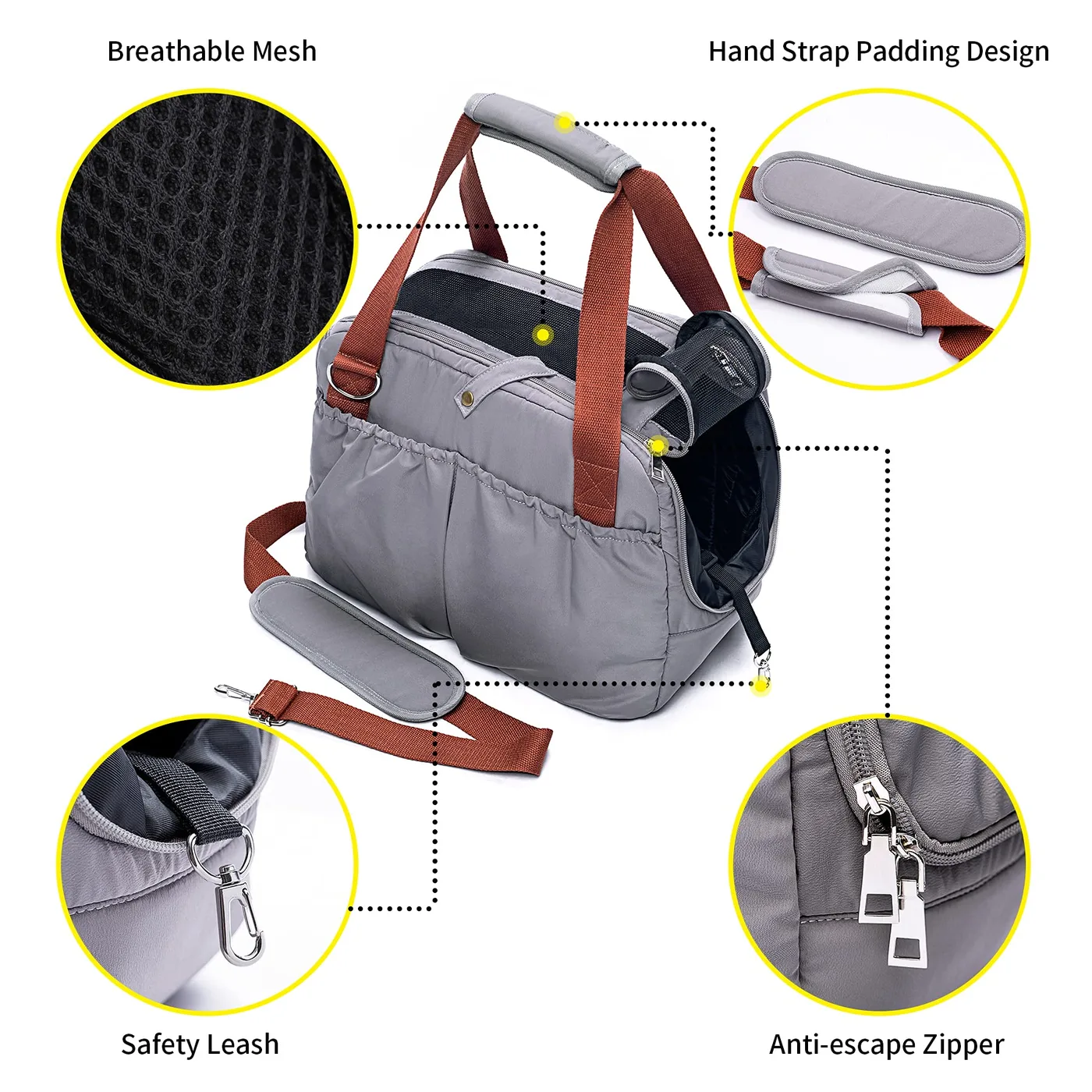
Fine, short hair is the specific hardware problem for this breed. It is short enough to pass a standard welt and stiff enough to pack inside a slider body, where it accumulates with the slider's own lubricant and eventually prevents the locking pawl from seating. The failure is gradual and presents as a slider that appears to lock but releases under load.
The countermeasure is a hair shield over the chain: a 12 mm brush strip of 6 mm pile height bonded along the full length of the chain on the interior side, plus a 20 mm continuous welt with a bound edge. The shield is positioned so the slider passes through the pile on every cycle, which clears accumulated material rather than merely covering it. In cycling tests with 5 g of fine hair introduced at the start, a shielded chain completed 600 cycles with no loss of locking function, against failure at 180-240 cycles on an unshielded control.
The closure itself is a #8 reverse-coil chain with two sliders, one lockable, chain cross-wise strength above 700 N and slider pull-off above 600 N, tested to the zipper method published by ASTM International. Slider force is specified between 10 and 22 N, slightly lower than the heavier classes because the escape risk from this breed is lower and handler convenience is worth more here.
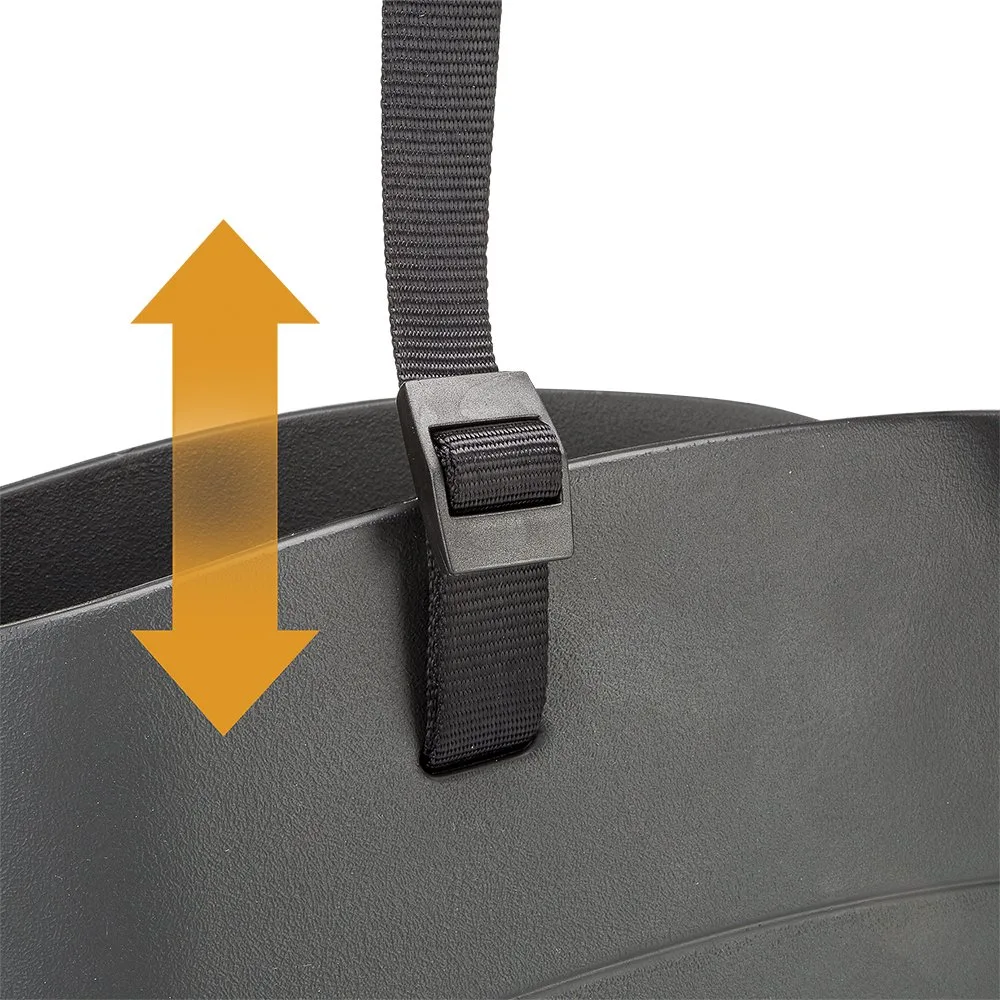
Secondary containment is a 15 mm webbing strap with a two-action buckle rated at 2 kN, anchored to the frame. Interior restraint is a 15 mm tether with a 600 N snap hook anchored at 380-450 mm above the floor, load-spread over 50 x 50 mm. Both are rated well above the loads a 30 kg animal generates and exist to prevent an opportunistic exit rather than a forced one.
Ventilation Architecture and Open Area
Open area for this class is 38-44%, achieved across the door and the two side panels with a high-level exhaust at the rear upper panel. Permeability of the finished panel is above 1100 l/m²/s at 100 Pa, and the mesh is a monofilament at 0.40-0.50 mm filament with a 1.4-1.8 mm aperture, which is a lighter filament than the Weimaraner specification because claw loads are lower and airflow is the priority.
Because the liner covers the side panels in cold mode, the ventilation path is arranged so it is not blocked by the liner. The liner stops 60 mm short of the intake panel on each side and is retained with a 20 mm gap at the roof line, so the stack path from low intake to high exhaust stays open in both modes. This detail is the reason the liner delivers 0.42-0.58 m² K/W rather than the higher figure its nominal weight would suggest, and it is a deliberate trade.
Weather protection is a deployable coated flap of 200-260 g/m² covering up to 60% of the intake, retained by three 20 mm hook-and-loop tabs, reducing open area to 16-20% during a shower. The flap is stowed in a 150 mm pocket at the rear.
Chamber acceptance is an interior rise under 3 C at 24 C ambient in unlined mode and under 5 C at 8 C ambient in lined mode, logged over one hour with a 30 W source, plus no interior contact surface above 46 C, which is set below the 48 C used for heavier breeds because of the thinner skin.
Verification Protocol: Seam Slippage, Zipper Reciprocation, Static Load and Drop
Qualification uses the standard four mechanical tests at loads derived from the 0.69 kN design figure, plus a pressure map, a thermal acceptance in both modes and a hair-ingress cycle. Sampling is three units per size per colourway from the first lot and one unit per 5,000 pieces thereafter.
Seam slippage runs to ISO 13936-2 with acceptance under 6 mm opening at 110 N on shell seams and under 4 mm at 130 N on board-retaining seams. Welds on the TPU lining are peel-tested at 30 N per 25 mm after seven days at 70 C and 95% relative humidity, which is the hydrolysis check carried across the whole set.
Zipper reciprocation follows the ASTM method at 600 cycles for the main opening and 200 for the access port, at 10 cycles per minute with a 1.5 kg lateral load. The hair-ingress variant introduces 5 g of fine hair at the start and requires full locking function at the end of 600 cycles, which is a pass or fail criterion rather than a measurement.
Static load is a 24-hour proof at 1.5 times design mass, 48 kg, hung by the suspension with the frame free, accepting permanent deflection under 4 mm, no seam opening above 2 mm, no frame deformation and full zipper function. A lateral variant applies 0.14 kN at mid-panel height with an acceptance of under 5 mm displacement.
Drop testing is a six-face sequence from 320 mm onto concrete with a 32 kg water ballast in an ISTA-style protocol, accepting no rupture in a load-bearing seam, no frame fracture at the HDPE corners, no buckle release and full zipper function. Because the HDPE frame is the light-weighting decision, the corner joints are separately cycled 500 times at 0.14 kN lateral with no measurable looseness.
Cost Bands, Tooling and Production Scheduling
Unit cost lands at 17-29 USD FOB Xiamen. Shell and cutting account for 6-10 USD, frame and board 4-8 USD, hardware 4-7 USD, the liner and interface package 3-6 USD, and closing labour 3-6 USD. The removable liner is the largest optional element at 2.20-3.80 USD and is quoted separately, so the base unit can be bought at 15-25 USD in warm markets.
Tooling is the lowest in the set. Profiling dies run 900-1,900 USD per size, sewing and welding jigs 800-1,500 USD, and print set-up 300-700 USD per colourway, giving a three-size program under 9,500 USD. No moulded parts are needed, and the HDPE frame is cut and riveted rather than bent, so there is no tube-bending jig.
Cutting efficiency is the best in the set at 87-92%, because all panels fit comfortably on a 1,500 mm table and the narrow width allows two-up nesting on the side panels. This is a real cost advantage: the shell line for this class runs 8-14% below the equivalent large-breed figure per unit of interior volume.
Timing follows the standard cycle. Prototypes are delivered in 6-10 working days from confirmed specification, covering patterning, first-cut samples and a fit check. Bulk production runs 35-50 days after sample approval, with fabric lead time the variable; a custom rust tone requires lab-dip approval, which adds 8-14 days before bulk cutting and is the single most common cause of schedule slip in this class. Final random inspection is to AQL 2.5 under general inspection level II, payment is T/T 30/70 and loading is FOB Xiamen. Monthly capacity across the network is 200,000 pieces, and this class uses roughly 4-6% of a line per 10,000 units.
Order and quality terms
- MOQ 500 pieces per colourway; samples in 6-10 working days
- Bulk production 35-50 days after approval; AQL 2.5 inspection standard
- T/T 30/70 terms, FOB Xiamen, full document set per shipment
People Also Ask
At what temperature should the liner be fitted or removed?
14-16 C ambient for a resting animal and above 6 C for an active one. The figures come from chamber measurement across ambient steps of 8 to 30 C with a 30 W source, defining where interior temperature leaves the comfort band by more than 4 C.
Why is the pressure limit lower for this breed than for larger gundogs?
Thin skin and almost no subcutaneous fat put bone close to the contact surface. The limit is 3.2 kPa at the hip and 2.6 kPa at the elbow, against 4.0 and 3.2 kPa for heavier athletic breeds.
What stops fine hair from jamming the zipper slider?
A 12 mm brush strip of 6 mm pile bonded along the chain so the slider passes through the pile on every cycle, clearing material rather than just covering it. With 5 g of hair introduced at the start, a shielded chain completed 600 cycles against failure at 180-240 unshielded.
How heavy is the finished carrier?
2.4-3.2 kg empty for the mid size. That figure is a design target achieved by a 2.0 mm HDPE frame instead of aluminium tube, a 5 mm board and 600D upper panels, and it is the first class where the handler carries the whole load for distance.
Why is the interior surface welded film rather than fabric?
The coat carries surface oil that transfers and oxidises on absorbent linings. A TPU film of 0.15-0.22 mm with a contact angle above 90 degrees beads oil and releases with a damp cloth, and welding avoids the stitch holes that wick oil into the substrate.
Does the liner block the ventilation path?
No. It stops 60 mm short of each intake panel and leaves a 20 mm gap at the roof line, so the stack path from low intake to high exhaust stays open in both modes. That is why the liner delivers 0.42-0.58 rather than the figure its weight alone implies.
What is the empty-mass and cost advantage of the smaller size?
Nesting reaches 87-92% because all panels fit a 1,500 mm table with two-up nesting on the side panels, putting the shell line 8-14% below the large-breed figure per unit of interior volume.
Frequently Asked Questions
What interior dimensions suit a 30 kg Vizsla?
340-400 mm wide, 680-760 mm long and 560-620 mm high. Width is the tightest dimension because the rib cage is narrow and the animal tolerates a close fit; height is withers minus 40-50 mm of clearance.
Why is the frame changed to HDPE at this size?
Weight. A 2.0 mm HDPE perimeter saves 0.4-0.6 kg against aluminium tube at a stiffness penalty of about 12%, which is acceptable at a 0.69 kN design load. It also removes a cold bridge, measuring 1.5-2.5 C warmer at the interior corner.
How is thermal resistance of the liner measured?
On a guarded hot plate, with the assembly rising from 0.16-0.24 to 0.42-0.58 m² K/W when the liner is fitted. Removal takes under thirty seconds and the liner packs to 240 x 240 x 90 mm.
Why is the contact surface limit set at 46 C rather than 48 C?
Because the dermis is thin and the coat is 5-10 mm, the animal has less protection against a warm surface than a heavier breed. The limit is lowered accordingly and applies to every interior face in both thermal modes.
What condensation control is used?
A 12 micron vapour-permeable membrane in the liner with a transmission rate above 3000 g/m² per 24 hours. Over four hours at 10 C with a 30 W source, maximum accumulated condensate was 18 ml, absorbed by the floor mat.
Why are thread ends back-tacked rather than knotted?
A knot at a contact point is enough to raise a local pressure spike above the 2.6 kPa elbow limit on a thin-skinned animal. Ends are trimmed flush and back-tacked, and every interior seam within 100 mm of a prominence is bound flat.
What foam density is required in the interface pad?
60-80 kg/m³ at 5 mm thickness. A 35 kg/m³ foam was tested at 10 mm and rejected because it bottomed out and the peak pressure rose above the limit, so density rather than thickness is the controlling variable.
How is the rust colourway handled for light fastness?
Grade 4-5 to ISO 105-B02 with no exception, restricted to a pre-qualified dye list, plus a UV absorber finish. Rust and golden pigments are among the least light-fast in the disperse range.
What is the zipper cycle acceptance with hair present?
600 cycles with 5 g of fine hair introduced at the start, at 10 cycles per minute with a 1.5 kg lateral load, requiring full locking function at the end. It is a pass or fail criterion rather than a measurement.
How are the HDPE corner joints validated?
Glass-filled nylon inserts with two 4 mm aluminium rivets per corner, cycled 500 times at 0.14 kN lateral with no measurable looseness, in addition to the standard drop sequence at 320 mm.
What static proof load applies to this class?
48 kg, being 1.5 times the 32 kg design mass, hung for 24 hours with the frame free. Acceptance is permanent deflection under 4 mm, no seam opening above 2 mm, no frame deformation and full zipper function.
Is a moulded floor tray ever used at this size?
Not normally. The 5 mm laminated board meets the 3 mm deflection limit at a 350 mm span with no tooling beyond profiling dies, whereas a tray would add 8,000-15,000 USD and eight to twelve weeks for no measurable benefit at this load.
What causes schedule slip most often in this class?
Lab-dip approval on custom rust and golden tones, which adds 8-14 days before bulk cutting. It sits outside the 35-50 day production window and is the main reason a program misses its planned ship date.
Can the liner be bought separately from the carrier?
Yes, it is a separate SKU at 2.20-3.80 USD, so a warm-market buyer is not paying for a component that will not be used. The base unit without liner is quoted at 15-25 USD.
Talk to QUANZHOU JUNYUAN BAGS about a pet carrier program: MOQ 500 pieces per colourway, samples in 6-10 working days, bulk production in 35-50 days under AQL 2.5 inspection.
Get a free quote Request a sample