Pet Carrier Clip: Leash Attachment
A leash attachment clip is specified by four numbers: wire section of 3.0-4.5 mm, lateral gate load above 0.9 kN, spring life of 10,000 engagement cycles with closing force retained above 60%, and 48 hours of neutral salt spray rated at grade 8 or better. Opening force sits between 8 N and 18 N so a user can operate it one-handed without the gate drifting open.
The clip is the smallest component in a pet carrier attachment system and the one that decides whether the rest of the engineering matters. Every webbing rating, stitch group and hardware choice upstream is delivered through two mating parts that move, wear, corrode and can be engaged incorrectly by a user who is not paying attention. This page treats the clip as a mechanical assembly: how the spring rate and preload are set and how they decay, why the gate is weaker across its width than along its body, what makes a latch appear closed while resting on the gate, and how material and plating choices play out over a salt spray cycle. It also covers wire section against load rating, the wear point where webbing meets the eye, and the inspection regime that catches a bad lot. Terms are standard: MOQ 500 pieces per colourway, prototypes in 6-10 working days, bulk production 35-50 days after sample approval, final random inspection to AQL 2.5.
In a private label pet carrier brief for pet carrier accessory, the artwork file and the label compliance text are the two items that most often delay a first shipment.
Connector Families: Geometry Decides the Application
Five connector families cover the pet attachment market, and they are not interchangeable. The differences are geometric rather than cosmetic: where the load sits relative to the gate, how much the body can rotate, and whether the gate can be opened by a force applied from inside. Choosing on appearance produces a clip that is strong in the direction nobody loads it.
A spring snap is the volume answer for light loads. The gate is a spring-loaded lever inside the body, the eye sits at the base, and the load path runs along the body rather than across the gate. It is cheap and one-handed, and its weakness is the gate, which typically carries 25-35% of the body rating.
A bolt snap moves the gate to the outside as a sliding sleeve with an internal spring, which raises the cross-gate figure to 30-40% and gives a cleaner exterior. A twist-lock carabiner puts the load on a symmetric oval with a threaded sleeve, reaching 45-58% across the gate and the highest rating in the family, at two to four times the cost.
| Family | Wire section | Body rating | Cross-gate rating | Gate share | Opening force | Cost (USD) | Suits |
|---|---|---|---|---|---|---|---|
| Spring snap | 3.0-3.5 mm | 1.8-2.4 kN | 0.5-0.8 kN | 25-35% | 8-14 N | 0.12-0.30 | Under 10 kg |
| Bolt snap | 3.5-4.0 mm | 2.9-4.6 kN | 0.9-1.6 kN | 30-40% | 10-18 N | 0.22-0.52 | 10-30 kg |
| Trigger snap | 2.6-3.2 mm | 1.2-1.8 kN | 0.3-0.5 kN | 22-30% | 6-11 N | 0.10-0.24 | Decoration only |
| Twist-lock carabiner | 4.0-4.5 mm | 4.2-5.8 kN | 2.0-2.9 kN | 45-58% | 12-22 N plus twist | 0.62-1.35 | Above 25 kg, safety |
| Flat-side release buckle | n/a | 2.4-3.8 kN | 1.3-2.2 kN | 50-58% | 18-34 N | 0.18-0.46 | Direct harness mount |
| Swivel-eye snap | 3.5-4.0 mm | 2.6-4.2 kN | 0.8-1.4 kN | 28-36% | 9-16 N | 0.34-0.74 | Rotating loads |
Rotation is the deciding factor between the last two rows. Where the attachment rotates during use, which is most of them, a swivel-eye variant removes the torsion that would otherwise be transmitted into the webbing and eventually into the stitch group. The swivel adds 0.12-0.22 USD and is rated at or above the body so it does not become the weak link.
Sizing the connector to the application is a function of the dynamic load, not the animal mass printed on the packaging. A 10 kg animal moving at 3 m/s and arrested over 0.25 m generates a peak around 1.8 kN, before any amplification. The connector body is therefore specified at two to three times the static animal weight equivalent, which is where the body ratings in the table come from.
Select on cross-gate rating and rotation, not body rating: a spring snap is a 0.5-0.8 kN component however its 2.4 kN body is marketed.
Spring Mechanics: Rate, Preload and Fatigue Life
The gate spring is the part that wears, and it wears in a predictable way: it loses preload. Preload is the force holding the gate closed with no external load applied, and it is what keeps a clip latched through vibration, brushing against furniture and the incidental knocks of normal use. Lose enough of it and the clip opens on its own.
Two numbers specify the spring. Free-length preload sets the closing force, typically 6-14 N at the gate tip on a light clip and 10-20 N on a heavier one. Rate sets how much force the user has to add to open it, typically 4-9 N/mm, which over a 6-10 mm travel gives the 8-18 N opening band in the specification.
Fatigue is measured as retained preload rather than as cycles to fracture, because a clip with a fractured spring is obvious and one with a tired spring is not. Over 10,000 engagements a stainless spring retains 88-94% of preload and a music-wire spring retains 82-90%. Retention below 60% is the rejection threshold, which on the worst case in that band arrives at roughly 22,000-30,000 cycles.
| Spring material | Preload at gate | Rate | Retention at 10,000 | Retention at 20,000 | Cycles to 60% | Cost (USD) | Corrosion |
|---|---|---|---|---|---|---|---|
| Music wire, zinc plated | 8-16 N | 5-8 N/mm | 82-88% | 72-80% | 22,000-28,000 | 0.03-0.07 | Moderate |
| Stainless 302 | 7-14 N | 4-7 N/mm | 90-94% | 84-90% | Above 34,000 | 0.08-0.16 | Excellent |
| Stainless 316 | 7-14 N | 4-7 N/mm | 88-93% | 82-88% | Above 32,000 | 0.11-0.22 | Superior |
| Phosphor bronze | 6-12 N | 4-6 N/mm | 84-90% | 76-84% | 26,000-32,000 | 0.09-0.18 | Good, non-magnetic |
| Leaf form, stainless | 10-20 N | 6-9 N/mm | 86-92% | 78-86% | 24,000-30,000 | 0.06-0.13 | Good |
| Music wire, uncoated | 8-16 N | 5-8 N/mm | 80-86% | 68-76% | 18,000-24,000 | 0.02-0.05 | Poor, excluded |
Corrosion and fatigue interact, and that interaction is why uncoated music wire is excluded from this programme. A spring that has lost 15% of its section to corrosion has lost far more than 15% of its life, because stress rises with the inverse cube of wire diameter in a torsion spring. A 0.8 mm wire corroded to 0.72 mm carries roughly 1.7 times the stress.
Assembly preload is a process variable worth controlling. Springs fitted by hand vary by 12-22% in installed preload; springs fitted on a jig with a measured setting vary by 4-8%. The jig costs 180-520 USD and pays for itself within a single production run through reduced sort and fewer field complaints.
Specify the spring on retained preload after 10,000 cycles at 82% minimum, use stainless for the extra 0.05-0.09 USD, and set preload on a jig rather than by hand.
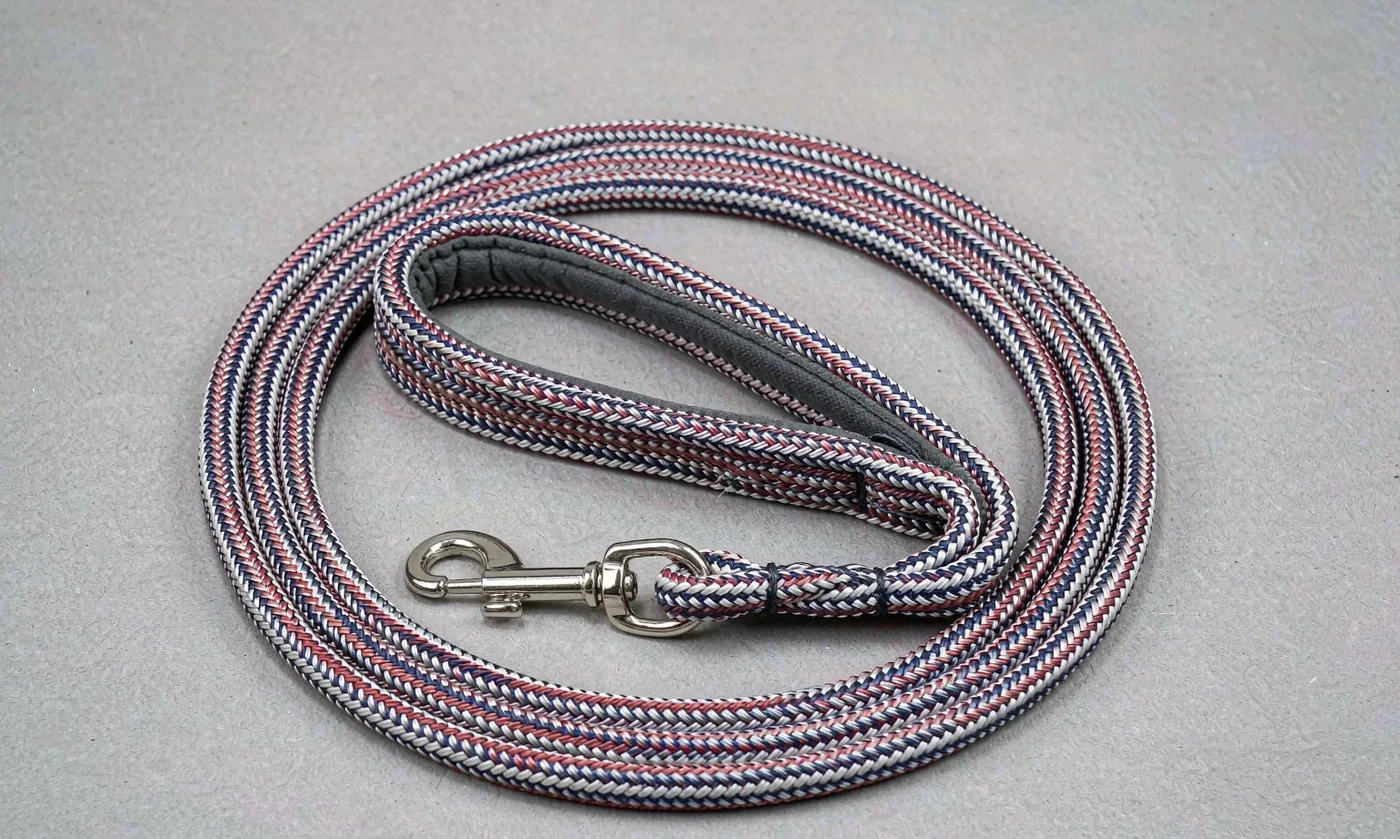
Gate Geometry, False Latch and Opening Force Band
A false latch is the failure mode that injures people and animals, and it is a geometry problem. It occurs when the gate closes against something it should have passed — a webbing edge, a second strap, a D-ring of the wrong section — and appears closed while resting on the obstruction rather than behind it. The clip is then held by spring force alone and releases under load.
Three geometric controls reduce it. Gate throat width sets what can enter: 10-14 mm accepts a single 25 mm webbing folded and a standard D-ring, and will not admit a second webbing. Gate seat depth sets how far the load-bearing part has to travel before it is captive, at 4-7 mm on this product. And the nose-to-body overlap sets how much of the load the body carries once latched, at 2.5-4.5 mm.
Opening force is the user-facing consequence and it has a band rather than a single value. Below 8 N the gate opens too easily and a determined animal or a brushing contact can release it; above 18 N an adult cannot operate it one-handed while holding an animal. The band is verified with a force gauge at the gate tip at the point of maximum leverage.
| Configuration | Throat | Seat depth | Overlap | Opening force | False latch rate | Verdict |
|---|---|---|---|---|---|---|
| Narrow throat, deep seat | 10 mm | 7 mm | 4.5 mm | 14-18 N | 0 of 200 | Preferred |
| Standard throat, standard seat | 12 mm | 5 mm | 3.5 mm | 10-15 N | 1 of 200 | Preferred |
| Wide throat, standard seat | 16 mm | 5 mm | 3.5 mm | 9-14 N | 7 of 200 | Acceptable with instruction |
| Wide throat, shallow seat | 16 mm | 3 mm | 2.0 mm | 7-11 N | 19 of 200 | Rejected |
| Narrow throat, shallow seat | 10 mm | 3 mm | 2.5 mm | 11-16 N | 6 of 200 | Rejected |
| Keel-lock nose | 12 mm | 5 mm | 3.5 mm plus key | 12-18 N | 0 of 200 | Preferred, premium |
The false latch rate is measured, not estimated. Two hundred engagements are performed against the intended mating part plus a deliberately incorrect one, at random approach angles between 0 and 60 degrees, and each is loaded to 0.4 kN to see whether it holds. A configuration showing any release at that load is re-engineered rather than re-instructed.
A keel-lock nose is the premium answer and it costs 0.10-0.24 USD more. The nose carries a small key that has to seat into a recess in the body before the gate can close, which makes a false latch geometrically impossible rather than merely unlikely. On a safety-rated attachment it is the correct choice.
Sharp edges are checked in the same review. A gate tip with a radius under 0.4 mm will catch on webbing and on skin, so the specification calls for a minimum edge radius of 0.5 mm and a deburr pass on every gate. This is verified by touch gauge at incoming inspection on 5% of a lot.
Hold the throat at 10-14 mm, the seat at 4-7 mm, opening force at 8-18 N, and specify a keel-lock nose at 0.10-0.24 USD wherever the attachment is safety-rated.
Material and Plating: Base Metal, Coating and Corrosion Grades
Base metal and coating are separate decisions and they fail in different ways. The base metal sets strength, fatigue life and cost. The coating sets corrosion resistance, appearance and the chemical compliance position, and it is the one that most often fails a test rather than a field.
Zinc alloy die casting is the volume standard, giving complex shapes at 0.16-0.46 USD with a body rating in the 2.4-4.6 kN band. Its limitation is section: a thin casting has porosity, and porosity under plating shows as blistering after a salt spray cycle. Minimum wall section on this product is 1.8 mm, and castings below that are rejected at incoming inspection on a sample radiograph.
Stamped or formed steel is the strength answer at 4.2-6.8 kN and 0.42-0.96 USD, with the penalty of weight and a more limited shape vocabulary. Aluminium is light and attractive but work-hardens at the gate radius and crack-starts there, so it is restricted to decorative or very light-duty attachments in this programme.
| Base | Coating | Thickness | Salt spray | Grade at 48 h | Grade at 96 h | Cost (USD) | Verdict |
|---|---|---|---|---|---|---|---|
| Zinc alloy | Nickel under chrome | 8-12 micron | 48 h | 8-9 | 6-7 | 0.20-0.44 | Standard |
| Zinc alloy | Electrophoretic black | 12-18 micron | 48 h | 9-10 | 8-9 | 0.24-0.52 | Preferred |
| Zinc alloy | Barrel nickel only | 4-6 micron | 48 h | 5-6 | 3-4 | 0.14-0.30 | Fails, excluded |
| Stamped steel | Zinc plate plus passivate | 8-14 micron | 96 h | 9-10 | 8-9 | 0.44-0.92 | Preferred, heavy duty |
| Stamped steel | Nickel under chrome | 10-16 micron | 96 h | 9-10 | 9-10 | 0.52-1.10 | Premium |
| Aluminium | Anodised | 6-12 micron | 48 h | 8-9 | 7-8 | 0.38-0.78 | Light duty only |
Grading is to the standard rating scale where 10 is no change and below 7 shows base metal corrosion, and the acceptance in this programme is grade 8 or better at the stated duration. A lot grading 7 is rejected, and rejection at incoming inspection costs 3-8% of the lot value against a recall that costs orders of magnitude more.
Chemical compliance sits on top of the coating decision. Nickel release under the REACH restriction is limited to 0.5 micrograms per square centimetre per week for items in prolonged contact with skin, and a nickel-plated clip is precisely the item that restriction targets. Testing to EN 1811 costs 70-160 USD per hardware lot and declarations are issued against ECHA guidance, with lead content checked to the 100 ppm limit under the consumer framework administered by the U.S. Consumer Product Safety Commission.
Colour consistency across a plating lot is a quality item that a buyer notices immediately. A clip in gunmetal next to a clip in near-black on the same leash reads as a defect, so every plating lot is measured on a spectrophotometer against the master with acceptance at Delta-E 1.5 or better, and mixed lots are not packed into the same carton.
Specify 8-12 microns minimum, electrophoretic or nickel-under-chrome, accept at grade 8 or better, and measure plating colour at Delta-E 1.5 so mixed lots never reach the same carton.
Wire Section, Weight and Load Rating by Size Block
Wire section is the most direct lever on both strength and weight, and it is the parameter most often quietly reduced to save cost. A clip drawn at 3.2 mm instead of 3.8 mm is 12% lighter and roughly 28% weaker, because bending strength in a formed section rises with the cube of thickness. That trade is invisible on a specification sheet that lists only the material.
Weight matters for a different reason. A clip is carried at the end of a leash or mounted on a harness, and mass at that point swings. A 32 g clip on a 20 mm webbing swings noticeably more than a 14 g one and transmits more to the animal's neck, so the lightest section that meets the rating is the correct choice rather than the heaviest.
Rating by size block resolves the tension. Each block sets a minimum wire section, a minimum body rating and a maximum weight, and a clip is accepted only if it meets all three. The blocks are graded to animal mass with the dynamic amplification from the earlier section applied, so a 30 kg block is rated for a peak far above 30 kg equivalent.
| Block | Animal mass | Min wire section | Min body rating | Min cross-gate | Max weight | Typical family |
|---|---|---|---|---|---|---|
| Mini | Under 4 kg | 2.6 mm | 1.2 kN | 0.30 kN | 9 g | Trigger snap |
| Small | 4-10 kg | 3.0 mm | 1.8 kN | 0.50 kN | 14 g | Spring snap |
| Medium | 10-20 kg | 3.5 mm | 2.9 kN | 0.90 kN | 22 g | Bolt snap |
| Large | 20-32 kg | 4.0 mm | 4.2 kN | 1.40 kN | 34 g | Bolt snap, steel |
| Heavy | 32-50 kg | 4.5 mm | 5.2 kN | 2.00 kN | 48 g | Twist-lock |
| Safety rated | Any | 4.0 mm plus keel lock | 4.6 kN | 2.20 kN | 52 g | Twist-lock carabiner |
Section is verified at incoming inspection rather than taken from the drawing. A calliper check on the wire at three points, on eight units per lot, catches the gradual drift that occurs as a drawing die wears through a long production run. Die wear of 0.15 mm over 200,000 pieces is normal and it is the reason the check exists.
The eye is the transition point and it deserves specific attention. The webbing passes through it, and the radius there sets both the wear rate on the webbing and the local stress in the clip. A radius under 2.5 mm abrades webbing measurably faster; the specification calls for 3.0 mm minimum with a smooth transition and no burr, checked visually at 10x on the incoming sample.
Weight is checked per lot as well, not because the number matters to the function but because it is the fastest proxy for section. A lot whose mean weight has fallen 8% against the golden sample has almost certainly lost section, and the calliper check then confirms it. Weighing 20 units takes under a minute.
Set minimum wire section, minimum rating and maximum weight per block, and use lot weight as the fast proxy that tells you when to reach for the calliper.
Test Protocol: Lateral Load, Cycles, Salt Spray and Drop
Four tests cover the failure modes that matter, and each has a numeric threshold that decides a lot. They are cheap in aggregate — 480-1,180 USD per hardware lot — and they are the reason a clip programme does not generate returns.
Lateral gate load is the first and the one most often omitted. The clip is engaged to the intended mating part and loaded across the gate at 90 degrees to the body axis, at a controlled rate, to the threshold. Acceptance is 0.9 kN minimum for the standard block with no permanent deformation of the gate above 1% of its critical dimension.
Engagement cycling is the second. Ten thousand cycles of full engagement and release against the mating part, with opening force measured at the start and at every 2,500 cycles. Acceptance is a closing force retained at or above 60% of the original, no gate deformation above 1%, and no crack at the gate radius under 10x magnification.
| Test | Condition | Sample | Measured item | Threshold | Cost (USD) | Duration |
|---|---|---|---|---|---|---|
| Lateral gate load | 90 degrees to axis | 5 units | Load at release or yield | 0.9 kN minimum | 90-190 | 1-2 days |
| Axial body load | In line with body | 5 units | Break or yield | 2.9 kN minimum | 80-170 | 1-2 days |
| Engagement cycling | 10,000 cycles | 3 units | Retained closing force | 60% minimum | 140-320 | 4-8 days |
| False-latch screen | 200 engagements, random angle | 1 unit setup | Releases at 0.4 kN | Zero releases | 110-240 | 2-4 days |
| Neutral salt spray | 5% NaCl, 35 C | 3 units | Corrosion grade | Grade 8 at 48 h | 120-260 | 3-5 days |
| Drop impact | 1.5 m onto concrete, 6 faces | 3 units | Function and cracking | Full function, no crack | 60-140 | 1 day |
| Nickel release | EN 1811 | 2 units | Migration | 0.5 ug/cm²/wk | 70-160 | 5-10 days |
| Edge radius check | Touch gauge and 10x | 8 units | Burr and radius | 0.5 mm minimum radius | 20-50 | 1 day |
The drop test is the one that surprises people. A clip that passes every load test can crack at the gate radius if dropped onto a hard floor on its nose, and in a product that gets dropped on pavements that matters. Six drops from 1.5 metres onto concrete, one per orientation, with full function afterwards, is an inexpensive screen for a brittle casting or a work-hardened radius.
Sampling intensity at goods-in is set by risk rather than by convention. A new supplier starts at 32 units per lot across the eight checks; a supplier with twelve consecutive clean lots drops to eight units on the load and cycle checks only. The intensity is reviewed quarterly and it moves in both directions.
Every result is recorded against the lot number and held for 24 months, alongside one retained unit. When a question arrives about a clip from a particular season, the answer is a specific test record rather than a general assurance.
Run all eight checks at 480-1,180 USD per lot, accept lateral gate load at 0.9 kN and corrosion at grade 8, and hold records and a retained unit for 24 months.
Integration with Webbing: Eye Wear, Crimp and Bar-Tack
A clip is only as good as its attachment to the webbing, and the interface is where field failures concentrate. Three methods are used and they behave differently under cyclic load, abrasion and the incidental snagging that happens in use.
A sewn loop through the eye is the standard. The webbing passes through the eye, folds back on itself, and is closed with a bar-tack group. The group has to be sized to the eye: too small and it pulls into the eye and jams; too large and it leaves a loose flap that catches. On a 3.5 mm wire eye the group is 28-36 mm long, sitting 4-8 mm clear of the eye at rest.
A metal crimp is the alternative for a cleaner appearance and a lower profile. A rolled sleeve compressed over the two webbing ends holds by friction and by the mechanical interlock of the crimp profile. Its weakness is that it is a one-shot process with no visual feedback, so every crimp is pull-tested on a sample basis and the crimp tool is calibrated daily.
| Method | Joint strength | Slip at 1.5 kN | Wear at eye | Process control | Cost (USD) | Verdict |
|---|---|---|---|---|---|---|
| Bar-tack through eye | 4.8-6.2 kN | 4-10 mm | Moderate | Visual plus pull test | 0.22-0.44 | Standard |
| Bar-tack with bound end | 5.4-6.8 kN | 2-7 mm | Low | Visual plus pull test | 0.30-0.58 | Preferred |
| Metal crimp sleeve | 3.6-4.9 kN | 1-4 mm | Low | Tool calibration daily | 0.16-0.34 | Acceptable |
| Crimp plus stitch backup | 5.8-7.1 kN | Under 2 mm | Low | Both controls | 0.34-0.66 | Premium |
| Riveted through eye | 2.9-4.2 kN | n/a | High, webbing cut | Torque check | 0.18-0.38 | Excluded |
| Sewn loop without bar-tack | 2.4-3.4 kN | 18-34 mm | High | Visual only | 0.10-0.20 | Excluded |
Wear at the eye is the slow failure. Webbing moving against a metal eye under repeated load abrades, and the abrasion is accelerated by a small eye radius, by a burr, and by grit trapped in the interface. In the accelerated rig used for development — 20,000 cycles at 0.3 kN with a grit challenge — a bound bar-tack end retains 88-94% of its strength against 74-84% for an unbound end.
A protective sleeve at the eye is the cheap mitigation. A short length of webbing or a moulded sleeve over the section that bears on the eye costs 0.06-0.16 USD and moves the wear from the load-bearing yarns to a sacrificial layer. On a product rated above 20 kg animal mass it is standard rather than optional.
Orientation is the last integration point. A clip mounted so that its gate faces the animal's body opens against the body and stays closed; one mounted with the gate outward is exposed to snagging. The assembly drawing specifies gate orientation, and it is one of the items checked on the pre-production sample.
Use a bound bar-tack through the eye at 28-36 mm, add a sacrificial sleeve above 20 kg blocks, and specify gate orientation on the assembly drawing.
Sourcing, Cost and Inspection Planning
Clips are bought rather than made, which changes the nature of the quality problem: the specification and the incoming inspection are the only controls available, and the supplier relationship is the rest. The programme therefore spends its effort on a written specification that leaves no discretion and on an inspection regime that verifies it lot by lot.
The specification has to be complete enough to be enforceable. It states base metal and its grade, coating type and thickness in microns, wire section with tolerance, gate geometry with the three critical dimensions, spring material and preload, opening force band, corrosion grade and duration, and the chemical compliance limits. A specification that omits the coating thickness is not enforceable when the plating fails.
Dual sourcing is worth the cost above about 20,000 units a year. A second qualified tool set costs 900-2,400 USD to commission and it removes the single-point risk that a plating line closure or a material shortage represents. Qualification takes 12-22 working days and repeats the full eight-check protocol.
| Element | Single source, 5,000 | Dual source, 20,000 | Note | Lead time |
|---|---|---|---|---|
| Unit price, medium block | 0.28-0.58 | 0.24-0.50 | Bolt snap, electrophoretic | 18-30 days |
| Tool commissioning | 0-900 | 900-2,400 | Zero if catalogue item | 25-40 days |
| Qualification testing | 480-1,180 | 960-2,360 | Eight checks per source | 12-22 days |
| Incoming inspection | 0.02-0.05 per unit | 0.01-0.03 per unit | Intensity by risk tier | Same day |
| Annual re-qualification | 340-820 | 680-1,640 | Per source | 8-14 days |
| Attachment labour | 0.18-0.36 per unit | 0.15-0.30 per unit | Bar-tack plus sleeve | In line |
| Total per assembled unit | 0.48-0.99 | 0.40-0.83 | Clip plus attachment |
Programme scheduling follows the standard structure with the hardware lead time as the critical path. Clips are ordered at sample approval rather than at bulk start, because an 18-30 day hardware lead against a 35-50 day production window leaves no room for a rejected lot. Sampling takes 6-10 working days and final random inspection runs to AQL 2.5.
Inspection classification puts gate function, corrosion appearance and lateral load into the critical class, and cosmetic variation into the minor class. That distinction matters at AQL 2.5 because a lot with two critical functional defects fails outright while the same lot with two cosmetic marks passes, and without the classification written down both get treated the same way.
Re-qualification is annual per source at 340-820 USD, and it catches the slow drift that a supplier may not even be aware of: a plating bath that has aged, a die that has worn, a spring sub-supplier that has changed. Test methods through the programme are referenced to ASTM International practice, and the production team holds the lot records at the SGS-verified production base for 24 months.
Write a specification complete enough to enforce, order clips at sample approval rather than bulk start, and put gate function in the critical class at AQL 2.5.
Production capability
- SGS-verified production space of 4,950 m², 149 machines, 7 assembly lines
- Pet carrier and pet bag output since 2014 from a 137-person team
- 200,000 units shipped monthly under BSCI and ISO 9001 systems
People Also Ask
Which clip type suits a 20 kg dog?
A bolt snap at 3.5-4.0 mm wire section, 2.9-4.6 kN body rating and 0.9-1.6 kN cross-gate rating, weighing under 22 g. A spring snap is a 0.5-0.8 kN gate component and is not adequate at that mass.
How strong is a clip gate compared with its body?
Typically 25-40% of the body rating, and 45-58% on a twist-lock carabiner. A spring snap rated 2.4 kN along the body holds 0.5-0.8 kN across the gate.
What opening force should a leash clip have?
8-18 N at the gate tip. Below 8 N the gate opens too easily under brushing contact; above 18 N an adult cannot operate it one-handed while holding an animal.
How many engagement cycles should a clip survive?
10,000 full engagements with closing force retained at 60% or better. Stainless springs retain 88-94% at that point; uncoated music wire retains 80-86% and is excluded.
What corrosion grade is required after salt spray?
Grade 8 or better at the stated duration, being 48 hours for zinc alloy and 96 hours for steel. Grade 10 is no change and below 7 shows base metal corrosion.
Why is nickel release tested on clips?
A nickel-plated clip is an item in prolonged skin contact, so the REACH limit of 0.5 micrograms per square centimetre per week applies. Testing to EN 1811 costs 70-160 USD per lot.
How is the webbing attached to a clip?
A bound bar-tack through the eye, 28-36 mm long and sitting 4-8 mm clear of the eye, giving 5.4-6.8 kN joint strength and 2-7 mm of slip at 1.5 kN.
What causes clip failure in the field?
Loss of spring preload, false latch against an obstruction, and webbing wear at the eye. All three are addressed by specification rather than by user instruction.
Frequently Asked Questions
What is a false latch and how often does it happen?
The gate closes against an obstruction rather than behind the load-bearing part, so the clip is held by spring force alone. Measured over 200 randomised engagements, a wide shallow gate shows 19 releases and a keel-lock nose shows none.
What gate dimensions prevent a false latch?
A throat of 10-14 mm that admits one webbing but not two, a seat depth of 4-7 mm, and a nose-to-body overlap of 2.5-4.5 mm.
Why is a keel-lock nose worth the extra cost?
Its key has to seat into a body recess before the gate can close, which makes a false latch geometrically impossible rather than unlikely. It costs 0.10-0.24 USD more.
How does corrosion affect spring life?
Stress in a torsion spring rises with the inverse cube of wire diameter, so a 0.8 mm wire corroded to 0.72 mm carries about 1.7 times the stress and loses far more than 10% of its life.
Why should spring preload be set on a jig?
Hand fitting varies installed preload by 12-22%; a jig with a measured setting varies it by 4-8%. The jig costs 180-520 USD and pays back within one run.
What minimum wall section is required on a zinc casting?
1.8 mm. Thinner castings carry porosity that shows as blistering under plating after a salt spray cycle, and they are rejected on a sample radiograph.
Why is aluminium restricted to light duty?
It work-hardens at the gate radius and crack-starts there. It is attractive and light, but the failure mode is sudden and it is not used on rated attachments here.
How much strength is lost by reducing wire section?
Drawing at 3.2 mm instead of 3.8 mm is 12% lighter and roughly 28% weaker, because bending strength rises with the cube of thickness.
Why is clip weight specified at all?
Mass at the end of a leash swings and transmits more to the animal. The lightest section that meets the rating is correct, which is why each block sets a maximum as well as a minimum.
What eye radius is needed to protect the webbing?
3.0 mm minimum with a smooth transition and no burr, checked at 10x on the incoming sample. Below 2.5 mm the eye abrades webbing measurably faster.
Why is a drop test included in the protocol?
A casting can pass every load test and still crack at the gate radius if dropped nose-first onto a hard floor. Six drops from 1.5 m onto concrete screen for brittleness cheaply.
How is incoming inspection intensity set?
By risk tier: a new supplier starts at 32 units per lot across eight checks, dropping to eight units after twelve consecutive clean lots, reviewed quarterly in both directions.
When should clips be ordered relative to production?
At sample approval rather than at bulk start. An 18-30 day hardware lead against a 35-50 day production window leaves no room to recover from a rejected lot.
What defect class does cosmetic variation fall into?
Minor. Gate function, corrosion appearance and lateral load are critical, so a lot with two functional defects fails while the same lot with two cosmetic marks passes.
Talk to QUANZHOU JUNYUAN BAGS about a pet carrier program: MOQ 500 pieces per colourway, samples in 6-10 working days, bulk production in 35-50 days under AQL 2.5 inspection.
Get a free quote Request a sample