Pet Carrier Travel Food Bag: Storage
A travel food storage bag is engineered as a food-contact article rather than as general luggage: welded rather than sewn seams, an outer shell above 5,000 millimetres water column, a lining screened for migration into food simulants, and a roll-top closure surviving 5,000 cycles, quoted at MOQ 500.
This is the one item in the health-adjacent group where our own engineering touches food contact directly, because the bag is the surface the food sits against. That shifts the technical file from general article compliance into contact-material territory, and it brings three specific disciplines along: screening against migration limits using declared simulants and conditions, construction that can actually be cleaned, and seam integrity that resists both moisture ingress and fines escape. Everything else follows the familiar pattern, with no statement anywhere about what any contents do for an animal. The sections below set out the contact-material position, material selection with cost and performance data, seam and construction choices, closure engineering, capacity grading by volume rather than by ambiguous serving counts, hygiene and cleanability, batch coding and documentation, co-packing with the carrier line, and finally inspection and release. Commercial terms follow the accessory range throughout: MOQ 500 pieces per colourway or print design, prototypes in 6-10 working days, bulk production 35-50 days after sample approval, final random inspection to AQL 2.5, T/T 30/70 and FOB Xiamen.
Choose a pet bag supplier that keeps the pet carrier accessory pattern card on file for at least twelve months, so a repeat order matches the approved sample instead of drifting.
A Storage Bag Is a Food-Contact Article, Not Just a Bag
The distinction sounds academic and has real consequences. An article intended to come into contact with food is assessed against contact-material rules in most jurisdictions, quite apart from the rules that apply to the food itself, and the person placing it on the market carries those obligations.
Practically, that means three things get measured that would not otherwise be measured. The first is migration: how much material transfers from the article into food or into a simulating liquid under stated time and temperature conditions. The second is composition: which substances are present in the polymer, the coating, the colourants and any adhesive layer. The third is containment of what the article is supposed to keep out, since a storage bag that admits moisture or odour is failing at its purpose regardless of what it does to the food.
Our side of that is bounded clearly. We supply the physical article with a composition declaration and with third-party migration reports where the buyer protocol requires them, quoted separately and with lead time added. The buyer supplies the simulants, contact time and temperature appropriate to their intended contents, since those depend on what will be stored and on how the destination expects testing to be run.
It is worth stating what we decline, because the list is short and stable. We do not set temperature limits for storage, we do not state duration limits, and we make no statement about what stored contents remain suitable for. Those belong to whoever markets the food and to their own data.
Two reference sources frame the internal discussion for most buyers. Restriction screening for materials we use is maintained by the European Chemicals Agency, and California substance screening runs against the list published by the Office of Environmental Health Hazard Assessment. Neither replaces destination advice from the importer own counsel.
The commercial upside is straightforward. Programmes that can produce a clean contact-material file move through retailer technical review considerably faster, and that speed is usually worth more than any marginal saving on material.
One further point helps buyers plan the sequence sensibly. Composition declarations can be prepared quickly because they depend only on what we know; migration studies take weeks because they depend on laboratory capacity and on the buyer declared conditions. Starting the second as early as anything is priced therefore removes the longest item from the critical path, which is generally the difference between launching on plan and launching next season.
Material Selection: Coatings, Linings and Weldability
Four material families cover the field, and the choice between them determines weldability, barrier performance, handle and price simultaneously.
Thermoplastic polyurethane coating on a woven polyester base is the performance leader. It gives excellent abrasion resistance, a soft handle that stays flexible in cold conditions, and it welds reliably by radio frequency or by hot air. Its disadvantages are cost and recyclability, since a coated laminate is harder to recover than a mono material.
Polyethylene vinyl acetate sheeting is the value option. It is soft, cheap, food-tolerant in standard grades and weldable, though it creases permanently and performs poorly in high heat. It suits short-lane promotional programmes rather than premium refill systems.
| Material | Key data | Weldability | Relative cost | Typical programme |
|---|---|---|---|---|
| TPU coated woven polyester | Water column above 5,000 mm | Excellent, RF or hot air | 2.6-3.2 | Premium refill systems |
| PEVA sheeting 0.15-0.25 mm | Water column 1,500-3,000 mm | Good, heat seal | 1.0 | Promotional, short lane |
| Mono PE laminate | Water column 3,000-5,000 mm | Good, recyclable | 1.4-1.8 | Sustainability-led lines |
| Silicone coated fabric | Highly flexible, high grip | Poor, needs bonding | 3.0-4.0 | Small collapsible units |
| Nylon with PU inner face | Water column 2,000-4,000 mm | Moderate | 1.6-2.2 | Lightweight travel sets |
Recyclability deserves more attention than it usually gets. Mono-material polyethylene laminates perform less impressively than coated textiles but can be recovered at end of life, and several retailers now prioritise that property over peak barrier numbers. Where sustainability targets are contractual rather than aspirational, this reverses the usual ranking.
Two secondary properties decide field performance more often than barrier does. Abrasion resistance determines how the bag looks after a season in contact with rough surfaces, and cold-flex behaviour determines whether the material stiffens and cracks in winter shipping lanes. Both are cheap to test and expensive to discover.
Colour stability deserves a specific note for this product group, because food-adjacent items get wiped frequently and often live in sunlight. Pigment selection and any print method should be verified against light fastness and against repeated cleaning contact, since fading is one of the few defects a customer notices daily and never stops noticing thereafter.
Seam Engineering: Welded, Sewn and Hybrid Construction
Seams are where a storage bag fails, both by admitting moisture and by trapping residue, so the construction choice deserves more attention than the fabric choice.
High-frequency or hot-air welding produces a continuous joint with no needle holes, which removes both problems in one step. It requires compatible materials as outlined above, it produces a stiffer seam line, and it makes repair essentially impossible, so a weld defect found at inspection means scrap rather than rework.
Sewing is the traditional alternative. It joins almost any combination, it is far more economical in tooling, and it permits the seam taping that many designs rely on. Its weakness is the needle holes themselves, which leak unless sealed, and the thread channel, which carries liquid and residue into places nothing can reach later.
Hybrid construction is what most serious programmes land on. Structural seams are sewn for strength and then taped from the inside with heat-activated tape applied at a controlled temperature and pressure; cosmetic panels are welded where materials allow. Tape application is the critical operation here, because underheated tape looks perfect and releases weeks later.
Two verification methods follow. A water column test on seam samples establishes performance against ingress, and a peel test on taped seams establishes bond strength, with both recorded per production run rather than only per sample. A taped seam that passes on the day it is made has told you nothing about whether it survives humidity.
Finally, design the interior so it can be cleaned: minimum internal corner radius above about 10 millimetres, no raw edges exposed, and an opening wide enough to admit a hand rather than only a scoop. Those three decisions determine whether the bag gets cleaned regularly or abandoned dirty.
Closure Engineering for Storage Duty
Storage closures have a different job from pouch closures. Where a pouch prioritises frequent access, a storage bag prioritises exclusion of air and moisture over weeks, so the ranking of properties changes.
Roll-top closures are dominant for good reason. Folding the top several times creates a long tortuous path that excludes moisture without depending on a mechanical track, and it has almost no failure mode beyond catastrophic tearing. Cycle life commonly exceeds 5,000 operations, and performance degrades gracefully compared with a zipper track losing engagement.
Zipper closures give cleaner aesthetics and quicker access, particularly slider types. They require a defined peel and shear specification and a contamination-free track, exactly as described for treat pouches, with the additional consideration that any food fines in the track will destroy engagement quickly. Many designs therefore add a fabric storm flap covering the zipper, which solves both problems cheaply.
Press-close profiles suit light duty inner bags rather than the outer storage bag. They are cheap and light, they reseal acceptably for short periods, and they should not be relied on where contents are stored for weeks rather than days.
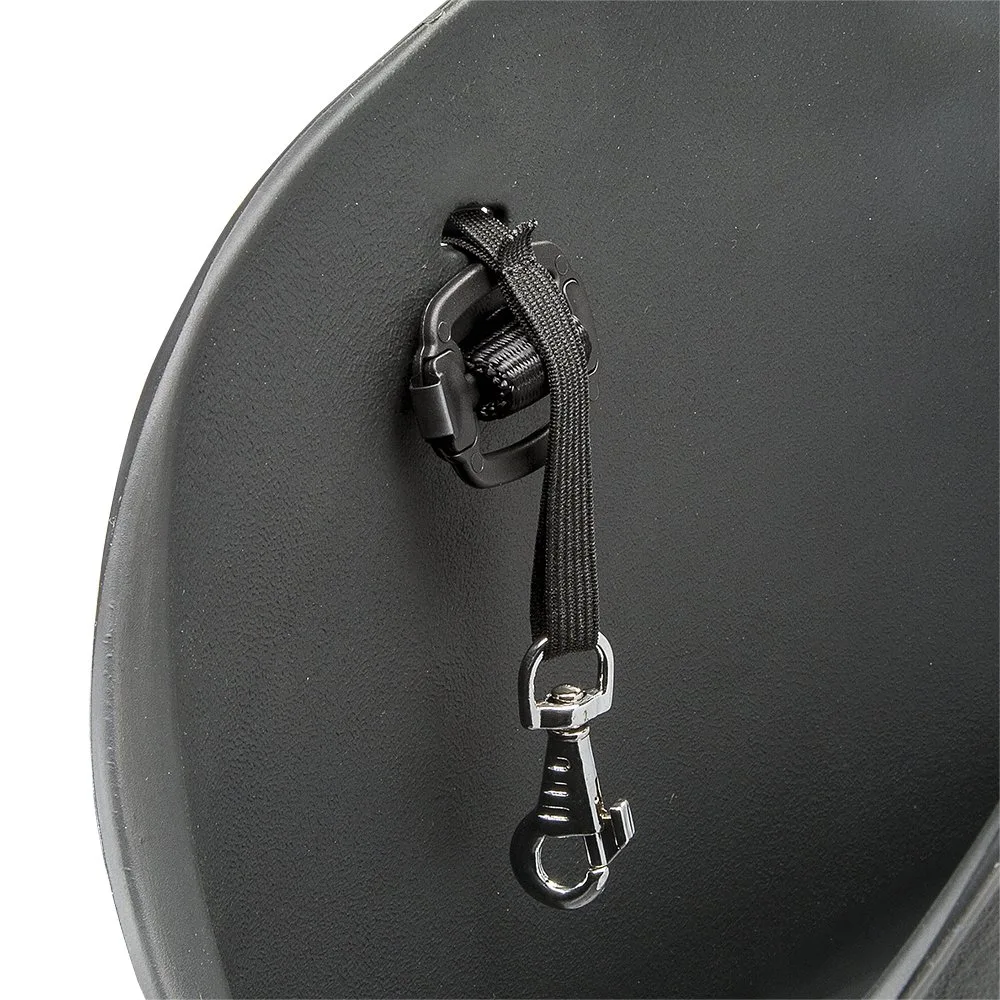
Two closing details matter regardless of type. Hardware such as buckles and clips must be corrosion-resistant, since stored goods and cleaning agents are both aggressive, and any metal component should be specified by grade rather than by description. And every closure should be operable with cold hands, which is a design constraint rather than a comfort issue.
Closure placement deserves its own line because it decides how the bag behaves in use. A side-opening closure lets the bag lie flat and be scooped from without digging, while a top-only opening keeps the folded roll-stack upright and easier to carry. Neither is universally right, so both configurations should be sampled in the same round and judged against how the intended shopper actually fills and empties the unit.
Capacity Grading by Volume Rather Than by Serving
Capacity is the specification customers compare and the specification suppliers most often misstate, mostly because serving-based descriptions depend entirely on contents nobody else controls.
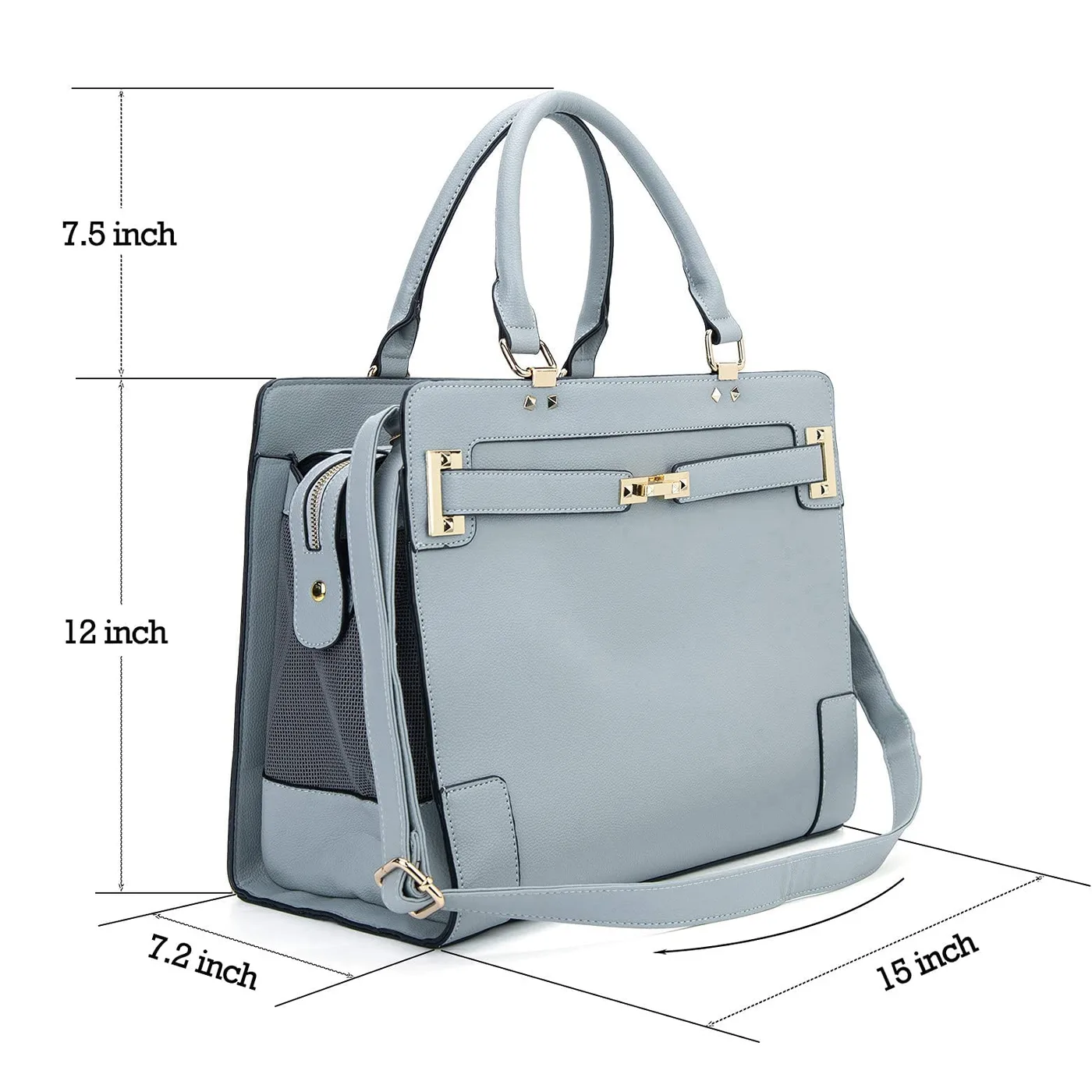
Volume is the honest basis. A litre is a litre regardless of what goes in, it is verifiable with a simple test using calibrated media, and it allows comparison across a range. Standard practice is to state volume filled to a defined closure line rather than brim-full, since the difference can be ten percent or more on a roll-top design.
Mass requires a declared bulk density. Typical dry kibble and dried formats fall somewhere between 300 and 450 grams per litre depending on unit size and shape, which means a five-litre bag holds anywhere between roughly 1.5 and 2.25 kilograms. Any mass figure stated without the assumed density is a guess dressed as a specification, so we either state both figures together or state volume only.
A useful practical conversion for buyers planning ranges is therefore to fix one assumed density across the whole range, publish it in the technical file, and derive all mass figures from it. That way any two products in a range are comparable with each other even if the assumption is not perfect in absolute terms.
Dimensional tolerance matters for production consistency. Cut panels accumulate variance through sewing and taping, so a nominal five-litre bag should carry a tolerance, commonly plus or minus 5 percent, verified by water fill testing at an agreed sample rate. Advertised capacity that falls below stated value is exactly the kind of compliance problem that is trivial to prevent.
Range planning follows naturally from grading by volume. A usable ladder usually steps in roughly two-litre increments across four sizes, giving clear visual separation on shelf while sharing tooling for every non-dimensional component. Shared tooling is where the margin sits, since a closure, buckle and webbing set used across four sizes buys materially better per-unit pricing than four separate specifications.
Hygiene, Cleaning Compatibility and Odour Retention
A bag used repeatedly for food will be cleaned repeatedly, and specifying for that reality prevents a large share of complaints about lingering smell.
Surface chemistry decides most of it. Smooth non-porous surfaces release residue and odour far better than textured ones, so linings should be specified with finish and gloss in mind rather than choosing whatever the base fabric happens to have. High-gloss coatings perform best here and cost no more than matte equivalents in most cases.
Geometry decides the rest, which is why internal corner radius, absence of raw edges and accessibility were specified earlier. Any pocket that cannot be reached cannot be cleaned, and any seam channel that can hold liquid eventually produces odour.
Compatibility with cleaning agents is the third requirement and one rarely specified. Determine what agents the lining will encounter, then verify that the coating does not craze, cloud or become tacky after repeated contact. A simple wipedown cycle repeated fifty times on a sample panel reveals almost every problem of this type before bulk production begins.
Odour testing rounds it out. A practical approach is to store a reference aromatic content in the bag for a defined period, empty it, wipe it down, then assess by trained panel after a further day. Materials differ dramatically on this test, and the results frequently surprise teams who assumed barrier performance correlated with odour performance.
A closing note belongs on drying, because it is the step most owners get wrong and the step most relevant to long-term condition. Designing for drying means an opening wide enough to admit air circulation, a construction that can be propped open without tooling, and ideally hardware placement that lets the bag hang inverted to drain. Those details cost nothing at quotation and determine whether the unit stays in rotation for years.
Coding, Documentation and Declaring Contact Materials
Coding a bag that will be reused for years needs more durability than coding a disposable item, since the code has to remain legible for the full life the customer keeps the product.
Method selection follows surface. Coated fabrics take screen print or heat transfer; woven labels suit inner seams protected from abrasion; woven tape tags suit external placement. Whatever is chosen gets verified after abrasion and after humidity exposure, not merely applied.
The code itself carries production year and week plus machine identity, recorded against the carton-to-lot map. Where the programme involves any bought-in component such as a buckle or a slider, that component lot gets recorded too, since it is a plausible subject for a later enquiry.
Documentation then completes the contact-material position described at the outset: composition declarations for every layer, restriction statements, and migration reports where required. Reports are quoted separately with their laboratory lead time added to the plan, because trying to compress a migration study after sampling has already completed is how schedules slip.
One discipline prevents most documentary trouble. Every layer gets declared, including adhesives, coatings and print inks, rather than only the primary fabric. Reviewers ask about the layers that were not volunteered, which means declaring everything up front is both faster and safer than a selective submission.
Two other records belong in the file: the assumed bulk density used for any mass statement, and a signed record of which simulants and conditions were declared by the buyer for migration testing. Both settle questions later without reopening technical work.
Co-Packing with the Carrier Line
Storage bags are usually shipped alongside the carriers they are designed to match, and that combination is almost uniquely cooperative because the bag is light, compressible and nests well.
Freight economics follow from that. Adding a storage bag to a carrier carton rarely changes outer dimensions, so it travels at minimal incremental freight while substantially raising the perceived value of the bundle. It is the clearest example in the accessory range of why bundling works.
Two guard rails still apply. Compression should not exceed what the material recovers from, because a bag that arrives creased and takes a permanent set looks defective; where nesting is tight, stuff the bag lightly or ship it flat rather than folded. And no hard component should share the cavity: a buckle pressed against a coated panel for a six-week lane leaves a permanent mark.
Odour segregation is not a concern for an empty bag, which is one advantage of shipping it unfilled, but it becomes one the moment any contents or samples are included. Where sample contents travel inside, the same rules as any food article apply: sealed inner bag, separate pallet group where shipment size allows, and no shared polybag with textiles.
Pack-off discipline closes it. Each master carton is weighed against a nominal target with plus or minus 1 percent tolerance, closures are confirmed closed so no unit arrives open, and any unit with visible marking is rejected rather than wiped. Those three checks cost seconds and prevent the majority of receiving complaints.
A final presentation detail is worth agreeing early, because it costs nothing to get right and is impossible to correct later. Retail photography of an empty bag looks deflated and unappealing, so most programmes either ship lightly stuffed with a removable form or photograph against a filled reference shot taken at the sample stage. Deciding which before photography is booked avoids rework at exactly the point artwork is being frozen.
Inspection and Release
Inspection for a storage bag concentrates on the three things that fail in use: seams, closures and stated capacity.
Seam verification comes first, combining a water column check on seam samples with a peel check on taped seams, both recorded per production run. A single result per batch tells you nothing about drift, so the plan specifies a defined rate rather than a single test.
Closure verification follows the closure type: cycle testing for roll-top constructions against the agreed 5,000 figure, and peel plus shear for any zipper or track. Contaminated tracks are the common systematic failure, so a visual inspection of every unit at pack-off complements the statistical testing.
Capacity verification completes it, using water fill to the defined closure line at an agreed sample rate and against the stated tolerance of plus or minus 5 percent. This is the check most often skipped and the one most likely to attract complaint, precisely because it is so easy for a retailer to repeat.
Acceptance then follows ISO 2859 general inspection level II with AQL 2.5 for major and AQL 4.0 for minor, where major covers seam leaks, closure failures, capacity shortfall and any raw edge inside the wet zone. Test methods referenced in buyer protocols commonly come from ASTM International, and we work to whichever standard the buyer names.
Release requires the full document set at loading, retains held three years and records five, plus the unchanged commercial frame: MOQ 500 pieces per colourway, samples in 6-10 working days, bulk production 35-50 days after approval, T/T 30 percent deposit and 70 percent before shipment, FOB Xiamen.
Production capability
- SGS-verified production space of 4,950 m², 149 machines, 7 assembly lines
- Pet carrier and pet bag output since 2014 from a 137-person team
- 200,000 units shipped monthly under BSCI and ISO 9001 systems
People Also Ask
Why treat a storage bag as a food-contact article?
Because it is intended to come into contact with food, which brings migration testing, composition declarations and containment performance into scope alongside ordinary general-product compliance. The obligations sit with whoever places the article on the market in each destination.
Who sets the simulants and conditions for migration testing?
The buyer, since appropriate simulants, contact time and temperature depend on intended contents and on destination expectations. We supply composition declarations and can order third-party migration reports, quoted separately with laboratory lead time added to the plan.
Which lining material performs best overall?
TPU coated woven polyester leads on abrasion, cold-flex behaviour and weldability, typically above 5,000 millimetres water column. Mono polyethylene laminates perform lower but are recoverable at end of life, which reverses the ranking wherever sustainability targets are contractual.
Should seams be welded or sewn?
Most serious programmes use a hybrid: structural seams sewn for strength then internally taped under controlled temperature and pressure, with cosmetic panels welded where materials allow. Tape applied underheated looks perfect and releases weeks later, so peel testing per run is required.
How should capacity be stated honestly?
State volume filled to a defined closure line rather than brim-full, since the difference on a roll-top design can exceed ten percent. Add a mass figure only alongside the assumed bulk density, fixing that assumption across the range so products remain comparable with each other.
What causes lingering odour in a reusable food bag?
Residue held in seam channels, textured surfaces that resist wiping, and geometry that cannot be reached. Add compatibility testing against cleaning agents by running repeated wipedown cycles on a sample panel before bulk begins.
Do these ship inside the carrier carton?
Yes, and that is their advantage: they are light and nest well, so added freight is minimal while perceived bundle value rises. Ship flat rather than tightly folded, keep buckles off coated panels, weigh cartons at pack-off and reject rather than wipe marked units.
Frequently Asked Questions
What is the MOQ for a food storage bag programme?
MOQ is 500 pieces per colourway and print design. Hardware such as buckles and sliders carries separate supplier minimums, each quoted individually so landed cost stays comparable across quotation options.
Can you supply migration test reports?
Yes, ordered from third-party laboratories and quoted separately with their lead time added to the plan. The buyer declares simulants, contact time and temperature, since those depend on intended contents and destination expectations.
How long does sampling take?
Prototypes arrive in 6-10 working days from signed drawings and colour references, including seam water column and peel results, closure cycle readings and a capacity check to the defined closure line.
What is the bulk production lead time?
Bulk runs 35-50 days after written sample approval and deposit. Programmes requiring coated laminates or bought-in hardware generally sit toward the upper end of that window.
Which inspection acceptance level applies?
ISO 2859 general inspection level II with AQL 2.5 for major defects including seam leaks, closure failures, capacity shortfall and raw edges inside the wet zone, and AQL 4.0 for minor cosmetic variation.
Do we need to declare every layer?
Yes. Adhesives, coatings and print inks should all be declared alongside the primary fabric, because reviewers ask about anything not volunteered. Declaring everything up front is both faster and safer than selective submission.
Which chemical restriction lists do you screen against?
Materials are screened against restrictions maintained by the European Chemicals Agency and, for California deliveries, against the list published by the Office of Environmental Health Hazard Assessment. Declarations are reissued per order.
Can the unit hold wet as well as dry contents?
Construction can be specified for either, but the buyer should state which, because welded seams and a 5,000 millimetre class shell suit both while taped-and-sewn builds are usually tested against dry duty. Stating the duty at quotation avoids retesting later.
How is cleanliness designed in?
Through internal corner radius above roughly 10 millimetres, no exposed raw edges, an opening wide enough to admit a hand, a smooth non-porous lining, and verified compatibility with expected cleaning agents across repeated wipedown cycles.
Are the bags odour tested?
Yes, by a practical method: store a reference aromatic content for a defined period, empty, wipe down and reassess after a further day. Results frequently differ from what barrier figures alone would predict, so the test earns its place.
Can it ship nested inside a carrier?
Yes, provided it ships flat or lightly stuffed rather than tightly folded so no permanent set develops, with no hard component sharing the cavity. Each master carton is weighed at pack-off and closures confirmed closed before loading.
What payment and delivery terms apply?
T/T 30 percent deposit and 70 percent before shipment, FOB Xiamen, with a full document set per shipment, retained units for three years and inspection records kept for five.
Talk to QUANZHOU JUNYUAN BAGS about a pet carrier program: MOQ 500 pieces per colourway, samples in 6-10 working days, bulk production in 35-50 days under AQL 2.5 inspection.
Get a free quote Request a sample