Dog Carrier Backpack Consumer Preferences: Engineering Translation
In a private label pet carrier brief for dog carrier backpack, the artwork file and the label compliance text are the two items that most often delay a first shipment.
What Buyers Report Versus What They Actually Measure
Preference research in this category is dominated by post-purchase reviews and survey responses, both of which describe outcomes rather than specifications. A buyer reporting that a carrier felt flimsy is describing a combination of panel stiffness, seam construction and hardware feel, none of which appear in the review. The engineering task is to decompose the complaint into parameters that can be written down and costed.
Our production team reads review language against the bill of materials and assigns each recurring phrase to one or more measurable properties. Flimsy maps to panel thickness and foam density; stuffy maps to open area; strap pain maps to strap width and padding compression; hard to clean maps to liner attachment and coating type. Once mapped, each item can be specified numerically.
- Review language describes outcomes, so decompose it into parameters before acting on it
- Flimsy maps to panel thickness, foam density and seam construction
- Stuffy maps to open area percentage and mesh aperture
- Strap pain maps to strap width, foam compression set and load path geometry
- Hard to clean maps to liner attachment method and face coating chemistry
The second problem with review data is selection bias. Reviews skew toward extreme experiences, so the distribution of complaints is not the distribution of users. A feature mentioned in fifteen percent of negative reviews may affect two percent of buyers, and spending to eliminate it can cost more than the returns it prevents.
Our production team recommends weighting preference data against return reasons rather than review counts. Return codes are generated by every dissatisfied buyer, not only by the motivated minority, and they usually carry a structured reason that maps cleanly to a specification item. That makes return data the more reliable input for engineering decisions.
Where a brand has neither, the fallback is a sizing and fit survey run against its own customer list, with questions phrased as dimensions and weights rather than as satisfaction ratings. Numeric answers translate directly; satisfaction ratings do not.
Survey design affects what can be engineered. Asking a buyer to rate comfort produces a number that cannot be costed; asking for the animal s weight, the typical carry duration and the shoulder strap width they currently use produces three numbers that map straight onto a specification. Our production team supplies that question set to brands at the start of a program, together with the tolerance band we recommend for each answer, so the resulting specification is built on data that has a stated precision rather than on a single reading.
Size and Fit: The Dominant Preference Signal
Across every data set our production team reviews, fit is the single largest driver of both satisfaction and returns. A carrier that is too small is returned; one that is too large is tolerated but criticised. The asymmetry matters: the engineering decision should bias toward the upper end of the stated size band rather than the midpoint.
Fit is a two-variable problem. Internal dimensions determine whether the animal can occupy the space, and the base panel determines whether the shape of the space is usable. A base that sags under load reduces effective height by several centimetres, which is enough to change the fit outcome for an animal at the top of a weight band.
- Bias internal dimensions toward the upper end of the stated weight band
- Base panel stiffness determines usable height more than nominal height does
- State internal dimensions on the label, because external dimensions mislead buyers
- Weight capacity should be quoted as a range tied to a tested base deflection
- A size range of two or three steps covers most demand without fragmenting volume
Measurement convention is the cheapest improvement available. Many returns occur because a brand publishes external dimensions while the buyer measures the animal against internal space. Publishing internal length, width and height, measured on a flat base with the panel unloaded, removes the largest single source of mismatch.
Our production team states internal dimensions on the packing label and the hangtag as standard, measured on the approved first article rather than calculated from the pattern. The pattern figure and the built figure differ by the seam allowance, and the built figure is the one the buyer experiences.
Tolerance is the other half of fit. Hand-built soft goods vary by several millimetres between units, and a specification written to a single value will be failed by normal production variation. Our production team writes internal dimensions with a tolerance band, then verifies the first article and the bulk sample against the same band so the published figure is honest and the inspection lot can be judged against the same band rather than against an unachievable single value.

Comfort Features Ranked by Engineering Cost
Comfort preferences divide into cheap wins and expensive ones. Cheap wins include strap width, strap padding placement and the position of the load lifter. Expensive ones include a moulded back panel, a multi-density foam build and a ventilated spacer mesh system. Ranking them by cost per unit lets a brand buy the cheap wins first.
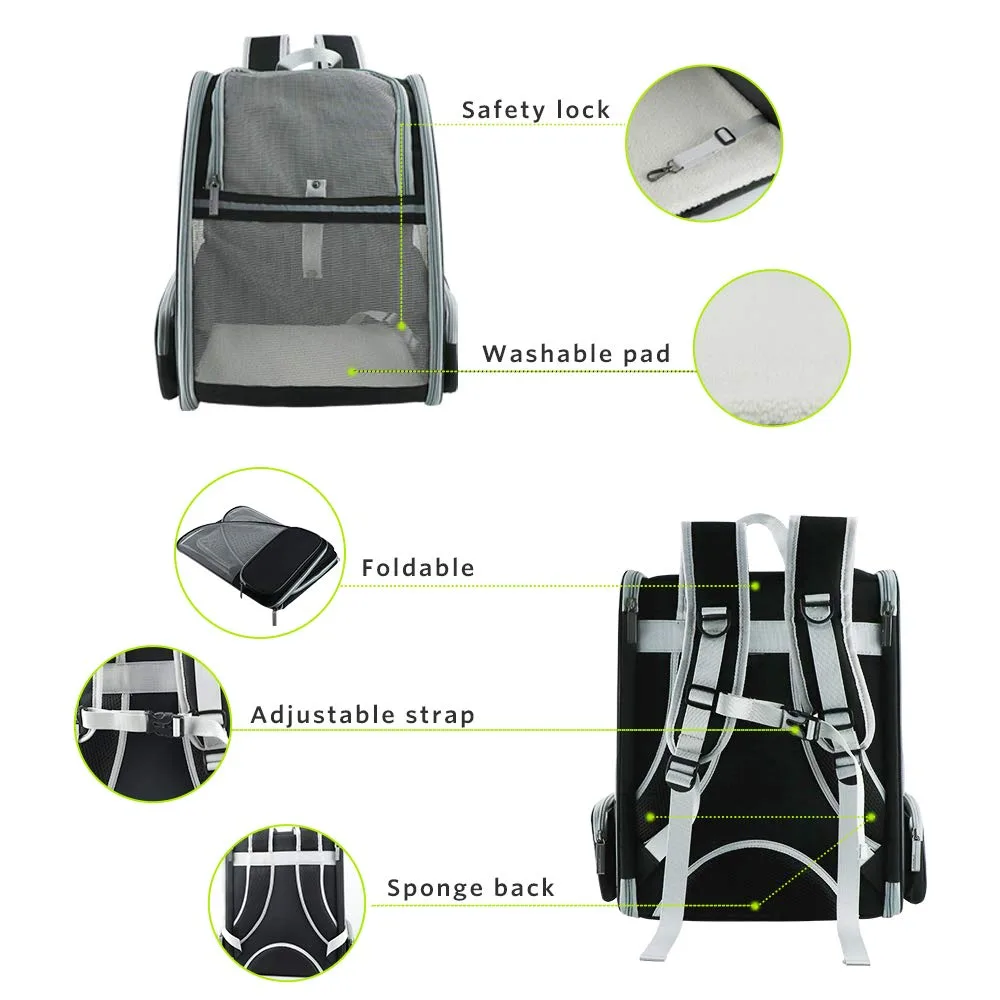
Strap width is the clearest example. Moving from 20 mm to 25 mm webbing on the shoulder strap adds a few grams and a small material cost while materially reducing the pressure per unit area under load. Moving to a moulded panel costs tooling and adds weight for a benefit that buyers notice mainly over long carries.
- Strap width from 20 mm to 25 mm is a low-cost comfort improvement
- Strap padding placement matters more than padding thickness
- Spacer mesh back panels improve airflow but raise material cost per unit
- Multi-density foam builds add assembly steps and cycle time
- Moulded panels require tooling and should be justified by volume
Foam density is the parameter most often misread. Higher density is not automatically more comfortable; it resists compression better but transmits more vibration. A layered build with a softer contact layer over a firmer support layer performs better in use than a single high-density block, and it costs roughly the same in material.
Our production team specifies foam by density in kilograms per cubic metre and by compression set percentage, both measured on the sample. Those two numbers predict field performance better than a thickness figure, which is why thickness alone should never be the specification.
Load path geometry is the remaining comfort variable and the one most often left to the line. Where the strap meets the body determines how the load transfers, and a strap anchored into a lining rather than into a reinforced panel will pull away under repeated use. Our production team marks the reinforcement on the pattern so the anchor point is built, not improvised.
Durability Expectations and the Tests Behind Them
Durability preferences show up in reviews as specific failures: a zipper that splits, a seam that opens, mesh that tears. Each failure has a standard test that predicts it, and specifying the test is far more effective than specifying a material by name. A brand that names a brand of zipper without specifying a cycle count has not actually specified durability.
The three tests our production team writes into every specification are abrasion resistance on the face fabric, seam strength on the load-bearing joints, and zipper cycle testing on every closure. Each is run on the pre-production sample and re-checked at lot change.
- Abrasion resistance is reported in cycles to a defined endpoint on the face fabric
- Seam strength is measured in newtons on the strap-to-body joints
- Zipper cycle testing is run to a stated count with a load on the slider
- Mesh snag resistance is checked separately from abrasion
- Hardware is cycle tested to a count appropriate to its function
Cycle counts should be matched to use. A carrier used for daily transport accumulates far more zipper cycles in a year than one used for occasional travel, and specifying 10,000 cycles for a product that will see 500 costs money that buyers never perceive. Our production team asks for the intended use frequency before setting the number.
Public test-method references help here. Standardised methods published by ASTM give both sides a common definition of a cycle and an endpoint, and independent crash and restraint work by the Center for Pet Safety informs how load paths are evaluated. Referencing them removes the ambiguity that makes test results non-comparable between suppliers.
The cost of over-specifying durability is real. A fabric rated for four times the required abrasion cycles can cost materially more per metre, and the difference is invisible to the buyer until the product is compared on price.
There is one durability item that should never be costed down: the strap-to-body joint. It carries the full load of the animal and its failure is both a safety issue and a visible product failure. Our production team specifies the joint by construction method and by measured strength, and treats it as a fixed line rather than a variable one. The reinforcement patch, the stitch density at the joint and the bar-tack position are all stated on the tech pack so the construction is identical on every unit and inspectable on the finished carrier.
Appearance Preferences and Their Production Cost
Appearance drives the click but not the return, which makes it a marketing variable rather than a quality one. The engineering question is how much appearance variation can be delivered without fragmenting the material supply. Colour, finish and hardware tone are the three levers, and they have very different cost structures.
Colour variation is cheap at the fabric stage if the shade is available in the mill range and expensive if it requires a custom dye lot. Finish variation between matte and gloss is a coating choice made at fabric purchase, so it behaves like colour. Hardware tone is a plating choice on a component that already exists, and it is usually the cheapest of the three.
- Colour from the mill standard range avoids dye-lot minimums and approval cycles
- Custom shades add a dye-lot minimum and a fresh approval sample
- Matte versus gloss finish is fixed at fabric purchase, not afterwards
- Hardware tone changes plating only and is the cheapest visual lever
- Stitch colour contrast is free and reads strongly in photography
The cheapest appearance lever of all is contrast stitching. Changing thread colour against the shell costs nothing per unit, needs no approval cycle beyond the sample, and produces a visual difference that reads clearly in a product photograph. Our production team recommends exhausting thread and hardware options before opening a custom dye lot.
The expensive path is a custom print or a sublimated panel, which introduces a print minimum, a colour-management step and a separate approval. For a program at 500 pieces per colourway, a sublimated panel can add more per-unit cost than the fabric it is printed on.
Photography constraints are a hidden appearance cost. A glossy shell reflects studio lighting and produces inconsistent images across a colourway range, which increases reshoot time and delays listing. Our production team flags high-gloss finishes for brands shooting in-house, because the fabric saving is often smaller than the added imaging cost.
Cleaning and Maintenance as a Design Constraint
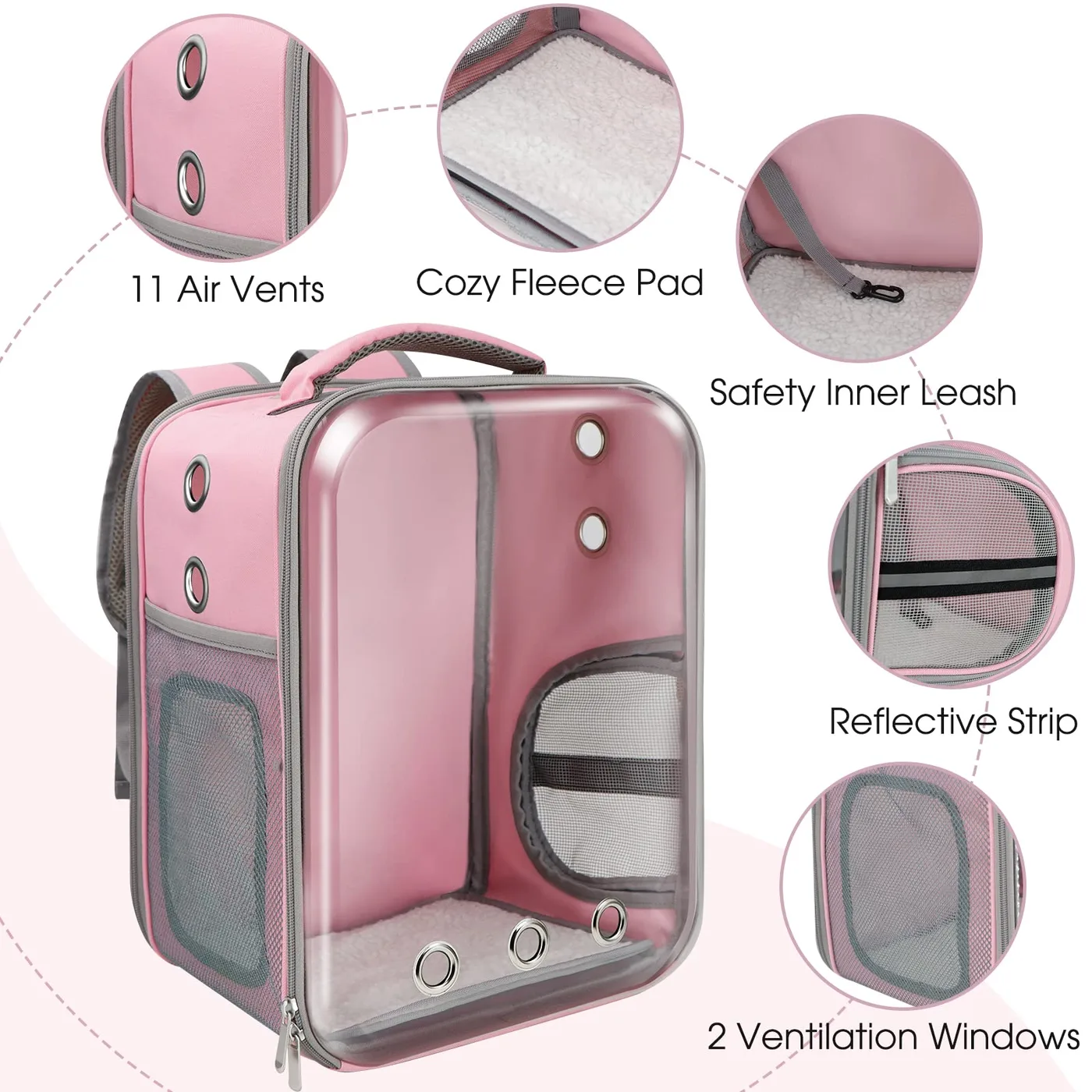
Cleaning preference is consistently under-rated in specification work and consistently over-represented in returns and complaints. A carrier that cannot be cleaned accumulates odour, and odour complaints are rarely recovered by a discount. The engineering answer is a removable, washable liner board and a face fabric with a coating that survives wiping.
Liner attachment is the decision that matters. Hook-and-loop attachment allows removal and washing but collects hair and loses grip after repeated cycles. A zip-out liner is cleaner in use but adds a closure, a pattern piece and assembly time. A snap-in rigid board is durable but must be sized to survive laundering without warping.
- Hook-and-loop liners allow washing but collect hair and lose grip over time
- Zip-out liners are cleaner in use and add one closure per unit
- Rigid boards must resist warping in a domestic wash cycle
- Face coating should survive repeated wiping with a mild detergent
- Interior seams should be bound rather than raw to reduce odour retention
Coating choice follows from the cleaning method. A PU coating tolerates wiping and light laundering well; a heavier PVC coating tolerates more but introduces the substance questions covered elsewhere in the compliance file. Our production team specifies the coating by weight and by the cleaning protocol it is expected to survive.
Wash testing should be part of sample approval. One domestic cycle on the liner and a wipe test on the shell, both recorded, settles most of the questions that otherwise surface months later in reviews. Our production team runs both and files the result with the sample report.
Odour retention is a separate specification line. Certain foam and coating combinations hold odour after a single soiling event, and no amount of cleaning recovers them. Our production team selects foam with low odour retention where the liner is removable, and states the requirement in the material declaration rather than assuming the default will perform.
Price Sensitivity Expressed as Specification Trade-Offs
Price sensitivity is easier to engineer against than to discount against. Buyers in this category compare on features at a given price, so the commercial question is which features survive at the target price point. That is a specification problem, and it is best answered with an explicit trade-off table rather than a negotiation.
Our production team builds the table by costing each preference-driven feature individually, then removing features from the bottom of the ranked list until the landed target is met. The discipline is that removal is explicit and recorded, so the brand knows exactly what was given up.
| Preference | Measurable specification | Verification | Relative cost impact |
|---|---|---|---|
| Fits properly | Internal dimensions, base deflection | Measure on first article | Low, mostly pattern work |
| Not stuffy | Open area 18-28 percent | Lit-fraction measurement | Low to moderate |
| Comfortable on shoulders | 25 mm strap, layered foam | Compression set test | Low |
| Feels durable | Abrasion cycles, seam strength | Laboratory test report | Moderate, fabric dependent |
| Zipper will not split | Zipper cycle count with load | Cycle test on sample | Low to moderate |
| Easy to clean | Removable liner, wipe-tolerant coating | Wash and wipe test | Moderate, adds closure |
| Premium appearance | Hardware tone, contrast stitch | Visual approval against reference | Low |
| Moulded back panel | Panel thickness and retention | Collapse test under load | High, tooling required |
Reading the table from the bottom up is the practical method. The high-cost items are removed or deferred to a second season, the low-cost items are retained, and the moderate items are decided against the target price. That order preserves the preferences buyers notice while protecting the margin.
Our production team revisits the table at the second season, because real return data by then shows whether the removed items were actually missed. In most programs they were not, and the saving is carried forward permanently.
The table also serves a second purpose: it makes the price conversation concrete. Rather than asking for a lower price, a brand can point at a line and ask what removing it saves, and the answer arrives as a number rather than as a negotiation position. Our production team prefers that exchange because it preserves the specification where it matters.
Writing Preferences Into the Tech Pack
The final translation step is writing each surviving preference as a line on the tech pack with a parameter, a tolerance and a verification method. A preference without a number is a preference that will be lost at the first cost-down, and one without a verification method cannot be inspected against.
The tech pack therefore carries a specification table rather than a feature list. Each row states the parameter, the target value, the tolerance, the test or measurement used to verify it, and the sample stage at which it is checked. That table becomes the inspection checklist for the bulk run.
- Each preference becomes a parameter with a numeric target and tolerance
- Each parameter names the verification method used to check it
- Each parameter states the sample stage at which it is first verified
- The specification table doubles as the bulk inspection checklist
- Any change to a parameter is logged as a specification revision
Our production team also records the rejected preferences and the reason for rejection. That history prevents the same debate recurring each season and protects the specification from drift when new stakeholders join the brand team.
The outcome is a document that can be quoted by any production partner without a meeting, which is the real test of a good specification. If a supplier can price it from the sheet alone, the preferences have been translated properly; if they need to ask what a feature means, the translation is incomplete.
Version control is the last discipline. A specification revised by email attachment will eventually be built to the wrong revision, and the error is usually discovered after cutting. Our production team issues the sheet with a revision number and a date, and confirms the revision being built before the bulk marker is laid.
Production capability
- SGS-verified production space of 4,950 m², 149 machines, 7 assembly lines
- Pet carrier and pet bag output since 2014 from a 137-person team
- 200,000 units shipped monthly under BSCI and ISO 9001 systems
People Also Ask
What do buyers care about most in a dog carrier backpack?
Fit dominates both satisfaction and returns, followed by ventilation, shoulder comfort, zipper reliability and cleanability. Appearance drives the initial click but rarely drives a return.
How should fit preference be specified?
As internal length, width and height measured on the first article, plus a base deflection limit. Bias dimensions toward the upper end of the stated weight band, since too small is returned and too large is tolerated.
Which comfort features give the best value?
Strap width from 20 mm to 25 mm, layered foam rather than a single high-density block, and correct padding placement. Moulded back panels cost tooling and usually belong in a later season.
How is durability specified correctly?
By test rather than by brand name: abrasion cycles on the face fabric, seam strength in newtons on load joints, and zipper cycle counts with a load on the slider.
Does mesh open area affect buyer satisfaction?
Yes. Stuffy is one of the most frequent complaints and maps directly to open area percentage. A target of 18-28 percent on combined side and front surfaces is typical.
Why do cleaning preferences matter to manufacturing?
Because they change construction: a removable liner adds a closure and a pattern piece, and the face coating must survive wiping or laundering without degrading.
Frequently Asked Questions
Should external or internal dimensions be published?
Internal. Buyers measure the animal against usable space, so publishing external dimensions is one of the largest single causes of size-related returns.
Is higher foam density always more comfortable?
No. Higher density resists compression but transmits more vibration. A softer contact layer over a firmer support layer usually performs better at similar material cost.
How many zipper cycles should be specified?
Match the count to intended use frequency. A daily-use carrier justifies a higher count than an occasional-travel carrier, and over-specifying costs money buyers never perceive.
What is the cheapest way to change appearance?
Contrast stitching and hardware tone. Both change the visual result without a dye lot, a print minimum or a new approval cycle.
Why is a custom dye lot expensive at 500 units?
The mill carries a minimum production quantity per shade that can exceed the fabric requirement for the order, and each new lot needs a fresh approval sample.
Which liner attachment lasts longest?
A rigid snap-in board survives repeated laundering best, provided it is specified to resist warping. Hook-and-loop loses grip over repeated cycles and collects hair.
How is open area measured on a sample?
Photograph the panel against a light source and compute the lit fraction, or compare the weight of a cut sample against a solid control in the same yarn.
Should preference data come from reviews or return codes?
Return codes. They come from every dissatisfied buyer rather than the motivated minority, and they carry structured reasons that map to specification items.
What happens to unranked preferences at cost-down?
They are removed first, because nobody wrote down what they meant. Ranking preferences by cost of satisfaction protects the features buyers actually notice.
How many sizes should a range carry?
Two or three steps on a shared pattern platform covers most demand. Unrelated sizes add a pattern, a cutting die and a separate sample cycle each.
Can a sublimated panel be justified at low volume?
Rarely. It adds a print minimum, a colour-management step and a separate approval, which at 500 pieces can exceed the cost of the base fabric.
What makes a specification quotable without a meeting?
A parameter, a tolerance and a verification method on every line. If a supplier must ask what a feature means, the translation is incomplete.
Talk to QUANZHOU JUNYUAN BAGS about a pet carrier program: MOQ 500 pieces per colourway, samples in 6-10 working days, bulk production in 35-50 days under AQL 2.5 inspection.
Get a free quote Request a sample