Pet Carrier Gate: Room Divider
A room divider gate is specified on five numbers: a mounting preload of 90-180 newtons for a pressure build, a spindle or mesh gap held at 45-60 millimetres across the full height, a two-action latch rated to 1,000-5,000 cycles, an adjustable width range of 710-1,120 millimetres, and a height of 760-1,000 millimetres at the top rail.
A room divider gate is the one product in this category where the failure is structural rather than cosmetic, because the load path runs out of the product and into somebody else's door frame. That single fact drives every decision downstream: how much preload a pressure mount can apply before it marks the architrave, whether the width adjustment introduces a second telescoping joint that becomes the weak point, where the entrapment geometry sits once the width is extended, and how the latch behaves after the frame has relaxed. This page works through the category in manufacturing order: mounting method and the load path into the surrounding structure, spindle spacing and head-and-neck entrapment geometry, latch architecture and its cycle life, width adjustment and the tolerance stack it creates, surface and contact treatment at the wall and floor, and the test protocol a gate has to clear. It then covers packaging for a long low-density carton and the programme economics of the three mounting families. Commercial terms are standard: MOQ 500 pieces per colourway, prototypes in 6-10 working days, bulk production 35-50 days after sample approval, final random inspection to AQL 2.5, T/T 30/70 and FOB Xiamen.
Working as a pet carrier manufacturer on pet carrier accessory ranges means the technical file is shared before any quotation: pattern, bill of materials, test report and packing specification.
Mounting Method and the Load Path into the Door Frame
A gate is a beam spanning a doorway, and the ends of that beam have to go somewhere. There are three places they can go and the choice defines the product: into the door frame by friction, into the wall by fasteners, or onto the floor by its own footprint.
A pressure mount applies a preload of 90-180 newtons at each end through four contact pads, and the friction it generates resists a horizontal push of 180-450 newtons at the top rail depending on the pad material and the architrave surface. The preload is delivered by four adjustable spindles or by two over-centre cams, and the distinction matters: a spindle delivers a measured and repeatable preload, while a cam delivers whatever the installer's wrist produced.
The pad is the component that limits the preload. A rubber pad of 55-75 Shore A at 20-35 millimetres diameter and 4-8 millimetres thick grips painted softwood at a coefficient of friction of 0.45-0.70 and distributes the load well enough to avoid a visible mark at 90-140 newtons. Above 160 newtons on a softwood architrave the pad indents 0.3-1.2 millimetres within 24-72 hours, and the indentation is permanent.
A hardware mount transfers the load through four screws into the stud or the frame at 300-900 newtons of pull-out per fixing. It resists 500-1,200 newtons of horizontal push, which is 2.5-3 times a pressure mount, and it is the specified solution where the animal is large or where the gate sits at the top of a stair. Its cost is installation: 12-25 minutes against 2-5 minutes, and four holes in the architrave.
A freestanding build carries the load on its own feet with no frame contact at all. It resists 100-260 newtons of push at a footprint of 700-1,100 millimetres, it is the only option for an opening wider than any adjustable gate, and its weakness is that it can be pushed out of position rather than failed.
Relaxation is the slow failure unique to a pressure mount. A spindle assembly loses 15-40% of its preload over 30-180 days as the pad takes a compression set and the frame timber moves with humidity, and the practical control is a visual tension indicator on the spindle plus a stated re-tension interval in the instructions. A gate that fails in month three has almost always lost preload rather than broken.
A pressure mount at 90-180 newtons of preload through four rubber pads resists 180-450 newtons of push; a hardware mount resists 500-1,200 and is the specification for a stair head or a large breed, at four holes and 12-25 minutes of installation.
Spindle Spacing, Mesh Gap and Entrapment Geometry
Every opening in a gate is a potential entrapment, and the category is regulated accordingly. The geometry that matters is not the average gap but the worst gap, measured with the width adjustment at its maximum extension and under load.
Spindle spacing on a vertical bar gate runs 45-60 millimetres centre to centre, with bar diameters of 8-16 millimetres giving a clear gap of 29-52 millimetres. A bar gate is the easiest build to make compliant because the gap is set by a jig and does not change with width: the bars are on a fixed panel and the extension is a separate telescoping section.
A mesh gate is harder. A welded mesh at 40-50 millimetres short dimension holds its aperture at rest, but under a 300 newton concentrated push a 2.5 millimetre wire opens to 62-78 millimetres while a 3.5 millimetre wire opens to 53-61. The mesh specification has to be written at load, not at rest, and the wire diameter is what makes it so.
The bottom rail is the second entrapment site and the one most often missed. A gate with a bottom rail 60-120 millimetres above the floor creates a gap that a small animal enters and cannot back out of. The control is a bottom rail at 45 millimetres or less above the floor, or a full-contact base rail.
The latch-side gap is the third and it moves with the product. As a telescoping gate is extended, the gap between the moving panel and the fixed frame grows from 4-8 millimetres to 12-30 millimetres, and at the top of that range it is an entrapment. The control is a fixed overlap of 40-80 millimetres at the latch side maintained across the full adjustment range, which costs 60-140 millimetres of nominal width.
The top of a gate is the fourth site and it is a climb hazard rather than an entrapment. A horizontal top rail at 760 millimetres is a ladder for a medium breed; a vertical bar top with no horizontal member, or a top rail above 900 millimetres, is the mitigation. The reference framework for the underlying safety provisions is published by the U.S. Consumer Product Safety Commission.
Specify the gap as the worst case at maximum extension and under load, hold a bottom rail under 45 millimetres above the floor, and maintain a 40-80 millimetre latch-side overlap across the whole adjustment range.

Latch Architecture: Two-Action, Gravity and Magnetic
The latch is the component the customer touches every time and the component that generates the warranty claim. Three architectures are in production and they differ in cycle life, in the force needed to open, and in whether they fail open or fail closed.
A two-action latch requires a simultaneous lift and slide, or a squeeze and lift, with the two actions separated by 15-35 millimetres of travel in different axes. It is the specification for any gate sold as a safety product. Opening force is 15-40 newtons on the first action and 8-25 on the second, and the mechanism survives 3,000-10,000 cycles before the detent wears by more than 0.4 millimetres.
A gravity latch uses a pivoting catch that drops into a keep under its own weight. It costs 0.35-1.40 USD against 1.20-4.60 for a two-action build and it opens with 6-18 newtons, but it can be defeated by a 40-90 newton upward push from the animal side and it is not a safety-rated mechanism.
A magnetic latch uses two or four neodymium magnets of N35-N52 grade at 10-25 millimetres diameter, giving a break force of 25-110 newtons. It is silent and it self-aligns, which is why it is used on premium builds, but the break force falls 8-22% over 24 months as the magnet surface oxidises, and it is temperature-sensitive above 80 degrees Celsius.
Directionality is a design decision that is often left to chance. A gate at a stair head must latch from both directions, because a gate that only latches on the approach side is open when the animal pushes from the other. The cost of a two-way keep is 0.25-1.10 USD and it is standard on a hardware mount.
Failure mode is the question to ask of any latch design. A two-action latch with a spring-return fails closed, which is the safe direction; a gravity latch fails closed only if the keep is below the catch; a magnetic latch fails open once the break force drops below the push it receives. The safe direction is written into the drawing as a spring specification, not as an intention.
Cycle testing qualifies it. A latch is cycled 1,000-5,000 times at 8-20 cycles per minute, then tested for opening force within plus or minus 25% of the original figure and for a release force under a 200 newton push of zero. A latch that opens under 200 newtons of sustained push has failed regardless of its cycle count.
A two-action latch at 15-40 newtons opening force with a spring return that fails closed, qualified to 1,000-5,000 cycles and zero release under a 200 newton sustained push, is the specification for a safety-rated gate.
Width Adjustment, Telescoping and the Tolerance Stack
A gate that fits a range of openings does so with a telescoping section, and that section is the least stiff part of the product and the source of almost every dimensional complaint.
Adjustment ranges in production are 710-820, 750-880, 760-1,120 and 900-1,400 millimetres. The range is set by the overlap: a telescoping joint needs a minimum engagement of 120-220 millimetres at full extension to resist the bending moment at the joint, and the nominal width of the fixed panel plus the minimum engagement is the lower bound of the range.
The tolerance stack is what makes a gate rattle. A telescoping joint with a radial clearance of 0.3-0.8 millimetres, on a joint 300 millimetres long, permits an angular play of 0.1-0.3 degrees, which at the top rail 800 millimetres above the joint is 1.5-4 millimetres of lateral movement. That movement is the rattle the customer hears and it is also a wear mechanism.
The fix is a bushing. A moulded acetal or nylon bush of 1.0-2.0 millimetres wall pressed into the outer tube reduces the effective clearance to 0.05-0.20 millimetres and holds it for 3,000-10,000 cycles, at 0.14-0.55 USD per joint. It is the cheapest quality upgrade in the whole product and it is the one most frequently omitted to save a few cents.
Incremental adjustment is the second decision. A stepped adjustment with holes at 25-50 millimetres pitch is stiff and positive but it only fits discrete widths; a continuous friction or screw adjustment fits anything but relies on the installer to tighten it. The compromise in production is a stepped adjustment at 25 millimetres pitch with a fine screw taking up the last 25 millimetres.
Extension inserts are the accessory that extends the range without a new tool. An insert of 70-350 millimetres is a short fixed panel with the same profile, costing 2.60-8.90 USD and adding 0.008-0.020 cubic metres to the carton. It is the highest-margin line in the accessory set and it doubles the addressable opening range for no tooling.
Stiffness at full extension is the acceptance test. A gate extended to 100% of its range must meet the same push criterion as at minimum, which means the joint has to be verified at the worst case. A gate tested only at mid-range will pass in the factory and fail in a customer's widest doorway.
Hold 120-220 millimetres of minimum engagement at full extension, fit a 1.0-2.0 millimetre acetal bush to take clearance to 0.05-0.20 millimetres, and verify the push criterion at 100% extension rather than mid-range.
Contact Surfaces: Wall Pads, Floor Contact and Finish
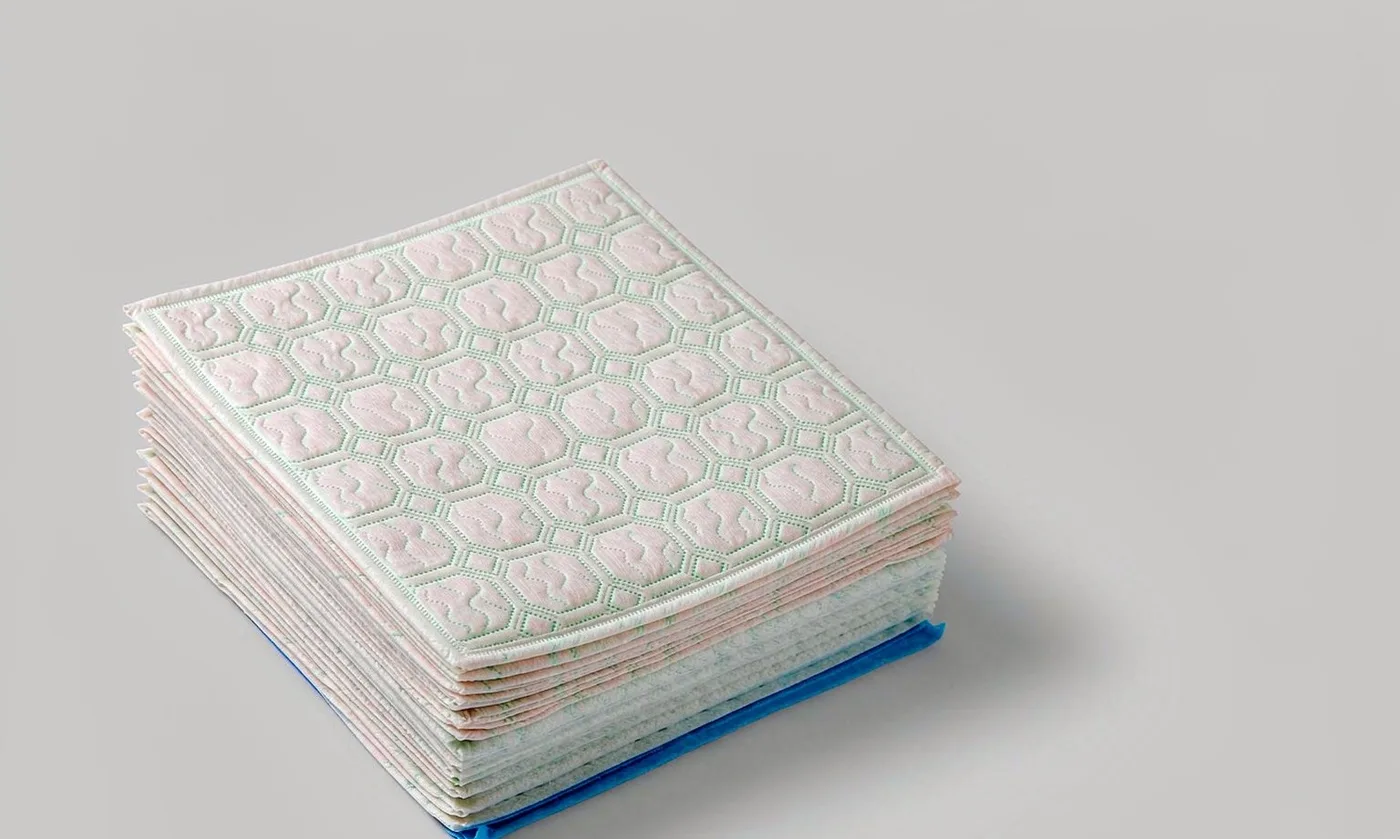
A gate touches three surfaces it does not own - the architrave, the floor and the wall - and every complaint about marking or slipping originates at one of them.
Wall pads are the first. A thermoplastic rubber at 55-75 Shore A and 20-35 millimetres diameter is the standard, and the specification that matters is compression set: a pad at 15-25% compression set after 22 hours at 70 degrees Celsius recovers and continues to grip, while one at 40-60% takes a permanent flat and the preload drops by 20-45%. The test method reference for these elastomer properties sits in the ASTM standards system.
Pad area is the second variable and it is a straightforward pressure calculation. Four pads at 25 millimetres diameter give 1,960 square millimetres of contact; at 140 newtons of preload that is 0.071 megapascals on the architrave, which painted softwood accepts without marking. Reducing to two pads at 16 millimetres gives 402 square millimetres and 0.348 megapascals, which marks.
Floor contact is the third. A gate with hard feet on a polished floor slips at 60-140 newtons of push; the same gate with a thermoplastic rubber foot at 60-70 Shore A resists 180-340 newtons. The foot is 0.08-0.32 USD and it is the difference between a gate that holds and one that walks out of the doorway over a week.
Finish on a steel gate follows the barrier specification: seven-stage conversion pretreatment, powder at 60-120 microns, and mechanical spatter removal before coating. A gate is used indoors, so 240-500 hours of salt spray is a sufficient rating and 1,000 hours is over-specification that adds 0.55-1.80 USD for no field benefit.
A timber gate carries a different obligation. A hardwood or a finger-jointed softwood at 8-14% moisture content is finished with a water-based lacquer or a stain at 60-140 grams per square metre, and the moisture content is the number that matters: above 14% the panel cups by 2-8 millimetres across a 900 millimetre width within one heating season, and a cupped gate does not latch.
Four pads giving at least 1,900 square millimetres of contact at under 0.10 megapascals, a compression set under 25%, and rubber feet at 60-70 Shore A, is the contact specification that avoids marking and slipping together.
Test Protocol: Push, Latch Cycle, Entrapment and Impact
A gate is qualified against five exposures and the protocol is heavier than the product's apparent simplicity suggests, because two of the five are regulatory rather than commercial.
Horizontal push is the primary test at 200-500 newtons applied at the top rail for 60 seconds, with the gate at 100% extension. Acceptance is a residual deflection under 12 millimetres, no permanent set in the telescoping joint, and no loss of preload exceeding 10% on a pressure build. The preload check is the one that distinguishes a gate from a barrier: a barrier is stiff or it is not, whereas a gate can be stiff and still come off the wall.
Latch release is the second at 200-400 newtons of sustained push on the latch side for 60 seconds, plus a dynamic impact of 5-15 joules at the latch. Acceptance is zero release. This is the test a gravity latch fails and a two-action latch passes, and it is the reason the two-action build is specified for a stair head.
Entapment probing is the third and it is regulatory. A set of articulated probes representing a head and a neck is applied at every opening with a force of 0-25 newtons, and no probe may pass where the geometry admits the head but not the body. Probing is run at minimum width, at maximum extension, and with a 200 newton push applied simultaneously, because the worst case is a loaded gate at full extension.
Impact is the fourth at 10-30 joules into the panel centre from a pendulum or a drop mass, with acceptance of no weld fracture and no spindle deformation. A spindle gate's failure mode here is a bent bar at 12-25 joules, and the fix is a bar diameter of 12-16 millimetres rather than 8-10.
Cycle is the fifth, at 1,000-5,000 latch cycles and 500-2,000 width adjustments, followed by a re-test of push and latch release. A gate that meets the push criterion new and fails it after 3,000 cycles has a wear problem in the bush or the detent, and the cycle test is the only way to find it before shipment.
Sample allocation is 12-22 units per model. Two are destroyed in impact, four in entrapment and push, and the remainder go to cycle and corrosion. Gates are cheap enough to sample properly and under-sampling here is a false economy measured in warranty claims.
A protocol of 12-22 units covering push at 200-500 newtons with under 12 millimetres residual, zero latch release at 200-400 newtons, entrapment probing under simultaneous load, impact at 10-30 joules and 1,000-5,000 cycles is the qualification standard.
Packaging: Long Carton, Corner Protection and Cube
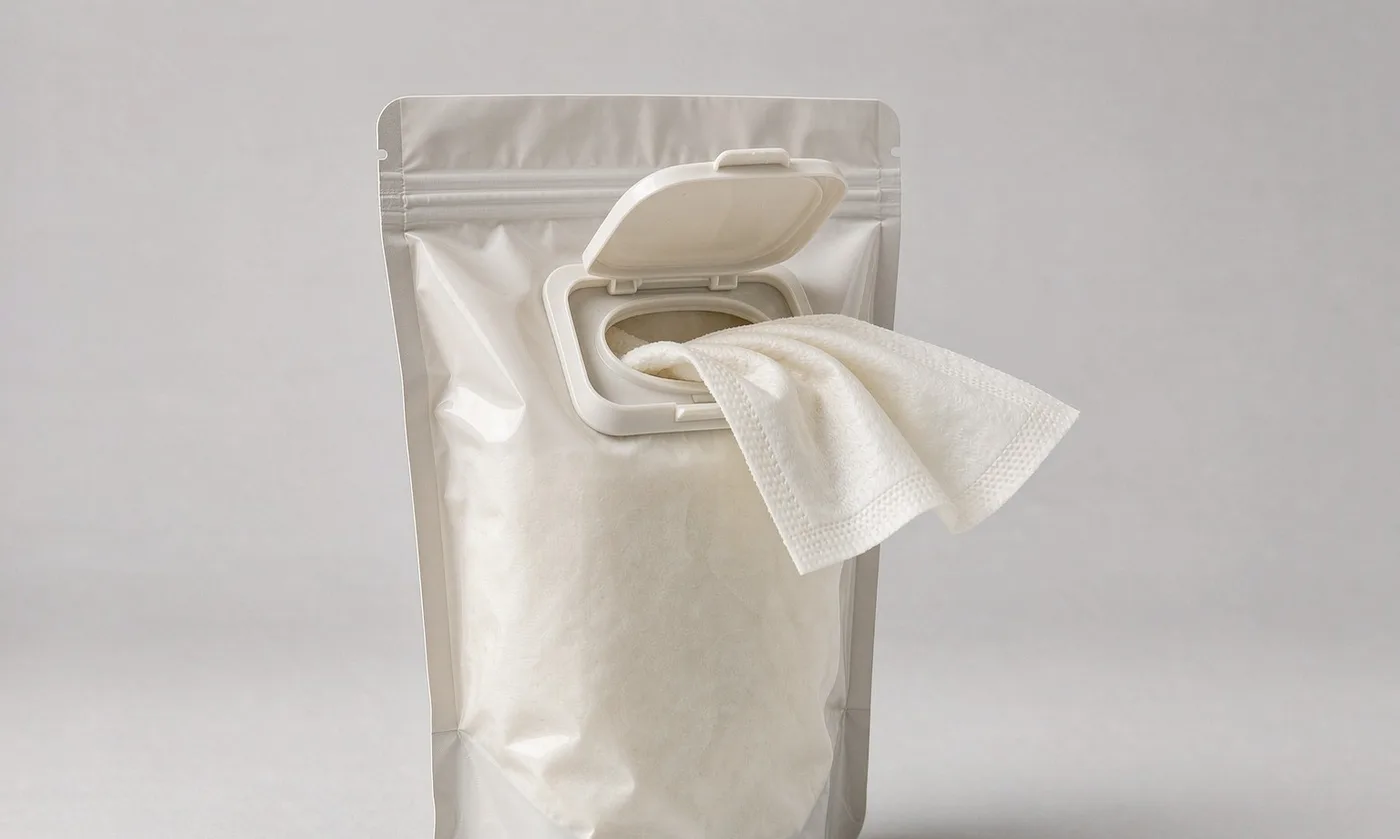
A gate is a long, thin, low-density product and it packs badly by nature. The carton is 780-1,150 millimetres on its longest side, 60-140 millimetres thick and 400-800 millimetres tall, which means it is dominated by void and by corner damage rather than by weight.
Void is the first cost. A gate at 900 by 700 by 90 millimetres occupies 0.057 cubic metres of envelope but the product itself is perhaps 0.008 cubic metres of steel. The ratio is 7:1 and it is why a gate is sold by its carton rather than by its mass. Reducing the carton thickness from 110 to 85 millimetres by laying the gate diagonally or by detaching the latch housing cuts 23% of the freight for a design change that costs nothing.
Corner damage is the second and it is the leading cause of a damaged-on-arrival claim in this category. A long carton dropped on its end concentrates the entire 6-11 kilogram mass on one corner, and a single-wall C-flute board crushes at a drop height of 300-500 millimetres. The control is a double-wall board at the two loaded ends, or a moulded pulp or expanded-polyethylene corner insert of 0.18-0.62 USD at each end.
Internal movement is the third. A gate that slides inside its carton arrives with a scratched finish, and the fix is a die-cut corrugate spacer at 0.09-0.30 USD plus a stretch or paper wrap on the finished frame. A wrap is also the cheapest answer to the scratch complaint, and it costs less than the claim it prevents by a factor of 8-25.
Palletisation is awkward because the carton is long. A standard 1.2 by 1.0 metre pallet takes a 1,100 millimetre carton on one axis only, and a pinwheel or a brick-bonded pattern on a 1.2 by 1.2 metre pallet gives 24-48 cartons per layer and 4-7 layers, at 96-336 cartons per pallet. Pallet height is capped at 1.8-2.1 metres by the container door.
Container arithmetic follows. A 40-foot high-cube at 68 cubic metres and a carton of 0.057 gives 1,190 cartons before pallet losses, and 1,010-1,090 after them. A gate at 0.041 cubic metres by a diagonal pack gives 1,660 before losses and 1,410-1,520 after, which is a 38% increase in units per container for a carton redesign costing 0.10-0.45 USD.
A gate carton dominated by void packs 1,010-1,090 units per 40-foot high-cube after pallet losses; a diagonal pack cutting thickness from 110 to 85 millimetres lifts that to 1,410-1,520 for a redesign cost of 0.10-0.45 USD.
Mounting Family Economics and Programme Structure
The three mounting families are not three price points of one product; they are three products with different tooling, different test obligations and different markets, and the range decision is made on that basis.
A pressure gate is the volume product. It is 18-46 USD FOB and 35-95 retail, it installs without tools, and it carries the highest claim rate in the category at 1.5-5% because of preload relaxation and marking. Its tooling is a bending fixture and a welding jig at 3,000-8,500 USD per width range.
A hardware gate is 26-68 USD FOB and 55-140 retail. It carries the same frame tooling plus a bracket and a template, it needs installation hardware in the box, and its claim rate is 0.6-2.2% because the failure mode is installation error rather than product relaxation. The fastener set is 0.45-1.90 USD and it has to be matched to the wall types in the destination market, which is a documentation task as much as a purchasing one.
A freestanding gate is 22-58 USD FOB and 48-120 retail. It has no mounting hardware, it needs the largest footprint and the most steel, and its claim rate is 0.4-1.6%. It is the configuration for a wide opening and for a customer who will not drill.
The table below compares the three families on the parameters that decide a range decision.
| Parameter | Pressure mount | Hardware mount | Freestanding | Hybrid, pressure with bracket |
|---|---|---|---|---|
| Preload or fixing load | 90-180 N | 300-900 N per fixing | Self-weight 6-14 kg | 90-180 N plus 300-900 N |
| Horizontal push resisted | 180-450 N | 500-1,200 N | 100-260 N | 500-1,200 N |
| Install time | 2-5 min | 12-25 min | 0-2 min | 12-25 min |
| Tools required | None | Drill, level, driver | None | Drill, level, driver |
| Suitable at stair head | No | Yes | No | Yes |
| Width range (mm) | 710-1,120 | 710-1,400 | 900-1,800 | 710-1,120 |
| Frame tube | 19-25 mm at 0.9-1.3 | 22-25 mm at 1.0-1.4 | 22-32 mm at 1.1-1.6 | 22-25 mm at 1.0-1.4 |
| Latch type | Two-action or gravity | Two-action, two-way | Gravity or magnetic | Two-action, two-way |
| Tooling (USD) | 3,000-8,500 | 4,500-12,000 | 4,000-11,000 | 6,000-15,500 |
| Carton volume (m³) | 0.041-0.072 | 0.048-0.081 | 0.062-0.104 | 0.052-0.086 |
| Units per 40ft HC | 1,010-1,660 | 900-1,420 | 700-1,100 | 850-1,310 |
| FOB cost (USD) | 18-46 | 26-68 | 22-58 | 32-78 |
| Claim rate | 1.5-5.0% | 0.6-2.2% | 0.4-1.6% | 0.7-2.0% |
| Market share of range | 55-72% | 14-26% | 10-22% | 4-12% |
Reading the claim-rate row alongside the market-share row is what shapes the range. The product with the highest claim rate is also the product with the largest share, which means the engineering effort on a pressure build is worth more per hour than the same effort anywhere else: a preload indicator and a better pad are worth more than a stronger frame.
A hybrid build that ships with a pressure mechanism and an optional bracket set is the range-extending answer. It costs 6-14 USD more than the pressure version, it reaches the stair-head customer who will not buy a dedicated hardware gate, and it shares one frame tool across both channels.
Pressure mount carries 55-72% of a range and the highest claim rate at 1.5-5%, so the preload indicator and the pad specification are the highest-return engineering items in the whole programme.
Production capability
- SGS-verified production space of 4,950 m², 149 machines, 7 assembly lines
- Pet carrier and pet bag output since 2014 from a 137-person team
- 200,000 units shipped monthly under BSCI and ISO 9001 systems
People Also Ask
How much preload does a pressure-mounted gate need?
90-180 newtons at each end through four pads. Above 160 newtons on a softwood architrave the pad indents 0.3-1.2 millimetres permanently within 24-72 hours.
What gap is safe between gate spindles?
45-60 millimetres centre to centre with bars of 8-16 millimetres, giving a clear gap of 29-52 millimetres. The gap must be measured at maximum extension and under load, not at rest.
Why does a gate lose grip after a few months?
Preload relaxation of 15-40% over 30-180 days as the pad takes a compression set and the frame timber moves with humidity. A tension indicator and a stated re-tension interval are the control.
What is a two-action latch and why is it specified?
It requires a lift and a slide in different axes, separated by 15-35 millimetres of travel, at 15-40 newtons. It survives 3,000-10,000 cycles and fails closed, unlike a gravity latch.
How much overlap should a telescoping gate keep?
120-220 millimetres of minimum engagement at full extension, plus a 40-80 millimetre latch-side overlap to stop the gap growing into an entrapment as the width opens.
Why does an adjustable gate rattle?
Radial clearance of 0.3-0.8 millimetres on the joint becomes 1.5-4 millimetres of lateral movement at the top rail. A 1.0-2.0 millimetre acetal bush takes clearance to 0.05-0.20 millimetres for 0.14-0.55 USD.
How many gate units fit in a 40-foot high-cube container?
1,010-1,660 depending on carton thickness. Cutting the carton from 110 to 85 millimetres by laying the gate diagonally lifts the load by about 38%.
Frequently Asked Questions
What push force should a gate resist?
200-500 newtons at the top rail for 60 seconds at 100% extension, with residual deflection under 12 millimetres and no preload loss above 10% on a pressure build.
Why is a hardware mount specified at a stair head?
It resists 500-1,200 newtons against 180-450 for a pressure mount, and a gate at the top of a stair is loaded by a falling mass rather than a steady push.
What is the entrapment probe test?
Articulated head and neck probes applied at every opening at 0-25 newtons, at minimum width, at maximum extension, and with a 200 newton push applied simultaneously.
How high should the bottom rail be above the floor?
45 millimetres or less, or a full-contact base rail. A rail at 60-120 millimetres creates a gap a small animal enters and cannot back out of.
Does a magnetic latch lose strength over time?
Yes, 8-22% over 24 months as the magnet surface oxidises, and it is temperature-sensitive above 80 degrees Celsius. Break force is 25-110 newtons from new.
Why must a latch be two-way?
A gate that latches only on the approach side is open when pushed from the other, which is exactly the case at a stair head. A two-way keep costs 0.25-1.10 USD.
What compression set should a wall pad have?
Under 25% after 22 hours at 70 degrees Celsius. A pad at 40-60% takes a permanent flat and preload drops by 20-45%.
How much pad area avoids marking an architrave?
At least 1,900 square millimetres in total, keeping contact pressure under 0.10 megapascals. Four pads at 25 millimetres give 1,960 square millimetres and 0.071 megapascals at 140 newtons.
Why do gates slip on polished floors?
Hard feet slip at 60-140 newtons of push. A thermoplastic rubber foot at 60-70 Shore A raises that to 180-340 newtons for 0.08-0.32 USD.
What moisture content suits a timber gate?
8-14%. Above 14% a panel cups by 2-8 millimetres across a 900 millimetre width within one heating season, and a cupped gate will not latch.
How much salt spray does an indoor gate need?
240-500 hours. A rating of 1,000 hours adds 0.55-1.80 USD with no field benefit for a product that never goes outdoors.
What impact energy must a gate survive?
10-30 joules at the panel centre. The common failure is a bent spindle at 12-25 joules, fixed by moving from 8-10 millimetre bars to 12-16 millimetre.
How many latch cycles qualify a gate?
1,000-5,000 at 8-20 cycles per minute, then opening force within plus or minus 25% of original and zero release under a 200 newton sustained push.
What is the argument for shipping a hybrid bracket set?
It costs 6-14 USD more than the pressure version, reaches the stair-head customer who will not buy a dedicated hardware gate, and shares one frame tool across both channels.
Talk to QUANZHOU JUNYUAN BAGS about a pet carrier program: MOQ 500 pieces per colourway, samples in 6-10 working days, bulk production in 35-50 days under AQL 2.5 inspection.
Get a free quote Request a sample