Custom Dog Carrier Backpack: OEM Production Process
A custom dog carrier backpack OEM build runs nine stages: brief, tech pack, pattern and marker, material booking, spreading and cutting, panel preparation, sewing, assembly, and inspection. Sampling takes 6-10 working days and bulk takes 35-50 days at MOQ 500 pieces per colourway. The two stages that decide quality are cutting tolerance and stitch specification; the two that decide the date are lab dips and hardware tooling.
Executive Summary. This is the process our production team actually runs, stage by stage, with the parameters that are controlled at each gate and the numbers that are recorded. It is written for brands commissioning a custom dog carrier backpack who need to understand where their decisions have leverage and where the schedule is really consumed. An OEM programme is not a purchase; it is a sequence of approvals, and the brands that finish on time are the ones who know which approval is on the critical path.
Standard terms: MOQ 500 pieces per colourway, samples in 6-10 working days from tech pack sign-off, bulk production 35-50 days after gold-seal approval, final random inspection to AQL 2.5 with zero tolerance for critical defects. The QUANZHOU JUNYUAN BAGS production network runs 7 partner production lines with 149 machines and 137 people inside an SGS-verified production base of 4,950 m2, at 200,000 units per month, audited to BSCI and ISO 9001. Payment is T/T 30/70 and shipment is FOB Xiamen.
The difference between one dog carrier factory and another is rarely the stitch count - it is whether the dog carrier backpack pattern survives a 1.5x static load without permanent set.
Stage 1: The Brief and the Specification Freeze
An OEM programme begins with a load case, not with a drawing. Before any pattern work starts, four numbers must be frozen: rated pet mass band, dynamic amplification factor, duty cycle and abuse case. These drive base board thickness, webbing width, hardware gauge and stitch specification, and every one of them is expensive to change after cutting begins.
The brief should also state the destination market, because compliance constrains materials before it constrains anything else. A programme destined for the EU needs REACH SVHC declarations across the bill of materials; a programme destined for the US will be asked for CPSIA lead and phthalate screening on coatings and inks; a programme sold in California needs a Prop 65 screen. Where the product carries a textile contact claim, buyers commonly reference OEKO-TEX Standard 100 class II, which sets limits on the dyes and finishes permitted rather than on the base polymer.
The output of stage one is a signed specification freeze. Our production team will not begin pattern making without it, because the most expensive iteration in any programme is the one started before the brief was settled. Brands that treat the brief as provisional typically consume three extra sample rounds and four extra weeks.
The brief should also settle the test protocol, because the protocol determines what the sample must survive and therefore what it must be built from. A strap-root seam test at 1,200 N, a handle lift test, a base load test and a zipper cycle test are the four assembly tests that govern a carrier structure, and each one has a design consequence: the strap root needs a bartack, the handle needs a box-plus-X stitch, the base needs a board and a perimeter band, and the zipper needs a specified size and slider. Deciding the tests at stage one means the sample is built to pass them the first time rather than rebuilt to pass them the third time.
Finally, freeze the wearer specification alongside the pet specification. Torso range, maximum acceptable shoulder pressure and intended activity determine strap width, foam density and sternum strap position. It is the input most often absent from a brief and the one that most often explains a carrier that tests well and sells poorly.
Stage 2: Tech Pack and Bill of Materials
The tech pack is the contract. It must contain a dimensioned drawing with tolerances, a complete bill of materials with mill and lot references, a stitch specification, a hardware list, artwork files with Pantone references, a packing specification, and the test protocol with acceptance numbers. Missing any one of those six items means the supplier will make a decision on your behalf, and you may not agree with it.
The bill of materials deserves the most attention because it is where silent substitution happens. Each line should name the material, the construction, the finish and the test requirement. "600D polyester" is not a specification; "600D polyester, plain weave, PU coating 0.30 mm, finished 230 gsm ±5%, Martindale 20,000 cycles, mill X lot Y" is. Do the same for thread, binding, foam, board, zippers and hardware, and the substitution risk drops sharply.
| BOM line | Must specify | Common omission |
|---|---|---|
| Shell fabric | Denier, weave, coating, GSM ±%, mill, lot | GSM tolerance and mill name |
| Lining | Denier, GSM, coating, colour fastness grade | Rubbing fastness grade |
| Webbing | Width, material, breaking strength, UV rating | Breaking strength in daN |
| Thread | Ticket number, material, bonded or not | Ticket number entirely |
| Board and foam | Material, thickness, density, compression set | Density in kg/m3 |
| Hardware | Brand or equivalent, plating, salt-spray hours, pull test | Plating thickness and salt-spray hours |
| Zipper | Size, type, tape treatment, cycle life | Cycle life and slider pull type |
Stage 3: Pattern Making, Grading and Marker Yield
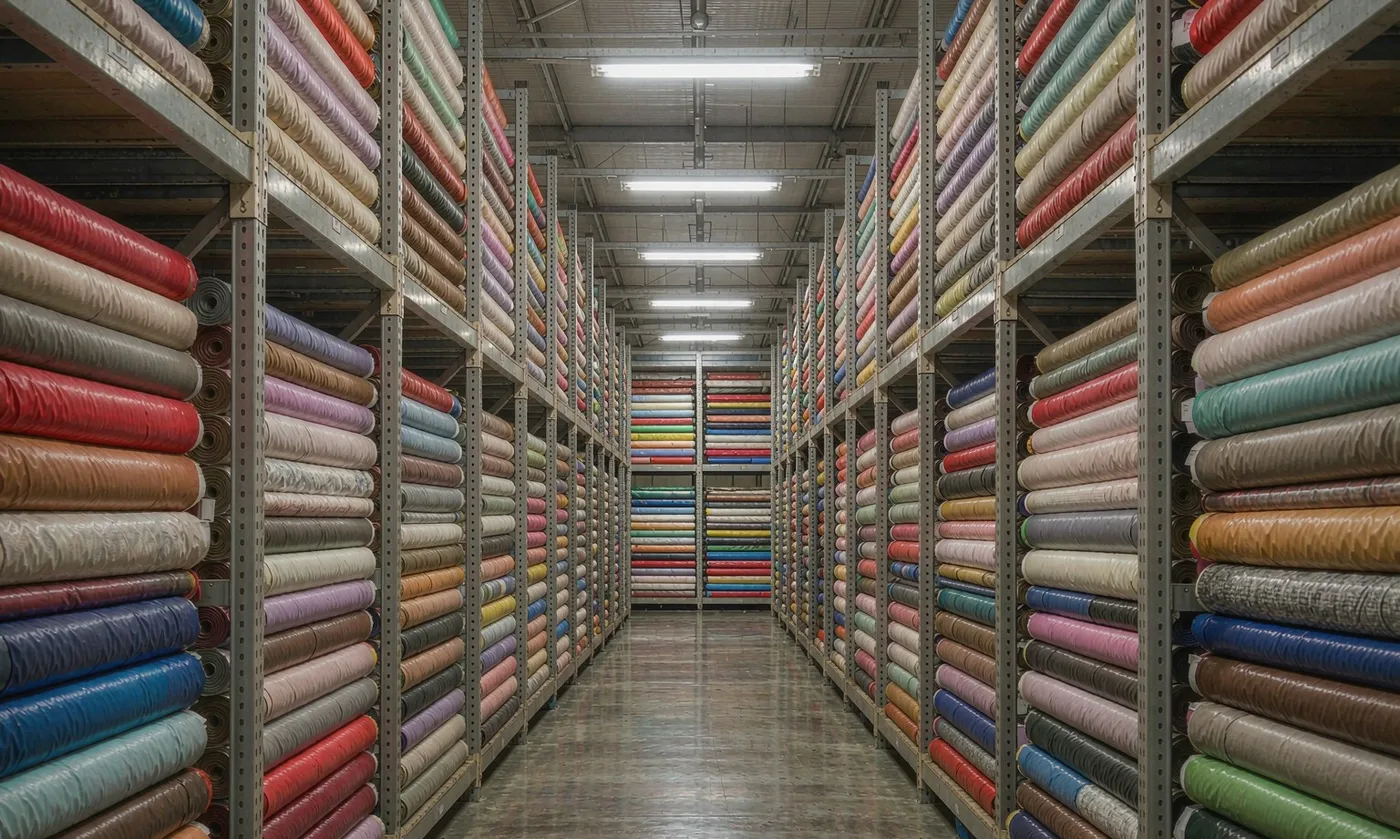
Pattern making converts the drawing into cuttable geometry. For a carrier, the consequential decisions are where the base panel is split, how the corner radii are eased so the shell does not pucker, and where the strap root sits relative to the load line. A strap root placed 5 mm off the load line turns a straight pull into a peel force at the stitch line, and that is how strap failures start.
Marker yield is the cost variable in this stage. The marker is the nesting layout of all panels on the fabric width, and yield is the percentage of fabric that ends up in the product rather than in the waste bin. A well-nested carrier marker runs 78-86%; a rushed one runs 68-74%. On a programme consuming 1.9 m of 150 cm fabric per unit, ten points of yield is roughly $0.35-0.60 per unit, which is real money at 5,000 units and is why yield belongs in the tech pack discussion rather than in the cutting room.
If the programme runs multiple sizes, grading is the second technical decision. Shell panels grade by percentage; load-path components grade in discrete steps, because webbing width and board thickness follow load rather than dimension. Our production team produces a graded size set with a written grade rule table so a size medium and a size large can be cut from the same marker logic without a structural surprise.
Stage 4: Material Booking and Incoming Inspection
Once the BOM is frozen, materials are booked, and this is the longest pole in the schedule. Stock 600D in a common colourway is available in 5-8 days. A custom dyed lot needs 18-25 days including lab dip approval. A printed or sublimated shell needs 12-18 days after artwork approval. Custom moulded hardware needs 20-30 days. Custom woven labels and printed trim need 12-18 days.
Incoming inspection is the gate that prevents most downstream defects. Our production team checks finished GSM against the specified value with a ±5% tolerance, measures coating thickness with a gauge rather than estimating it, and assesses colour under D65 lighting against the approved standard with a Delta E target of 1.5 or less. Abrasion and tear strength are verified against the mill report at the first lot of a programme and every third lot thereafter. Hardware is checked for plating adhesion and, at load-path positions, for pull strength.
Retained swatches close the loop. A signed bulk swatch from the approved sample is kept on file, and every subsequent lot is matched against it. Without a retained physical standard, colour disputes become arguments about memory rather than measurements.
Sequencing is the scheduling discipline inside this stage. Materials are not all booked at once; they are booked in the order in which they constrain the line, and the deposit is released against the long-lead items first. For a typical programme that means custom hardware and dyed fabric are booked on day one, printed trim in week two, and stock consumables in the final week before cutting. Booking everything late is the single most common cause of a 35-50 day window becoming a 60-day window.
There is also a financial control here worth stating plainly. Under T/T 30/70 terms the 30% deposit is what releases material bookings; if the deposit is late, the material slot is lost, and the mill reallocates the capacity. Brands that treat the deposit as a formality are surprised by a three-week slip that has nothing to do with the supplier's efficiency.
Stage 5: Spreading, Cutting and Panel Tolerance
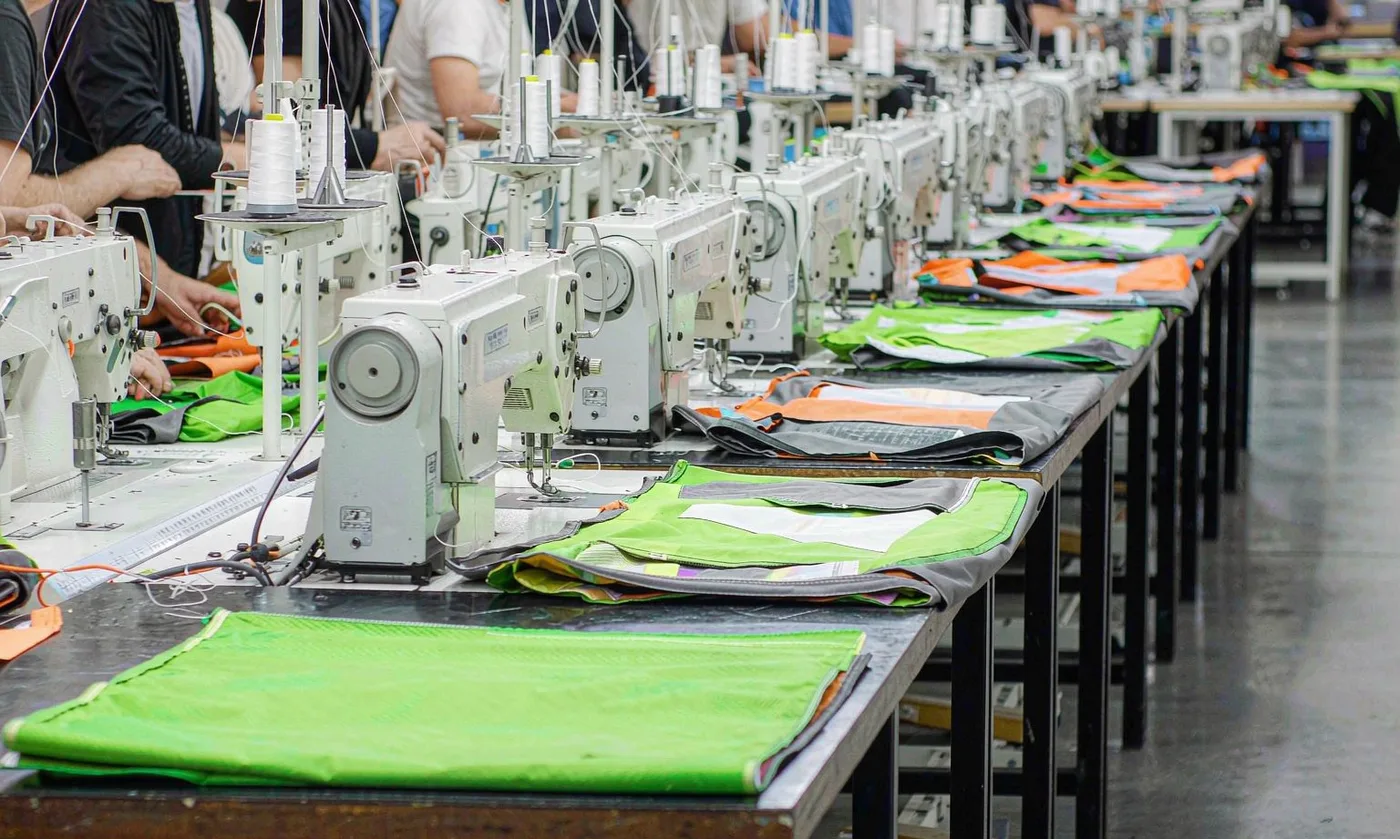
Spreading lays the fabric in plies on the cutting table under controlled tension. Too much tension and the panels relax after cutting, shrinking by 1-2% and throwing off assembly; too little and the plies shift, producing panels that are cut out of square. Our production team spreads at low tension and allows the lay to relax before cutting on any fabric with a coating weight over 0.25 mm.
Cutting method depends on volume and material. A straight-knife machine handles straight panels and high plies economically. A band knife is used for curves and corners, where knife deviation would otherwise produce panels that do not nest. For synthetic shells, a laser or an oscillating knife gives a sealed or clean edge respectively, and for programmes above 3,000 units an automatic cutter with a vacuum hold-down holds panel tolerance to ±2 mm, which matters when a moulded board has to seat precisely.
- Panel dimensional tolerance: ±3 mm on cut panels, ±5 mm on finished assemblies
- Grain line deviation: maximum 2 degrees on structural panels
- Shade banding: panels from the same unit must come from the same dye lot and, where possible, adjacent plies
- Notch and drill marks: checked at first-off against the pattern, then at every 50 panels
Panel counting and bundling is the final control. Panels are bundled by unit and by size so that a size medium shell never meets a size large board, and bundle tickets travel with the work through sewing. Mixing sizes in the bundle is a defect that final inspection will not reliably catch.
For programmes using a printed or a patterned shell, cutting acquires a second constraint: registration. A panel printed with a repeating motif must be cut so the motif lands in the same place on every unit, which reduces marker yield by 4-9% and requires the marker to be planned against the print repeat rather than purely against panel geometry. Our production team flags this at stage three because the yield loss is a cost the brand should approve knowingly, not discover in the quotation.
Knife maintenance is the operational detail behind panel tolerance. A dull straight knife deflects, and deflection increases with ply height, so a 40-ply lay cut with a worn blade produces panels that differ by several millimetres between the top and bottom of the lay. Blades are changed on a ply-count schedule rather than on appearance, and the first and last panel of every lay are measured and logged.
Stage 6: Panel Preparation, Printing and High-Frequency Welding
Before panels reach the sewing line they are prepared: logo application, edge treatment, and any welded seams. Logo application method depends on volume and substrate. Screen printing is economical above 500 units and durable on polyester with a plastisol or a water-based PU ink cured at the stated temperature; heat transfer is better for multi-colour art at low volume but has lower abrasion resistance; embroidery is the most durable and the most expensive, and it adds a backing that can stiffen a panel.
High-frequency welding joins thermoplastic-coated fabrics by dielectric heating rather than by thread. For a pet carrier it is used for the lower side seams where leakage is most likely, because a welded seam has no needle perforations and therefore no wick path. The process is controlled by three parameters: electrode pressure, generator power in kilowatts, and dwell time, typically 1.5-4 seconds depending on coating thickness. Under-welded seams peel; over-welded seams embrittle the coating and crack at the fold. Our production team qualifies the weld window on the actual production fabric and records the settings, then peel-tests the seam at first-off and every two hours.
Edge binding is the other preparation step that affects perceived quality. Binding tape should be cut on the bias so it follows curves without puckering, applied at a consistent width, and closed with a clean overlap of at least 15 mm at the start point. Binding width variation of more than 1 mm across a panel is visible on shelf and is a common major defect classification.
Where the programme includes a mesh ventilation panel, insertion happens at this stage and it is a fit problem rather than a sewing problem. Mesh has to be set with a controlled ease so it neither puckers the surrounding shell nor sits slack enough to billow. Our production team specifies a 2-3 mm negative ease on the mesh relative to its aperture, which keeps the panel taut without distorting the shell, and it is checked at first-off because a mesh panel that is 5 mm out cannot be corrected later.
Reinforcement patches are applied at this stage as well: an internal webbing band at the base perimeter, a bar-tacked patch behind every D-ring, and a load spreader behind the handle roots. These are invisible in the finished product and they are the components most often deleted during value engineering, which is why they should be named in the BOM with their own line items rather than included in a general allowance.
Stage 7: Sewing, Stitch Specification and Load-Path Reinforcement
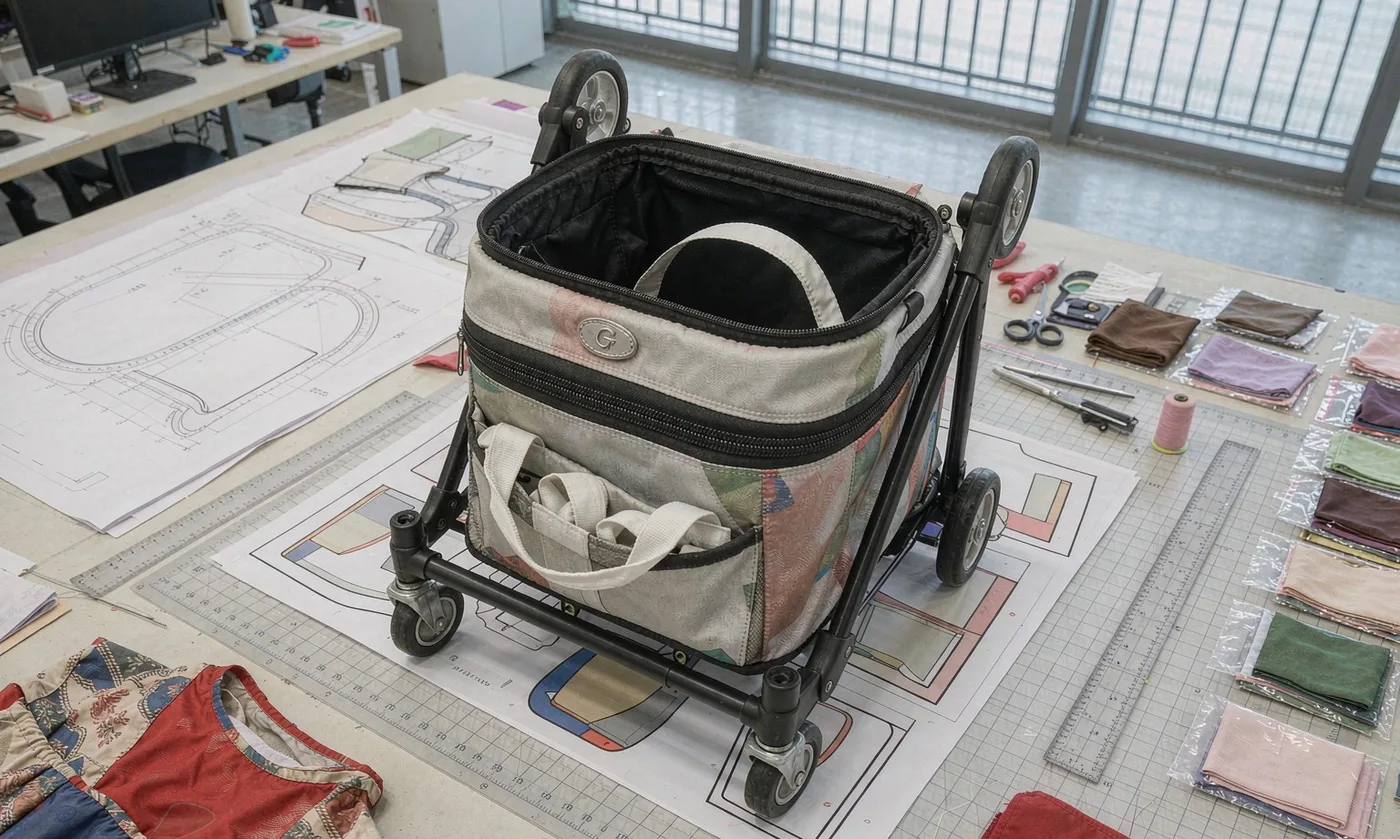
Sewing is where the specification becomes physical. The stitch parameters that govern strength are thread ticket number, stitch type, stitches per inch, and seam allowance. For structural assemblies on a dog carrier, our production team specifies bonded polyester thread at Tex 70, a lockstitch (ISO 301) for general assembly, a 10-12 mm seam allowance on structural seams, and 8-10 stitches per inch.
| Seam / operation | Stitch type | Thread | SPI | Reinforcement |
|---|---|---|---|---|
| Shell panel assembly | Lockstitch 301 | Tex 40 polyester | 8-9 | None |
| Strap root to back panel | Lockstitch 301 box | Tex 70 bonded | 9-10 | Bartack at load corner, 42 stitches |
| Handle attachment | Lockstitch 301 box + X | Tex 70 bonded | 9-10 | Bartack both roots |
| Base seam | Lockstitch 301 | Tex 70 bonded | 9-10 | Internal 25 mm webbing band |
| Binding | Chainstitch 401 or zigzag | Tex 40 | 10-12 | 15 mm overlap at start |
| Mesh insertion | Lockstitch 301 | Tex 40 | 8-9 | Bound edge on claw line |
Below 7 stitches per inch the perforation line from the needle weakens the fabric enough to matter under load. Above 11 the needle begins to sever yarns in the weave. This is why stitch density is specified as a range with a named thread, rather than left to operator habit, and why it is checked at first-off and logged hourly.
The line itself is laid out as stations with a balanced flow: a structured carrier is 18-26 minutes of labour across 12-20 operations. Bottlenecks are predictable and sit at base board insertion, binding of curved panels, and bartack operations. Our production team balances the line against a target of 240-320 units per day per line for structured carriers, and staffs the bartack station with capacity to spare so reinforcement never becomes the constraint that operators work around.
Stage 8: Assembly, Hardware and Final Operations
Assembly brings the sewn shell together with the board, the hardware and the insert. Base board insertion is the operation most likely to be rushed: the board must seat fully into its channel with the perimeter band aligned, and a board forced in 3 mm short will dish under load. Our production team uses a go/no-go gauge at this station for programmes with moulded boards, so a panel that is out of tolerance never reaches insertion.
Hardware is fitted next: ladderlocks, buckles, D-rings, triglides and the zipper assembly. Load-path hardware is checked for correct orientation and for full engagement of the webbing through the bar, because a webbing tail that is not fully seated will slip at roughly a third of its rated load. Zipper assembly is checked for smooth travel across the full length, including around the corner where coil zippers bind if the tape is not eased.
Final operations are metal detection, trimming, cleaning and packing. Every unit passes a needle detector, with the log retained, because a broken needle fragment in a pet carrier is the single defect class that cannot be tolerated at any AQL level. Thread trimming is a quality signal that costs nothing: a unit with 15 mm thread tails reads as cheap regardless of how well it was built.
Stage 9: Inspection, Documentation and Container Loading
Final inspection is a sampling exercise against a written defect list. AQL 2.5 for major defects and 4.0 for minor, with zero tolerance for critical, is the standard for sewn pet products. On a 5,000-unit lot that means 21 major defects permitted before the lot is rejected, which is a reasonable balance: it catches systemic error while tolerating the variation inherent to textile assembly. The test methods referenced in the protocol are published by ASTM International, and the quality system that governs the records is ISO 9001, described in detail by ISO.
Documentation runs in parallel: packing list, commercial invoice, certificate of origin, bill of lading instructions, test reports indexed by lot, and the AQL report with photographs. Missing paperwork costs days at destination and those days are more expensive than the inspection itself.
Container loading is the last control point. Cartons are loaded against a loading plan that respects weight distribution and carton strength, with the count verified at the door. Our production team photographs the loading sequence with carton numbers visible, which resolves any shortage claim against a record rather than an assertion. After that, the 25-35 day transit begins, and the programme enters the replenishment cycle described in the wholesale calendar.
Two closing controls are worth building into the purchase order. The first is a retained counter-sample: three units from the production run, signed by both parties and held for the life of the programme, which settles any later dispute about what was actually approved. The second is a corrective action clause with a defined timeline, so a defect found at inspection has a committed response measured in days rather than in correspondence.
Understood end to end, the process is not mysterious: nine stages, each with a measurable parameter and a recorded check. What separates a programme that lands on schedule from one that slips is almost never the line speed. It is whether the lab dip was approved in week one, whether the deposit was released on time, and whether the stitch specification was written down before the first panel was cut.
Production capability
- SGS-verified production space of 4,950 m², 149 machines, 7 assembly lines
- Pet carrier and pet bag output since 2014 from a 137-person team
- 200,000 units shipped monthly under BSCI and ISO 9001 systems
People Also Ask
How is a dog carrier backpack made?
Nine stages: brief and specification freeze, tech pack and BOM, pattern and marker, material booking and incoming inspection, spreading and cutting, panel preparation and welding, sewing with a defined stitch specification, assembly with hardware and board insertion, then AQL 2.5 inspection and packing.
How long does OEM production take for a pet carrier?
Sampling takes 6-10 working days from tech pack sign-off and bulk takes 35-50 days after gold-seal approval. Material lead time, not sewing, governs the bulk window.
What is a tech pack and what must it contain?
A dimensioned drawing with tolerances, a full bill of materials with mill references, a stitch specification with thread ticket and SPI, a hardware list with test data, artwork with Pantone references, a packing spec, and a test protocol with acceptance numbers.
What stitch density is used on a pet carrier?
8-10 stitches per inch with Tex 70 bonded polyester thread at structural seams, with a bartack at strap roots and handle roots. Below 7 SPI the needle perforation weakens the shell.
What is high-frequency welding used for?
Joining coated thermoplastic fabrics without needle holes, typically the lower side seams of a carrier where leakage would occur. It is controlled by electrode pressure, generator power and dwell time.
What does AQL 2.5 mean for a 5,000-unit order?
At AQL 2.5 the sample size is 200 units and the lot is rejected at 11 or more major defects under a single sampling plan, with zero tolerance for critical defects at any level.
Can I change the design after bulk starts?
Only at cost. After cutting begins, a design change means re-cut panels, a revised marker, and usually a schedule slip measured in weeks rather than days.
Frequently Asked Questions
What is the minimum order for a custom OEM carrier?
500 pieces per colourway. The limit is set by fabric dye-lot minimums, custom woven label minimums and hardware order economics rather than by sewing capacity.
How many sample rounds should I budget for?
Three is typical: a first prototype for fit and geometry, a revised sample for materials and colour, and a pre-production sample for gold seal. Each round adds 5-7 working days.
Who owns the pattern after development?
The brand, if it is stated in the agreement. Without that clause the pattern usually remains the supplier's property, which complicates moving the programme later.
What causes panel dimensional problems?
Spreading tension that lets the lay relax after cutting, knife deviation on curves, and mixed sizes within a bundle. All three are controlled at the cutting gate rather than at final inspection.
How is fabric waste controlled?
By marker yield. A well-nested carrier marker runs 78-86% against a fabric width of 150 cm, and ten points of yield is worth roughly $0.35-0.60 per unit.
Do I need high-frequency welding on my carrier?
Only where a watertight lower seam is required. It adds capital cost and a weld-window qualification step, so it is specified for wet-climate or waterproof programmes rather than as a default.
What thread is used at structural seams?
Bonded polyester at Tex 70 for load-bearing seams and Tex 40 for general assembly and binding. Bonded thread resists UV and moisture better than spun thread of the same ticket.
How do you stop needle fragments reaching the customer?
A needle issue-and-return log at the line, plus 100% metal detector screening of finished units with a retained log. Broken needle fragments are a zero-tolerance defect class.
What is a pre-production sample?
A unit built on the production line with production materials, production tooling and the confirmed marker, used as the physical standard against which bulk is inspected and as the gold-seal reference.
How is colour controlled across repeat orders?
A retained physical standard stored in the dark, matching under D65 lighting with a Delta E target of 1.5 or less, plus a signed bulk swatch from every lot kept on file.
Can custom hardware be developed for one programme?
Yes, at $3,500-$9,000 per mould set and 20-30 days of additional lead time. It is the only trim element that cannot be sourced from a catalogue and copied by a competitor.
What documents ship with the order?
Commercial invoice, packing list, certificate of origin, bill of lading, test reports indexed by lot, the AQL inspection report with photographs, and any compliance declarations required by the destination market.
Talk to QUANZHOU JUNYUAN BAGS about a pet carrier program: MOQ 500 pieces per colourway, samples in 6-10 working days, bulk production in 35-50 days under AQL 2.5 inspection.
Get a free quote Request a sampleKeep reading
- How to Choose the Right Dog Carrier Backpack for Your Brand
- Dog Carrier Backpack Manufacturer: What to Look For
- Dog Carrier Backpack Tech Pack: What to Include
- Dog Carrier Backpack Production Lead Time: Timeline
- Dog Carrier Backpack Testing: Quality Assurance
- Best Dog Carrier Backpack Materials: A Complete Comparison