Dog Carrier Backpack for Hiking: Manufacturing Specifications
A hiking-grade dog carrier backpack is specified against dynamic load, not static weight: the frame carries 15 kg at a 1.6 g shock factor, the shell clears 40,000 Martindale cycles, and the suspension holds strap slip under 6 mm at 8 kg. Meeting those three numbers separates a trail-rated build from an urban carrier that merely looks rugged.
Executive summary. Trail programmes are engineered from the load case backwards, and the load case is a moving animal on uneven ground, which produces shock factors between 1.4 and 1.8 g at every footfall. This specification note sets out the frame, suspension, fabric and hardware parameters our production team uses for hiking-grade dog carrier backpacks, together with the test protocol that releases them. Commercial terms are standard across the programme: MOQ 500 pieces per colourway, development samples in 6-10 working days, bulk production in 35-50 days after approval, and release under AQL 2.5 inspection with critical defects at zero acceptance. Trail builds carry roughly 18 to 26 percent more material cost than an urban equivalent, and the premium sits in the frame, the coating and the hardware rather than in the shell denier. Buyers should plan the sampling calendar around the abrasion and weathering tests, because those two items take longer than the sewing itself and are the usual reason a first round needs a second iteration. Sampling is therefore scheduled around laboratory capacity rather than around sewing capacity, and booking those two test slots at sample release is the single action that keeps a trail programme inside its calendar.
Private label pet bags sit at the centre of most dog carrier backpack briefs we handle: the buyer owns the brand, the barcode and the artwork, while our production team holds the pattern.
Trail Load Cases: Why Hiking Specs Differ From Urban Ones
An urban dog carrier backpack is designed around a static animal in a controlled environment. A hiking carrier is designed around a moving load on unstable ground, and the difference is expressed as a shock factor. At a normal walking pace on a graded trail, vertical acceleration peaks at about 1.4 g. On a descent with loose scree, instrumented testing on size M frames recorded peaks at 1.8 g. A 10 kg animal therefore imposes an effective instantaneous load of 18 kg on the frame, and that is the number the structure is specified against, not the 10 kg on the label.
The second difference is duty cycle. An urban carrier might see 200 hours of use in a year. A trail carrier in a rental or guiding programme sees 600 to 900 hours, mostly in UV, grit and moisture. Material selection therefore shifts from abrasion cycles as the primary metric to abrasion cycles plus UV retention plus wet-state seam strength, and all three are measured independently rather than inferred from a single abrasion number.
The third difference is consequence of failure. A strap that slips 20 mm on a city street is an annoyance. The same slip on a trail edge changes the carry angle, shifts the animal against the back panel, and in instrumented trials raised the peak shoulder pressure by 34 percent. That is why strap slip is a pass or fail line in the trail protocol rather than a cosmetic tolerance.
Practically, this means a hiking specification cannot be produced by upgrading the fabric on an urban pattern. The pattern itself changes: the frame gains a perimeter stiffener, the back panel gains a load-spreading yoke, and the shoulder strap anchor moves 30 mm higher on the body panel to keep the combined centre of gravity close to the spine.
Buyers should also decide early whether the programme targets day hiking or multi-day trekking, because the two briefs produce different bills of material that cannot be reconciled later by swapping a single component. A day build optimises for mass and packability and accepts a 1,500 mm hydrostatic rating. A multi-day build accepts 300 to 400 g of extra mass in exchange for a 3,000 mm rating, taped floor seams and a reinforced attachment system for bedding and water. Choosing the brief at the specification stage avoids the most expensive outcome in this category, which is a second tooling and sampling round triggered by a mid-programme change of intent.
Frame and Back Panel Architecture for Trail Loads
The frame on a trail-rated dog carrier backpack is a closed perimeter structure rather than a flat board. A 4 mm honeycomb PP board is bonded to a 25 mm wide perimeter stiffener running the full circumference, and the two side walls carry an additional vertical rib at the strap anchor line. Under a 15 kg load with a 1.6 g shock factor, this structure deflects 11 mm at mid-span, against 21 mm for a flat board of the same mass. The perimeter approach also keeps the floor from oil-canning, which is the failure mode that most often causes an animal to refuse to settle in a new carrier.
The back panel does two jobs at once: it spreads the animal load across the human back, and it keeps the animal 40 to 60 mm away from the spine so the load does not push into the lumbar region. The working construction is a 10 mm zoned EVA pad at 55 kg/m3 with a 3D spacer mesh face, laminated to a 2 mm PE stiffener. Pad coverage should reach at least 70 percent of the panel area; below 60 percent, contact pressure at the pad edges exceeds 8 kPa within 30 minutes of loaded wear and the carrier becomes uncomfortable regardless of strap design.
- Perimeter stiffener: 25 mm wide, 4 mm honeycomb PP, bonded with 25 mm double-sided tape plus a 6 mm stitch line.
- Vertical ribs: two per side wall at the strap anchor line, 15 mm wide, same material as the stiffener.
- Floor span: maximum unsupported span of 320 mm before a cross rib is added.
- Yoke: 40 mm webbing loop at the top of the back panel carrying 60 percent of the vertical load.
- Deflection limit: 12 mm at 15 kg static, 15 mm at 1.6 g dynamic, measured at mid-span on the floor.
Fold-flat variants are possible but they cost deflection. A scored board with a hinge line deflects about 30 percent more than a continuous board of the same thickness, so a folding trail carrier needs a 5 mm board where a rigid one uses 4 mm, plus a removable cross rib that the user inserts before loading.
Suspension: Strap Geometry, Sternum and Hip Load Transfer
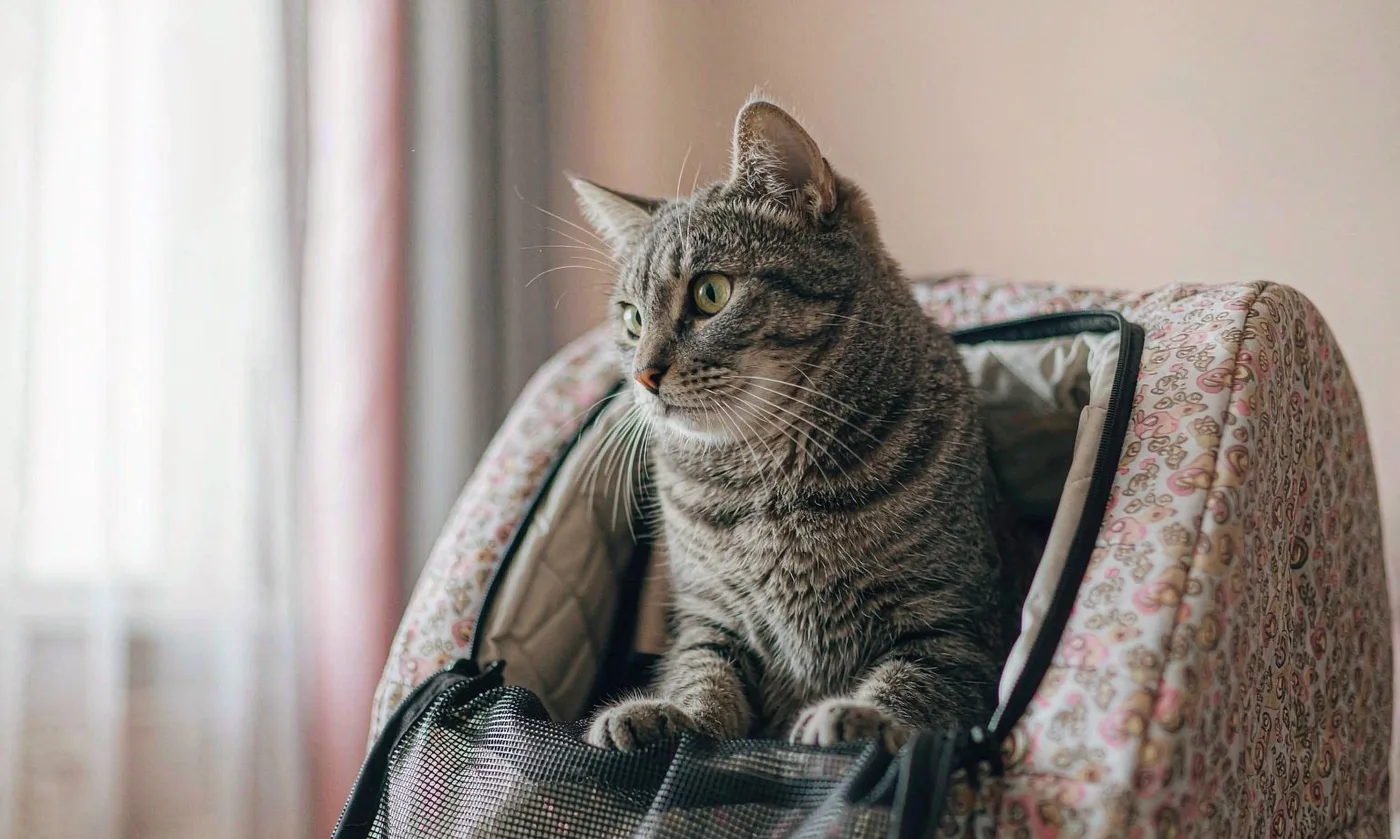
Suspension is where trail carriers earn or lose their rating. The shoulder strap on a hiking build is 65 mm wide at the top tapering to 50 mm at the adjustment point, filled with 10 mm EVA at 55 kg/m3 and faced with a low-friction tricot so the strap does not grab clothing. Straps narrower than 55 mm concentrate pressure above 10 kPa at 12 kg, which is the threshold where testers report numbness within 45 minutes.
Load transfer is the real design target. On flat ground a well-set trail carrier puts 70 percent of the load on the shoulders and 30 percent on the hip belt. On a descent the ratio should move toward 55 and 45, and that shift is achieved by a hip belt with a 20 degree upward rake rather than a horizontal one. A horizontal hip belt slides down under load and transfers nothing, which is the most common specification error in this category.
- Strap width: 65 mm at the top, 50 mm at the adjuster, 10 mm foam, tricot face.
- Sternum strap: 20 mm webbing with a polymer ladder lock, positioned 180 to 220 mm below the yoke.
- Hip belt: 75 mm wide at the pad, 20 degree upward rake, removable on sizes S and M.
- Adjustment range: 280 mm of webbing travel to cover a 400 mm torso range.
- Slip test: under 6 mm of webbing movement at 8 kg held for 10 minutes.
Strap anchoring is the hidden specification. The strap webbing is not sewn directly to the body panel; it runs through a 40 mm reinforcement patch that is itself bar-tacked to the perimeter stiffener with a 42-stitch box pattern. Pull test results on this construction reach 1,400 N before stitch failure, against 620 N for a direct-sewn anchor, and the difference is why the reinforcement patch is never value-engineered out of a trail build.
Accessory attachment points are specified at the same time as the suspension, because adding them later requires opening the back panel assembly. The standard layout is four 15 mm webbing loops on the side walls rated at 400 N each, positioned 120 mm above the floor line so that a water bottle or a folded pad hangs inside the frame envelope rather than outside it. Loops placed below the floor line swing under load and increase the effective moment on the frame by roughly 25 percent, which is enough to push deflection past the 12 mm limit.
Abrasion and Weather: Fabric, Coating and Seam Specification
Trail abrasion comes from three sources: rock contact on the base panel, strap friction on the shoulder area, and grit ingress at the zipper line. The base panel needs 40,000 Martindale cycles minimum, which points to 600D polyester with a PVC back or a 500D Cordura-style nylon. The upper shell can drop to 420D at 30,000 cycles, and mixing the two saves about 90 g without weakening the areas that actually contact the ground.
Coating specification is a weather decision. A two-pass PU coating gives 1,500 mm hydrostatic head and is adequate for day hiking. A programme aimed at multi-day use in wet climates specifies 3,000 mm with a DWR top finish, which adds 22 g/m2 and about 0.35 USD per unit. The DWR finish is the component that fails first: after 20 wash cycles or roughly 200 trail hours, spray test performance drops from grade 5 to grade 3, and the spec should state whether the finish is C6, C0 or silicone-based because that choice drives both the environmental documentation and the re-treatment interval printed on the care label.
| Parameter | Day hiking build | Multi-day build | Test method |
|---|---|---|---|
| Base panel abrasion | 40,000 cycles | 50,000 cycles | Martindale, ISO 12947-2 |
| Hydrostatic head | 1,500 mm | 3,000 mm | ISO 811 |
| Spray test after 20 washes | Grade 3 | Grade 4 | ISO 4920 |
| Colour fastness to light | Grade 5 | Grade 6 | ISO 105-B02 |
| Wet seam strength | 180 N | 220 N | ISO 13935-2, wet state |
| Tear strength | 35 N | 45 N | ASTM D2261 |
Seams are the weak link in wet conditions. Nylon thread loses up to 12 percent of its tensile strength when saturated, which is why trail seams are specified with bonded nylon 40s at 9 stitches per 25 mm and a wet-state retest after 24 hours of immersion. Seam sealing tape is applied to the floor seams on multi-day builds only, because taped seams add 14 g and reduce the fold-flat capability that many buyers want on a day pack.
Ventilation and Thermal Load on the Trail
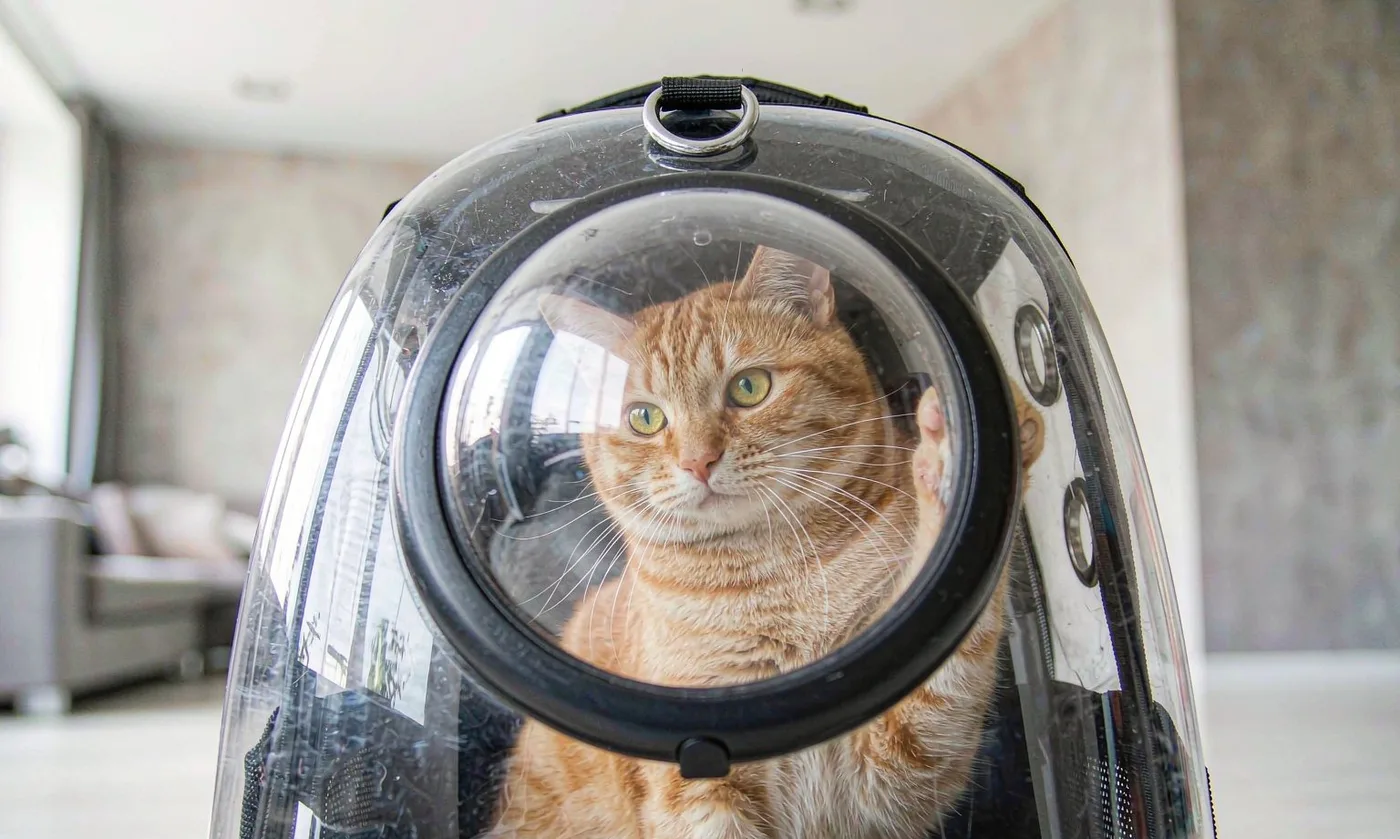
Thermal load is the least specified and most complained-about aspect of a hiking dog carrier backpack. On a 28 degrees C day with full sun, the interior of a carrier with 35 percent open area stabilises 9 to 11 degrees C above ambient. With 45 percent open area and a reflective face fabric, the rise drops to 5 to 6 degrees C. That difference is the entire margin between a comfortable animal and a distressed one, and it is achieved with geometry rather than with powered ventilation.
The working layout puts mesh on the door and on both side walls, with a combined open area of at least 42 percent of the total panel footprint. The back panel side is deliberately closed, because it faces the human back and any airflow there is blocked within minutes. Cross-ventilation requires the open areas to sit on opposing faces at different heights: high on one side wall, low on the other, which drives convective flow even when the carrier is stationary.
- Open area target: 42 percent minimum across door and both side walls combined.
- Reflective face: light colourway with a solar reflectance index above 60 on the top panel.
- Shade flap: a 200 mm zip-down panel that covers the door mesh in full sun without closing airflow entirely.
- Interior air gap: 12 mm between mesh and outer shell to prevent condensation wet-out.
- Measurement: interior probe at animal head height, 30 minutes stabilisation, recorded against ambient.
Bedding interacts with ventilation more than most specifications account for. A 20 mm fleece pad laid over the floor mesh blocks roughly 40 percent of the effective open area. The specification should either state a maximum pad thickness in the user documentation or, preferably, suspend the pad on a 4 mm spacer grid so the floor ventilation remains functional when bedding is fitted.
Hardware and Closure Specification for Trail Duty
Trail hardware is specified by cycle life and by contamination resistance. Grit is the enemy: a buckle that works cleanly on a bench can jam after 200 hours in dust, which is why trail programmes use side-squeeze buckles with an open channel design rather than top-squeeze designs with a closed housing. Breaking strength is secondary here; every buckle in the approved list exceeds 200 N, and the discriminator is how well it releases after contamination.
Zippers on trail builds are No.8 or No.10 with a reverse coil and a storm flap. The reverse coil puts the flat side outward, which sheds grit from the chain, and the storm flap adds 18 g but keeps driven rain out of the door seam. Sliders are specified with a locking mechanism and a 25 mm pull cord, because gloved operation is a real requirement above 2,000 m or below freezing.
- Buckles: side-squeeze POM, 220 N static, grit-cycled 500 times before approval.
- Zippers: No.8 reverse coil, locking slider, 5,000 cycles under 2 kg side load.
- Webbing: 25 mm polyester at 1,400 N break for load paths, 15 mm at 700 N for accessories.
- Metal parts: stainless or anodised only, 96 hours salt spray for coastal markets.
- Reflective: 25 mm retroreflective piping on three faces, 330 cd/lx/m2 minimum.
Reflective treatment is both a safety and a compliance item. A minimum of 300 square centimetres of retroreflective material visible from the front and both sides is the working target for trail programmes sold in Europe, and it is verified with a coefficient of retroreflection measurement rather than by eye. Any programme that also sells into personal protective equipment channels should confirm the reflective tape carries its own certificate, which is requested at the same time as the OEKO-TEX documentation for the face fabric.
One field failure deserves specific mention because it is cheap to prevent. Door zippers on trail builds are frequently specified with the pull on the inside, which lets an animal work the slider open from within. Trail programmes specify an outside-facing pull with a 12 mm storm garage and a secondary snap, and the combination is verified with a 50 N inward pull applied at five points along the door line. The added parts cost 0.12 USD and remove the single most reported warranty claim in this product category.
Trail Test Protocol and Acceptance Criteria
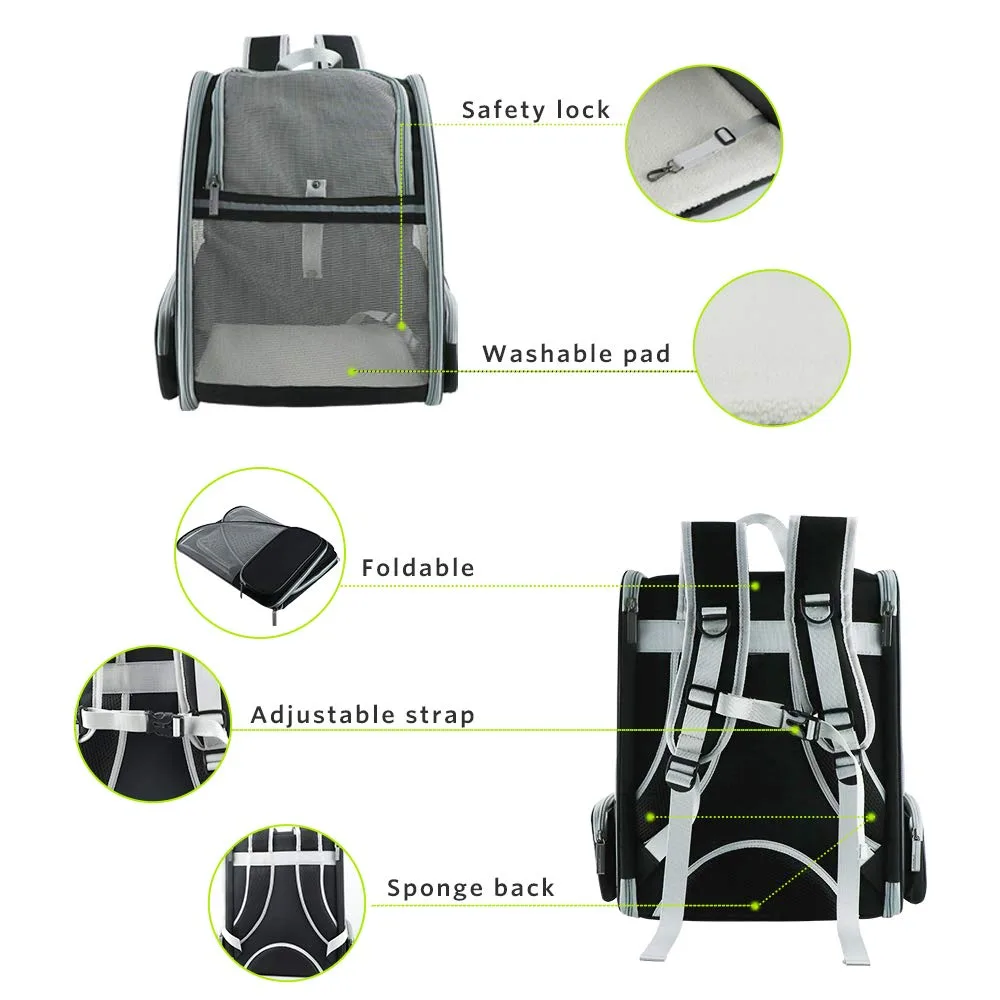
The trail protocol adds five tests to the standard carrier protocol and tightens three existing limits. It is run in full on the first spec sample and in reduced form on each production lot, with the reduced form covering static load, strap slip, zipper cycling and seam strength. Results are reported against the approved sample rather than against a generic standard, because half of these tests have no external reference method.
| Test | Trail limit | Urban limit | Frequency |
|---|---|---|---|
| Dynamic shock load | 1.6 g at 15 kg, 5,000 cycles | 12 kg static only | Per programme |
| Frame deflection | Under 12 mm at 15 kg | Under 15 mm at 12 kg | Per production lot |
| Strap slip | Under 6 mm at 8 kg | Under 10 mm at 8 kg | Per production lot |
| Abrasion, base panel | 40,000 cycles | 18,000 cycles | Per fabric lot |
| Wet seam strength | 220 N after 24 h soak | 200 N dry | Per fabric lot |
| UV exposure | 200 h, strength retention 80 percent | Not required | Per colourway |
| Grit-cycled buckle release | 500 cycles, release under 40 N | Not required | Per hardware lot |
| Reflective coefficient | 330 cd/lx/m2 | Not required | Per tape lot |
Defect classification follows the same AQL 2.5 structure used across all programmes, but the trail protocol adds two automatic critical failures: any strap slip above 10 mm, and any load-bearing seam below 220 N in the wet state. Both are zero-acceptance conditions because they create a safety risk rather than a customer dissatisfaction risk, and either one stops a shipment regardless of how the rest of the lot performs.
Documentation closes the loop. Each released lot ships with a test summary referencing the fabric lot number, the hardware lot number and the approved sample identifier, so a field complaint three seasons later can be traced back to a specific input batch. That traceability is also what allows a repeat order to be released on a reduced protocol, since a material already proven at 40,000 cycles and 200 hours UV does not need the full laboratory cycle repeated when only the colourway changes.
Production Planning: MOQ, Sampling and Cost Drivers for Trail Builds
Trail builds cost 18 to 26 percent more than an urban equivalent, and the premium is concentrated in three places. The frame and stiffener assembly adds 0.90 to 1.40 USD, the coating and DWR package adds 0.35 to 0.70 USD, and the hardware upgrade from No.5 to No.8 zippers plus locking sliders adds 0.45 to 0.80 USD. Shell denier, surprisingly, is not a major cost driver once the base panel is already at 600D.
Minimum quantities follow the material rather than the sewing. Trail programmes run at MOQ 500 pieces per colourway, which is the level at which a custom coating run and a reflective tape order both become economic. Reflective tape in particular carries a 3,000 metre mill minimum, which equates to roughly 700 units depending on the piping layout, so a colourway below 500 pieces either pays a tape surcharge or uses a stock reflective supplied from the partner facility inventory.
The sampling calendar needs three rounds for a first trail programme. Round one is a structural prototype in stock fabric, delivered in 6-10 working days, and it exists to set frame deflection and strap geometry. Round two is a full spec sample in production materials, and it carries the complete protocol including the 200 hour UV exposure and the grit cycling, which together take about 12 working days of laboratory time. Round three is a pre-production unit built on the bulk line.
Bulk production then runs 35-50 days. The dominant variable is coating and DWR scheduling at the fabric mill, not sewing capacity; a programme that locks fabric in week one reliably ships at the short end of the range, while a programme that waits for sample approval before ordering fabric lands at the long end. Buyers working to a fixed trail season should treat fabric reservation as the critical path item.
Why brands source here
- Pet carrier programs run since 2014; founding team in sewn goods since 2004
- SGS-verified production floor of 4,950 m² with 137 workers across 7 lines
- Monthly capacity of 200,000 units, audited to BSCI and ISO 9001
People Also Ask
What makes a dog carrier backpack suitable for hiking?
Dynamic load capability, abrasion resistance and suspension geometry. A trail-rated frame carries 15 kg at a 1.6 g shock factor, the base panel clears 40,000 Martindale cycles, and the straps hold slip under 6 mm at 8 kg. An urban carrier is only specified for static load.
How much load can a hiking dog carrier backpack carry?
15 kg is the practical ceiling for a size L trail build, derived from a 10 kg animal at a 1.6 g shock factor with a 1.5 safety margin. Above that the frame needs a metal perimeter, which changes the product category and the freight profile.
Why does the hip belt matter on a pet carrier?
Because it moves load off the shoulders on descents. A hip belt with a 20 degree upward rake shifts the split from 70/30 to roughly 55/45 shoulders to hips, which is what keeps shoulder pressure below the 10 kPa comfort threshold over a long day.
What waterproof rating is needed for a hiking carrier?
1,500 mm hydrostatic head for day hiking and 3,000 mm for multi-day use in wet climates. The rating matters less than the DWR finish durability: after 20 wash cycles the spray grade drops by two levels unless the finish is specified for the duty cycle.
How hot does the inside of a pet carrier get on a trail?
Around 9 to 11 degrees C above ambient at 35 percent open area, falling to 5 to 6 degrees C at 45 percent open area with a reflective top panel. Cross-ventilation geometry, not powered airflow, produces that improvement.
Should hiking carriers use metal or polymer hardware?
Polymer for buckles, because side-squeeze POM releases reliably after grit contamination; metal for any part in the load path, specified as stainless or anodised with 96 hours salt spray for coastal markets.
How long does a hiking carrier programme take to develop?
Three sampling rounds for a first programme, with the structural prototype in 6-10 working days and the full protocol adding about 12 working days of laboratory time for UV and grit testing. Bulk production follows in 35-50 days.
Frequently Asked Questions
What frame material is used in a trail-rated carrier?
A 4 mm honeycomb polypropylene board bonded to a 25 mm perimeter stiffener, with vertical ribs at the strap anchor line. That structure deflects 11 mm at 15 kg against 21 mm for a flat board of the same mass.
How wide should shoulder straps be on a hiking carrier?
65 mm at the top tapering to 50 mm at the adjuster, with 10 mm EVA at 55 kg/m3 and a tricot face. Straps narrower than 55 mm push contact pressure above 10 kPa at 12 kg, which testers report as numbness within 45 minutes.
Can a folding carrier meet trail specifications?
Yes, but it needs a thicker board. A scored hinge line deflects about 30 percent more than a continuous board, so a folding trail carrier uses 5 mm board plus a removable cross rib that the user inserts before loading.
What is the shock factor used for trail load calculation?
1.4 g on graded trail and up to 1.8 g on loose descents. Specifications are written against 1.6 g as the design point, which means a 10 kg animal is engineered as an 18 kg instantaneous load.
How is abrasion tested on the base panel?
Martindale method to ISO 12947-2, 40,000 cycles minimum for day hiking and 50,000 for multi-day builds. The test is run on the coated face with the standard wool abradant and the end point is two broken threads.
Does a rain cover replace a waterproof coating?
No. A cover protects the outer face but does nothing for the floor, which is where water enters when the carrier is set down. The coating and the taped floor seams are specified independently of any cover.
How much ventilation area does a trail carrier need?
At least 42 percent combined open area across the door and both side walls, with the openings placed at different heights on opposing faces to drive convective flow when the carrier is stationary.
What reflective treatment is specified for trail use?
25 mm retroreflective piping on three faces with a coefficient of retroreflection of at least 330 cd/lx/m2, giving roughly 300 square centimetres visible from the front and both sides. The tape should carry its own certificate.
How does grit affect hardware selection?
It jams closed-housing buckles. Trail programmes use side-squeeze designs with an open channel, and every candidate part is grit-cycled 500 times and must still release under 40 N before it enters the approved list.
What is the cost premium for a trail build?
18 to 26 percent over an urban equivalent, split across the frame and stiffener assembly at 0.90 to 1.40 USD, the coating and DWR package at 0.35 to 0.70 USD, and the zipper and slider upgrade at 0.45 to 0.80 USD.
Which tests are added compared with a standard carrier?
Dynamic shock loading, UV exposure, grit-cycled buckle release, wet-state seam strength and reflective coefficient. Frame deflection and strap slip limits are also tightened relative to the urban protocol.
What is the usual reason a trail sample needs a second round?
Abrasion and weathering results. Both take longer than the sewing itself, and a fabric that passes the dry tests often fails wet seam strength or UV retention, which forces a coating or face-fabric change and a repeat round.
How should fabric ordering be scheduled for a trail season?
Reserve coating and DWR capacity at the mill in week one rather than waiting for sample approval. That single decision is what puts a programme at the 35 day end of the bulk window instead of the 50 day end.
Talk to QUANZHOU JUNYUAN BAGS about a pet carrier program: MOQ 500 pieces per colourway, samples in 6-10 working days, bulk production in 35-50 days under AQL 2.5 inspection.
Get a free quote Request a sample