Dog Carrier Backpack OEM: Original Equipment Manufacturing
Dog carrier backpack OEM manufacturing converts a brand-controlled design into repeatable production through 4 controls: a frozen tech pack, approved materials, verified samples, and measurable quality gates. A practical program starts at MOQ 500 pieces per color, uses a 6-10 working day sample cycle, and releases bulk output only after load, seam, zipper, ventilation, and dimensional checks are approved.
Executive Summary
An OEM program works best when ownership is explicit: the buyer controls product intent and brand assets, while the production team converts those inputs into patterns, bills of materials, operation sheets, inspection criteria, and shipment records. The commercial baseline is MOQ 500 pieces per color, samples in 6-10 working days, bulk production in 35-50 days after approval, and final inspection to AQL 2.5. Before quotation, specify the intended dog weight range, internal dimensions, carrying orientation, shell denier, mesh construction, foam density, hardware finish, logo method, packaging, and destination-market chemical requirements. Before bulk cutting, approve a physical sample and a sealed specification set with tolerances. During production, control incoming fabric shade, coating adhesion, webbing width, seam allowance, stitch density, reinforcement placement, and closure function. Lot release should be based on records rather than appearance alone. A complete shipment file normally contains the approved specification revision, material declarations, in-line findings, final AQL report, packing list, carton marks, and any requested laboratory reports. This disciplined handoff protects fit, load distribution, ventilation, and brand consistency when a carrier moves from one prototype to thousands of units. The release meeting should assign owners for every open deviation and block material cutting until safety-critical dimensions, components, and evidence are closed in writing.
A dog carrier manufacturer is expected to hold the dog carrier backpack pattern card for at least twelve months, so a reorder matches the approved sample rather than drifting.
Define the OEM Boundary Before Quotation
OEM does not mean that a production partner should infer the product from a reference photograph. The buyer normally owns the concept, target price, performance level, color direction, labeling, and sales-channel requirements. The manufacturing side should turn that information into controlled production data. The first engineering task is therefore a boundary document stating what is fixed, what may be optimized, and who approves each change. A useful brief names the target dog mass, standing height, body length, chest depth, and permitted carrier weight rather than relying on labels such as small or medium. It also identifies whether the backpack is intended for walking, public transport, airline cabin use, or convertible hand carry because each use condition changes the frame, opening, tether, and strap geometry.
Commercial assumptions belong in the same brief. Color count, order quantity, packaging format, inspection level, shipment term, and required delivery window affect material purchasing and line allocation. If the quotation assumes stock black 600D polyester but the order later changes to a custom-dyed 900D fabric, cost and timing must be recalculated. Logo size and position can alter seam paths; molded zipper pullers can add tooling; retail boxes can change carton utilization. Recording these facts before costing prevents an apparently small design decision from becoming an uncontrolled production variation.
The responsibility matrix should distinguish buyer-supplied artwork from production-created patterns and should identify the master sample, test plan, and document owner. Revision numbers must appear on the tech pack, bill of materials, artwork, and approval sheet. Verbal approval in a message thread is not a reliable release method. An OEM carrier becomes manufacturable only when every performance claim is translated into a dimension, material code, construction instruction, or pass/fail test.
A quotation review should also expose assumptions that are not yet decisions. Mark estimated fabric consumption, provisional carton size, unconfirmed test scope, and nominated-brand availability as open items. Give each item an owner and closure date. This simple discipline prevents provisional values from being copied into the purchase order as if they were approved facts. It also lets sourcing and engineering work in parallel without concealing commercial uncertainty.
- Freeze intended dog dimensions and rated load before pattern work.
- State allowed substitutions for fabric, mesh, foam, zippers, and hardware.
- Assign approval authority for samples, colors, packaging, and test reports.
- Use one revision index across all production documents.
Engineer the Carrier Architecture Around Load and Ventilation
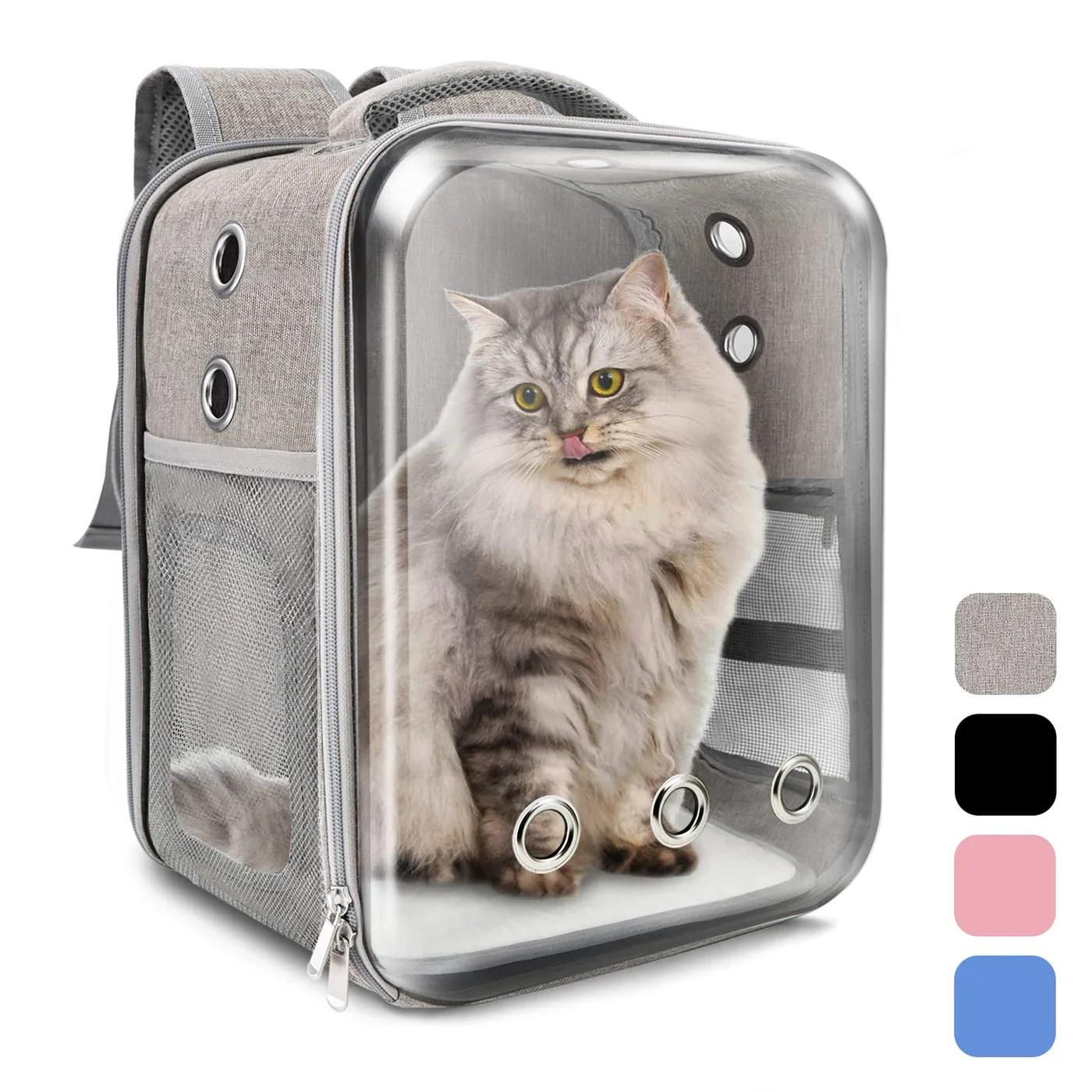
The carrier is a flexible load-bearing structure, not simply a backpack with mesh windows. Its base, side walls, top frame, shoulder harness, and attachment tabs form a connected load path. Engineers begin by placing the dog's center of mass close to the wearer's back and above a base that resists sagging. A removable board may distribute pressure, while closed-cell foam limits point loading. Side panels require enough flex for comfort but enough stiffness to preserve breathing space. If the shell collapses inward under strap tension, the stated internal volume is not available in use.
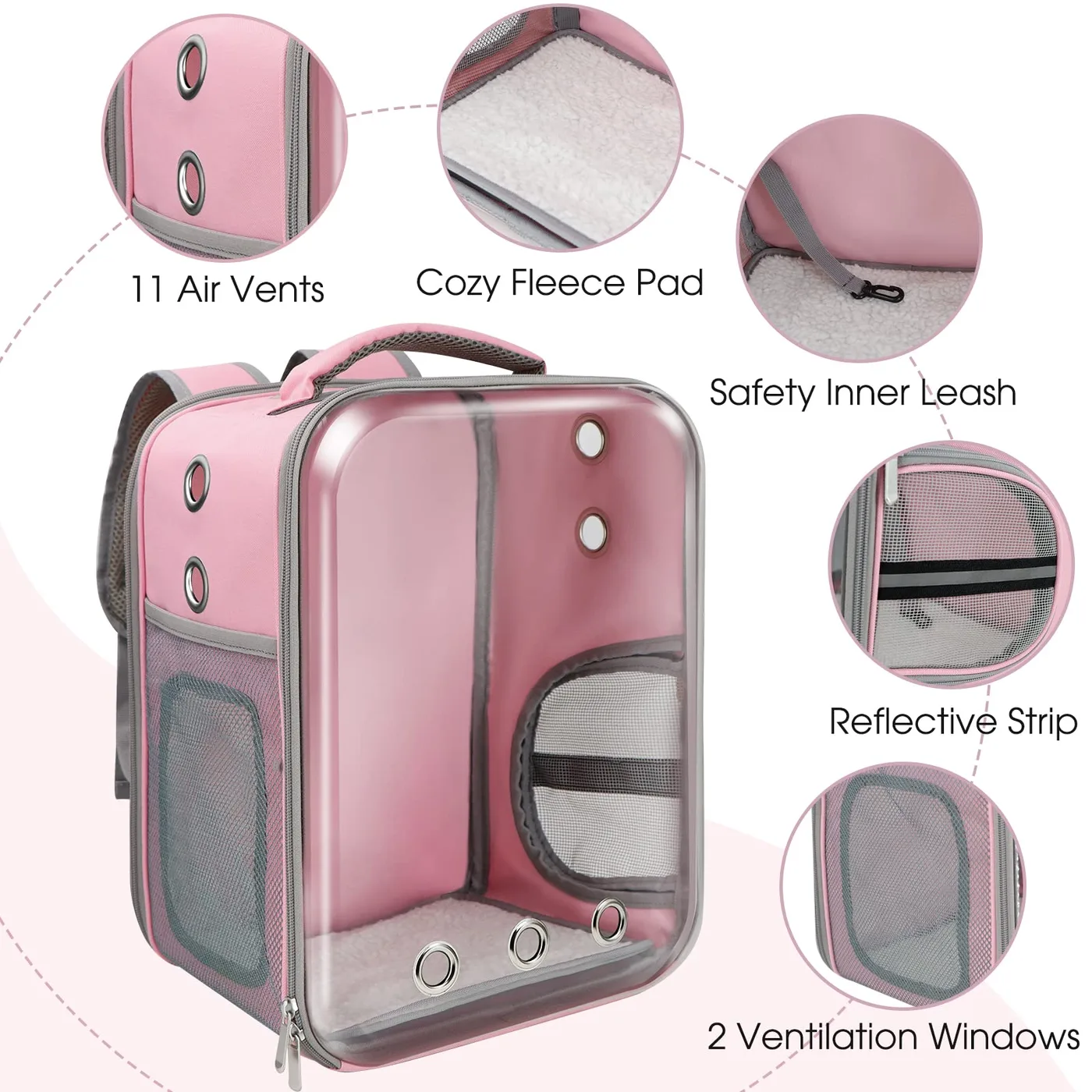
Ventilation should be specified as open area and panel position, not as a decorative mesh percentage. Low intake zones and upper exhaust zones support natural air exchange, while opposing mesh panels reduce stagnant pockets. Mesh selection must balance aperture, yarn diameter, burst resistance, snag behavior, and visibility. Binding around the mesh should capture enough material to prevent pull-out without blocking excessive area. For dogs with deeper chests, the pattern may need added front-to-back depth while keeping the center of gravity controlled. The tether position must prevent an animal from reaching the opening yet must not force the neck downward.
Access geometry also affects structure. A large top opening simplifies loading but removes supporting shell area, so stays, piping, or a shaped frame may be needed. Side entries can lower the step-in height, but the zipper ends and lower corners then become critical stress points. Every opening requires an escape-resistant closure logic, such as paired sliders with a clip, while avoiding small loose parts that can enter the occupied compartment.
Straps are sized as a system. Webbing width, foam thickness, bar-tack pattern, seam capture, sternum strap travel, and lower anchor spacing determine load transfer. A strong buckle cannot compensate for an anchor sewn only to the lining. Rated carrier capacity must be established by the weakest complete load path, not by the catalogue strength of one component. Pattern reviews should therefore trace forces from the base through reinforcement patches into the shoulder harness before the first sample is cut.
A simple engineering mock-up can reveal structural errors before branded materials are consumed. Load the base with distributed test mass, tighten both shoulder straps to a representative setting, and observe panel bow, opening distortion, and anchor rotation. Mark contact zones and photograph the loaded profile from consistent positions. These observations become pattern corrections and objective sample comments rather than subjective preferences about whether the bag “feels stable.”
Build a Controlled Material and Component Specification
A bill of materials should describe each input well enough that purchasing, sampling, production, and inspection identify the same item. “Oxford fabric” is insufficient. The shell entry should include fiber, denier, construction, finished mass or agreed reference swatch, coating type, color standard, usable width, and any water-resistance requirement. Mesh entries need yarn construction, finished weight, aperture reference, color, and performance limits. Foam needs chemistry, density range, thickness tolerance, hardness or compression behavior, and lamination method. Webbing requires fiber, width, thickness, weave, color, and tensile requirement.
Components that look interchangeable often perform differently in assembly. Zipper chain gauge, slider type, puller finish, tape color, and closed-end or open-end configuration must all be coded. Buckles should include nominal webbing size, resin or metal type, finish, mating component, and functional load. Thread ticket, needle size, hook material, base board composition, binding width, label substrate, ink system, and carton grade also belong in the controlled BOM. For custom-colored textiles, the approval method should define viewing light and tolerance against a lab dip or physical standard.
| OEM input | Minimum controlled fields | Typical verification |
|---|---|---|
| Shell textile | Fiber, denier, coating, color, width, finished mass | Visual shade check, mass, coating and water test |
| Ventilation mesh | Construction, aperture, yarn, weight, color | Burst, snag and seam pull-out evaluation |
| Load webbing | Fiber, width, thickness, weave, tensile target | Dimensional and tensile sampling |
| Foam package | Type, density, thickness, lamination | Thickness and compression recovery |
| Closures | Chain size, slider, buckle type, finish | Cycling, pull and mating checks |
| Base insert | Material, thickness, edge profile, removability | Deflection and moisture exposure |
Material compliance is a separate field from physical performance. Destination, age grading, and buyer policy determine the restricted-substance list. Suppliers can review the European chemicals framework through ECHA, but the buyer should still define the exact substances, limits, test methods, and report validity required for its market. A purchase order is protected from silent downgrades when every critical material has both an identity specification and a measurable acceptance method.
The BOM should connect to approved physical standards where numbers cannot describe appearance completely. Keep labeled swatches for shell shade, mesh hand feel, webbing texture, plated finish, print color, and lining brightness. Seal each standard with date and revision, then protect it from light and contamination. Incoming inspectors can compare production lots against both numeric requirements and these controlled visual references, reducing arguments caused by photographs viewed on different screens.
Move Through Samples With Defined Approval Gates
Sampling should reduce uncertainty in a planned sequence. A construction sample is used to prove shape, assembly access, seam order, and component interaction; it may use substitute colors if that is documented. A fit or wear sample checks internal dimensions, center of gravity, opening control, shoulder adjustment, and contact pressure. A pre-production sample uses approved bulk-intent materials, colors, logos, labels, and packaging. Combining every purpose into one first sample slows decisions because reviewers cannot separate structural problems from cosmetic details.
The normal sample window is 6-10 working days after all usable inputs are available. That clock should not start while artwork, color references, hardware choices, or the target size remain open. Pattern engineering includes seam allowance, turn-of-cloth, foam compression, binding take-up, and fabric direction. Digitized pieces need notches, drill or mark points, grain direction, quantity, material code, and revision. For shaped carriers, the sample team should measure the finished internal envelope rather than only flat pattern dimensions. A carrier can meet external dimensions and still lose occupied space through thick padding or inward bowing.
Comments should be written against numbered photographs or drawing callouts. “Make it stronger” is not actionable; “extend the 38 mm reinforcement patch 25 mm beyond the lower strap seam and apply a 28 x 16 mm bar tack” can be executed and checked. Each round closes with a comment disposition: accepted, rejected, changed, or pending. If a revised detail influences another component, the BOM and operation sheet must change with the drawing.
The sealed sample is a comparison reference, not the only specification. Materials can vary invisibly, and a physical sample does not state acceptable tolerances. Approval should therefore include a signed measurement chart, BOM revision, color and artwork records, functional test results, packing method, and deviation list. Bulk cutting should begin only after the pre-production sample and its matching document set carry the same release revision. This gate keeps last-minute aesthetic edits from entering production without cost, performance, or schedule review.
Sample evaluation should be performed in a repeatable condition. Allow compressed foam and packed panels to recover, close every zipper, set adjustable straps to defined positions, and place the carrier on a level surface before measurement. Record the instrument, measurement points, and result beside the tolerance. When reviewers use the same conditioning and landmarks, apparent dimensional disagreement becomes a solvable process issue instead of an exchange of conflicting tape-measure photographs.
Convert the Approved Design Into Repeatable Sewing Operations
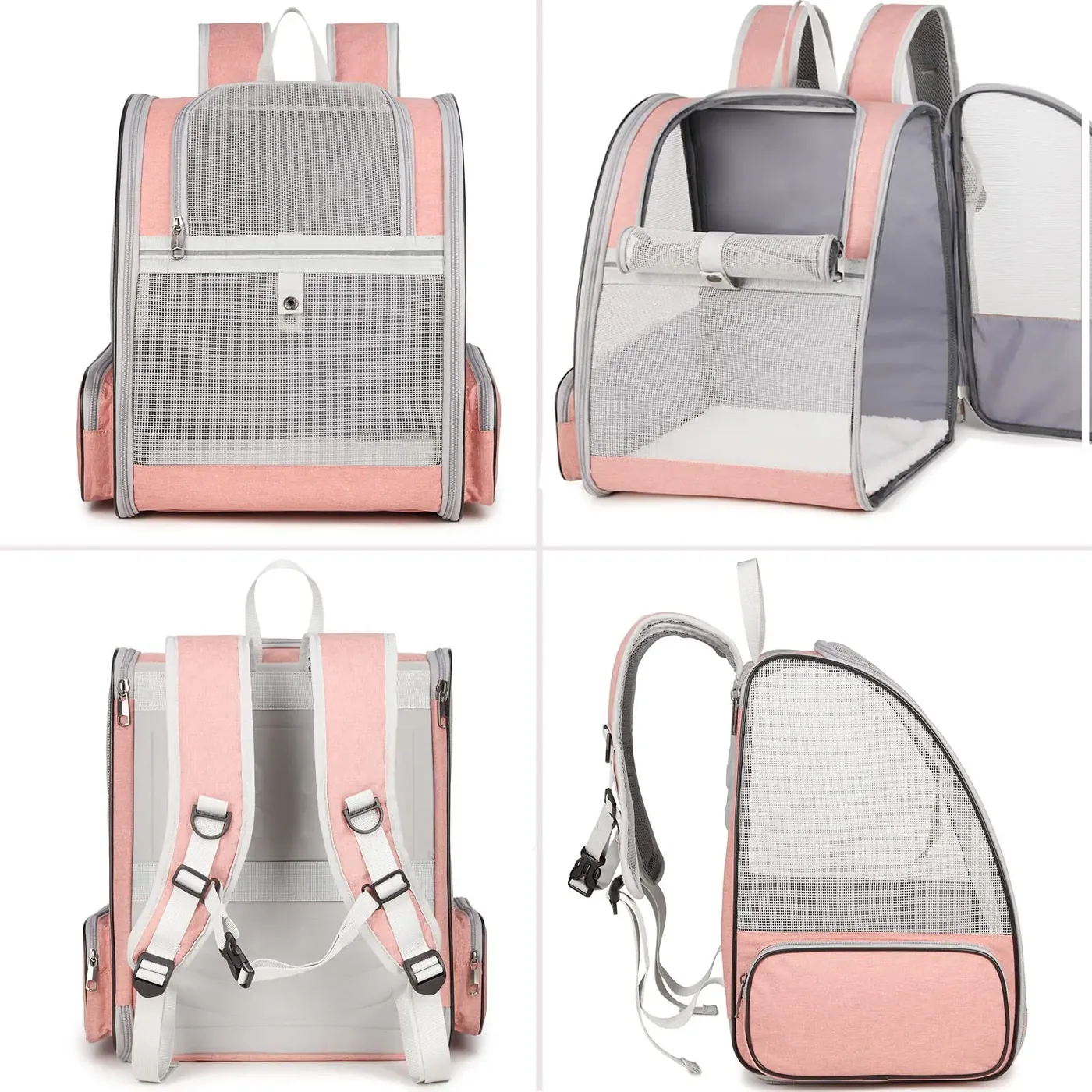
Bulk consistency depends on operation engineering before line loading. The production team breaks the backpack into subassemblies such as front panel, mesh side, top frame, base sleeve, shoulder harness, lining, and accessory pocket. An operation bulletin records machine type, seam class, stitch density, folder or guide, thread, reinforcement, and quality checkpoint. Difficult curves and thick intersections should be trialed with the actual material stack because feed behavior changes when coated Oxford, spacer mesh, foam, webbing, and binding meet.
Cutting control starts with fabric relaxation, shade segregation, marker direction, ply height, and bundle identification. Coated textiles may creep under high lays, while mesh can distort if clamped aggressively. Paired panels must remain in the same shade group. Printed or woven logos need placement templates tied to seam references, not raw cut edges that disappear during assembly. Heat-transfer parameters should state temperature, dwell, pressure, peel method, and cooling condition; embroidery backing and stitch density must not create a rigid abrasive patch inside the compartment.
On the line, risk-based checkpoints are more effective than inspecting only finished appearance. Operators or in-line inspectors verify strap anchors before they are covered, zipper stops before binding closes the seam, tether capture before lining closure, and board access before final topstitching. Bar tacks need a defined pattern and dimensions. Skipped stitches, needle cuts, seam grin, raw edges, twisted webbing, asymmetrical anchors, and slider mismatch are recorded by operation so corrective action reaches the actual station.
Metal detection or broken-needle control should follow the buyer's product-safety requirement and facility procedure. Needle issuance and recovery records are especially important because the occupied compartment contains direct animal contact surfaces. Finished units should be cleaned without masking coating defects or loose threads. Repeatable OEM quality is created by controlling hidden operations while they remain visible, not by trying to sort every defect at final inspection. A pilot run of a small controlled quantity can confirm line balance, critical dimensions, and packaging sequence before full output accelerates.
Defect data from the pilot should be expressed by opportunity and operation, not only as a total rejected-unit percentage. Ten twisted straps and ten dirty marks demand different corrective actions even if the reject count is identical. Pareto review identifies the dominant stations, while first-off approval after adjustment confirms that a machine setting or work method actually changed. Retain corrected samples at the workstation until the affected operation is stable.
Validate Safety, Durability, and Market Compliance
The test plan should connect foreseeable use to a measurable method. Static loading checks whether the complete carrier supports a specified multiple of rated dog mass for a defined time without seam rupture, anchor movement, buckle release, or excessive base deformation. Dynamic testing cycles the loaded carrier through lifting or drop motions to expose fatigue at strap roots and handles. Zippers are cycled around actual corners because a straight-chain result may not represent the assembled product. Mesh panels require burst or puncture evaluation plus seam pull-out checks at their bound edges.
Dimensional inspection covers both user-facing volume and interface dimensions. Internal length, width, and height influence animal space; strap range controls wearer fit; openings determine loading access; and trolley or seat-belt interfaces require their own gauges. Ventilation assessment can compare open area, pressure drop, and panel obstruction after the carrier is loaded. Coating adhesion, colorfastness, abrasion, odor, and moisture resistance are selected according to material claims. General test-method research is available from ASTM International, while quality-system context is described by the ISO 9001 quality management overview. A buyer must identify applicable methods and acceptance values rather than displaying standards logos without scope.
Airline language demands particular restraint. There is no universal bag size accepted by every carrier and every aircraft. Product pages should direct travelers to the operating airline, and engineering teams can consult the IATA framework for live-animal transport context. Any claim such as water resistant, recycled content, low chemical content, or load rated needs a defined test, specimen description, report date, and responsible laboratory.
Final inspection to AQL 2.5 does not replace engineering tests; it samples workmanship and specification conformity from a completed lot. Inspectors verify quantity, workmanship, measurements, function, labeling, packing, and critical safety points against the approved file. A defensible compliance claim identifies the exact model, material set, test method, acceptance limit, and production revision covered by evidence.
Test samples need traceability equal to production samples. Record material lot, sample revision, conditioning, load fixture, cycle count, failure mode, and photographs. A pass recorded without these fields cannot reliably support a later shipment made from changed mesh or webbing. Where laboratory work is required, confirm sample quantity and report wording before dispatch; otherwise the correct test may be run on a specimen that cannot be linked to the marketed SKU.
Control Bulk Schedule, Inspection, and Change Management
The 35-50 day bulk production window begins after sample approval, deposit, final specifications, and material release conditions are satisfied. The schedule is built backward from shipment readiness through final inspection, packing, finishing, assembly, subassembly, cutting, incoming inspection, and material arrival. Custom-dyed textiles, molded pullers, special buckles, printed cartons, and laboratory testing can define the critical path. A responsible plan distinguishes confirmed dates from estimates and adds approval deadlines for buyer decisions.
Capacity should be discussed at the product-operation level rather than as a single monthly headline. A backpack with framed openings, multilayer shoulder straps, extensive binding, and multiple zipper curves consumes different minutes than a simple soft bag. Line planning uses standard minute values, expected efficiency, changeover loss, and available machines. Early output is normally slower while operators stabilize handling and quality. In-line reports should show inspected quantity, defect types, corrective actions, and recheck results so progress is not represented only by a completion percentage.
Change control remains active after order placement. A proposed substitution must identify the reason, affected component, old and new specifications, cost effect, schedule effect, appearance difference, test impact, and approval status. No material change should enter cutting based on an informal “equivalent” statement. If the buyer changes artwork or dimensions after approval, revised documents and samples may be required. The master production record should preserve which revision and component lots entered each shipment.
Commercial terms should align with these gates. A common structure is T/T 30/70 with FOB Xiamen, but the purchase contract should state payment triggers, inspection access, packaging responsibility, document requirements, and remedy for nonconformance. At final AQL 2.5 inspection, randomly selected cartons and units should be traceable to the lot. Release occurs after findings are accepted or corrected and rechecked. A reliable OEM delivery date is the output of approved inputs, secured materials, operation-based capacity, and closed quality findings—not a promise detached from production evidence.
Shipment readiness also requires packaging validation. Confirm folded shape, protective inserts, polybag warning or ventilation requirements, barcode readability, carton count, gross weight, dimensions, and drop-test condition. Compare the packing method with the sealed sample because aggressive compression can crease foam, deform frame stays, or imprint hardware onto coated fabric. A carton audit before mass packing protects both product presentation and freight calculations, completing the production record before goods move to the port. The approved pack-out is then photographed for shipment traceability.
Order and quality terms
- MOQ 500 pieces per colourway; samples in 6-10 working days
- Bulk production 35-50 days after approval; AQL 2.5 inspection standard
- T/T 30/70 terms, FOB Xiamen, full document set per shipment
People Also Ask
What does OEM mean for a dog carrier backpack?
OEM means the buyer supplies or controls the product specification and branding, while the production partner industrializes and manufactures the approved design under controlled documents.
What information is needed for an OEM backpack quotation?
Provide dimensions, rated dog weight, materials, construction details, hardware, logo method, packaging, quantity by color, compliance needs, and target delivery terms.
How long does an OEM dog carrier backpack sample take?
A normal sample takes 6-10 working days after complete artwork, dimensions, materials, colors, and construction decisions are available.
What is the normal OEM minimum order quantity?
The baseline MOQ is 500 pieces per color, subject to material minimums and the number of custom components.
How is load capacity verified?
Load capacity is verified on the assembled carrier through static and dynamic tests covering the base, seams, webbing anchors, handles, buckles, and shoulder harness.
Can an OEM carrier be called airline approved?
No universal approval covers every airline. Dimensions and construction should be checked against the operating airline and current route-specific requirements.
Frequently Asked Questions
Who owns the design in an OEM program?
Ownership is defined by contract. The buyer should state rights for supplied artwork, patterns, tooling, custom components, and any engineering work created during development.
Is a reference sample enough to start bulk production?
No. A reference sample should be converted into a BOM, measurement chart, drawings, tolerances, artwork files, test plan, and approved pre-production sample.
How many sample rounds are typical?
Two or three focused rounds are common, but the actual number depends on whether the first round tests construction, fit, cosmetics, or bulk-intent materials.
What is a sealed sample?
It is the approved physical unit retained as a workmanship and appearance reference and linked to the released document revision.
Why must internal dimensions be measured?
Foam, bindings, bowed panels, and inserts reduce usable space, so external measurements alone do not confirm the occupied envelope.
Can materials be substituted during production?
Only through written change control that compares specifications, appearance, cost, timing, compliance evidence, and test performance.
What does AQL 2.5 cover?
It provides a statistical sampling basis for lot workmanship and specification inspection; it does not by itself certify load safety or chemical compliance.
When does the 35-50 day bulk timeline start?
It starts after the agreed commercial and technical release conditions are complete, including approval, deposit, documents, and material confirmation.
Should zipper and buckle brands be locked?
Critical closure brands and model codes should be locked when their performance, appearance, warranty, or marketing value matters to the program.
How are custom colors controlled?
Use approved lab dips or physical standards, define viewing conditions, segregate dye lots, and record shade findings at incoming inspection.
What records should ship with the order?
The agreed file may include inspection reports, packing data, material declarations, laboratory reports, commercial documents, and traceability references.
Can one OEM design cover several dog sizes?
Yes, but each size needs its own pattern, measurement chart, rated load, strap geometry review, test specimens, and packing data.
Talk to QUANZHOU JUNYUAN BAGS about a pet carrier program: MOQ 500 pieces per colourway, samples in 6-10 working days, bulk production in 35-50 days under AQL 2.5 inspection.
Get a free quote Request a sample